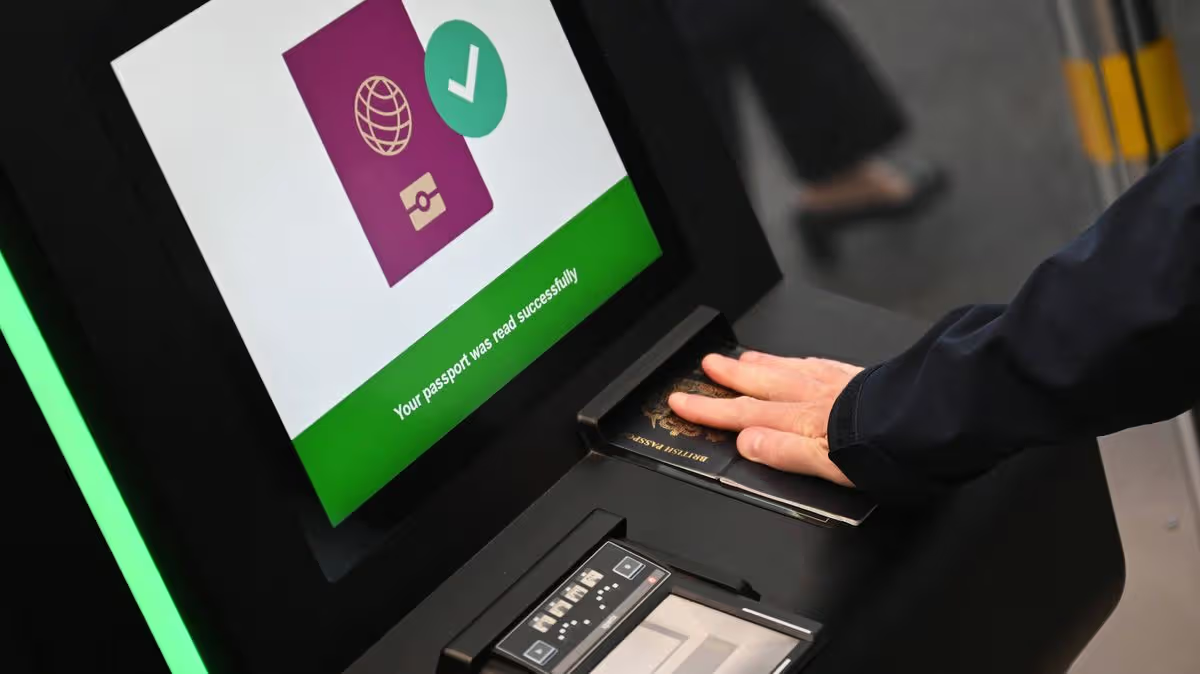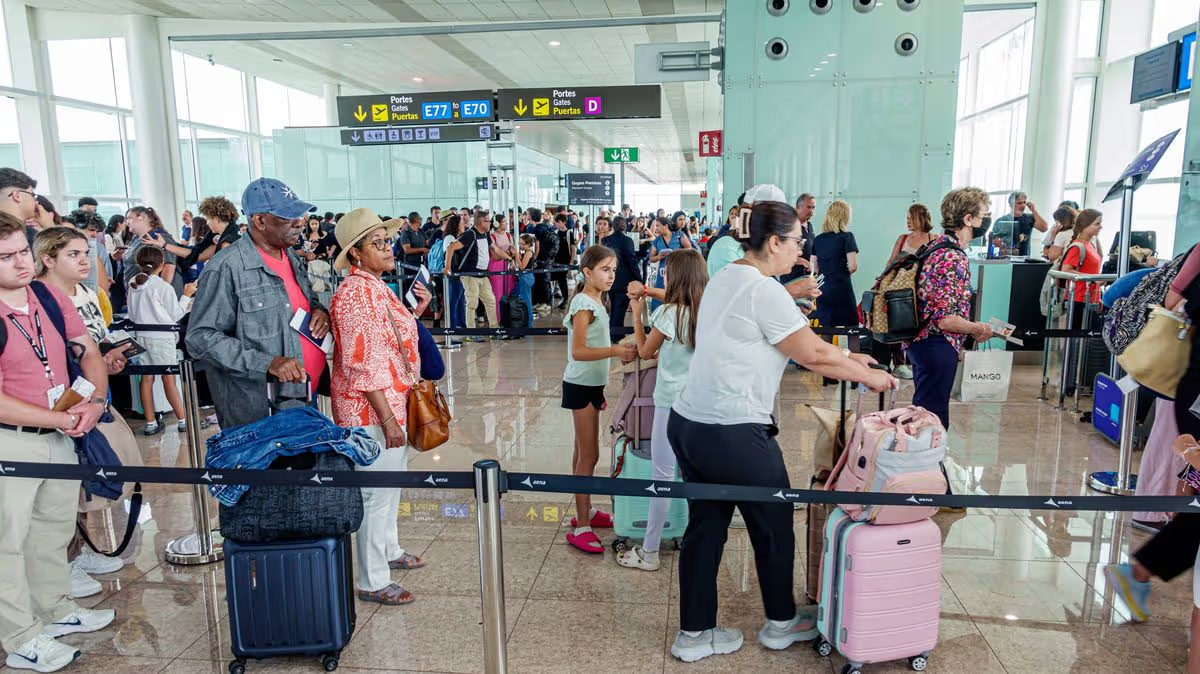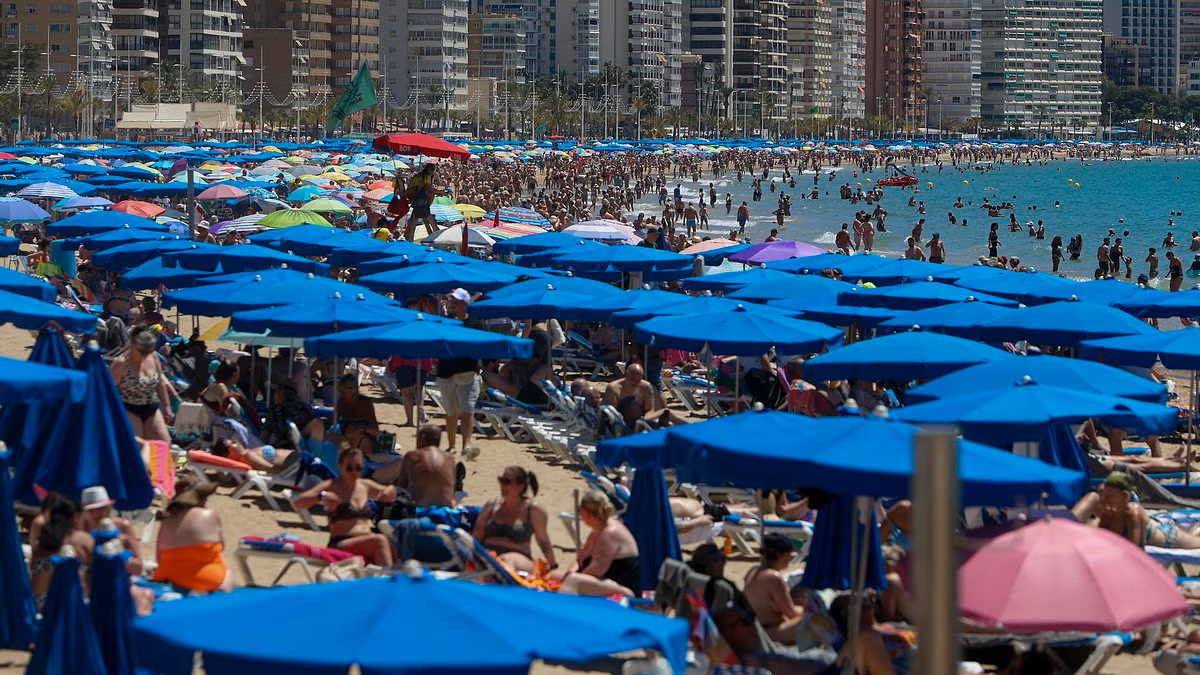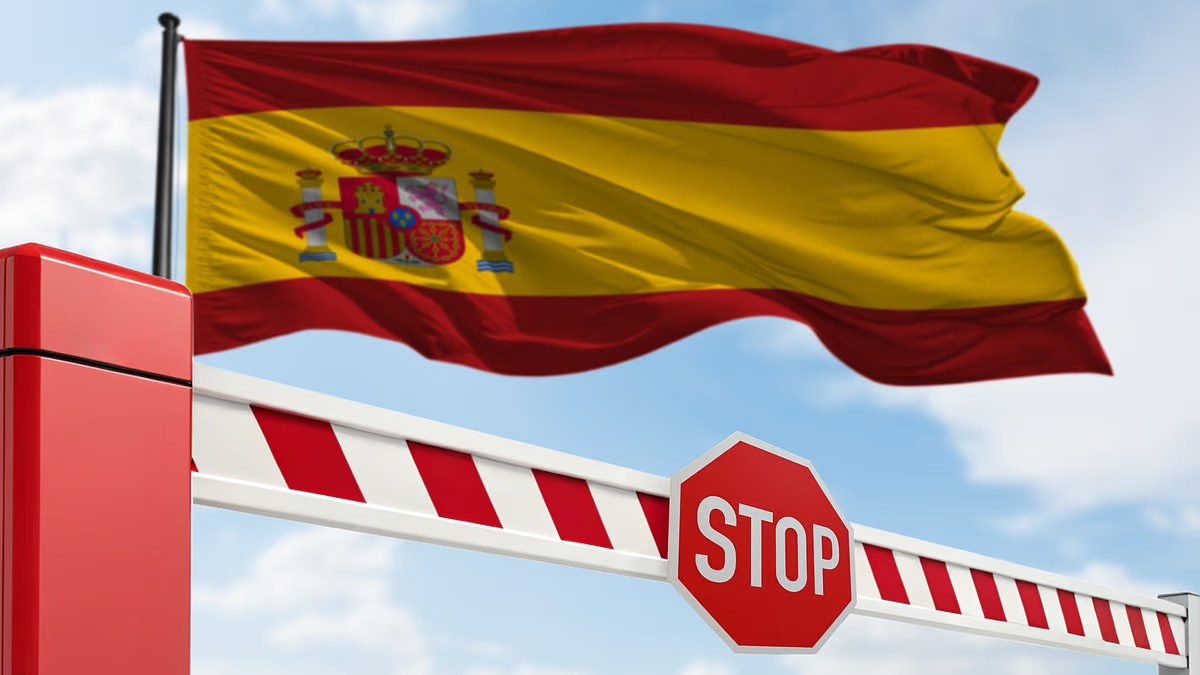
Millions of Britons will jet off to Spain this summer - but holidaymakers should make sure they're financially solvent before they touch down or face being denied entry. Tourists visiting for up to 90 days could be asked to present proof of having sufficient means for the duration of their proposed stay, after regulations were first introduced post-Brexit in 2021. Spain's Ministry of Foreign Affairs quietly announced earlier this year that every visitor to the destination in 2026 will now be required to have €122.10 (£105.53) per person per day, The rule changes mean travellers must also have a minimum overall amount of €1,089.90 (£942) or its equivalent in foreign currency before they arrive in the country. Britons heading to Spain for their holidays should be aware of the updated proof of funds requirementsThe Ministry of Foreign Affairs reiterated the small print rules in February, saying: 'Economic means may be accredited by presenting cash, traveller's cheques, a credit card accompanied by a bank account statement, an up-to-date bank book, or any other resource that accredits the amount available, such as a credit statement regarding the card or bank account. 'Bank letters or online bank statements will not be accepted.'Among the documents that can be required at the border are proof of identity or a valid travel document (such as a passport), as well as a visa if required. The lesser known rule was first introduced in 2021, but amounts required have increased this year due to Spain's national minimum wage going up. Other European countries have similar requirements, including Italy (pictured, Rome Airport)In 2025, holidaymakers were required to present proof of having €118 (£101.99) per person per day, as well as at least €1,065 (£920.47) 'regardless of the length of stay'.The updated financial requirements mean visitors who are staying for just four days, for example, will still need a minimum of €1,089.90 (£942), despite their €122.10 (£105.53) per person per day figure totalling to €488.40 (£422.12).Those who do not meet the entry requirements may be denied access - although it's not clear how strictly the rules are being enforced.Some holidaymakers have been caught out by the proof of funds issue, with EuroWeekly reporting that travellers were denied entry at Málaga Airport over Easter as a result.Spain isn't the only European destination to have such requirements. The rule was first introduced in 2021 for Brits entering EU countries following Brexit, but the amount varies. Here's where else tourists may face financial scrutiny...FranceFor travellers going to France, those with a hotel booking could be asked to provide proof that they have €65 (£56.20) per day of stay.They may also be asked to show they have €120 (£103.70) per day 'in the case of non-presentation of a hotel booking'.'In the case of a partial hotel booking: 65 euros per day for the period covered by the booking and 120 euros per day for the remainder of the stay,' France's government website outlines. LatviaBrits heading to Latvia are required to bring €14 (£12.08) per day, the Ministry of Foreign Affairs states. The Baltic country outlines that tourists must arrive with 'no less than €14 for each day of stay, if the duration of the intended stay in Latvia does not exceed 30 days.'And 'not less than €780 (£674.23) (the minimum monthly wage in Latvia), if the duration of the intended stay in Latvia exceeds 30 days.'ItalyThose heading to Italy may also be asked to prove they have enough money for the duration of their stay. The UK Foreign Office says that 'the amount varies depending on your accommodation'.Holidaymakers may also be asked to show proof of their accommodation, travel insurance and a return or onward ticket. Portugal Brits heading to Portugal may need to show 'an onward or return ticket' as well as 'proof you have enough money for your visit', reports the UK Foreign Office. France, for example, asks passengers to have proof of €65 (£56.20) per day of stay if they have a hotel bookingProof of funds isn't the only matter Brits will be grappling with when travelling in Europe this summer. The new Entry/Exit System (EES) looks set to hamper airports and borders across the region, with some countries saying they may 'switch off' technology during the height of the summer travel period. The EES is an automated digital border system for non-EU nationals, including UK citizens, entering the Schengen Area, which includes most of the EU, plus Iceland, Norway, Liechtenstein and Switzerland.Travellers are now required to register biometric details, including fingerprints and photographs. Operating in 29 European countries, countless holidaymakers have already experienced problems since the roll-out began in October, reporting long queues and even causing some to miss their flights.Ryanair recently called for all of the countries using the EES to temporarily scrap the system. The budget Irish carrier wrote to the governments of all 29 countries and urged for them to suspend the EES until September to help manage queues during the peak summer season.
The new financial requirements for Brits entering Spain this summer
The country has quietly upped the amount tourists visiting the country must have during their stay - and may even deny entry to those who can't prove they have the means to fund their holiday.
TL;DRAI
Spain now requires 2026 tourists to show €1,089.90 proof of funds (€122.10 daily) for entry; denial without documentation. The increase from 2025's €1,065 reflects EU post-Brexit compliance tightening, affecting remote workers planning European mobility.
827 words~4 min read