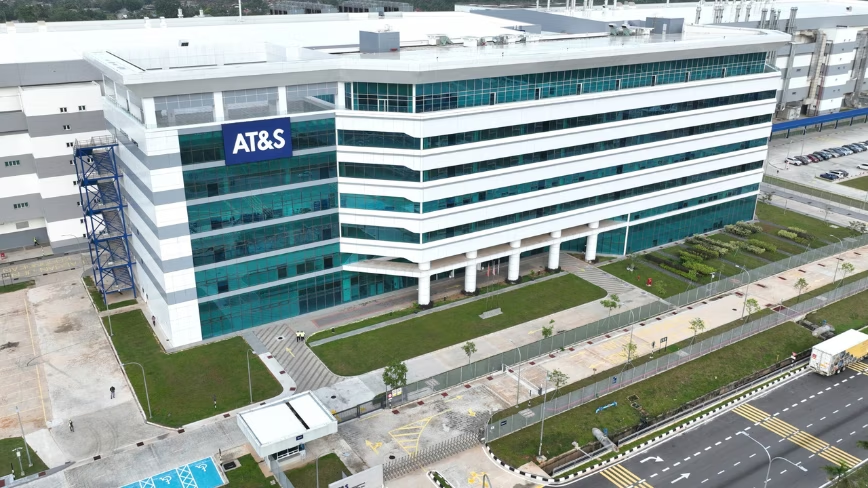
AT&S, the Austrian maker of printed circuit boards and chip substrates, will spend between €1.5bn and €2bn expanding capacity for the high-end IC substrates that AI and high-performance computing chips are built on, the company said. The plan spans its plant at Kulim in Malaysia and its facility at Chongqing in China, and it is anchored by an agreement with AMD and a second, unnamed technology company.
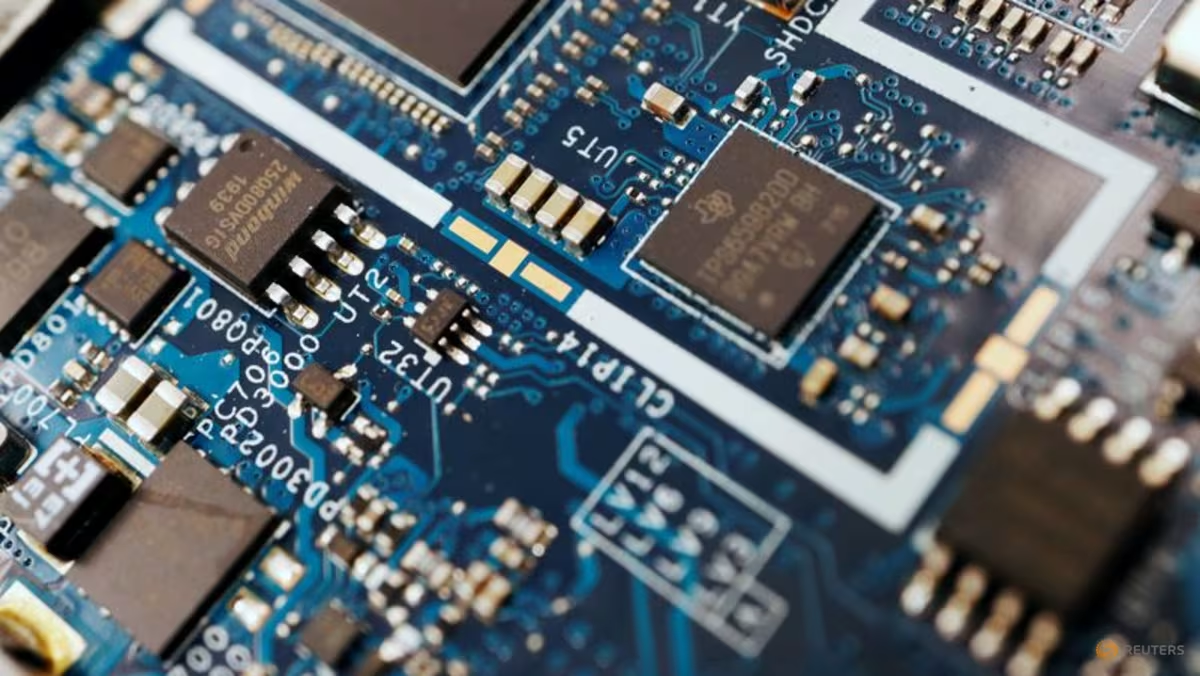
Substrates are the unglamorous layer of the AI supply chain, the engineered base that carries a processor and connects it to the board around it. As chips grow more complex, the substrate becomes harder to make and more valuable, which is why a specialist supplier is willing to commit up to €2bn to producing more of it. The capacity is aimed squarely at the same AI and HPC demand driving everything further up the chain.
In Malaysia, the money will install additional capacity at the existing Kulim plant and bring a previously unused building at the site’s second plant into production.
The Chongqing expansion is being driven by growing demand from what AT&S described as a key customer. The company framed both as a response to orders it can already see rather than a speculative build-out.
That distinction shows up in how the spending is financed. AT&S said the €1.5bn to €2bn is fully supported by long-term customer commitments, though it noted those commitments remain subject to final negotiation and execution. It is the kind of structure that lowers the risk of overbuilding: the capacity is being added against contracts rather than against a forecast.