In brief
Over $4.8 billion has exited U.S. Bitcoin ETF products since May, and analysts say a peace deal alone won’t bring institutional capital back.
The 25-delta options skew remains at -4% to -5%, showing traders are still paying a premium for downside protection over upside exposure.
The Fed’s Wednesday meeting and improving institutional demand could help with Bitcoin’s recovery, Decrypt was told.
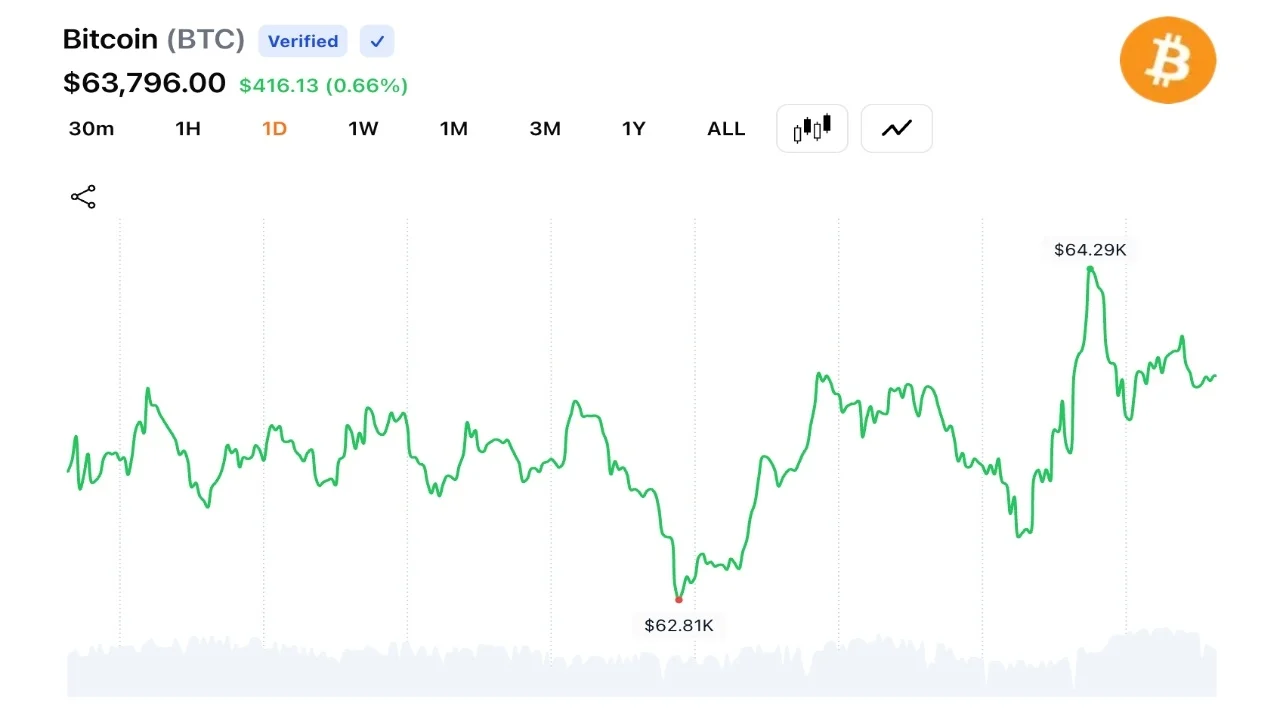
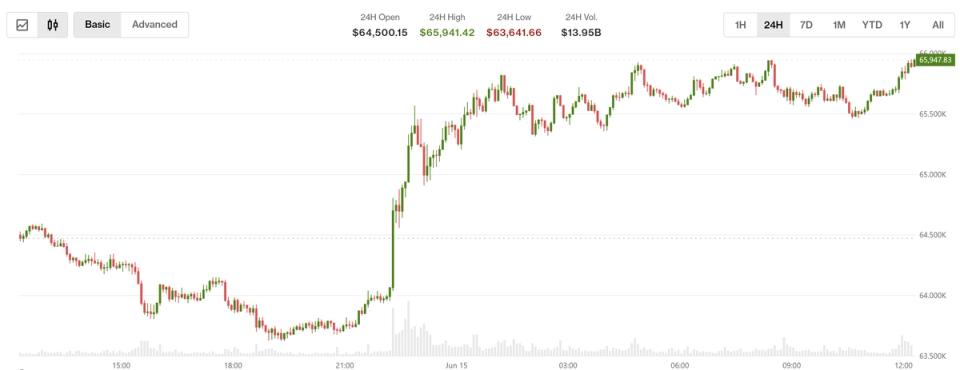
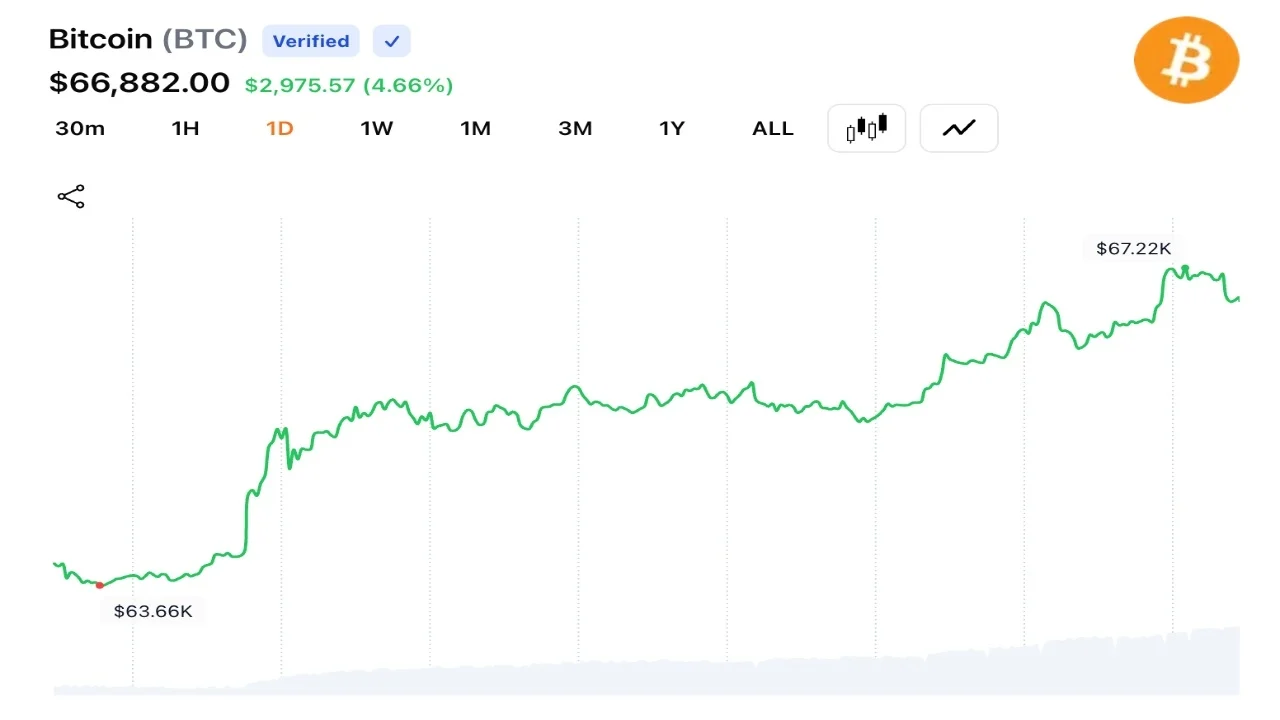
Bitcoin jumped to highs over $65,000 after President Trump announced a completed deal with Iran, but investors remain skeptical about a lasting turnaround for the crypto market.The leading crypto is trading at $65,860, up 2.2% over the past 24 hours and 4% over the past week, according to CoinGecko data. The move follows Trump’s Truth Social posts on Sunday, in which he claimed to have made a “Great Deal” with Iran and authorized the “toll free opening of the Strait of Hormuz” and removal of the U.S. naval blockade.While this round of Iran negotiations feels different, with Pakistan’s prime minister confirming the deal independently before Trump’s posts, investors are unlikely to fully price in a resolution until the signing in Switzerland happens on Friday, Markus Levin, Co-Founder of XYO, told Decrypt.He noted the relief rally in Bitcoin “has already partially arrived,” with the move from the low $60,000s to around $65,800 recovering most of the geopolitical risk premium built up in recent weeks.Bitcoin’s recent levels looked significantly oversold from a sentiment perspective, Georgii Verbitskii, derivatives trader and founder of TYMIO, told Decrypt. His base case is that most negative news is already priced in, given the market has spent months digesting geopolitical tensions and macro uncertainty.Despite the positive headlines, prediction market users remain bearish on Bitcoin’s outlook. On Myriad, owned by Decrypt’s parent company, Dastan, users put a 67% chance on Bitcoin's next major move knocking it down to $55,000. Kalshi users expect Bitcoin to close out the year at $69,000, down 45% from its all-time high of $126,080 set in October 2025.Bitcoin’s fundamental problemThe U.S.-Iran deal does not fix Bitcoin’s fundamental problem of “genuinely soft institutional demand,” Levin said. “A peace deal alone does not bring that capital back.”The skepticism matters because the market has repeatedly struggled to sustain rallies on positive headlines alone. Part of the reason stems from Trump’s repeated assertions that a peace deal was just around the corner—on at least 38 occasions, according to CNN.The crypto market is also wrestling with underlying weakness stemming from the lack of institutional demand, capital, and attention rotation, as Decrypt previously reported. Over $4.8 billion of U.S. capital has exited Bitcoin ETF products since May, according to SoSoValue data, reflecting weak demand.The Bitcoin network recorded its 11th-largest downward difficulty adjustment ever: a drop of 10.09% at block 953,568, the second-biggest decline of 2026, Galaxy Research tweeted Sunday. The firm attributed Bitcoin’s 15% price drop in June as the reason for squeezed miner margins.