READ MORE: Popular migraine drugs linked to miscarriagesSee more Daily Mail on Google - save us as a Preferred SourceBy LUKE CHAFER, HEALTH REPORTER Published: 11:27 BST, 15 June 2026 | Updated: 11:46 BST, 15 June 2026
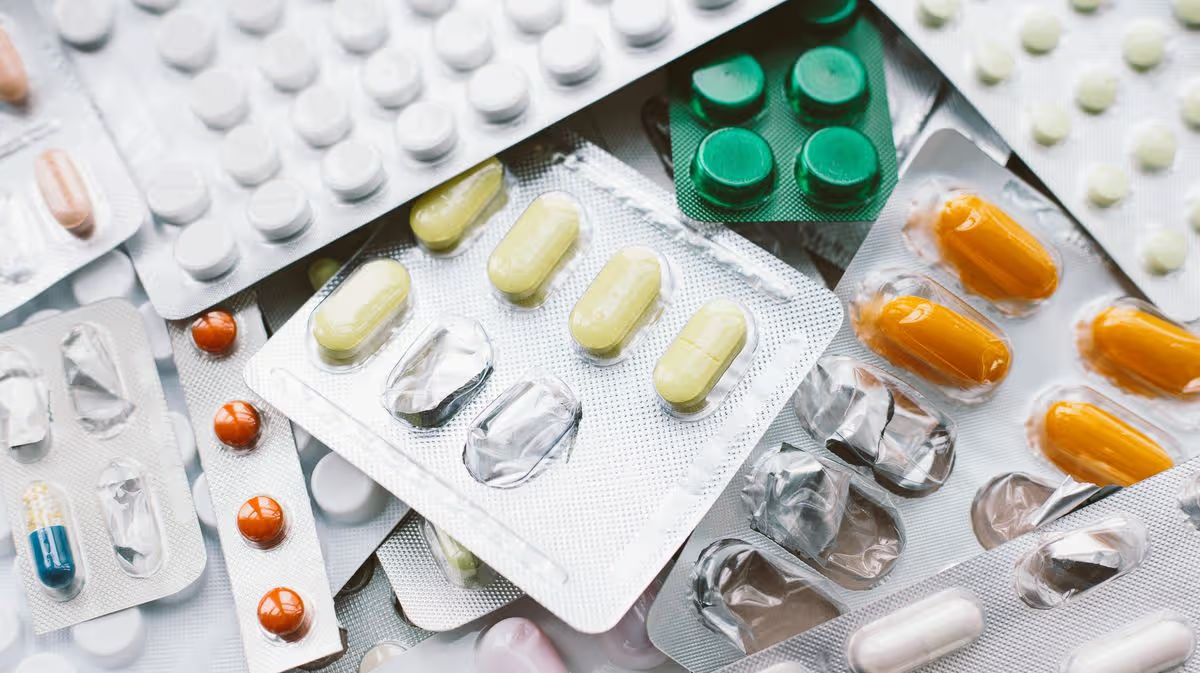
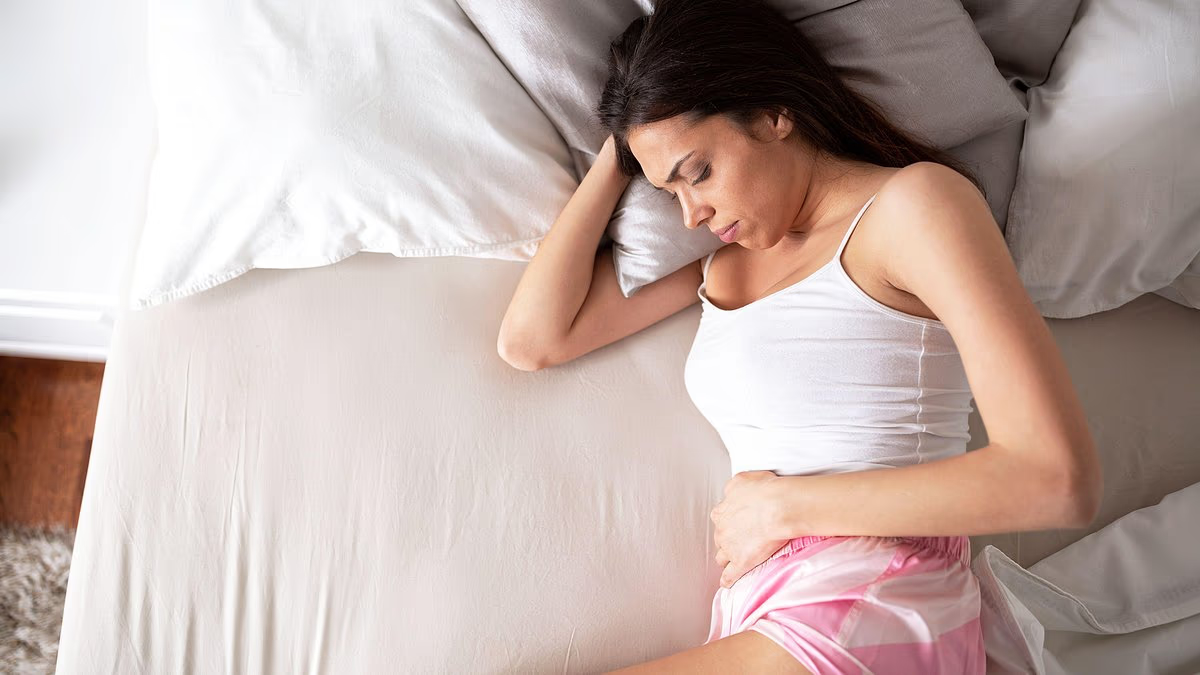
Millions of women are using the wrong pain relief for period cramps, a new study has found.Analysis of 211 million receipts from a high street retailer found paracetamol was the most common painkiller bought alongside tampons and sanitary towels.However, experts suggest that ibuprofen could be a more suitable option for many women, as it is more effective at tackling muscle cramps associated with menstruation.The researchers say that their findings reveal the 'scale and impact' of period pain and how people actually manage it - which they has been severely understudied. Professor James Goulding from Nottingham University, an investigator on the study, told the BBC: 'I don't think I'm going out on a limb here by saying that if men got period pain, we'd know a lot more about it by now.'The analysis of data from 3.1 million shoppers between 2006 and 2015, found that half of menstrual product transactions also included a pain product, the study published in PLoS Digital Health.Of those pills, around two–thirds were paracetamol–based and the other third being ibuprofen.Experts though say that for period cramps the anti–inflammatory drug, ibuprofen, is the better choice – as per NHS guidance. Analysis of 211 million receipts from a high street retailer found paracetamol was the most common painkiller bought alongside tampons and sanitary towelsThis is because it blocks the production of prostaglandins – the chemical responsible for causing the cramping contractions of muscles in the womb.Whereas paracetamol works primarily in the brain to block pain signals, making it a good choice for headaches. Most often, cramping is a normal part of the menstrual cycle when the womb muscle contracts to help shed its lining as a period.During this time the body makes hormone–like substances, called prostaglandins, but higher levels have been linked with more–severe menstrual cramps.It is best to start taking ibuprofen the day before, or several days before, a period or pain is expected – before the body produces prostaglandins – says the charity Endometriosis UK.Survey data suggests that seven in ten British women will experience 'debilitating' period pain for almost four solid years of their life, according to researchers.And an overwhelming 78 per cent of those will have been told by a medical professional that it is completely normal to have discomfort every month.A study by OnePoll of 5,000 women found the average sufferer will have three days of pain a month, equivalent to 1,350 over 450 periods.One in ten (9 per cent) say their period pain is excruciating, while 24 per cent describe it as an intense, sharp, stabbing feeling.And 47 per cent find their periods particularly debilitating – with 31 per cent calling them unmanageable and 48 per cent admitting they lack any energy.