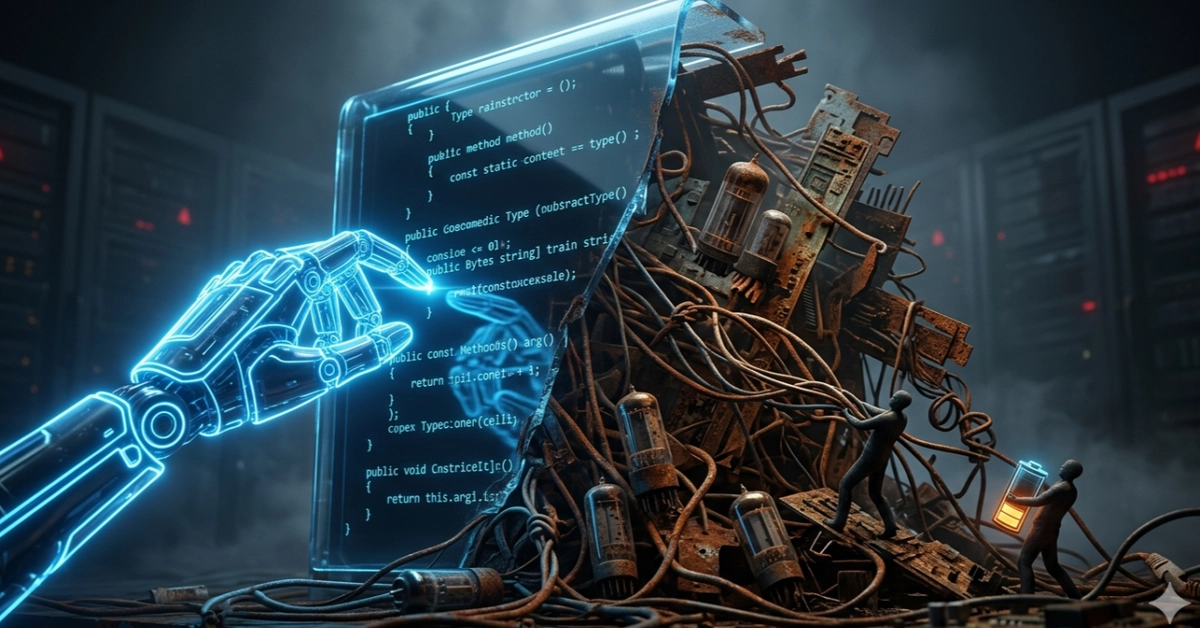
The other day, I was sitting in front of my screen with a cup of coffee, looking at lines of code, and thinking about how fast our industry has transformed over the last few years. Especially right in the heart of the Microsoft .NET ecosystem a space traditionally known for its strict discipline, corporate structure, and type safety something is quietly fracturing beneath the surface. With AI entering our daily workflows, the tech world fell into a beautiful illusion. We all thought we had suddenly gained superpowers. But there is a massive "open secret" we’ve been sweeping under the rug lately: The job gets done, the UI looks great, but what exactly are we leaving behind in the codebase?
Remember the old days? The learning curve for a junior developer was painful but incredibly rewarding. Grasping object oriented programming, engraving SOLID principles into your brain, and figuring out why and where to use companion technologies like Redis, RabbitMQ, or SignalR took nights of trial and error. Today, you just open a prompt window right inside your IDE, and like a magic wand, a massive module unfolds in seconds. For our junior colleagues, this feels like an incredible speed boost. It even allows them to tackle tasks way above their pay grade. But the flip side is quite dark. They finish the job without truly understanding the workflow or knowing why a specific piece of code lives where it lives, falling into a thoughtless copy-paste cycle. In the end, code quality is reduced to a single question: "Does it work?" If it does, no one cares about the digital spaghetti underneath. But software engineering isn't just about saving the day; it's about building a sustainable future.