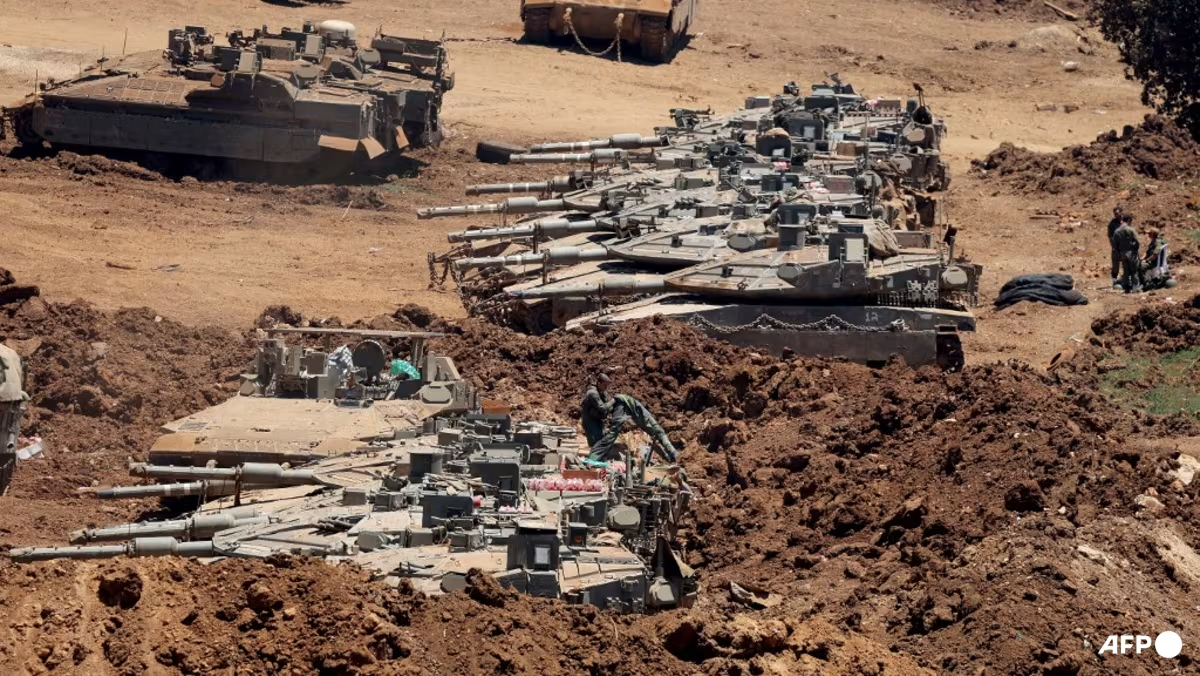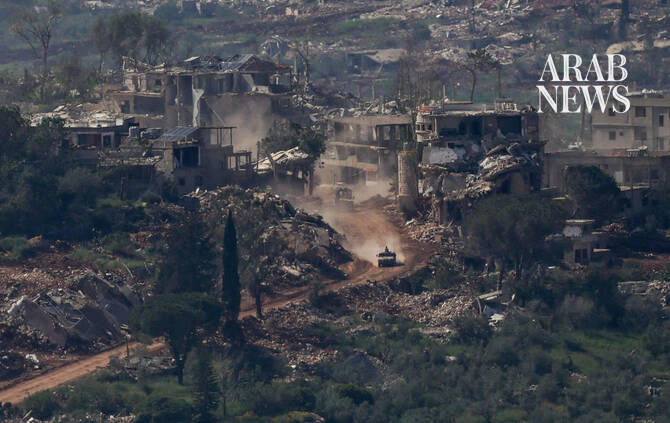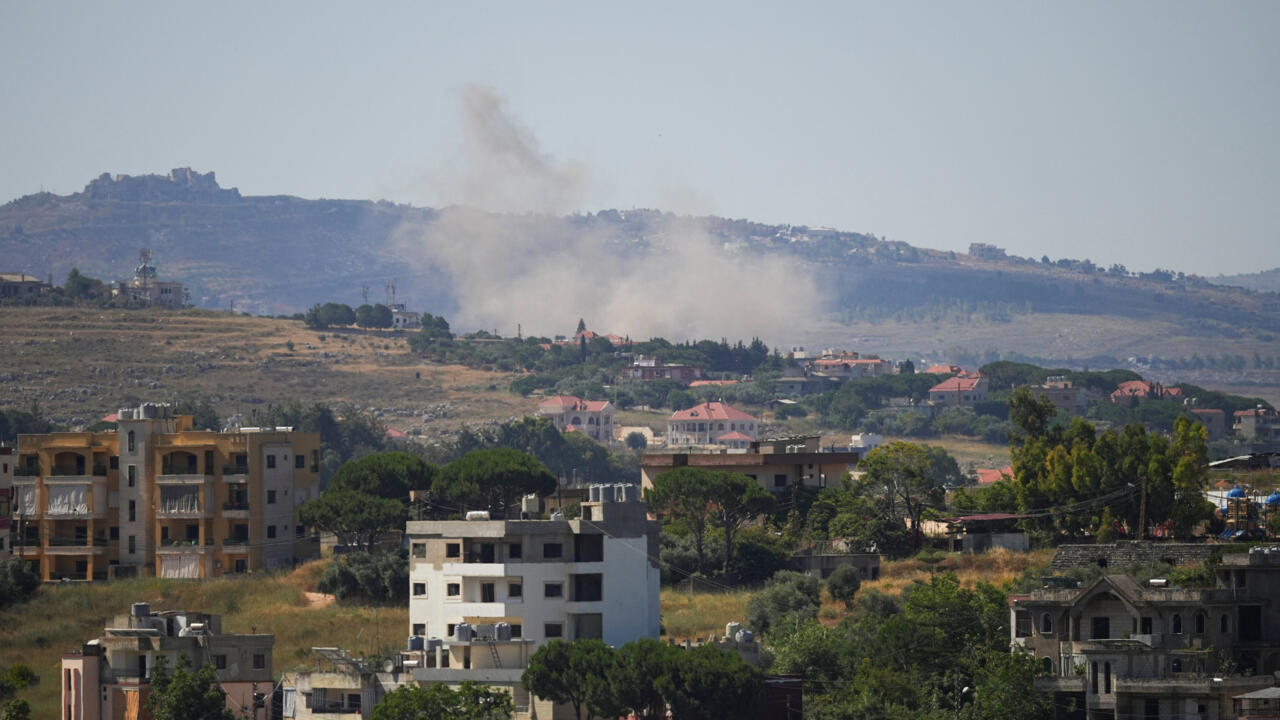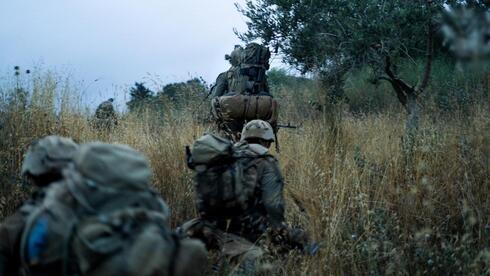
Defense Minister Israel Katz says the IDF will remain in security zones in Lebanon, Syria and Gaza without a time limit, but commanders still lack clarity on where troops will stay, what rules of engagement will apply and whether gains against Hezbollah can be preserved“Prime Minister Benjamin Netanyahu and I are leading a clear policy stating that the IDF will remain in the security zones in Lebanon, Syria and Gaza without a time limit, in order to protect the border and Israeli communities from jihadist elements. The area will be cleared of local residents, and all terror infrastructure, above and below ground, including homes in contact-line villages that served as terror outposts, will be destroyed,” Katz wrote in the statement. 3 View gallery Activity in the Nabatieh area (Photo: REUTERS/Stringer)Katz added that this was “the main lesson of the events of October 7.”“Holding the territory and the security zones is one of the IDF’s greatest achievements in the War of Revival, under the decisions and direction of the political echelon,” he said, using the official Israeli government designation for the Iron Swords war. “Therefore, we oppose an IDF withdrawal from Lebanon, despite all the existing pressure and the pressure that will still come. Prime Minister Netanyahu made this clear to U.S. President Trump and other senior American officials, and I also made it clear yesterday to U.S. Secretary of War Pete Hegseth.”Katz said the IDF supports the position on professional security grounds.“If there are elements in the opposition who challenge this security concept and support an IDF withdrawal, let them stand up and say so, so the public can judge between the positions,” he said. “We will not compromise on Israel’s supreme security interest and the defense of our citizens, and we will not withdraw from the security zones. If Iran attacks Israel over the events in Lebanon, we will attack it with full force and make the balance of power very clear.”For now, however, the main focus is on what is close and, in practical terms, what is happening in southern Lebanon. Since the start of the operation in late February, 30 soldiers have been killed in various incidents. At the moment, it is unclear what the IDF has been instructed to do on the ground, and many questions remain unanswered. The fact that soldiers are positioned deep inside combat territory could be critical, and could put their lives at risk.The current situation is that large numbers of IDF troops are deployed across southern Lebanon. From the border to what has been defined as the “yellow line,” forces from regional brigades are securing the area and pushing threats away.The military has also cleared areas, collected weapons and, according to the IDF, eliminated hundreds of terrorists. Current operations are focused on shaping conditions on the ground so that forces can hold the area and push back the threats of anti-tank missile fire and raids toward Israeli border communities.3 View gallery Residents of southern Lebanon (Photo: AP Photo/Mohammed Zaatari)At the same time, the 36th Division, which crossed the Litani River several days ago, is continuing operations to clear the area of Hezbollah’s underground tunnels. That effort is nearing completion.IDF activity in the area continues, and military officials say: “There is no change. We are operating in the area, carrying out raids and clearing the territory.”But this is where strategic questions arise regarding Israel’s activity in southern Lebanon. Cabinet ministers are demanding that Netanyahu not withdraw the IDF from southern Lebanon. The question, however, is what those ministers mean.Do they mean all the points where the IDF is currently positioned, even beyond the yellow line? If so, will the IDF be able to use fire against Hezbollah’s renewed buildup?3 View gallery IDF soldiers in southern Lebanon (Photo: IDF)For the IDF, it is highly significant whether it is operating in an area that has not yet been stabilized and where forces are not authorized to carry out raids. In other words, the forces’ lack of mobility creates a risk for the soldiers.Another question is what will happen if the IDF is ordered to withdraw back to the border of the “yellow line.” In that case, will residents of southern Lebanon be allowed to return to the villages evacuated during the fighting? And will those residents be allowed to bring heavy machinery with them to rebuild the infrastructure that was destroyed?From the IDF’s perspective, it is crucial to know whether troops will be able to strike an armed person identified inside a village.At the same time, another question is whether the IDF will establish permanent posts in the territory it holds, in addition to the five permanent points that already exist, or whether the military presence will take the form of raids into certain areas for periods of 36 to 48 hours.There is also the question of what will become of declarations about disarming Hezbollah in southern Lebanon, and what border line northern residents will actually see in front of them.All these questions remain unanswered for now. As time passes and the issues remain unresolved, the uncertainty poses a danger to the forces on the ground and, of course, to residents of northern Israel.During 108 days of fighting since the start of Operation Roaring Lion, the Northern Command carried out a series of significant operations to weaken Hezbollah. Precisely because of the political directive under which the IDF avoided strikes in Beirut, the military deepened its activity inside the infrastructure Hezbollah had built over years in southern Lebanon.Even if that activity stops now, the IDF’s achievements are significant. But without clear instructions that preserve those gains, the military could very quickly find itself back in the situation that existed before the maneuver began in February.It is important to stress that, from the IDF’s perspective, there is currently no change on the ground. Forces are acting to remove threats, and strikes are carried out where needed. In addition, residents of southern Lebanon are not currently returning to villages where the IDF is present.Any change will depend on instructions from the political echelon and on the agreement whose precise content, at this stage, remains unknown.
Israel vows to hold security zones deep in Lebanon, but key questions about IDF positions remain
Defense Minister Israel Katz says the IDF will remain in security zones in Lebanon, Syria and Gaza without a time limit, but commanders still lack clarity on where troops will stay, what rules of engagement will apply and whether gains against Hezbollah can be preserved
1,019 words~5 min read