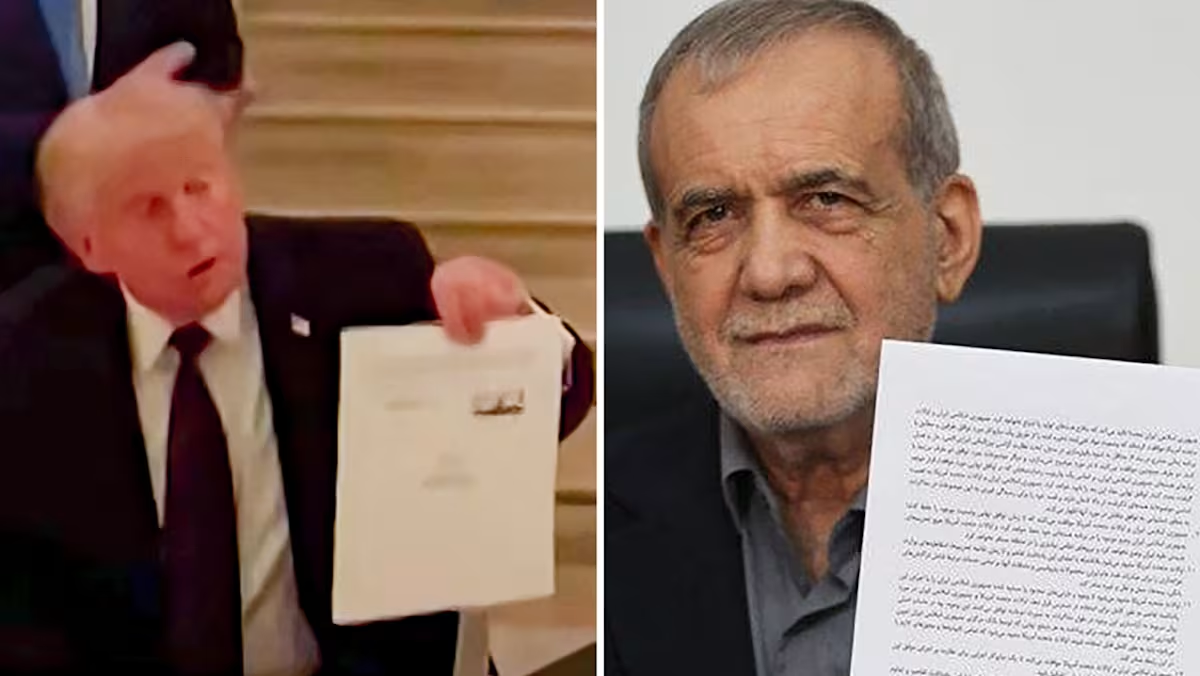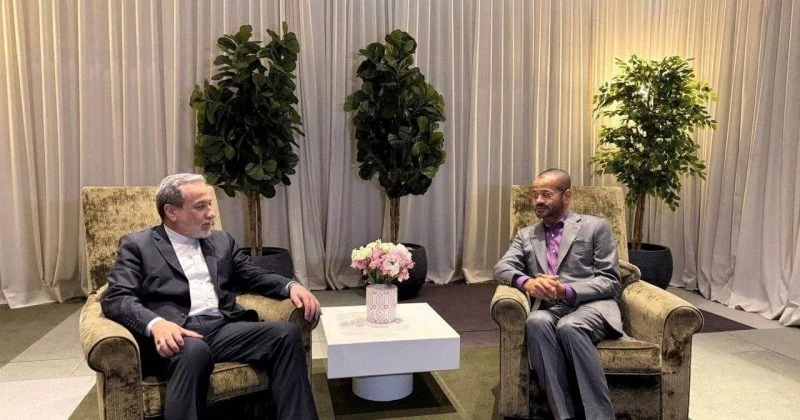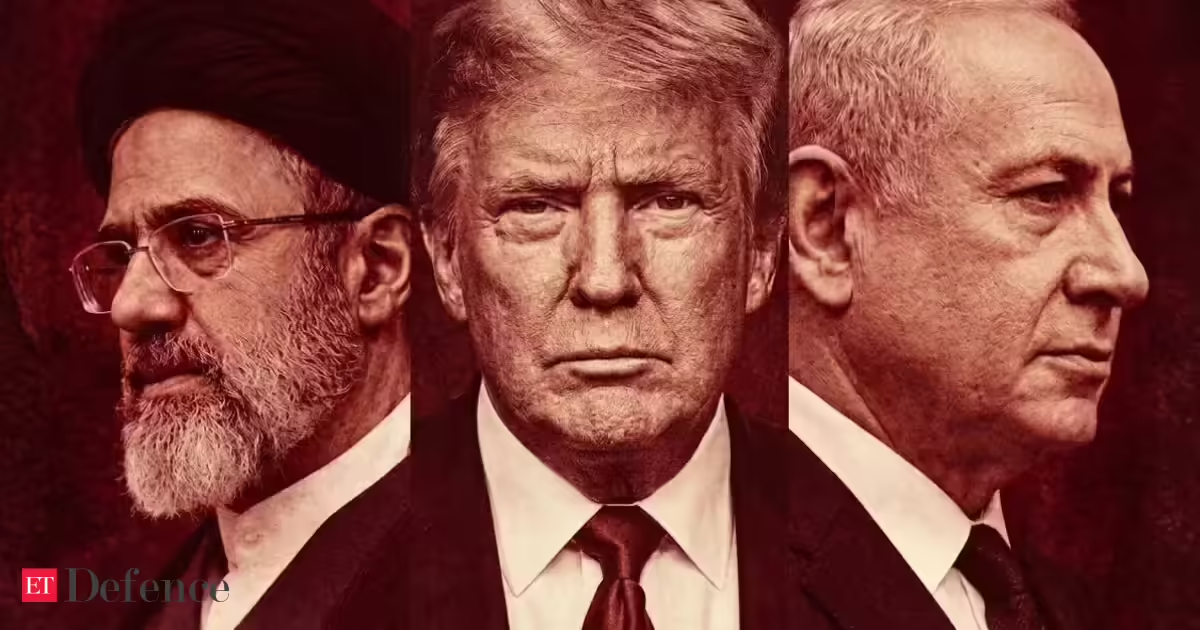
The guns may have fallen silent in West Asia, but the harder part could just be beginning.After more than three months of fighting that disrupted global energy supplies, rattled financial markets and brought West Asia to the brink of a wider regional conflict, the United States and Iran announced a peace agreement on Sunday that both sides hope will end the war for good.US President Donald Trump declared on Truth Social that "The Deal with the Islamic Republic of Iran is now complete," while Iranian Deputy Foreign Minister Kazem Gharibabadi confirmed the framework from Tehran. Pakistani Prime Minister Shehbaz Sharif, who helped mediate the talks, said a formal signing ceremony is expected in Switzerland later this week.Also read: US and Iran reach deal to end war, Trump says Strait of Hormuz to open on FridayYet the agreement's most consequential provision may not be the ceasefire itself.At the heart of the framework is a 60-day period during which Washington and Tehran are expected to negotiate the most difficult issues left unresolved: sanctions relief, Iran's nuclear programme, reconstruction, monitoring mechanisms and regional security concerns.The ceasefire is signed. The real negotiations start nowThe 60-day window emerged from a memorandum of understanding first reported in May by Axios and later confirmed by Reuters through multiple sources familiar with the negotiations.The period will reportedly be used to establish a roadmap for implementing the broader agreement, including sanctions relief and mechanisms to verify compliance by both sides.Among the most sensitive questions is the future of Iran's stockpile of uranium enriched to 60% purity. According to the International Atomic Energy Agency, Iran possesses 440.9 kilograms (972 pounds) of uranium, far beyond civilian requirements and only a short technical step from weapons-grade levels. The issue has already emerged as a major fault line. US Treasury Secretary Scott Bessent had earlier stated that sanctions relief would be tied to Tehran's willingness to address concerns surrounding its highly enriched uranium stockpile. The compressed timeline has already drawn skepticism from veterans of previous nuclear negotiations. Speaking on ABC's This Week on Sunday, former US Deputy Secretary of State Wendy Sherman, who helped lead negotiations that culminated in the 2015 Iran nuclear deal, questioned whether two months would be enough to resolve the outstanding issues."Indeed, it is," Sherman said when asked whether 60 days was sufficient. "I think it's very good, ostensibly. There is a provision that if both parties agree, they can continue after 60 days, and I can assure you, they will not get all of this done in 60 days."Sherman noted that negotiators initially envisioned a six-month process for the 2015 agreement but ultimately spent 18 months reaching a final accord.For negotiators, that challenge underscores the central reality of the agreement: the ceasefire settled the immediate fighting, but not the disputes that helped fuel it.Also read: Trump warns of renewed strikes on Iran if nuclear talks fail, says US could become ‘guardian of the Middle East’A war that kept returningIf the next two months appear uncertain, it is because diplomacy throughout the conflict has repeatedly struggled to keep pace with events on the ground.Since the fighting escalated, mediators and political leaders have periodically indicated progress toward a settlement, only for new disputes and military developments to complicate negotiations.Several rounds of talks were accompanied by public declarations that a breakthrough was near. Yet disagreements over sanctions, security guarantees, military operations and nuclear restrictions repeatedly resurfaced.That history has made analysts cautious about declaring the conflict resolved.Reuters noted in earlier reports that the Trump administration had on multiple occasions suggested an agreement was close, only for Iranian officials to dispute or downplay those claims. Each diplomatic breakthrough was followed by difficult discussions over implementation, verification and competing interpretations of what had actually been agreed.The result has been a conflict marked not only by military confrontation but also by recurring efforts to secure a lasting political settlement.Also read: A history of Iran's nuclear programme and tensions with the US as an interim deal is reachedThe obstacles that still stand in the wayEven before the agreement is formally signed, negotiators face a list of issues that have complicated previous efforts to end the conflict.One recurring challenge has been the broader regional dimension of the crisis. Military operations involving Iran-backed groups and Israeli forces repeatedly overlapped with US-Iran diplomacy, creating new points of tension at sensitive moments in negotiations.Israeli military activity in Lebanon and elsewhere in the region has frequently emerged as a concern for Iranian officials, who have argued that broader regional security issues cannot be separated from the diplomatic process.The issue resurfaced even as negotiators moved toward a final agreement. According to a source cited by NewsNation, a fresh round of Israeli strikes in Beirut was creating complications in efforts to finalise the deal. Iran has previously linked the durability of its ceasefire commitments to the maintenance of the separate Israel-Lebanon truce.The agreement has also faced criticism from some Israeli political figures. National Security Minister Itamar Ben-Gvir said on Sunday that "Trump's agreement does not bind us" and argued that Israel would continue responding militarily to threats from Lebanon. While Ben-Gvir does not determine Israeli foreign policy, his remarks highlighted the regional tensions that negotiators may struggle to isolate from the US-Iran track.Another unresolved question is whether both sides can agree on a credible system for monitoring compliance. Previous negotiations have stumbled over disagreements concerning verification, implementation timelines and what constitutes a violation.Sherman said any final agreement would require an extensive team of specialists, including "nuclear physicists, treasury experts, sanctions experts, commerce experts, lots of lawyers, intelligence assets, to really get such a deal done."She also pointed to the challenge facing US negotiators, describing Iranian Foreign Minister Abbas Araghchi as "very tough" and "very smart." Sherman further argued that recent developments inside Iran may have strengthened hard-line elements within the country's political establishment, potentially complicating efforts to secure a durable settlement.Those issues now move to the centre of the talks.Also read: Trump veers toward exit in Iran war but risks loomWhy the world is watching HormuzThe stakes extend far beyond Washington and Tehran.Throughout the conflict, the Strait of Hormuz became a symbol of the war's global consequences. Roughly one-fifth of the world's oil and liquefied natural gas trade passes through the narrow waterway linking the Persian Gulf to international markets.Disruptions to shipping sent energy traders scrambling and contributed to sharp swings in oil prices. Concerns over supply security reverberated across Asia, Europe and North America, raising fears of renewed inflation and economic uncertainty.Markets reacted swiftly to Sunday's announcement. Oil prices fell as investors wagered that a durable ceasefire could restore stability to one of the world's most important energy corridors.Yet the uncertainty surrounding the 60-day negotiating period continues to temper optimism. While traders welcomed the prospect of shipping resuming through Hormuz, analysts known to Reuters noted that the most contentious issues — from uranium stockpiles to sanctions relief and verification mechanisms — remain unresolved.Sherman's assessment suggests the 60-day period may ultimately prove less a deadline for a final settlement than the opening phase of a much longer negotiating process.A formal agreement may have opened the door to peace, but the next 60 days will determine whether the ceasefire becomes a lasting settlement or merely the latest pause in a conflict that has repeatedly tested the limits of diplomacy.The clock has not yet run out. For Washington, Tehran and the wider West Asia, it has only just started.
A 60-day clock starts ticking on the US-Iran peace agreement
A peace agreement between the United States and Iran has been announced. This marks the end of a period of intense fighting. The core of the deal involves a 60-day negotiation window. During this time, critical issues like sanctions relief and Iran's nuclear program will be discussed.
1,234 words~6 min read