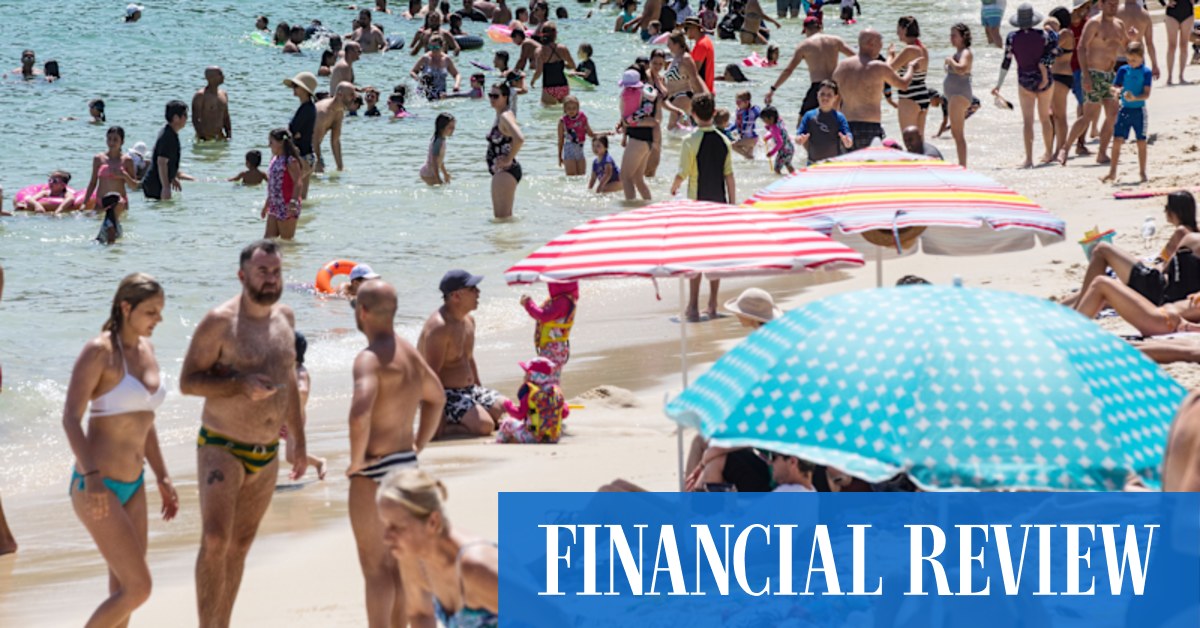
It appears most Aussies share one thing in common when they go on holiday - they keep checking their work emails. It’s either that or they’re returning from their getaways even more tired than when they left, as they struggle to really switch off. Holidays are a luxury to most people, and despite the cost of living pressures, Aussies are ensuring they’re setting money aside to go on that long-awaited and much-needed weekend away.However, new research from Mudgee Region Tourism reveals that while the point is to switch off, 59 per cent are checking work emails, 41 per cent feel guilty doing nothing while on holiday, and 64 per cent have come home from holiday more tired than when they left.Clinical psychologist Dr Maria-Elena Lukeides described the checking of work emails outside of working hours as “anxiety-driven.”“The reason we go on holidays is to actually get away to be somewhere safe, to have a sense of not needing to worry, not needing to stress, not working to deadlines,” clinical psychologist Dr Maria-Elena Lukeides told news.com.au.“And yet because we are constantly worried, even that slight [email] check, now means that whether I action anything or not, I’ve now devoted some brain space to work in a space that I on purpose paid a lot of money to escape.”Morgan McCormack from Sydney’s inner west, admitted that when escaping to the NSW to QLD border for a mini getaway to visit family, she never truly unwinds. “A two-day weekend just isn’t enough,” she told news.com.au.“Even if you’re leaving Friday - you usually get there pretty late, so a two-day turnaround to go anywhere almost feels counterproductive.” Like many Aussies, the 26-year-old leads a busy life - between studying for her master’s degree in International Sports Business and working full-time as a school administrative officer - a weekend away is crucial to help her reset.She also said she’s often hesitant to ask her boss for a mental health day. And she’s not alone with the research revealing 59 per cent feel too uncomfortable to tell their boss they need a mental health day - rising to 64 per cent of Millennials.All data from the survey is based on 1,018 Australians.Rest RebateIt’s the reason why the Mudgee Region Tourism has today officially launched Australia’s first Rest Rebate - a travel initiative backed by brain science that rewards Aussies for taking the rest they actually need.Simply put, the tourism board has partnered with several properties, including Evamor Valley, Evanslea Luxury Boutique Accommodation and Glenayr Farm, to give travellers a third day for free. You just need to book a Friday and Saturday night at a participating property in the Mudgee Region, and “Sunday night is on us”.“The Mudgee Region has always understood the benefits of slow travel, and now we are able to reward Aussies for turning any weekend into a long weekend,” Beau Kassas, of Mudgee Region Tourism, said.He explained that by removing the cost of the extra night, the Rest Rebate removes one barrier that often stops Aussies from extending their stay and truly switching off. “By focusing on the peace that comes with a slower pace, we aim to change the way Aussies travel - and show how regional travel can be a genuine tool for rest, and a way to address the burnout and exhaustion that so many are experiencing.”The Rest Rebate comes as the tourism board also revealed new research that Australians are running on empty: burnt out, always-on, and returning from holidays more depleted than when they left. Dr Lukeides told news.com.au that burnout is not simply tiredness. She said the World Health Organisation has recognised it as an occupational syndrome that requires structured recovery time, not just a day off.The research revealed 78 per cent of Aussies have gone to work stressed, burnt out or mentally exhausted.“I think it’s getting much worse,” she said. “There’s a sense of fear and uncertainty in our jobs, we know the rates are rising, we know the impact it’s having on (things) such as anxiety, sleep disorders, depression, which then seep into every modality of our lives.” She explained the soothing system, which governs genuine rest through the release of oxytocin, only activates when the brain feels truly safe and unhurried.“ A rushed two-night trip rarely gets us there - three nights in a slow, unhurried environment does,” adding the Rest Rebate is a ‘fantastic initiative’. Mr Kassas said the Rest Rebate isn’t a financial incentive. It’s a reward for taking the time to rest the way your brain actually needs.The Rest Rebate officially launched today with a number of long-weekend travel packages available to book through June, July and August. Terms and conditions apply.
‘On us’: Australia’s first three-day weekend
It appears most Aussies share one thing in common when they go on holiday - they keep checking their work emails.
782 words~4 min read