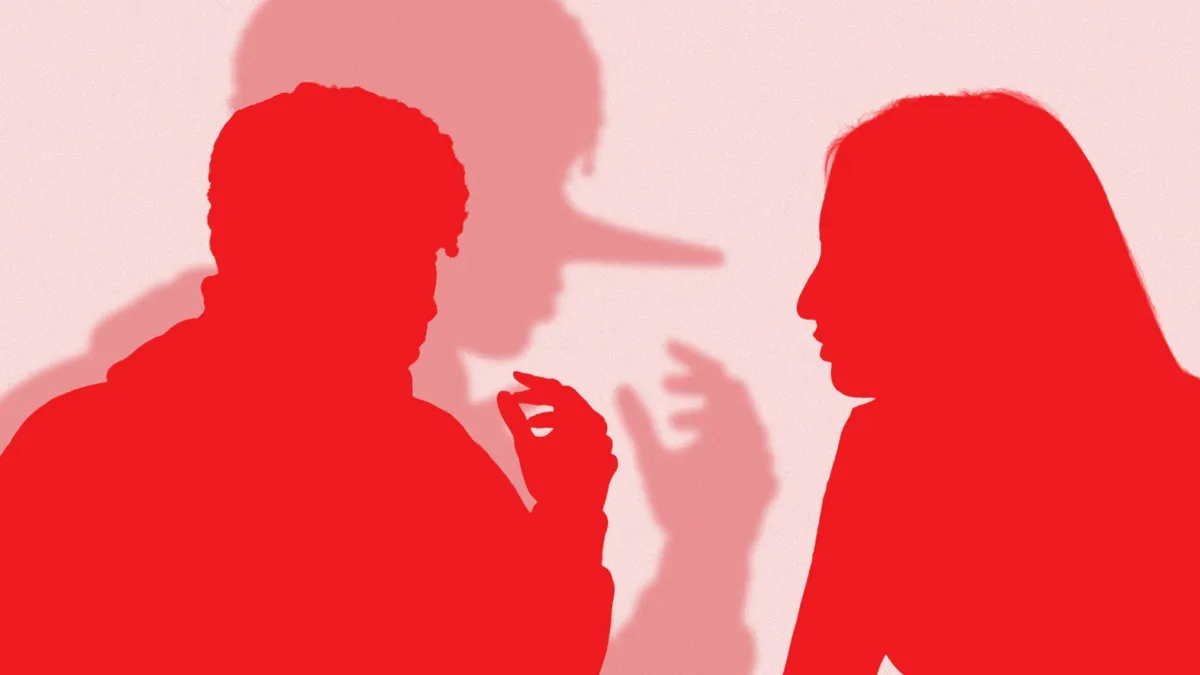
Psychotherapists from Sigmund Freud to Esther Perel have long been fascinated by the secrets we keep and the reasons we keep them. Particularly in romantic partnerships, the choice of what to conceal from each other, and when and why we do so, can shed an important light not only on the dynamic within the relationship, but on our own self-construct and deepest fears.
According to recent research, one of the biggest areas of dishonesty in partnerships is financial. Thirty-one per cent of us are keeping the extent of our credit card debt on the down low. Others – nearly one in eight Brits – admitted to conveniently forgetting to tell their other half about the bank balance they’re saving for a rainy day/divorce.
My own lies to my partner are less “white” and more of a Farrow and Ball Beige. Did I really water the plants in the garden while my wife was away and do I really have no idea how they all could have possibly died on my watch? Did I actually leave her special water bottle in the gym, or is it lost and gone forever? And am I actually on my way, or am I still in the shower?
Emotional currency also plays a big part in our secrets and lies – 48 per cent of British couples avoid difficult conversations to swerve arguments, according to data from the Alzheimer’s Society. And then, of course, there’s infidelity. Research shows that one in five British adults have at some point cheated on a partner.