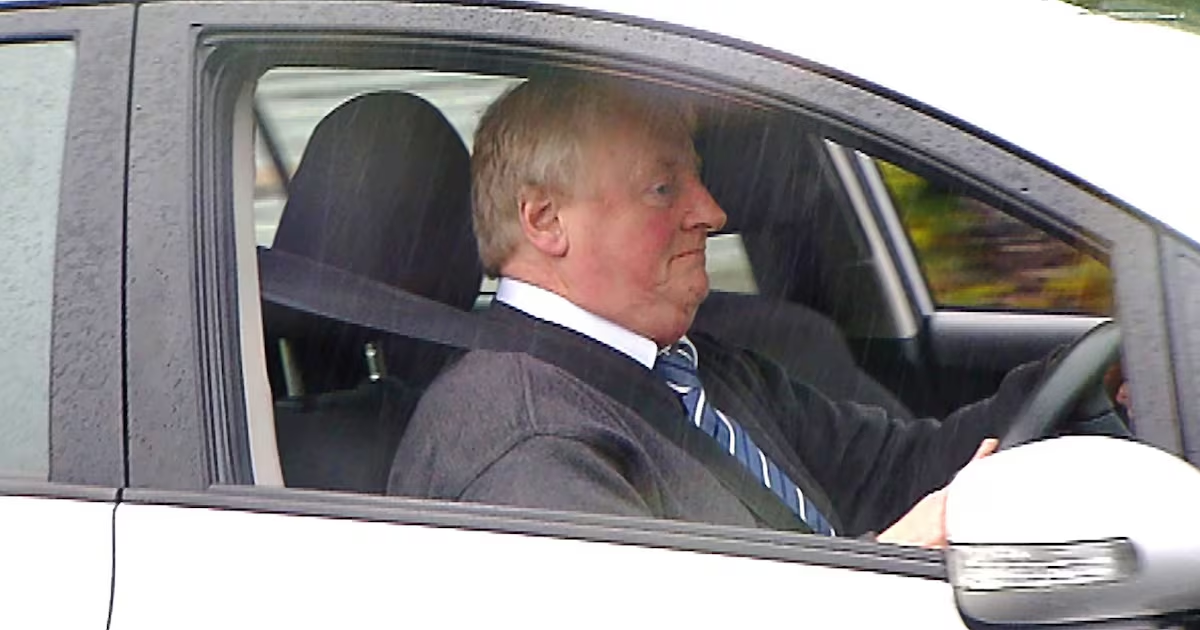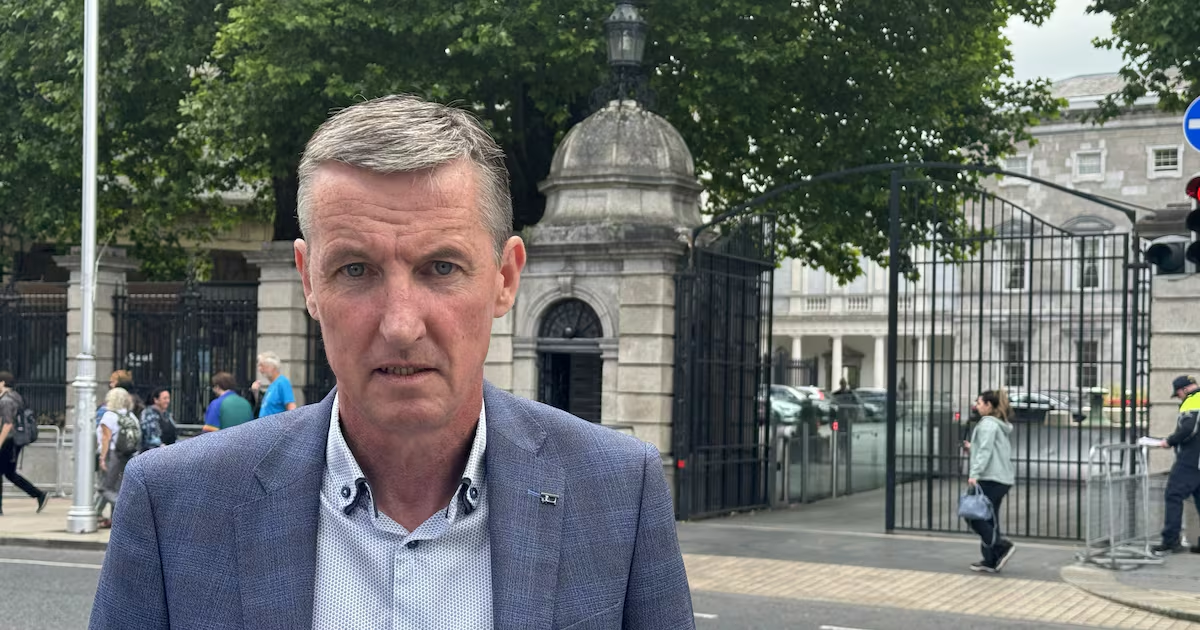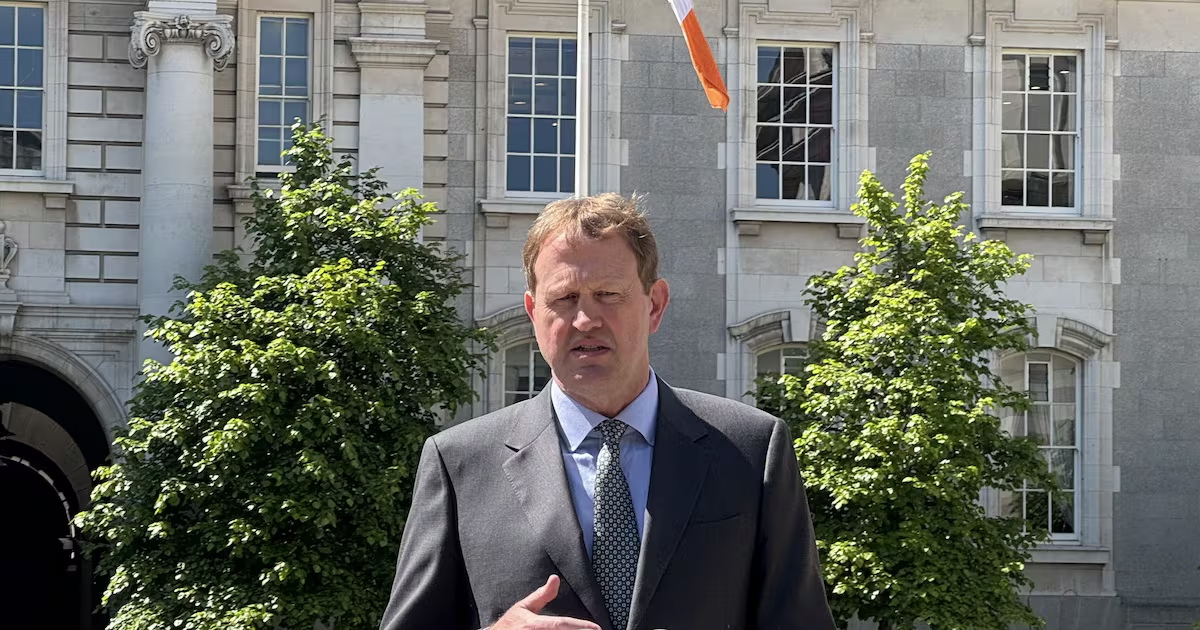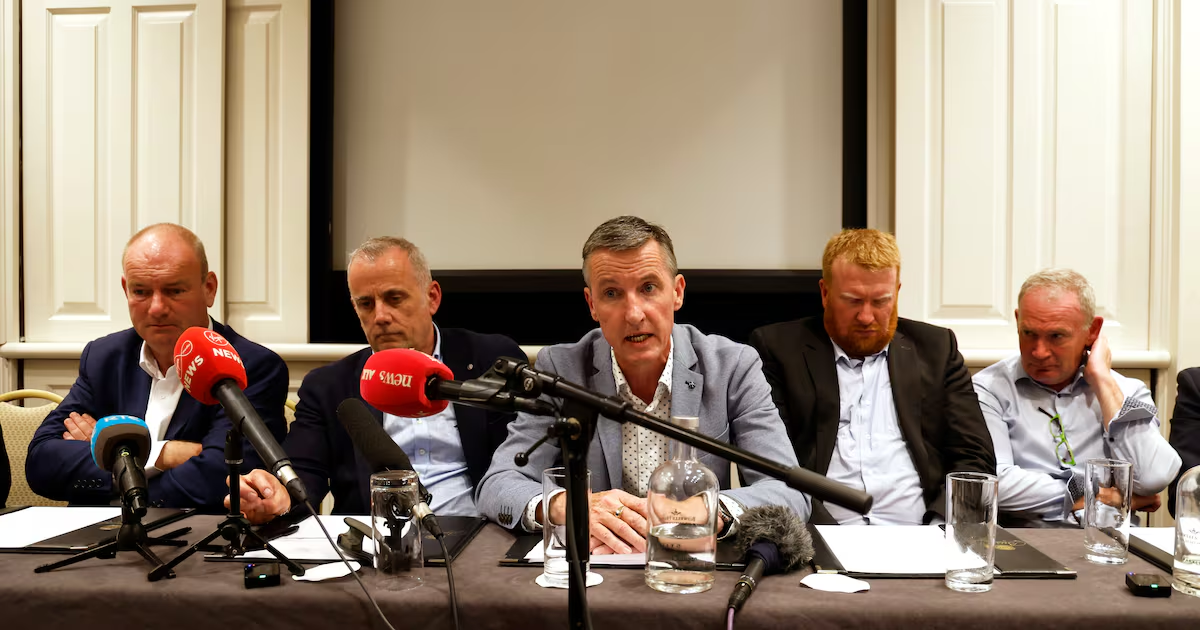
Survivors of serial sex abuser Bill Kenneally are to press Minister for Justice Jim O’Callaghan at a meeting this week to introduce a criminal offence of misconduct in public office, as suggested by the commission of investigation into the scandal.Jason Clancy, whose criminal complaint against Kenneally triggered the events leading to the establishment of the commission, said its chair, retired High Court judge Michael White, clearly identified a deficiency in the legislation.“Judge White found the evidence wasn’t strong enough to merit a charge of perverting the course of justice against senior gardaí in the original investigation in 1987 but there was no other charge available so no criminal prosecution could be taken against them,” he said.“We want to see that gap plugged so we will be pressing Minister for Justice Jim O’Callaghan to introduce a charge of misconduct in public office ... so people who fail to do their job and protect children will be open to criminal sanction.” Clancy and fellow survivors Colin Power, Kevin Keating, Barry Murphy and Paul Walsh, with legal advisers Phoenix Law, are to meet O’Callaghan on Tuesday to discuss the findings and recommendations of the commission report published last week. Another survivor, Simon O’Toole, and his solicitor, Conal McGarrity, will also attend. White, who heard from about 90 witnesses, suggested the Law Reform Commission should look at the possibility of introducing an offence of misconduct in a public office after finding senior gardaí were derelict in their duty.The father of a 14-year-old boy contacted gardaí in 1987 to say his son had been abused by Kenneally, but he did not want to make a formal complaint even though then-acting chief supt Sean Cashman tried to persuade him to permit his son speak to gardaí.Cashman believed he could not pursue a criminal investigation without a formal statement of complaint.He made contact with Kenneally, who subsequently admitted he had abused a boy. Because the abuse did not involve sodomy, Cashman and another officer, then-acting superintendent PJ Hayes, believed it was simply inappropriate behaviour, warned him about future conduct and did not pursue the matter further.White found that Cashman and Hayes, who is deceased, failed “to conduct a proper investigation” and were guilty of “a clear and serious dereliction of duty even by 1987 standards”.The judge noted it was alleged during the commission hearings that Cashman, by failing to properly investigate Kenneally in 1987, had “acted corruptly to gain promotion, engaged in a deliberate cover-up, lied and was guilty of a criminal offence or offences”.“Intent could be inferred if there was evidence of corruptly receiving a reward. Mere failure on the part of a police officer to pursue a matter with a view to a prosecution is not necessarily a criminal offence,” said White, who found no evidence of corruption on Cashman’s part.In the Kenneally case, Cashman had no statement of complaint. The advice of senior counsel was that formal statements of complaints from that boy and two others, as well as their willingness to testify, was required for a successful prosecution.Satisfied that Cashman and Hayes’s behaviour fell short of what was required to warrant a prosecution for intending to pervert the course of justice, the commission sought the advice of counsel on whether an offence of misconduct in public office by omission exists in Irish law.“In other words, can a failure by an officer of An Garda Síochána to properly investigate a serious offence be a crime?” asked White, noting that such an offence existed as a common law criminal offence in England and Wales.[ Victims of Bill Kenneally performed ‘major public service’, says Children’s Rights AllianceOpens in new window ]Legal advice sought by the commission in July 2025 was that the offence of misconduct in public office by omission “does not continue to exist in Irish law”, prompting White to suggest the Law Reform Commission look at it.
Bill Kenneally survivors seek law on misconduct in public office
Victims of Bill Kenneally will review damning report findings with Minister for Justice on Tuesday
643 words~3 min read