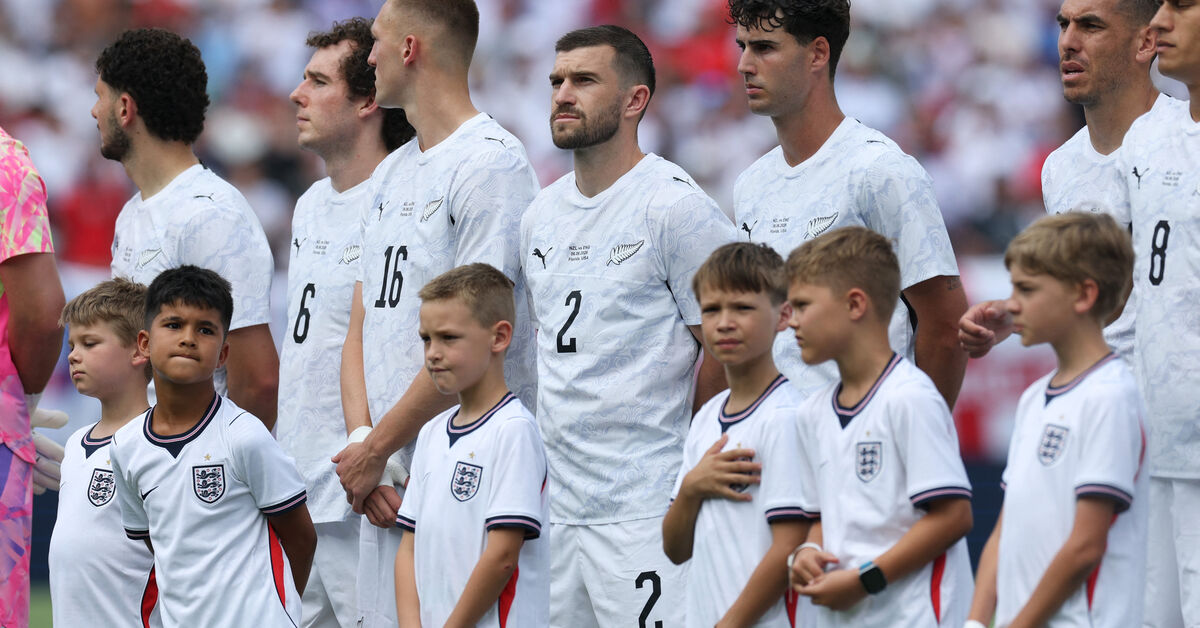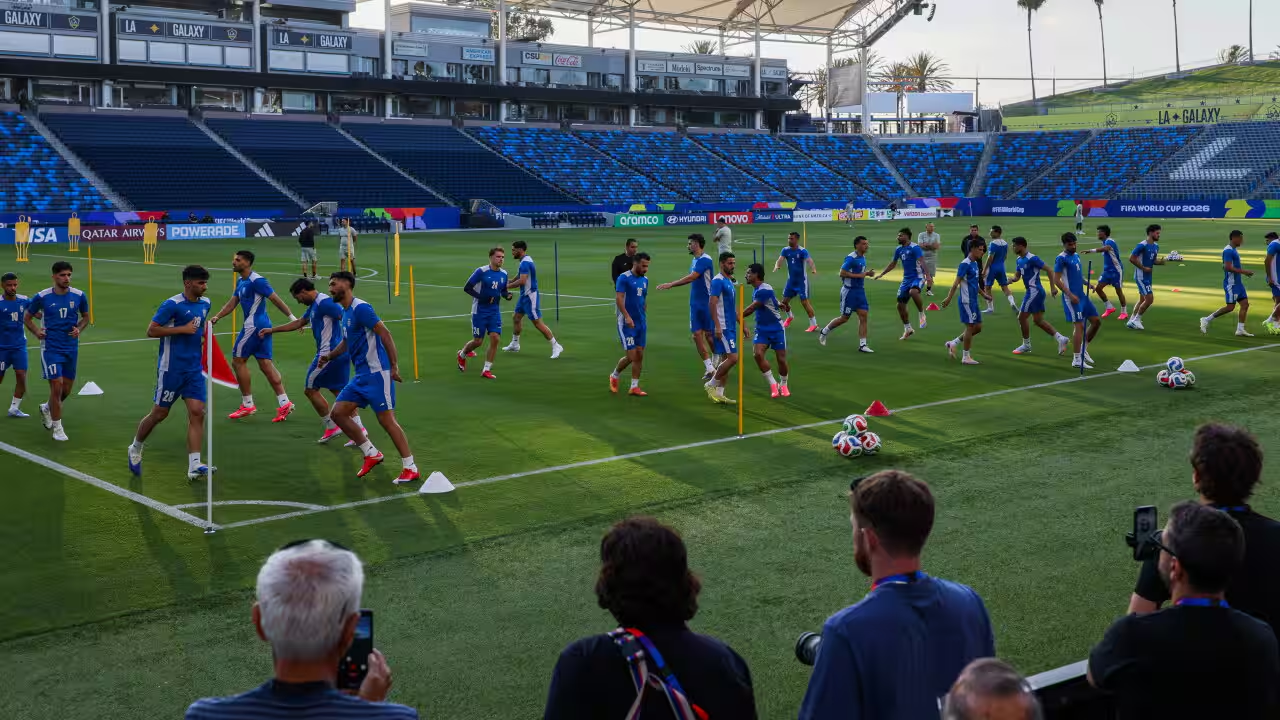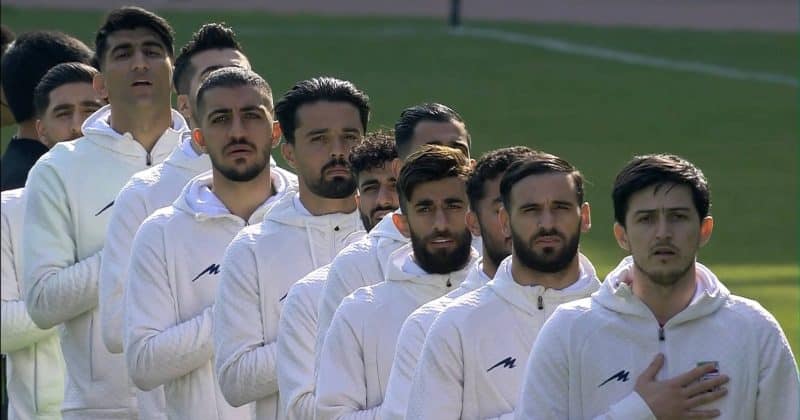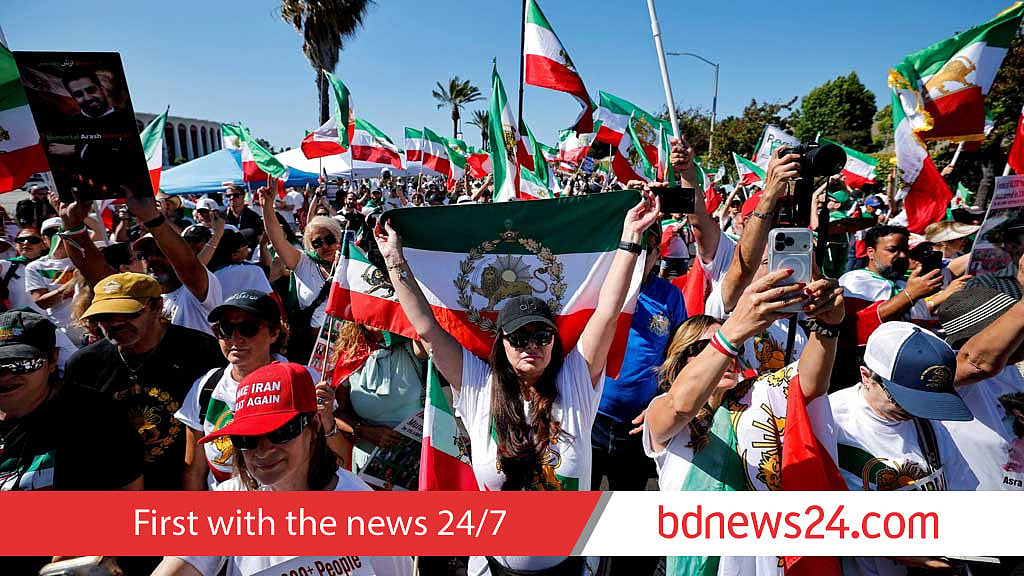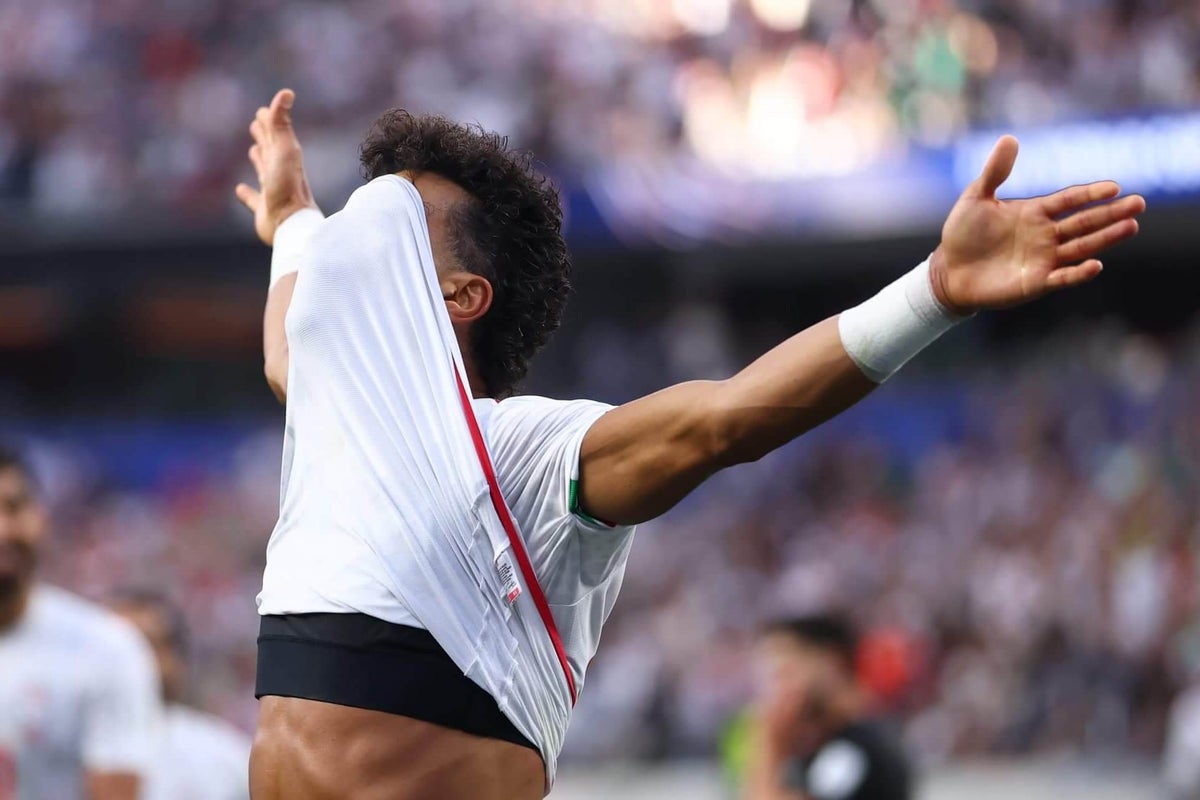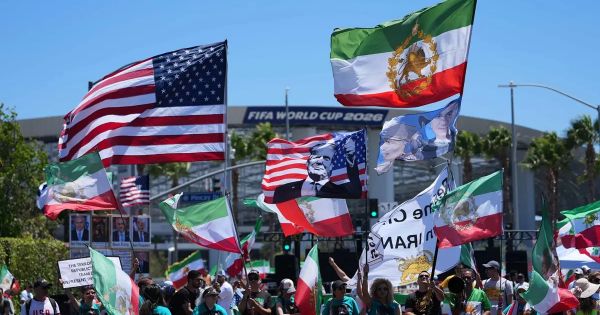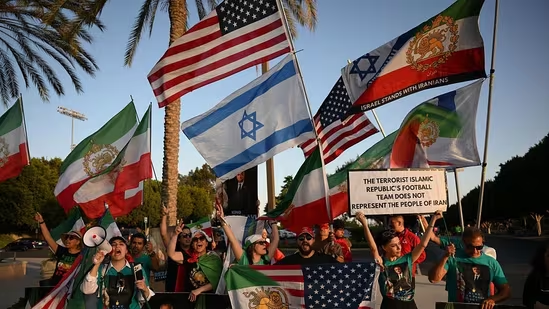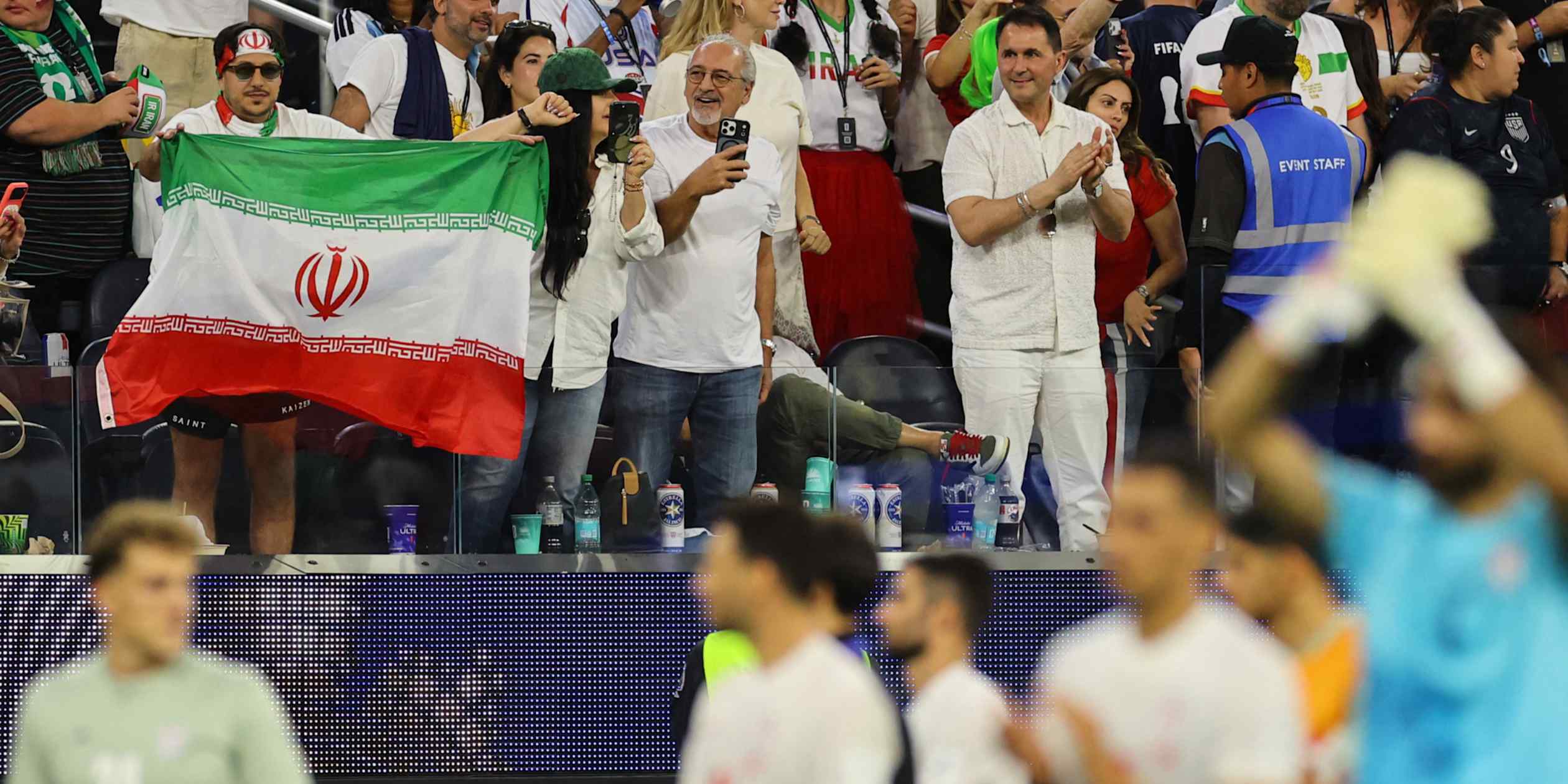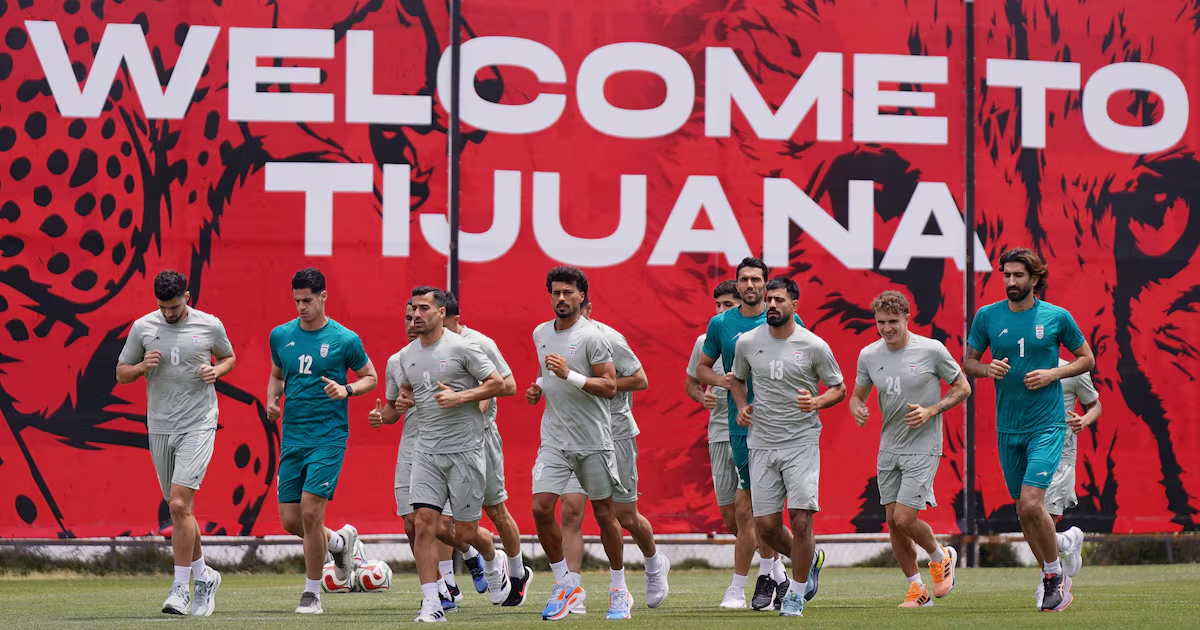
Iran is set to face New Zealand in its opening World Cup match, a day after the US and Tehran signed a peace agreement that ended months of war. The match takes place on Monday in Los Angeles, with a 6pm kickoff, corresponding to 5am GST on Tuesday, and 1pm in New Zealand.The West Coast metropolis is home to the largest Iranian diaspora community in the world, so the city is feeling the political weight of the moment.For a time, it was unclear whether Team Melli would participate in the tournament, or be allowed into the country.US visas for the team were approved only last week, although several members of the delegation – including the head of Iran’s football federation – were denied entry.Iran was also forced to move its training camp from Tucson, Arizona, to Tijuana, Mexico, after authorities indicated that the team would not be permitted to remain in the US between matches. Instead, the squad will fly in and out of the US for each game.Iran’s first two group-stage matches – against New Zealand on June 15 and Belgium on June 21 – will both be played at LA's SoFi Stadium. Iran’s third group-stage match against Egypt will be played in Seattle.Alex Vatanka, an expert on Iran, said there is little indication that President Donald Trump's government views the World Cup as an opportunity for sports diplomacy.“I don’t see any signs that the administration is looking at this as an opportunity to build bridges with the people of Iran,” he said. “This is not two countries at peace – there’s a limit to what you can do on the sports front.”Instead, he argued that Washington should avoid alienating ordinary Iranians. “You’ve got to keep the people of Iran on your side,” he said. “It’s not an anti-American population. That’s probably the biggest tool the US has.”On Sunday, Mr Trump said the US and Iran had signed an agreement to end the war he started alongside Israel on February 28.TehrangelesMore than 500,000 Iranian Americans live in the Los Angeles area, the largest concentration outside Iran. Westwood Boulevard, in west Los Angeles, is packed with Iranian restaurants, cafes and bookstores, and the area is also known as Tehrangeles. The community includes Iranians from different ethnic and religious backgrounds, including Jewish Iranians, Armenians and Assyrians. Many left Iran in the years leading up to the 1979 revolution that toppled the Pahlavi monarchy and brought Ayatollah Ruhollah Khomeini to power.Play00:58Iran faces travel hurdles before World Cup openerWhen the US and Israel launched attacks on Iran in February, hundreds gathered in Los Angeles and other cities in support, viewing the conflict as a possible route to political change in Iran. As the months dragged on, some of that support softened as hopes of regime change faded.Many Iranian Americans are nevertheless expected to protest against the national team’s presence, saying it represents the government rather than the Iranian people.On Wednesday, dozens demonstrated outside Los Angeles City Hall, arguing that Iran’s participation in the World Cup gives Tehran a platform to improve its international image, following decades of human rights violations. They accuse the regime of killing tens of thousands of dissidents, including athletes. Further inflaming tension, Fifa has banned Iran’s pre-1979 Lion and Sun flag from stadiums, classifying it as a political symbol under tournament rules.“I think Fifa has been more politicised this year than any year,” Hoda Katebi, an Iranian-American writer and activist, told The National before the peace deal was announced. “We’re seeing members of the Iranian team and support staff denied visas. We’re seeing, obviously, the United States is currently bombing Iran.”If both Iran and the US team finish second in their groups, they could face each other in Dallas on July 3.Ms Katebi said Iranian Americans' views vary on Monday's match and the players. While many in Los Angeles will protest or boycott the game, other diehard football fans have bought pricey tickets to cheer on their team inside the stadium. Others, including her, sympathise with the players and view them as athletes who need to stay silent. “Will I watch Iran play on TV? Yes. Do I hope Iran advances and gets to play the United States? Yes. And do I want Iran to win that match? Obviously, yes.”
Iran's World Cup opener in Los Angeles comes as US declares peace with Tehran | The National
Protests and tension threatened to turn match into political flashpoint
TL;DRAI
Iran plays New Zealand in LA on June 15, after US-Iran peace deal signed. The match reveals geopolitical tension: 500k Iranian Americans may protest the regime team; FIFA's flag ban shows sports diplomacy remains constrained by political rivalries.
711 words~3 min read