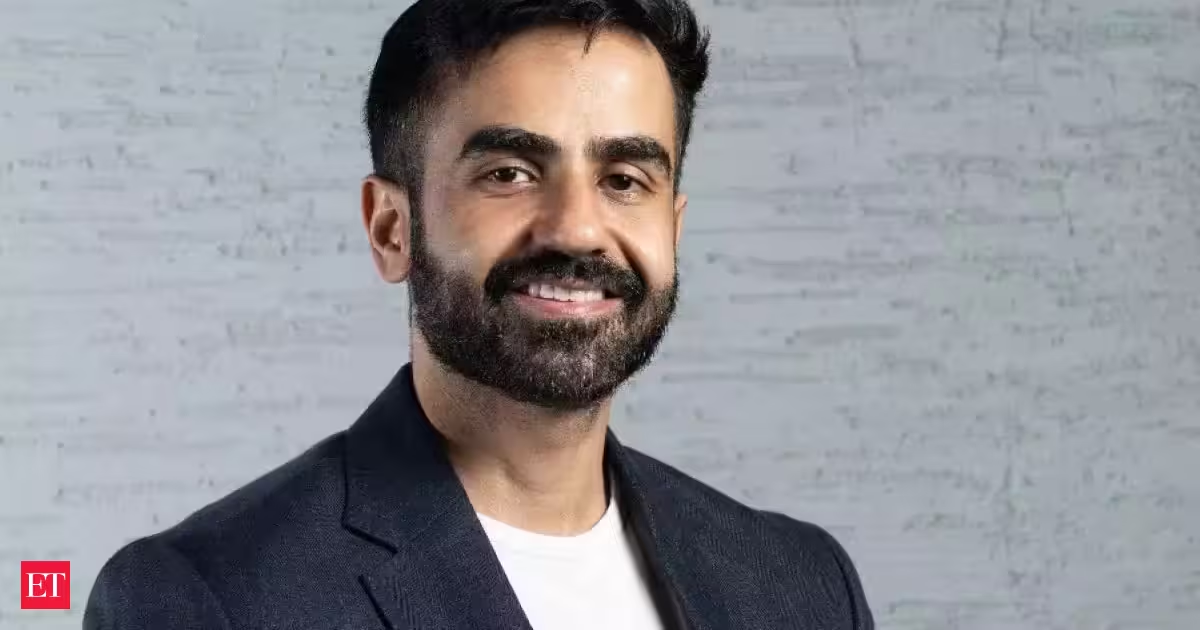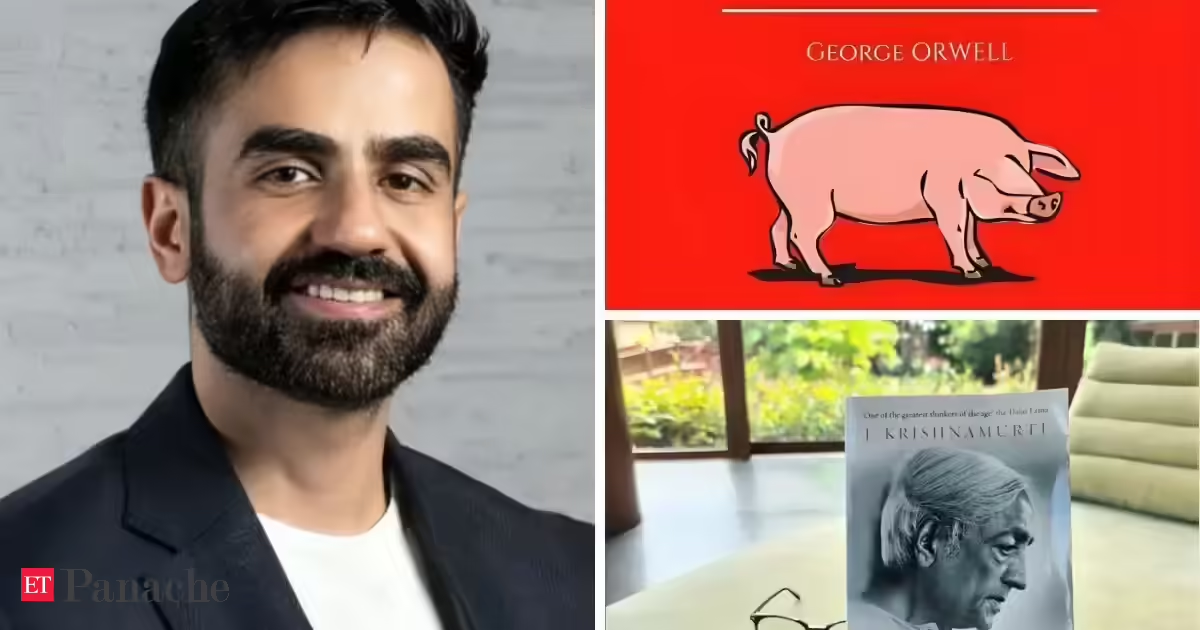
Books are often where investors quietly reveal how they think, not just about money, but about people, power, and uncertainty. Zerodha co-founder Nikhil Kamath’s reading list is less about “tips” and more about how he interprets the world. From Chinese political transformation to philosophy, psychology, and market collapses, his recommendations move across disciplines. What stands out is not just what he reads, but how he reacts to each idea, often turning books into reflections on behaviour, systems, and timing.Deng Xiaoping and the Transformation of China by Ezra F VogelNikhil Kamath described this as a “big book” that took him around two months to finish. He noted that it offered lessons on governance structures where “states and mayors competing works,” and even suggested that systems sometimes need a “variable reward mechanism” where winners get bigger states.One of his more subtle takeaways was about politics itself. He observed that if you want to change something, “don’t forget to praise your predecessor even if you don’t mean it :)” He added that “people want change but don’t like to change,” rating the book 7.5/10 and pointing out how closely its themes mirror today’s world.Trading Game by Gary StevensonKamath said he picked this book up “randomly at an airport” and finished it during a long flight. He described it as a book that views life “through the lens of time,” where what people want keeps changing across days, weeks, and years.He added that “what we wanted yesterday will never be good enough tomorrow,” and what we want tomorrow often resembles what we once left behind. Calling it “very easy to read, more storytelling, less economics,” he rated it 8/10 and described it as “unpredictable, gripping.”You Might Also Like:History of Western Philosophy by Bertrand RussellFor Kamath, this book stood out not just as reading material but as a map of human thought. He called it “good to catalogue summaries of different schools of thought” and rated it 8/10, though he admitted it “takes forever to finish.”He also linked it to his personal curiosity about human behaviour, saying that beyond finance, “it’s definitely psychology for me,” and that the real fascination lies in “figuring out why we are how we are.”On Truth by J KrishnamurtiKamath described this as a book that “doesn’t find truth, but questions truth.” He said it didn’t fully satisfy his “internal need for gratification,” but still left him with “better questions.”He rated it 7.5/10 and noted that the value of the book lies in discomfort rather than answers, as it pushes the reader to rethink what they believe rather than confirm it.You Might Also Like:Freedom from the Known by J KrishnamurtiThis is one of Kamath’s most revisited books. He shared that he has read it “at least 5 times,” and each time it gives him a “totally different takeaway.” He described it as extremely simple to read, something you can finish in “3 hours in one sitting,” but powerful in its effect. It may not give many answers, he said, but it definitely gives “the right questions.” He called it a top 10 all-time favourite, rating it 10/10.He added that “everything we believe in is preconditioning,” and suggested that real understanding requires looking beyond that conditioning.Animal Farm by George OrwellKamath called this an “incredible book” that explains “the cyclical nature of everything.” His key reflection was that what has happened before “will probably happen again and again.”He emphasized that studying the past is just as important, “if not more,” than trying to predict the future. He also advised readers not to stop early, saying, “don’t stop after the first 30 mins, you’ll see why after you finish.” He rated it 9/10 and called it a short but powerful read.You Might Also Like:When Genius Failed by Roger LowensteinKamath highlighted a simple principle from this book: “experience without theory over theory without experience.” The book, he explained, is about how some of the smartest minds came together to build models for investing and still ended up losing everything. His takeaway was to “ignore the noise” of people, marketing, and branding and instead focus on understanding the product or company itself.He called it an “easy read, story kinda thing, no maths,” and rated it 7/10.
7 book recommendations by Zerodha’s Nikhil Kamath on topics of money, politics and psychology you should add to your reading list
Nikhil Kamath shares his reading list, offering insights into his thinking on people, power, and uncertainty. His book choices span governance, philosophy, and market collapses. Kamath's reflections highlight lessons on human behavior and systems. He emphasizes understanding the past and questioning beliefs. His recommendations provide a unique perspective on navigating the world.
700 words~3 min read