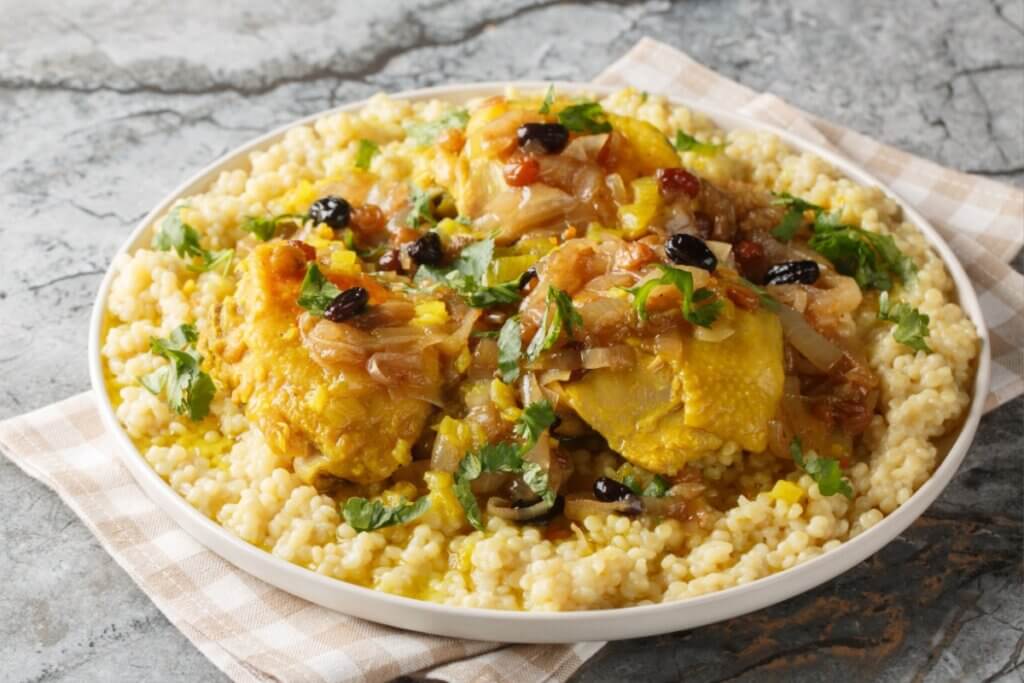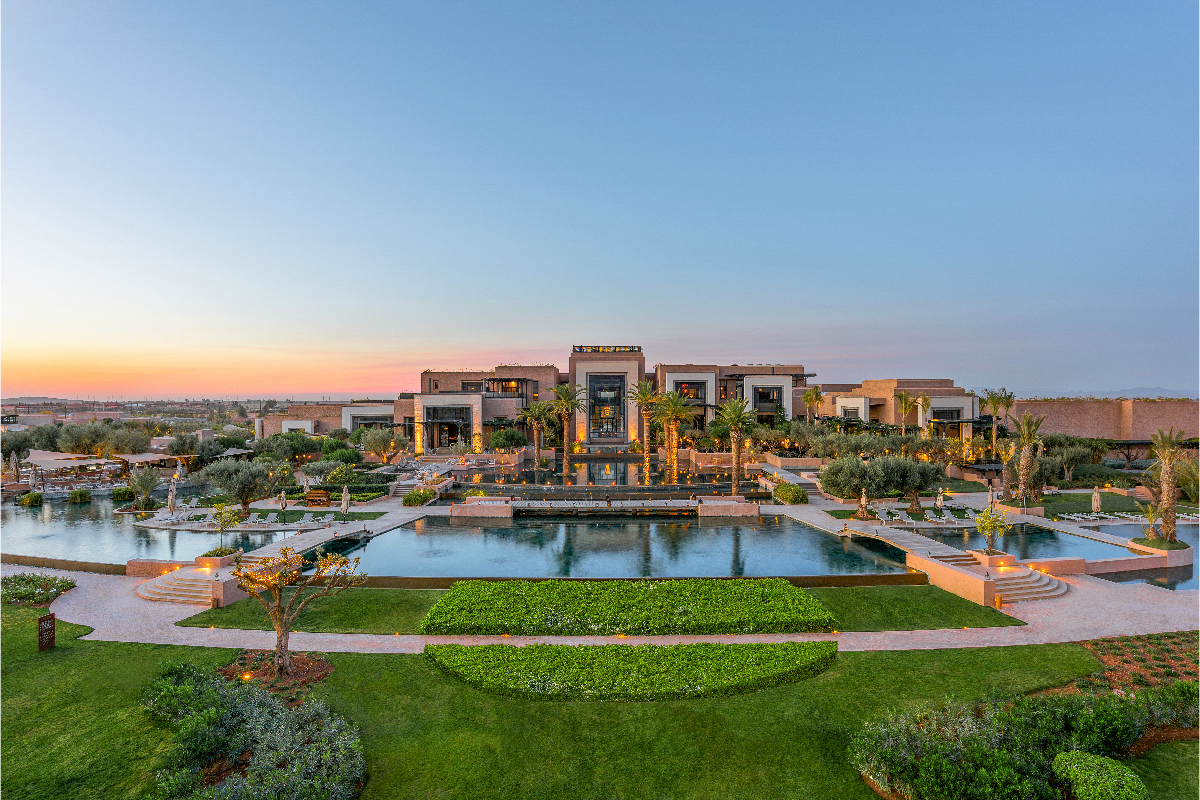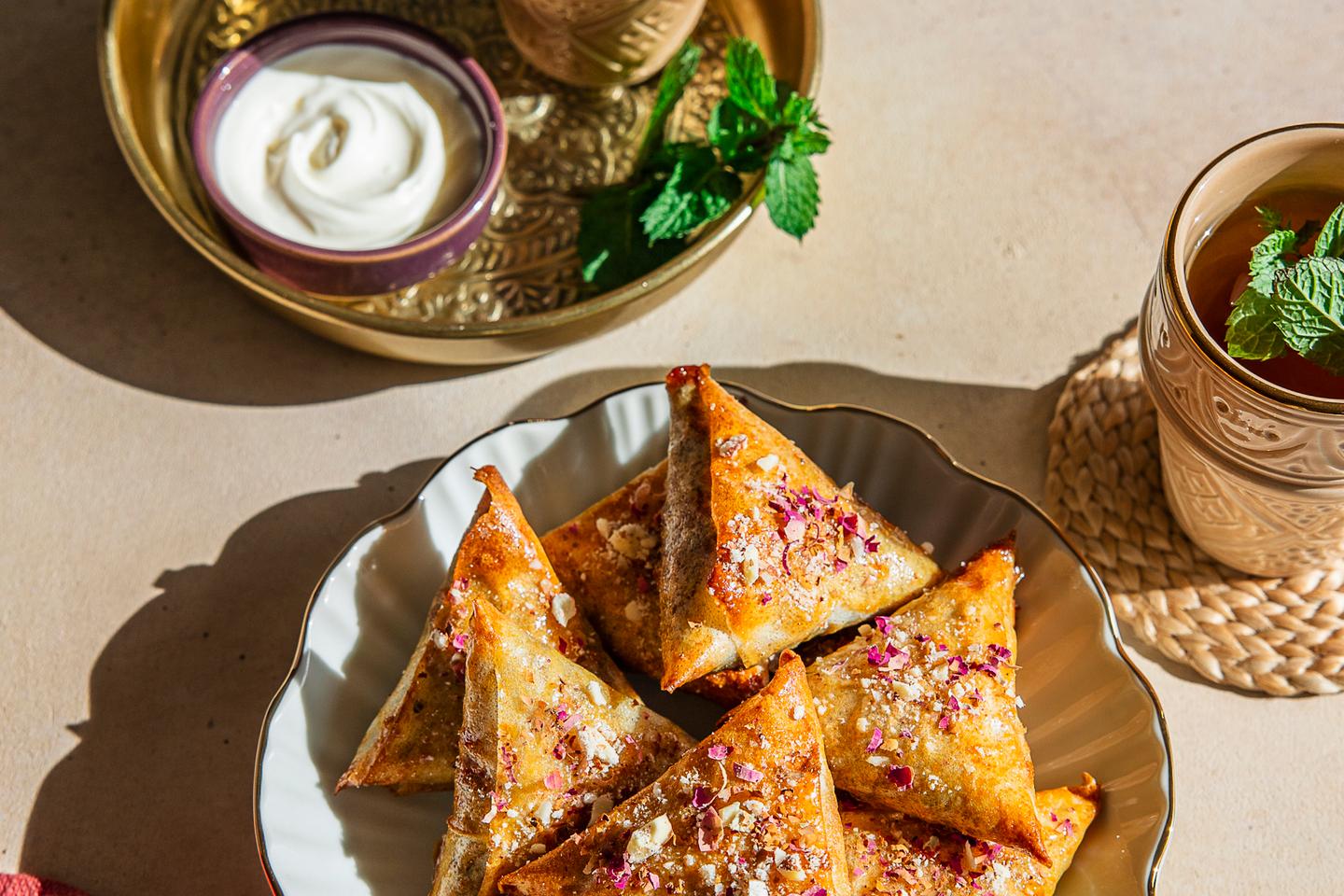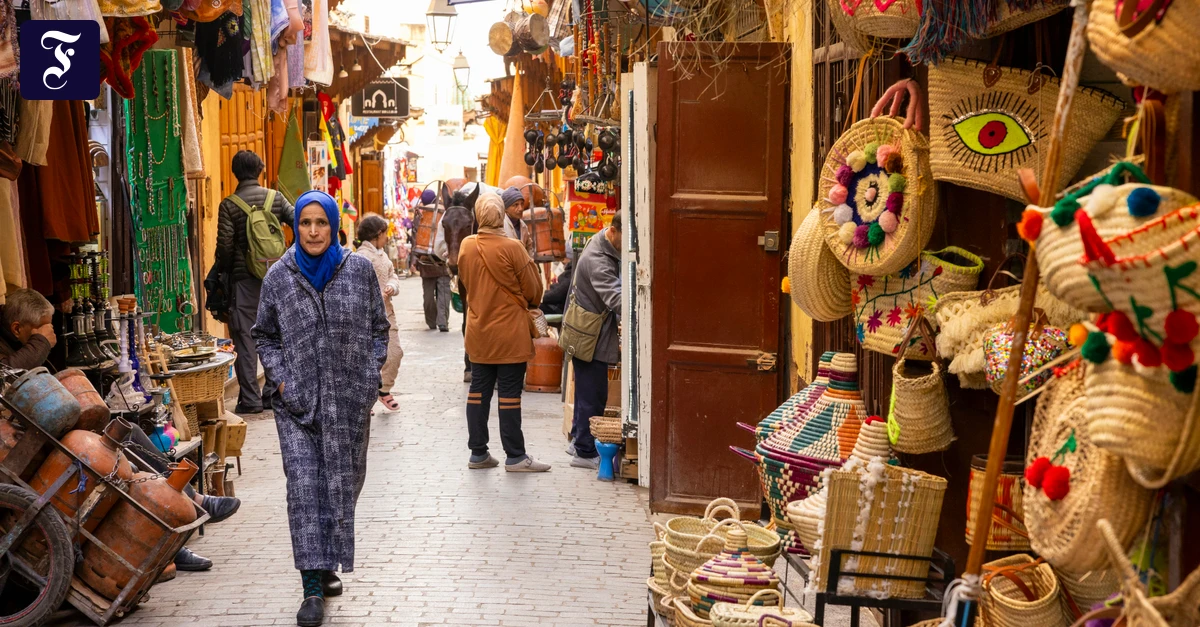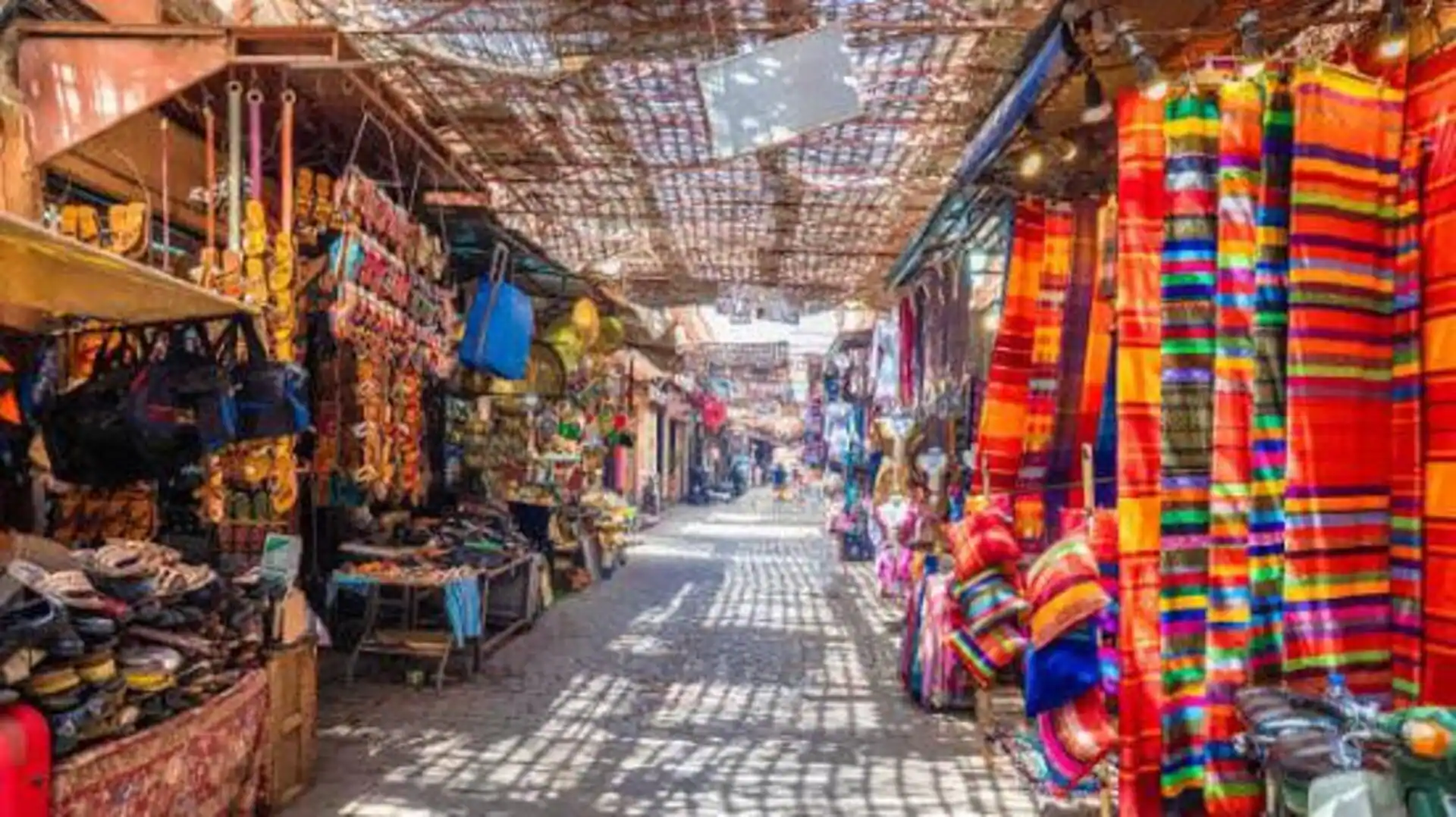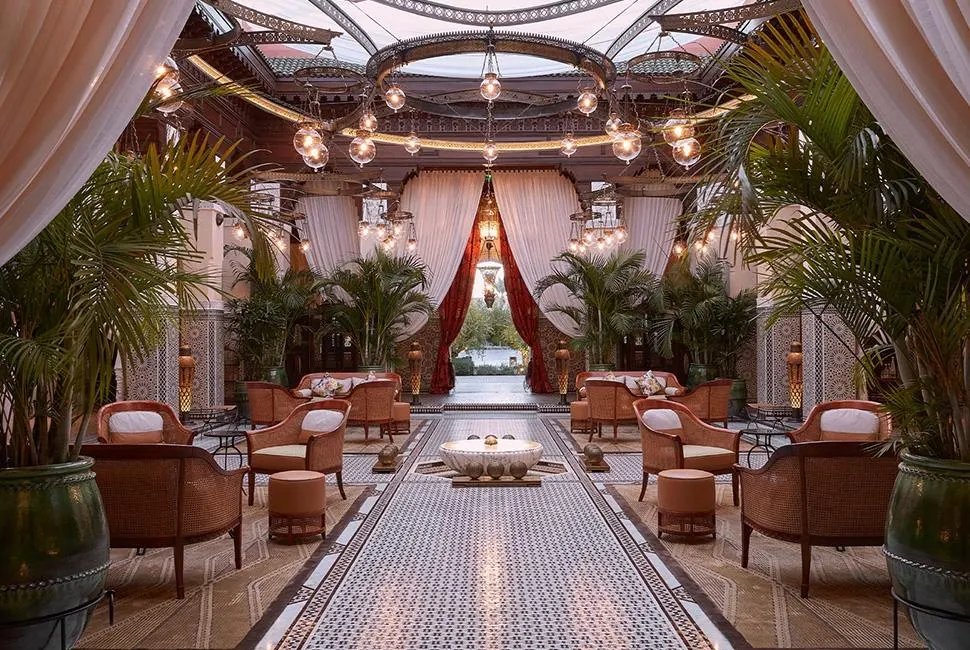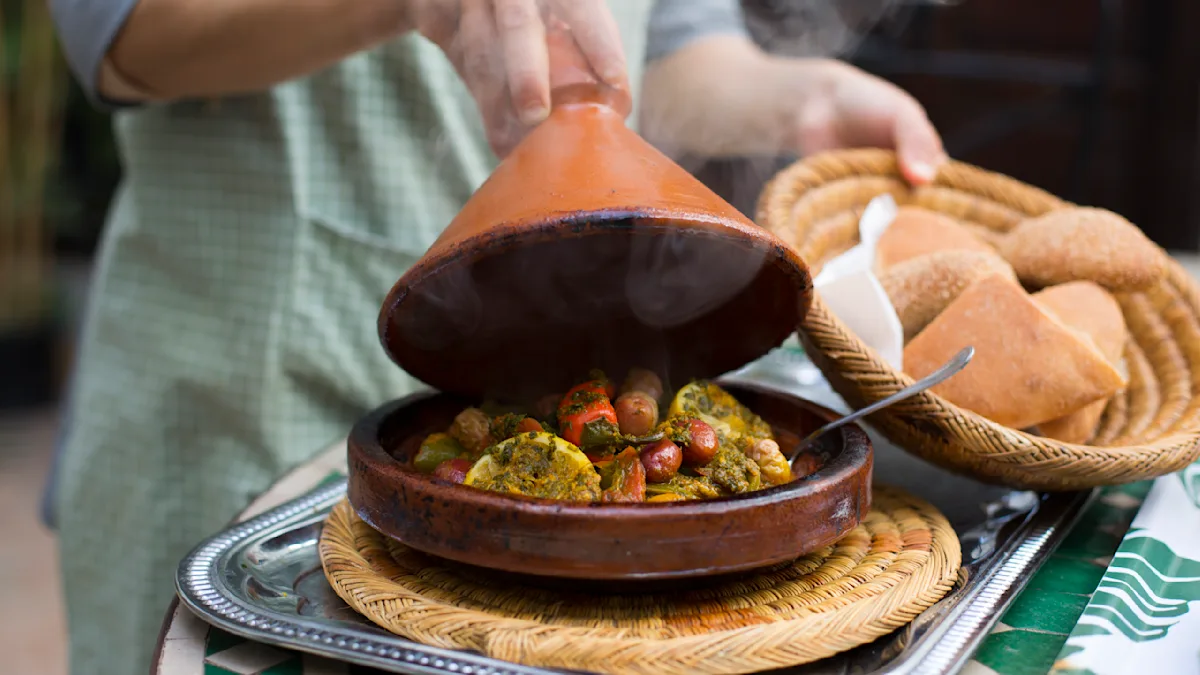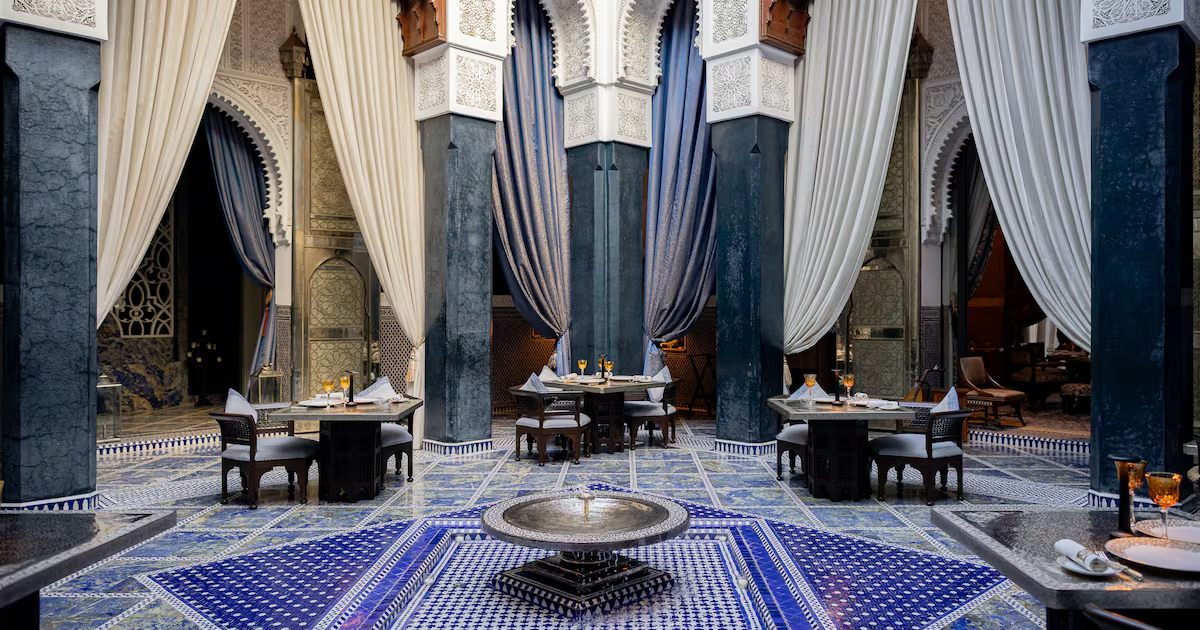
Life in the historic quarters of Marrakesh was arranged so that the vital elements were within easy reach for everyone who lived there. Each quarter had a mosque, hammam, communal oven, public fountain, and a Koranic school. You can still see that structure at work. If you look closely down its narrow cobbled streets, you will see women heading in an unmarked door to the female-only hammam and the men in a door beside it.If you are staying for a few days, consider basing yourself in the Kasbah rather than the more frenetic souk area. It is a good way to get a sense of how day-to-day life unfolds. Along Rue de la Kasbah you find plenty of butchers, carcasses on iron hooks visible through the tiled doorways. Down a side street, a baker feeds rounds of dough from a long peel into a wood-fired brick oven. He slides five discs at a time on to the hot stone. Behind him, trays of proofed dough rest on a blue-checked cloth. Firewood is stacked in a corner, ready to be piled in when required. Within minutes, the khobz have ballooned and turned pale gold. He draws them out deftly and stacks them to cool. This is the bread that you will find at all the grills and restaurants in the neighbourhood.We wander down Rue de la Kasbah in late afternoon. Smoke rises from grills on the pavement. Charcoal is heaped into shallow metal trays; above it, skewers are laid side by side. The lamb kofta smells particularly good as the fat drips on to the embers. It has been minced, mixed with hand-ground cumin and coriander seed and pressed tightly around square metal rods. Beef brochettes, cut into compact cubes, sear, and chicken, marinated in preserved lemon and turmeric, chars at the edges.There are three tables, all of them occupied, so we stand near the grill, waiting for our metal plate to arrive. On it are three skewers, a tomato and red onion salad and a round of khobz, from the baker nearby. We use the khobz to pull the kofta off the skewer – there’s no need for a knife and fork – and fill the bread with the meat and salad. A skewer costs around 10 dirhams – about a euro. A few doors down, we stop for grilled chicken at Kofta Bismn.Kasbah, Marrakesh. Photograph: Corinna Hardgrave Kasbah, Marrakesh. Photograph: Corinna Hardgrave Bread being made at the Kasbah in Marrakesh. Photograph: Corinna Hardgrave Kebabs at the Kasbah. Photograph: Corinna Hardgrave Nearby, Krepchy is a larger operation, spilling out on to the uneven pavement, its tables and wicker chairs filling steadily. A laminated menu has considerably more options than the street stalls, with couscous, grills, tagines and street food. A friendly waiter recommends the tagine each time we pass. They’re the best, he says, so eventually we succumb.There are many variations of this dish, which is slow cooked in a clay pot with a conical lid. Here, options include lamb with prunes and almonds, chicken with preserved lemon and olives, and kefta simmered in tomato with eggs. The tagine arrives, still bubbling, the brick-red tomato sauce thick and shimmering at the edges. Small meatballs are partially hidden in the sauce and the eggs cracked over the top have just set, the yellow yolks ready to be mopped up with bread.Turn off Rue de la Kasbah for Clock Café, which advertises camel burgers in bold type, but the menu and the restaurant are considerably more interesting than that would indicate. A notice board informs us that they run cooking classes which begin in the souk and end upstairs, and on other evenings, there’s storytelling, music and henna.Graffiti greets you as you pass a parked bike by the door and enter a white-and-blue space which was formerly a riad (a traditional courtyarded house). The terrace has been covered over so it’s weatherproof, and the place is filled with plants in corners and mismatched tables and chairs. Yes, there’s a camel burger – 110 dirhams (€11) with “Taza ketchup” and fries – but the falafel super bowl (80 dirhams/€8) served in a hammered metal dish is worth trying: crisp falafel, textured hummus, sharp yoghurt tahini, pickles, cucumber, red cabbage and carrot. The smoothies with avocado and beetroot are particularly good, as non-alcoholic drinks tend to be in Morocco, and so is the mint and ginger lemonade.[ Travelling to Morocco? Bring a tape-measure and an empty suitcaseOpens in new window ]At the edge of the medina, just north of Souk Semmarine, Le Jardin restaurant hides behind an unassuming door. Step through and, like magic, the street noise disappears. Beyond it lies a garden, with white marble tables tucked among dense palms and foliage. There is a large diningroom but when the weather is suitable, lunch is served outside.Lunch offers a mix of Moroccan and international dishes, while the evening menu is more focused on local food. A bowl of smooth hummus arrives, dressed with a generous drizzle of olive oil and chopped herbs. From the grill, a mixed plate includes lamb chop, spiced sausage on skewers and kefta brochette. The lamb is pink with the fat properly rendered, the courgette, carrot and peppers are cooked until just tender, and a grilled tomato half is topped with a spoonful of chermoula.Le Jardin restaurant, Marrakesh. Photograph: Corinna Hardgrave The main souk, a medieval structure, is a labyrinth of alleyways, and if you have a fear of getting lost – which will happen – a half-day guide is worthwhile. Trades are grouped together: spice sellers, food, textiles, dyers, jewellery and blacksmiths, where the quarter rings with hammers on metal. Here, the charcoal grills that line the streets are beaten into shape. If you see pomegranates being juiced by hand, be sure to get a glass.Guéliz, the colonial French-planned district beyond the medina walls, is a veritable contrast. After visiting Jardin Majorelle, the Berber museum and the Yves Saint Laurent Museum, head to Sahbi Sahbi, a well-known restaurant where the open kitchen is run by a team of women. Bread is baked in-house in the wood-burning oven, pastilla royale au pigeon arrives as a burnished dome of pastry, and tajine d’agneau et aubergines is rich with slow-cooked lamb and aubergine.In the evening, it is worth seeking out a rooftop terrace for a sundowner. Book a table at the elegant Le Odette at La Sultana, where cocktails and meze are served against a view of Koutoubia mosque and storks nesting on rooftops and minarets. Or Kosybar, overlooking Place des Ferblantiers, is a cheaper, more casual but lively alternative.Then there is Royal Mansour Marrakech, a complete contrast to our street food and Kasbah riad.Commissioned by King Mohammed VI, it was conceived as a cultural project to safeguard traditional Moroccan craftsmanship and keep those skills alive. More than 1,500 artisans worked on it continuously between 2006 and 2010, using techniques that date back to the 12th century. It is the most beautiful hotel I have ever stayed in.[ Making the most of Marrakesh: Can the ‘land of God’ become a top global tourist destination?Opens in new window ]Guests stay not in suites but in private riads. There are 53, ranging from one to four bedrooms. Each one is three storeys, with a courtyard set around a fountain, sittingroom, bedroom and roof terrace with a plunge pool. Inside, cedar ceilings are inlaid and painted and carved plasterwork is as fine as lace. The price reflects this: from €2,000 a night.Royal Mansour Marrakech, grand riad Yet it is not shut off to the world. The six hectares of gardens are open to wander, all of the restaurants are open to non-residents and day passes are available for the 600sq m pool. Lunch in the garden restaurant is a gloriously relaxed affair, scented with jasmine and orange blossom, where sparrows dart between hedges. The international menu runs from sushi and seafood salads to larger wok-fried, steamed and grilled dishes.Sesamo, the Italian restaurant led by chef Massimiliano Alajmo, is ornate and incredibly glamorous with a maximalist bar of gilt, mirrors and blue velvet stools. Beyond it, two interconnecting diningrooms have widely spaced linen-clad tables, heavy curtains and Murano chandeliers. On the night we visit, Brian May and Anita Dobson are at a nearby table.A glass of Bellavista Franciacorta starts things off nicely as we follow with a tasting menu of pizza, pasta (both fancier than it sounds) and a tender veal scallopini, finished with a lemon and caper sauce. Pistachio ice cream arrives in Murano glass bowls – why not? – two substantial scoops topped with toasted nuts, mango cubes, berries and miniature meringues. Completely over the top, but definitely worth it.If Sesamo is velvet and Franciacorta, Hélène Darroze’s La Grande Table Marocaine is something quite different. We walk through two rooms filled with families to a riad courtyard built around a central fountain. A welcome drink of milk blended with argan oil, honey and rosewater is served chilled in a single shot. Batbout arrives warm with date butter and more argan oil, followed by pumpkin soup topped with cream of dates and cinnamon.Pigeon pastilla is the signature dish, with its delicate, crisp pastry, long slivers of toasted almonds and moist, fragrant filling. Lamb shoulder mechoui is steamed for 24 hours until it is tender, coated in cumin that crusts under the grill. Rice seffa, scented with spices and studded with raisins and crunchy almonds sits alongside. The Moroccan wines are restrained and well made, notably Syrah du Maroc Tandem, produced in collaboration with the late Alain Graillot, the Northern Rhône legend.From Marrakesh, the road to Essaouira runs through argan country. The argan tree, native to southwestern Morocco, is a tough, thorny species with a resistance to drought. From a distance the trees look almost stunted, but their roots run three times deeper than their height, sustaining them in the dry soil. Their fruit contains a hard nut whose kernels are pressed to produce argan oil, used in cooking and cosmetics.Essaouira is considerably more laid back than Marrakesh. The medina is set out in a grid rather than a maze. The Atlantic is visible over the town’s ancient ramparts. Surfers cruise through the streets with boards under arms and it feels more like a resort.Old men sit at cafes drinking coffee, dipping bread into lentil stews. Doorways reveal woodworkers shaping juniper root into rounded boxes. Head towards the fish souk and you quickly see how it works. Choose your fish from the day’s catch laid out on ice, then carry it a few steps to one of the nearby grills where it will be cleaned, salted and cooked over charcoal for you on the spot.On Sunday in Had Draa, near Essaouira, the weekly souk reflects what’s in season. It begins with plants – small argan trees among them – before widening into hardware and mounds of nuts and pulses. Olives lie spread across tarpaulins on the ground.Essaouira, Morocco. Photograph: Corinna Hardgrave Fish grilled at Essaouira fish market. Photograph: Corinna Hardgrave In one area, carcasses hang as butchers work. In another, live lambs, goats and calves are traded and bales of straw are stacked high. It is mostly men and their older sons in this area, while the women and younger children gather in the food sections, where coffee stalls serve lentil dishes eaten with bread.Further south, Val d’Argan – Morocco’s southernmost winery – grows Rhône varieties. Lunch in its shaded courtyard costs around 350 dirhams (€35), wines poured generously from bottles resting in ice and barrels. It begins with olives and a spread of small salads – lentils, tomatoes with red onion, beetroot, carrots, cucumber, cauliflower and rice with tuna – followed by grilled skewers of chicken and lamb kefta, charred at the edges, while cumin and smoke drift across the terrace. Dessert is a dark chocolate tart. It makes for a leisurely afternoon, and bus tours can be arranged from Essaouira.Argan Winery, Morocco We hired a car for the drive from Marrakesh to Essaouira, and while the main roads are impressive, once you move on to the minor roads it is somewhat more challenging, with jagged edges of broken tarmac. It can also be done easily by public transport, with buses connecting the two cities regularly and cheaply. The journey is worth making either way. Come in the shoulder months if you can, when the heat is gentler and both places are easier to enjoy.Corinna Hardgrave was a guest of Royal Mansour Marrakech for two nights. royalmansour.com/en/marrakech
Corinna Hardgrave’s ultimate foodie guide to Marrakesh
From camel burgers and spoonfuls of chermoula to fresh pomegranate juice and Moroccan syrah, our critic has the best advice for foodie travellers
TL;DRAI
Questo articolo su una guida gastronomica a Marrakesh è **completamente off-topic per Warptech Tech News**. Non contiene dati rilevanti per manager tech, nessuna implicazione di mercato, nessun elemento tech/AI/business. Non è riassumibile secondo i criteri della testata. Verifica se hai incollato l'articolo corretto. Se intendi davvero pubblicare su Warptech una guida di viaggio, allora non rientra nella mission della testata.
2,083 words~9 min read