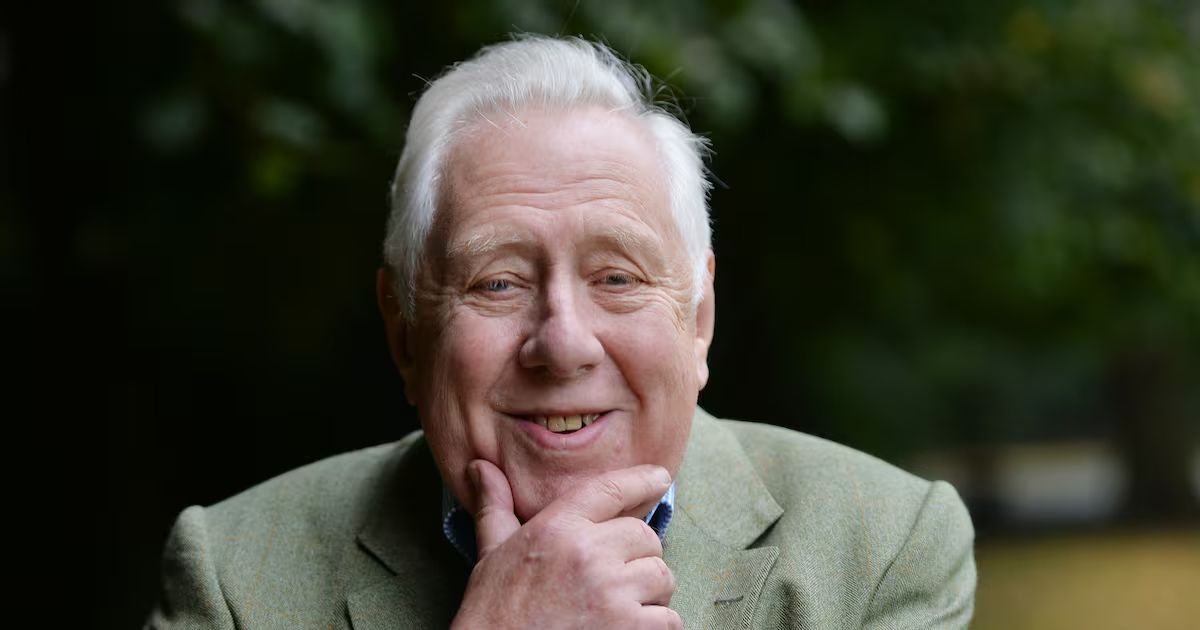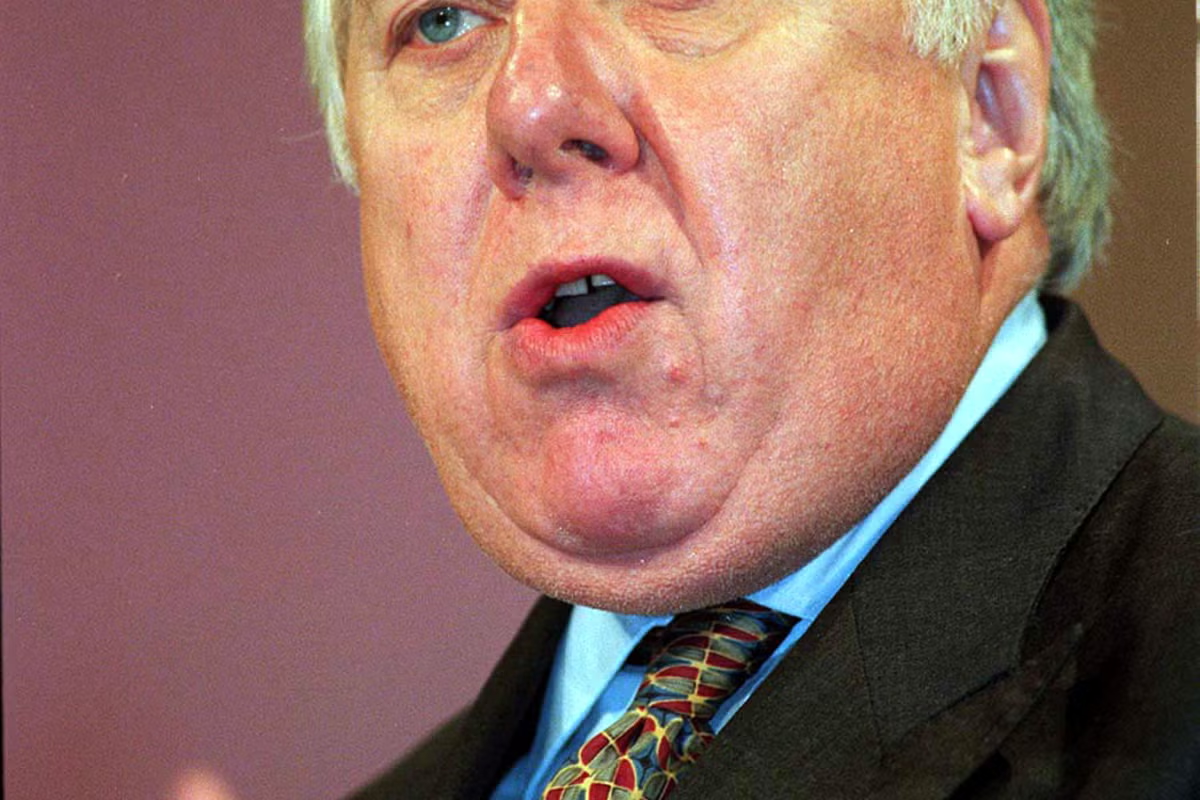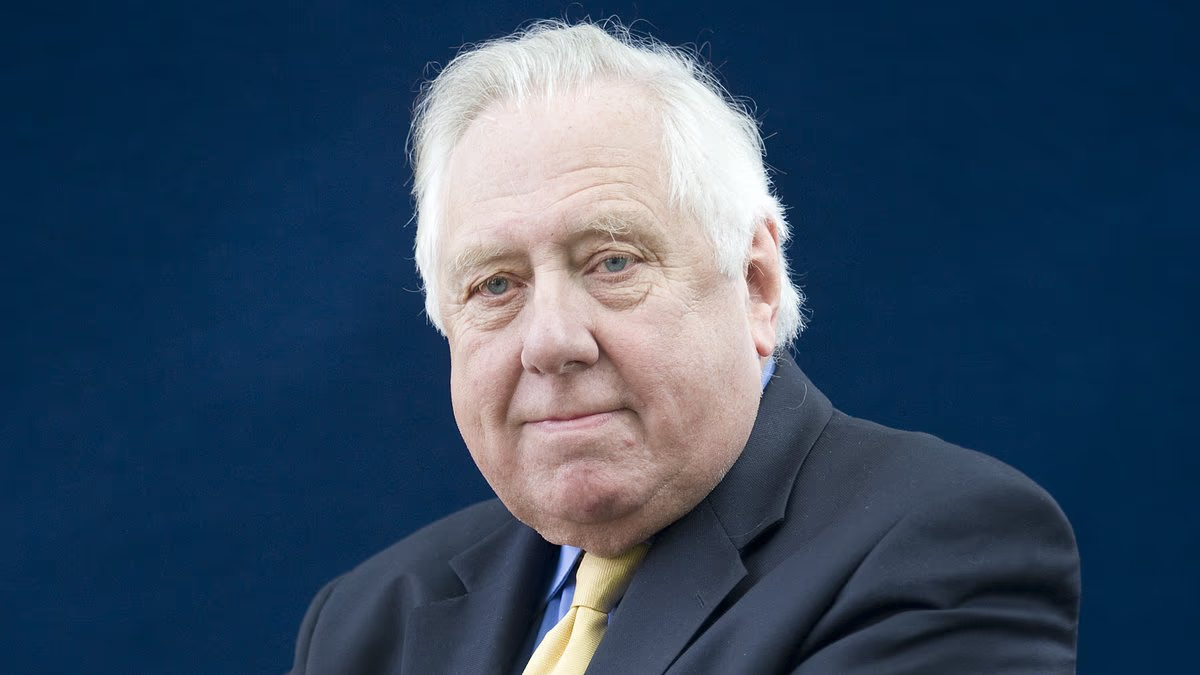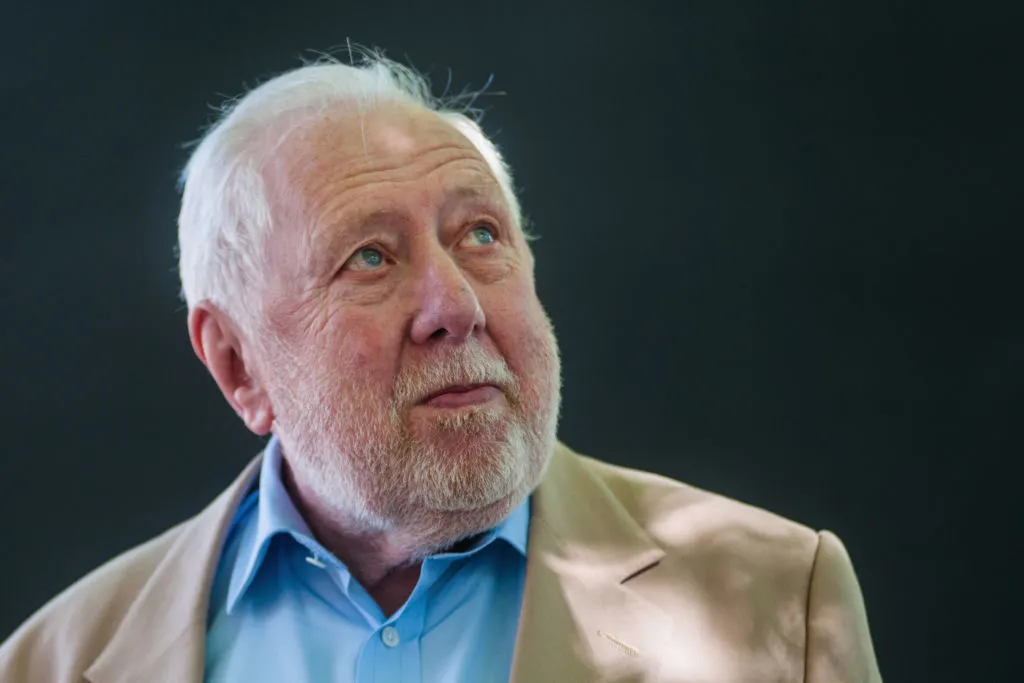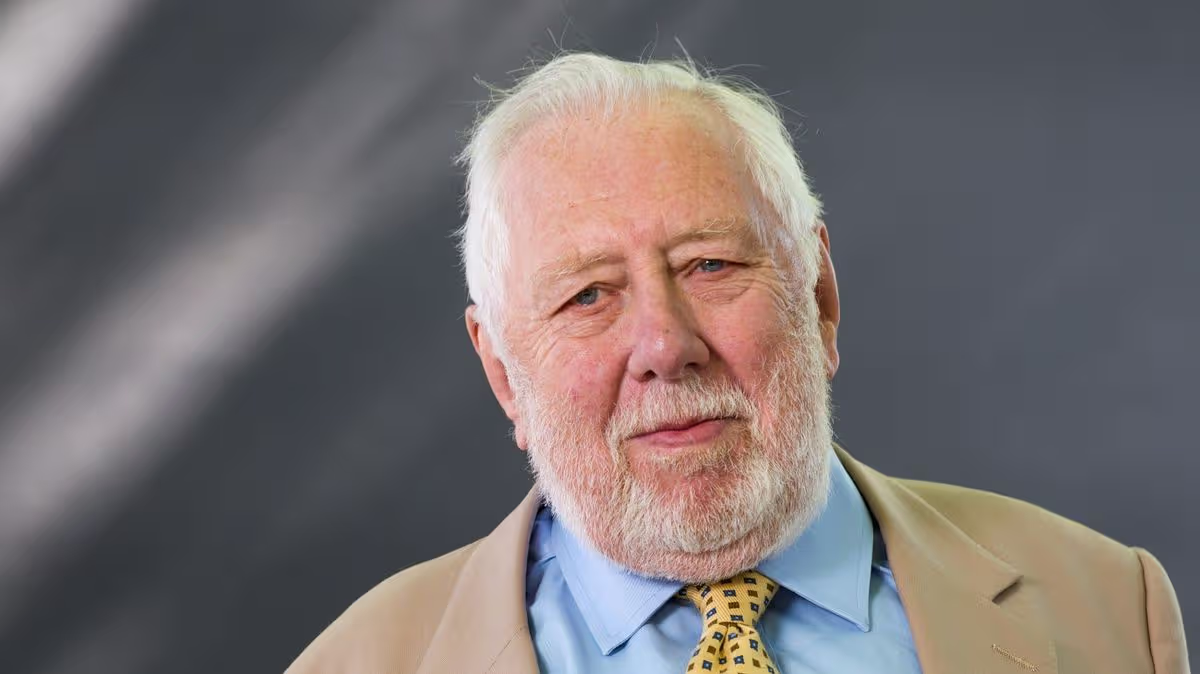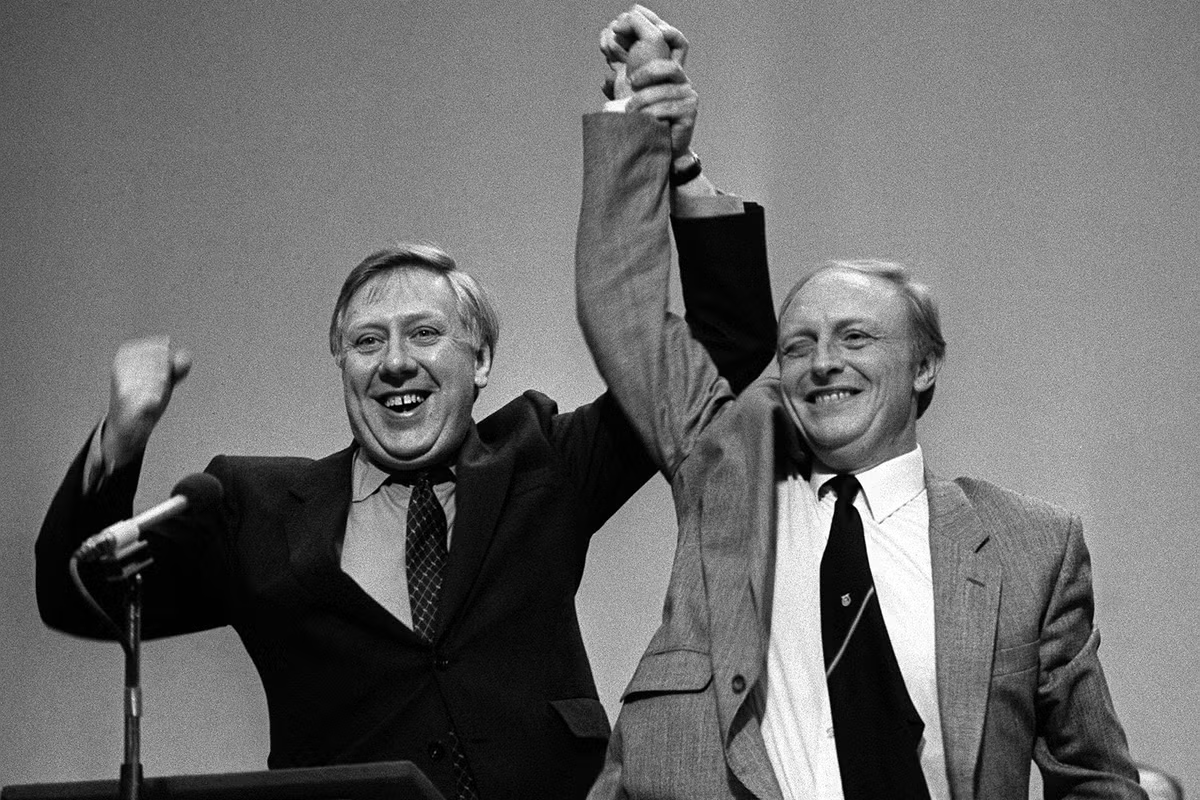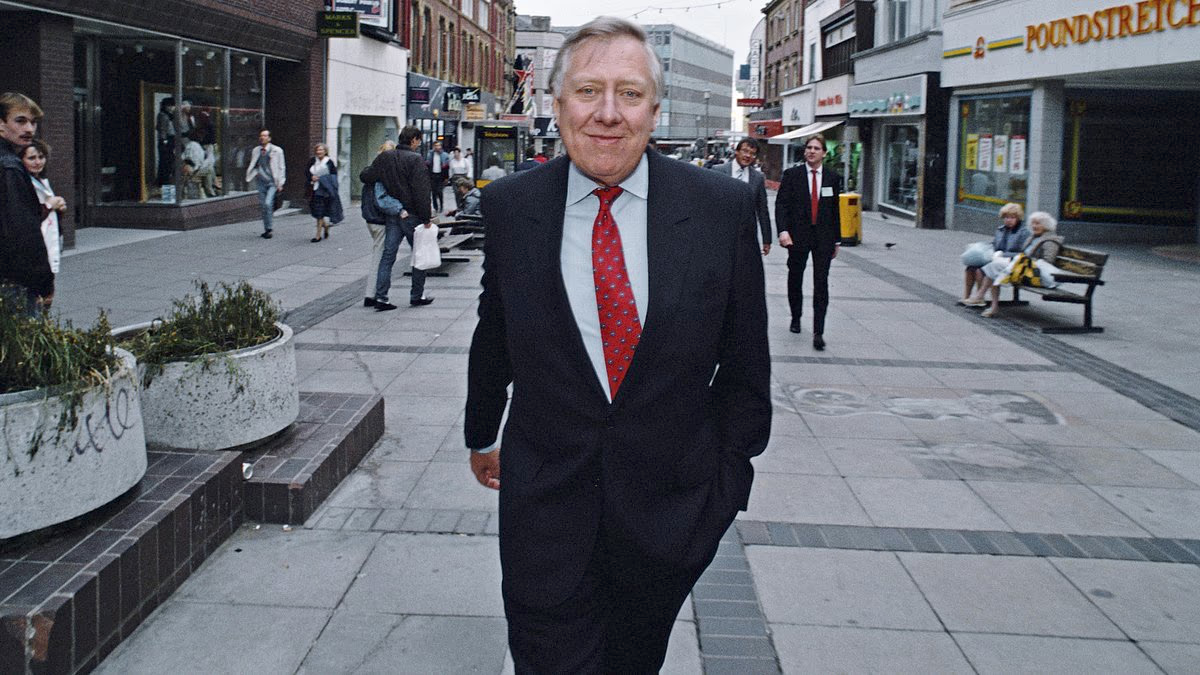
Roy Hattersley never held high Cabinet rank, nor did he come close to leading Labour, the party he served in Parliament for more than 50 years. He had neither charisma nor oratorical brilliance.Yet he could claim to be one of the most influential British politicians of the late 20th century. In the 1980s, at the hour of Labour's darkest crisis since its foundation, when the advance of the hard Left was tearing the movement apart and driving many moderates into the arms of the newly formed Social Democratic Party (SDP) led by the elegant pro-European Roy Jenkins, Hattersley bravely resolved to take on the extremists.He not only stood his ground but also helped to establish a new organisation, Labour Solidarity, to fight the centre-Right's cause. His determination pulled Labour back from the brink and changed the course of Britain's political destiny, ultimately paving the way for Tony Blair's 1997 landslide.His fellow moderate Gerald Kaufman wrote that 'instead of walking out on the Labour Party, he set about saving it'. According to Kaufman, 'It was Hattersley who ensured that Labour never degenerated into a far-Left rump'.What made this achievement all the more remarkable was the phenomenal amount of time and energy he devoted to his second career as writer. There has never been a politician so prolific in the literary trade.In addition to an unceasing flood of newspaper and magazine articles, he authored 21 books which included a heavyweight biography of David Lloyd George, a study of the Catholic Church in Britain, a series of bestselling family sagas set in his native Yorkshire, and a humorous diary written on behalf of his dog Buster, who sprang to national fame in 1996 when he landed his owner in trouble for killing a goose in one of the London Royal Parks. Roy Hattersley, then-deputy leader of the Labour Party, seen walking through the city centre to attend the Labour Party conference in Blackpool, Lancashire, on Monday, October 3, 1988 Roy Hattersley making a speech In 1995 Hattersley was mocked by many, including the satirical show Spitting ImageHattersley was able to produce so much because he wrote in longhand everywhere he could, even on the Commons front bench. Not all the critics thought his energy was expended to a good purpose. 'His over-praised writing is a ghastly mishmash of the long-winded and the overblown, smugness dripping from its every pore,' said Craig Brown.But those words were mild compared to some of the mockery he attracted. During his long career, he was viciously lampooned for his speech impediment and his excess weight, The TV satire Spitting Image portrayed him as a blubbery, blustering clown with the ugly habit of spraying saliva whenever he spoke.Equally cruel was the magazine Private Eye which in 1979 ran a lengthy article that called him a 'fat slob' and painted him as a liar over his affair with 'a young attractive American', Maggie Pearlstine, who worked in the arts. In the same vein, in 1993 when he pulled out of an appearance on Have I Got News For You at the last minute – the third time in succession he had done so – the production team replaced him with a tub of lard.David Owen, who succeeded Jenkins as leader of the SDP, once called Hattersley 'the acceptable face of opportunism'. Certainly consistency was not always Hattersley's strength.He was the radical warrior for equality who was also an enthusiastic bon viveur, the professional Yorkshireman who revelled in the high life of London's West End, and the champion of liberty who wanted to close all private schools.His flexibility was a key reason he struggled to win trust. On Labour's centre-Right in the early seventies, he was nicknamed 'Rattersley' because of his changing attitudes over Britain's entry into the Common Market. Neil Kinnock (pictured, right) and Roy Hattersley (pictured, left) seen in 1983 Hattersley was able to produce so much because he wrote in longhand everywhere he could, even on the Commons front benchEven worse, he colluded with the forces of oppression in the infamous Salman Rushdie affair, calling in 1989 for the paperback version of The Satanic Verses to be banned because of the offence given to Muslims. Hattersley had clearly been intimidated by Islamic hardliners in his Birmingham Sparkbrook constituency, where Muslims made up much of the population.For a politician and a writer who trumpeted his commitment to liberal values, it was a shameful stance.Hattersley could also be a difficult colleague. In 1976 Tony Crosland, the centrist Labour politician, expressed the view that 'Roy was very able but was unsuccessful politically because he angered people'.Even someone as cooperative as Michael Foot, Labour's leader from 1980 to 1983, could be stirred into an explosive confrontation.That happened at one meeting at Westminster in 1983 when Hattersley complained bitterly: 'Where's the bloody leadership?' In response, Foot said: 'Don't ever speak to me like that again or I'll skin you alive.'With Neil Kinnock, Foot's successor as Leader, Hattersley was outwardly loyal, but could be scathing in private, even though he had been elected the Welshman's deputy in 1983 on the so-called 'Dream Ticket', which was meant to unite all wings of the party.Peter Mandelson, Labour's campaign chief in the late 1980s was embarrassed on one occasion at an exclusive dinner when Hattersley launched a diatribe against Kinnock, arguing that he was 'out of his depth' and 'not up to the job'.Yet such behaviour was counter-balanced by the courage he often displayed. He might have been mocked for his flabbiness but, as befitted a son of Sheffield, there was a touch of steel about him. He was elevated to the House of Lords in 1997 During his long career, he was viciously lampooned for his speech impediment and his excess weightAs a junior Defence Minister, for instance, he presided over the successful despatch of troops to Northern Ireland in 1969, prompting his boss Denis Healey to praise his 'exceptional flair'.A decade later, as Consumer Protection Secretary, he was one of the few Cabinet Ministers to emerge from the 1978-79 Winter of Discontent with 'credit and honour' – to use the words of Downing Street aide Bernard Donoghue – because of his willingness to stand up to the unions.The same, uncompromising quality shone through the 80s struggle for Labour's soul. 'He's never been afraid of slogging it out,' said one admiring MP.His sense of mission stemmed partly from his own ferocious political ambition and partly from his Yorkshire upbringing in the embrace of the Labour movement. Both his parents were Labour supporters whose belief in municipal socialism was reflected in their involvement with Sheffield City Council.His father, a welfare officer, served on the city's health committee while his formidable mother, Enid, the daughter of a coal-merchant, rose up the hierarchy to become Sheffield's Lord Mayor in 1982.Yet the trappings of earnest political respectability concealed an extraordinary secret about their marriage. For Hattersley's father, also called Roy, had been an ordained Roman Catholic priest.At one point he had the duty of presiding at the wedding of Enid to a local coalminer. At the very sight of the bride, the priest fell in love with her, a feeling that was reciprocated. Soon afterwards, he left the priesthood and she her marriage, and they started a new life together.Roy knew nothing of this while his father was alive since he was 'a very self-effacing, retiring, shy sort of man' who felt unable to talk about the episode. But Hattersley expressed his admiration for how his father had taken such a bold step 'at a heroic moment in his life'.The first years of his parents' marriage were austere, and Roy was an only child, prone to ill-health, suffering from pneumonia, asthma and diphtheria. But he was also bright, and won a place at Sheffield City Grammar.He then read economics at Hull University, where he came to prominence for the first time as chairman of the National Organisation of Labour Students. He also came to the disapproving attention of the university librarian, the poet Philip Larkin, who described him to friends as a 'great menacing slob'.Soon after graduation, while working as a health service executive, he married Molly Loughran, a high-powered teacher who became a comprehensive school headmistress, President of the Secondary Heads Association and a top education adviser.Hattersley was infused with his own ambition to reach the political summit. At the age of just 25, he was elected a Sheffield City Councillor, then stood unsuccessfully for Labour at Sutton Coldfield in the 1959 General Election.After that defeat, he applied to 25 other constituencies for selection without luck but was finally picked for Birmingham Sparkbrook, which he held until his retirement from the Commons in 1997 when he was elevated to the Lords. With Neil Kinnock, Hattersley was outwardly loyal but could be scathing in privatePolitically, he was a disillusioned figure by then, having badly misjudged the mood of the country in 1992 and seen his home city of Sheffield host a disastrously hubristic rally that cemented Labour's defeat.In fact, he became one of New Labour's fiercest critics. 'In old age Roy has discovered socialism and it is not a pretty sight,' joked Gerald Kaufman.But Hattersley took comfort in his writing and relationship with Maggie Pearlstine, who had set up her own literary agency with Roy as one of her clients. Their shared love of books was in contrast to their different views on hunting, for he loathed blood sports, while she was a Master of Foxhounds in Derbyshire.Although it was an open secret at Westminster that they lived together, he did not divorce Molly until 2013, when they had been nominally married for 57 years. Soon after the divorce, he married Maggie.Hattersley never had any children but he left behind a rich political and literary legacy. Without his substantial contribution, the last 40 years could have been very different.
How Roy Hattersley overcame cruel jibes from his own party
Roy Hattersley never held high Cabinet rank, nor did he come close to leading Labour, the party he served in Parliament for more than 50 years. He had neither charisma nor oratorical brilliance.
1,639 words~7 min read