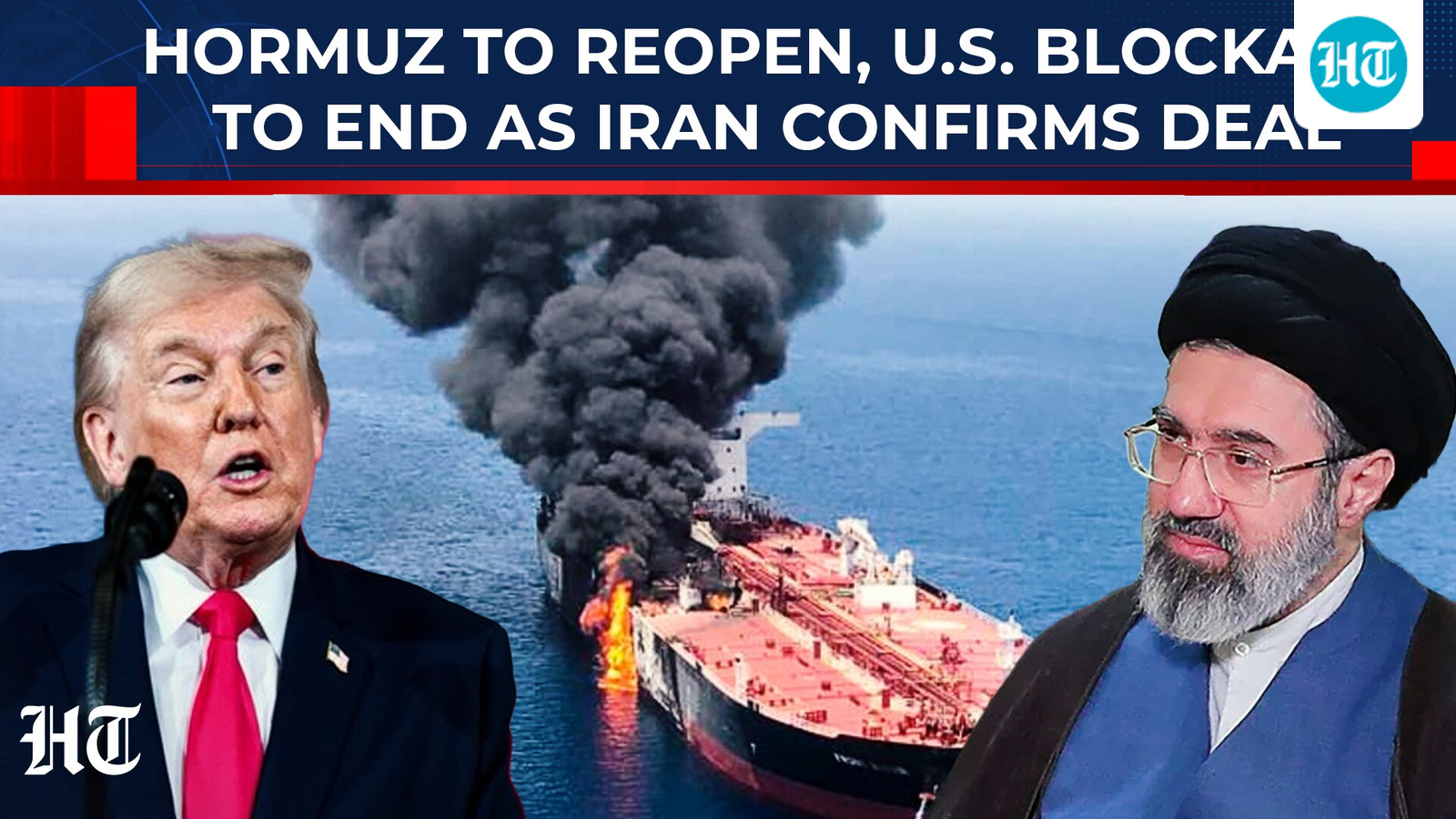
President Donald Trump announced on Sunday that his administration has reached a peace deal with Iran more than three months after the U.S. and Israel launched a disastrous war that has put intense strain on the world’s energy supply, and left the Iranian regime strengthened and emboldened.The agreement constitutes the most notable diplomatic development since the strikes on Iran began Feb. 28. American and Israeli forces decapitated the Iranian government by reportedly acting on information that many of the country’s top leaders would be in the same place at the same time.The Iranian regime, however, has managed to sustain its grip on power, even in the wake of mass protests that were put down with ruthless violence earlier this year. After some initial confusion among Republicans as to what the U.S. military action was ultimately meant to accomplish, Trump began repeating that Iran could not be permitted to develop a nuclear weapon, and that the Strait of Hormuz needed to be reopened to commercial shipping, as it was before the war began. He has also said that Iran’s nuclear “dust” — or the remnants of nuclear materials that were targeted in U.S. airstrikes last summer — must also be destroyed. The issue of how the country will dispose of its highly enriched uranium has long been a point of contention.Fully reopening the Strait of Hormuz is expected to alleviate some of the pressure on global fuel markets, which have seen major spikes in oil and gas prices due to the closure of the waterway. Prior to the Iran war, some 20% of the global oil and gas supply moved through the strait.Iran effectively shut it down by threatening to attack ships that attempted to cross, leaving some crews stranded on ships waiting for the conflict to resolve. Casualty estimates from the war vary, with the Israel Defense Forces estimating some 6,000 Iranians have been killed. The U.S. officially counts 13 deaths on its side. News of a previous possible deal between the U.S. and Iran drew pushback in May from some Senate Republicans, who favored a harsher approach toward Iran. Trump had signaled he would not be rushed into an agreement. He repeatedly pushed back on the idea that the upcoming midterms were putting political pressure on him, due to rising prices that could be directly tied back to his decision to launch the war. “I don’t care about the midterms,” Trump said bluntly at one point. At another, when asked whether he shared Americans’ concerns over the high cost of living, he was even more abrasive. “The only thing that matters when I’m talking about Iran — they can’t have a nuclear weapon. I don’t think about Americans’ financial situation. I don’t think about anybody. I think about one thing — we cannot let Iran have a nuclear weapon. That’s all,” he said.He doubled down on that sentiment last week, saying, “I love the inflation.”
U.S., Iran Reach Deal To End The War, Reopen Strait Of Hormuz
The agreement marks one of the biggest diplomatic developments since the U.S. launched strikes in February.
TL;DRAI
Trump reaches peace deal with Iran, reopening Strait of Hormuz after war blocked 20% of global oil/gas supply for 3+ months. Energy price normalization will lower data center and cloud operation costs—critical for IT budgets as AI infrastructure scaling accelerates.
486 words~2 min read