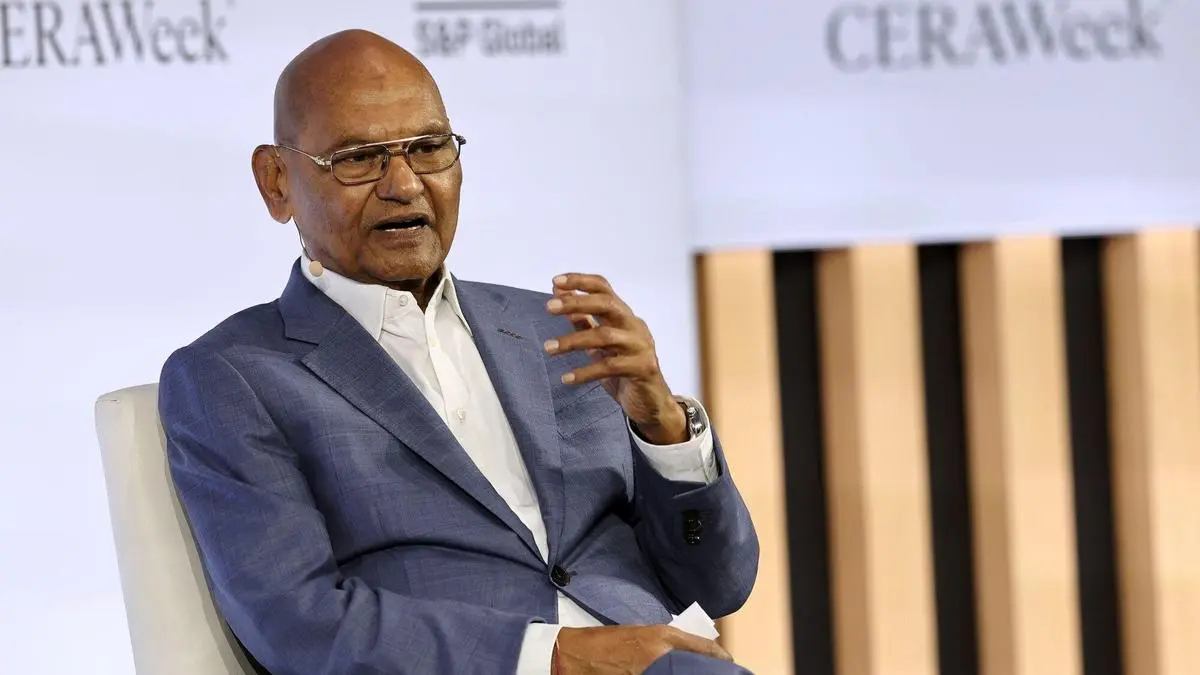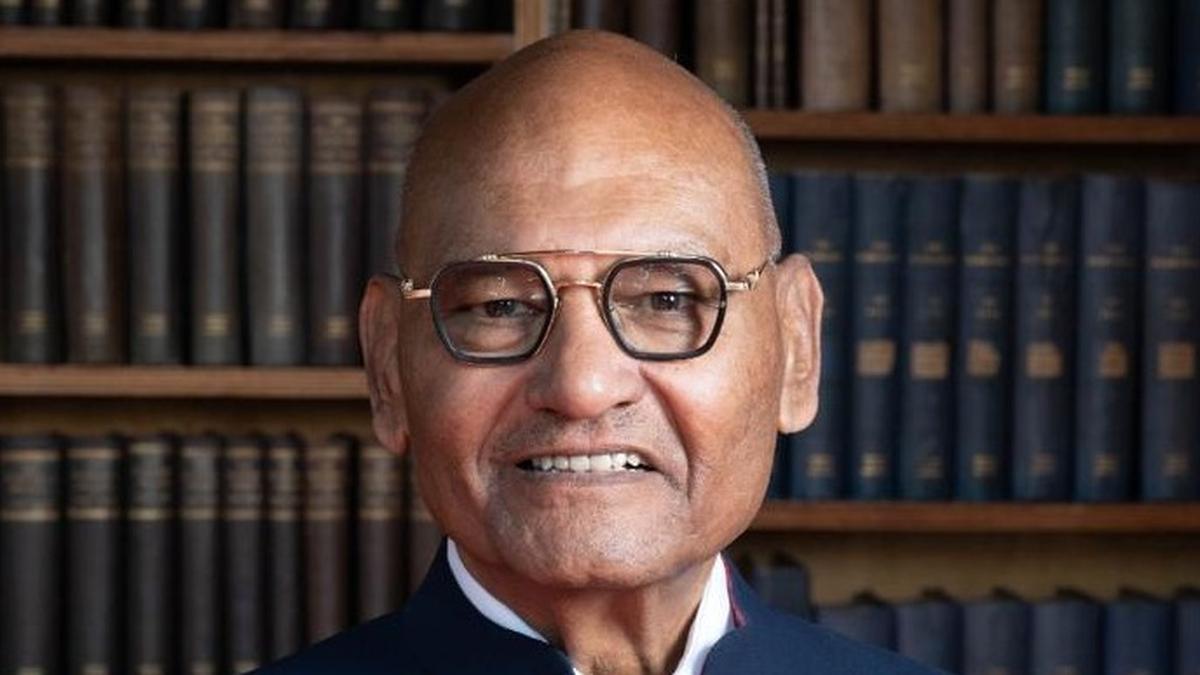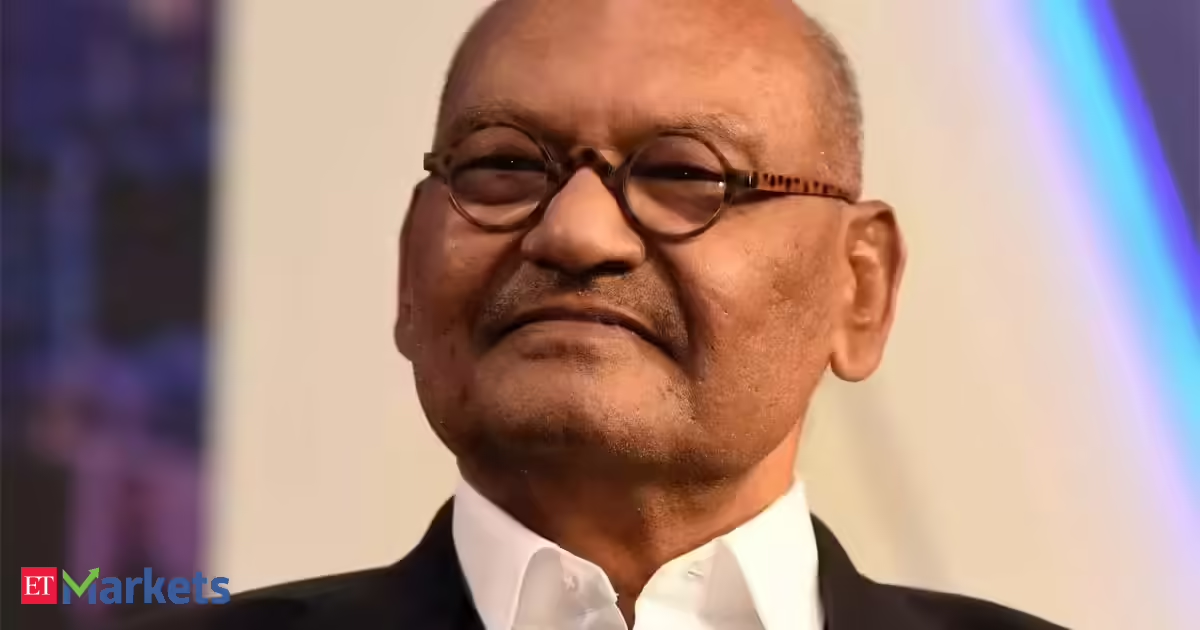
Few companies have been at the centre of reorganisation so much as the companies that belonged to Anil Agarwal of Vedanta. He is at it again. Now, he creates history by listing four companies simultaneously. In an interview with Nikita Periwal & MC Govardhana Rangan, Agarwal reasons out and lays down the road ahead. Edited excerpts:In 2012, you brought all companies together to create a conglomerate. Now you are going for a structure opposite to that. What triggered this?It is the law of nature. You created a structure and put everybody together. It grew big and is now a banyan tree. Under this tree, we are now creating more banyan trees. When we consolidated the companies, it helped create a single stream of money. Today, each of the businesses is strong, and it is time to grow them as big as possible, because the demand-supply gap is huge in each of these companies.One of the arguments during consolidation was about balancing the cycles of various businesses. What happens now?These are not small companies. For instance, if an automobile company goes through a downturn, it does not mean they will go down. It is a cycle, and there is always a bottom.With five listed companies in the Vedanta group now, what does the road ahead look like?We pay ₹60,000 crore each year to the government exchequer, and this can go to ₹2 lakh crore over five years. We directly employ about 200,000 people, and about a million benefit from this. This should rise to 3 million people. Jobs will rise as mining requires more people.What is the benchmark you have for the businesses that will list on Monday?For aluminium, we will be doubling output and be the largest producer with the lowest cost. Oil and gas is set to become one of the largest businesses for us where we plan to produce 500,000 barrels a day. In our steel assets, we are looking to produce 15 million tonnes each year from 4 million tonnes, which includes special steel. For power, we are looking at a capacity of 20,000 MW. Vedanta will produce nickel and manganese and is also the largest producer of zinc in the country. We don't have the technology available for oil and gas, but we are developing a model.London-based BP and Royal Dutch Shell also have the technology...Yes, but their assets are not in the UK. It is like Vedanta, which is headquartered in London, but does not produce anything there. But we manage it because it is a financial centre. We have grown today only because of our listing in London.But you have delisted there as well...It was necessary at the time. We raised $35 billion. We are looking for other options. What are the other options you are looking at?This five-way demerger has happened. The Indian stock market is also doing very well. There will be other options; our London company may look at other places, somewhere else. We want to be bigger, raising more funds. The US is an option.What about the funding requirement for these businesses?We require about $20 billion over three to three-and-a-half years. We have about $10 billion in Ebitda and we will use these internal resources first.This demerger is unprecedented in corporate India. What is it intended to achieve?We never thought the journey would evolve like this. Fundamentally, we are building India. I have believed that dhartima (Mother Earth) gives everything-both above and below the ground. We have been able to cultivate above the ground, but it is very important to cultivate below the ground. I am a geologist by practice and can see that India is rich in minerals. It is a land of opportunity, a land for entrepreneurs, and I was one of them to benefit. We have acquired companies, done brownfield expansion and done greenfield projects. We got success in some, and some we did not, but kept going.We have been talking about Atmanirbhar Bharat. What do you think needs to be done for basic materials, and any change you wish for as an entrepreneur?Self-certification and freedom to the entrepreneur, where rules must be followed, and non-compliance should have a hard penalty. India needs manufacturing, brick-and-mortar, mining and exploration. Once an industry is set up, everything follows, and this works because India's biggest power is its human resources.One of the concerns around Vedanta is its corporate governance. How will you address this?We were a FTSE 100 company. And to be a part of this index, we had to be stringent about governance and everything else. We have brought in $35 billion to India for Hindustan Zinc. Aluminium and oil and gas have the highest governance.You wanted to delist in 2020, and LIC had offered shares at a higher price than you were willing to pay. Do you regret not paying LIC then, now that it is ten times more valuable?I never think of yesterday.Your bid for Jaiprakash Associates did not go the way you wanted it to. How do you see that?We thought we could have a higher price, but they (Adani Group) were the better bidders. These five companies are enough for everybody, and I am not going to hunt for anything new. If someone walks up to me and says they have a steel company for sale, I will look at it. But yes, my hands are full. Internationally, we are ambassadors of India.Do you want to become a bigger ambassador for India with a listing in the US?Let's see what happens. Nothing is on the cards right now, but why not? I have a vision to get about $100 billion into India, and a lot of funds will be raised outside of the country.When the consolidation happened, there was a debate about who would benefit the most. Now, in this exercise, who are the winners and who are the losers?The government could be the biggest beneficiary of what we are doing because the biggest tax inflow for the exchequer is oil and minerals. Second, we are among the largest job creators and third, for any industry that we start, there are ancillary industries which come up.As the largest producer of aluminium in the country, why is your downstream business relatively muted?My philosophy is that unless it helps the society, I will never do anything. When we are in the upstream business of aluminium, it allows people to set up downstream operations. I have the money to get into downstream operations, but there is still so much potential in upstream operations-bauxite mining, alumina production, aluminium production, power plants. Why should I take away a small thing which a new entrepreneur can develop?
'Oil & gas set to become one of the largest businesses for us': Anil Agarwal
Vedanta's Anil Agarwal is listing four companies simultaneously. This move aims to unlock significant growth potential across its businesses. The company plans substantial increases in production for aluminium, oil and gas, and steel. Vedanta expects to significantly boost tax inflows to the government and create millions of jobs.
TL;DRAI
Vedanta demerges into five listed companies with 500k barrels/day oil & gas target and doubled aluminium output at lowest cost. Strategy mobilizes $20B over three years to control critical minerals (nickel, zinc, aluminium), essential for semiconductor and battery supply chains.
1,106 words~5 min read