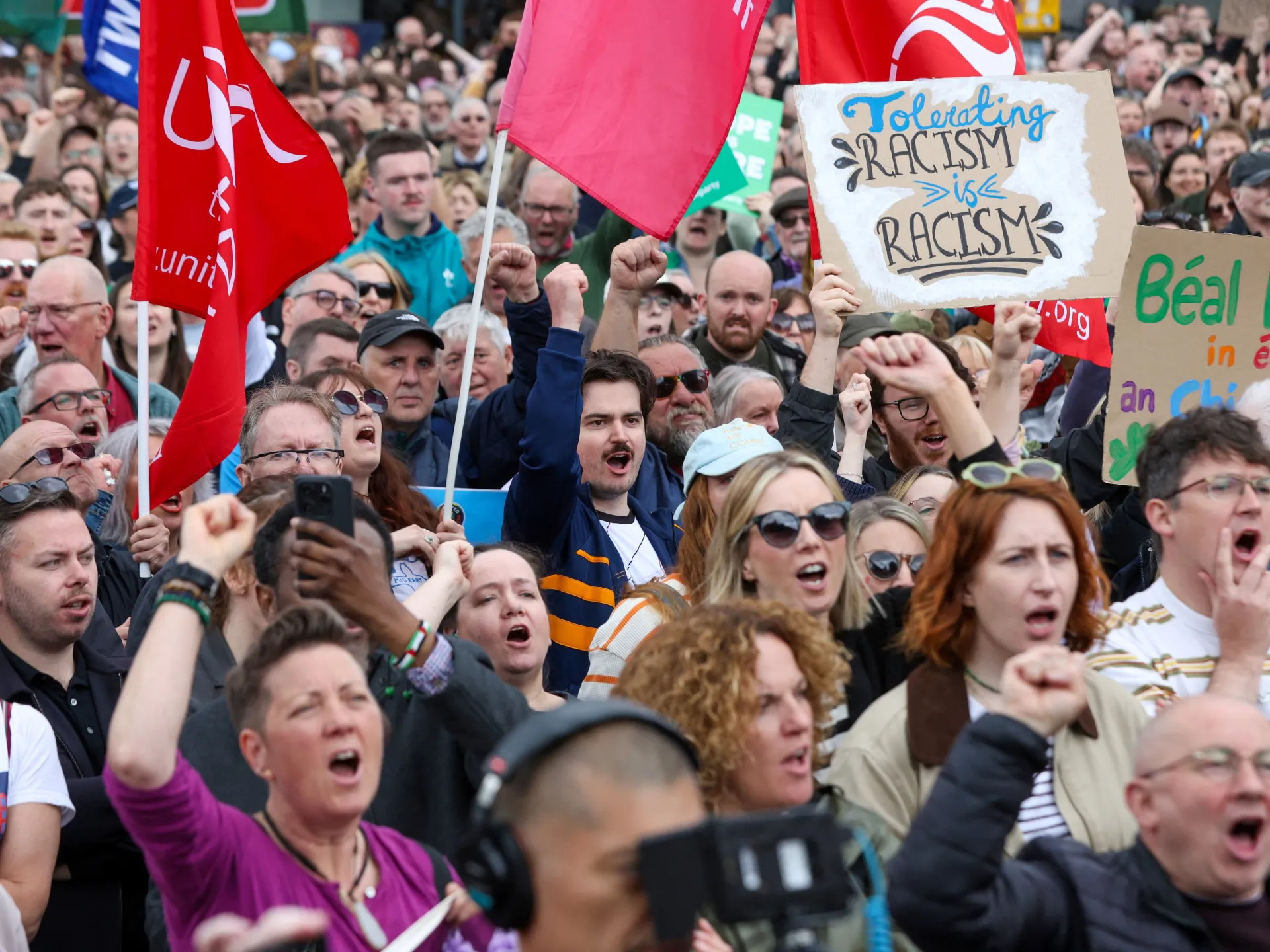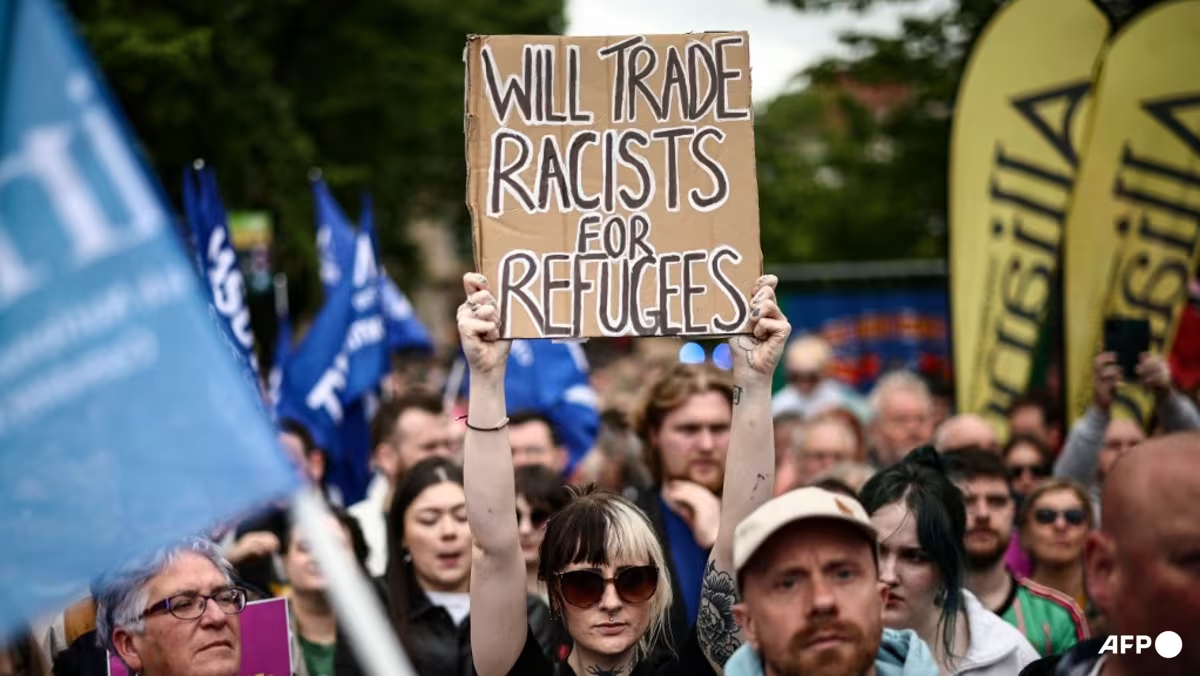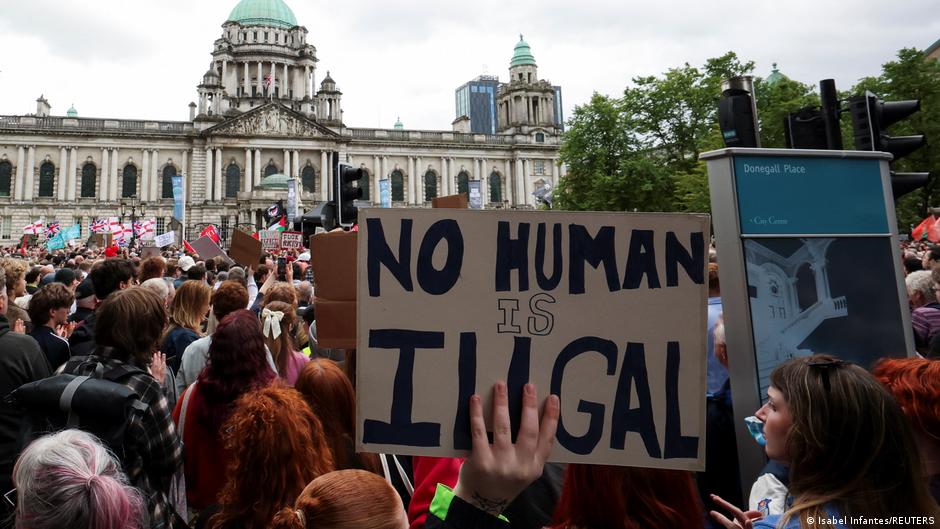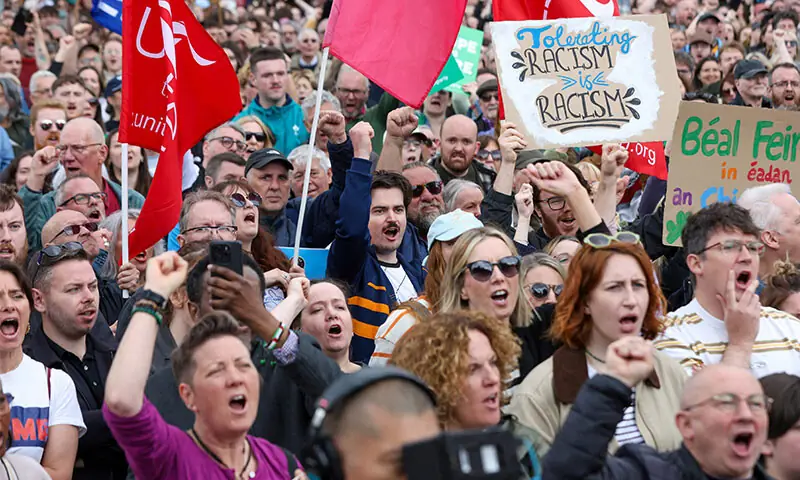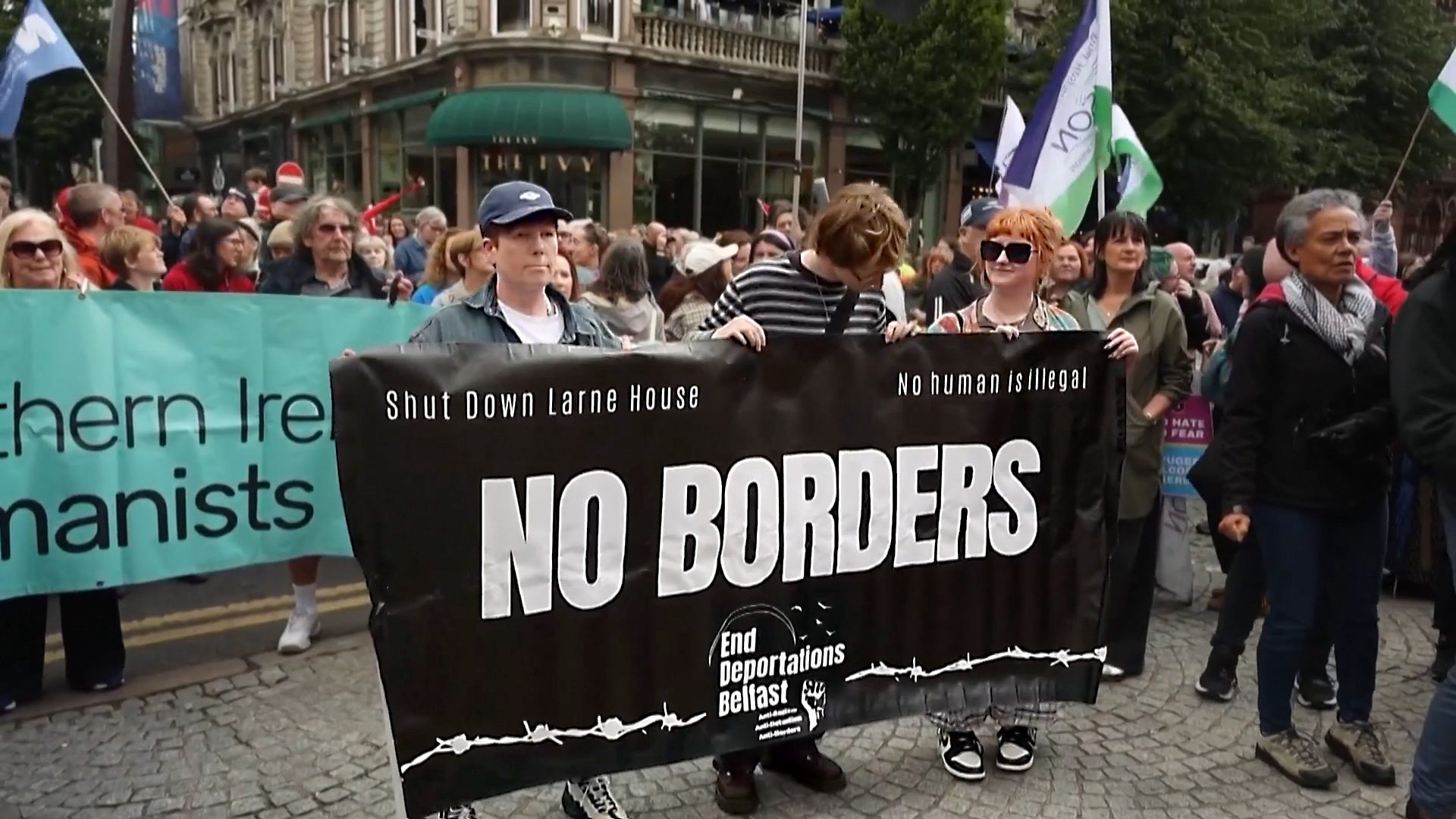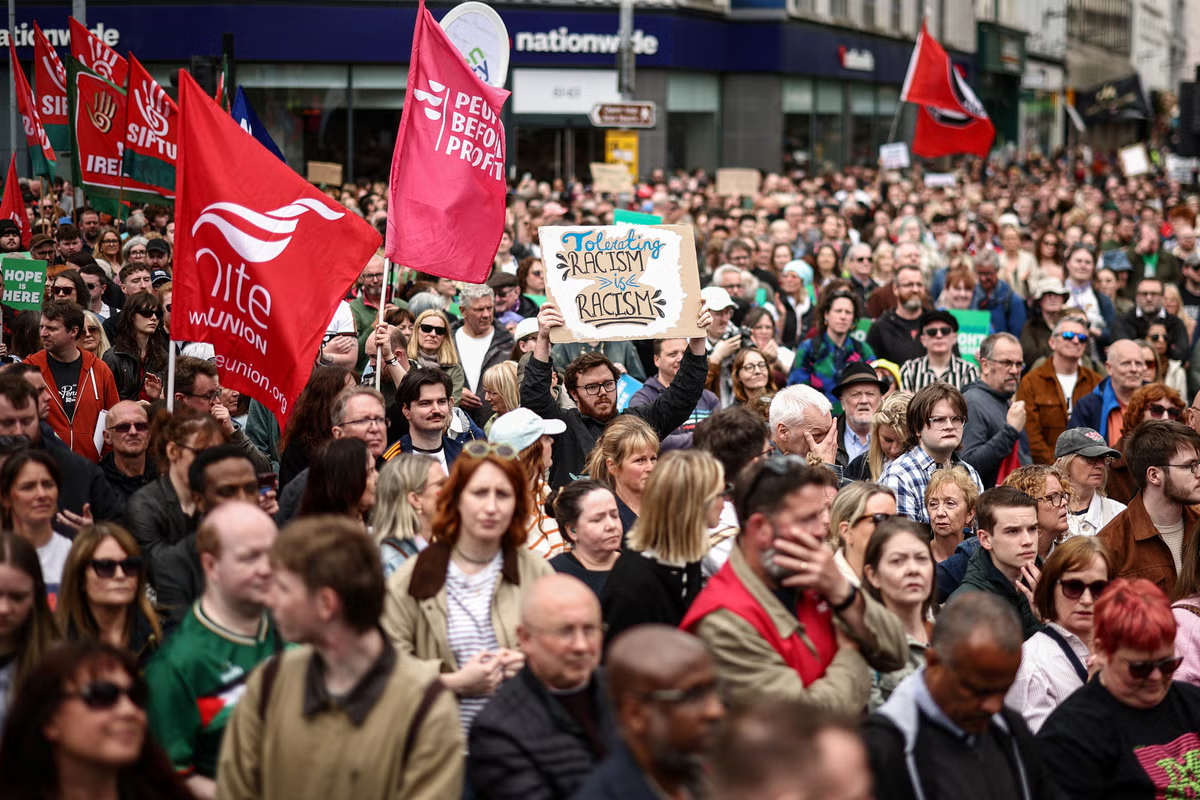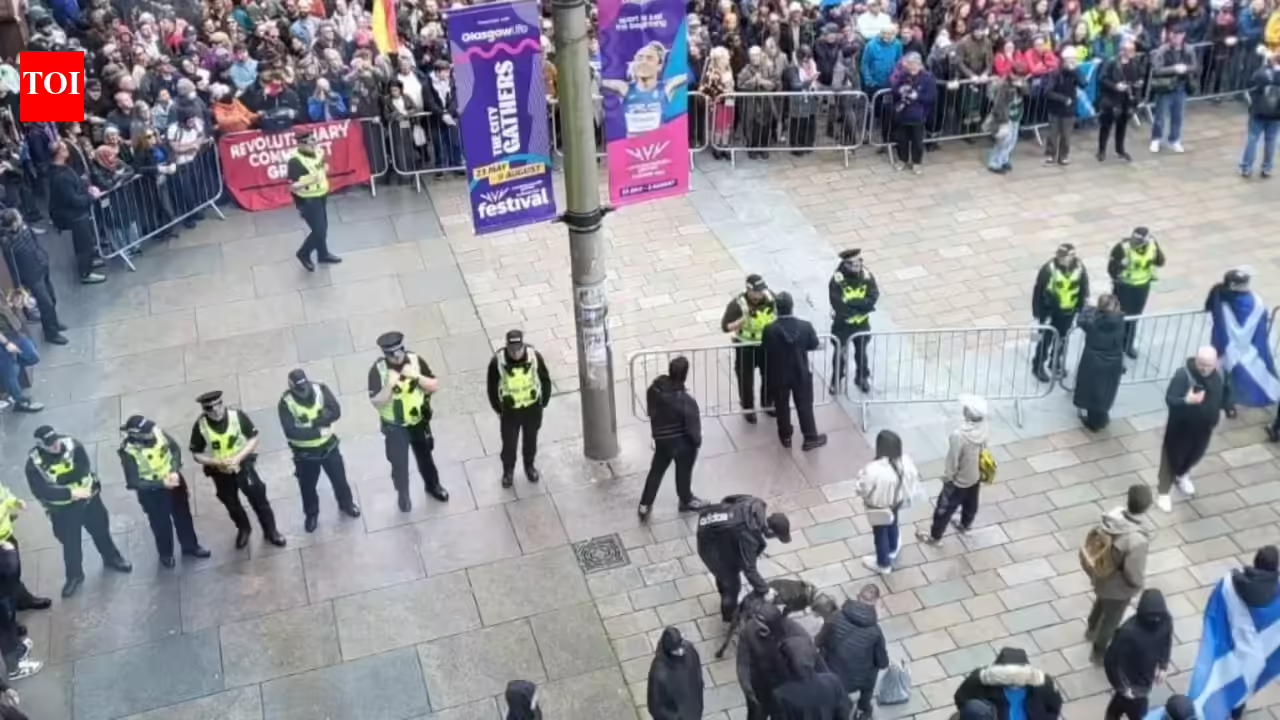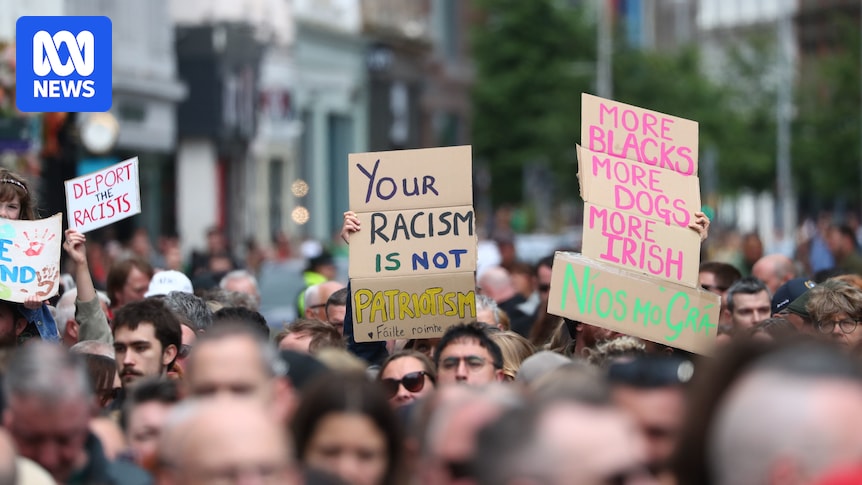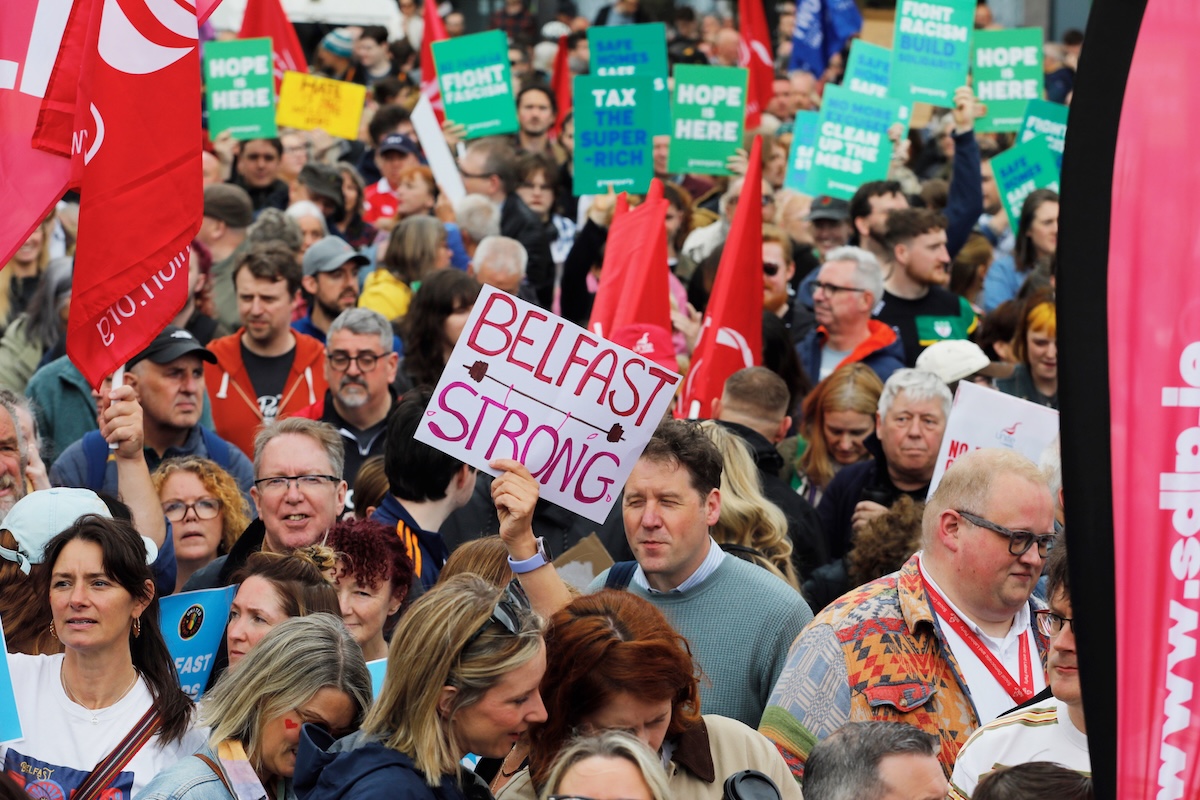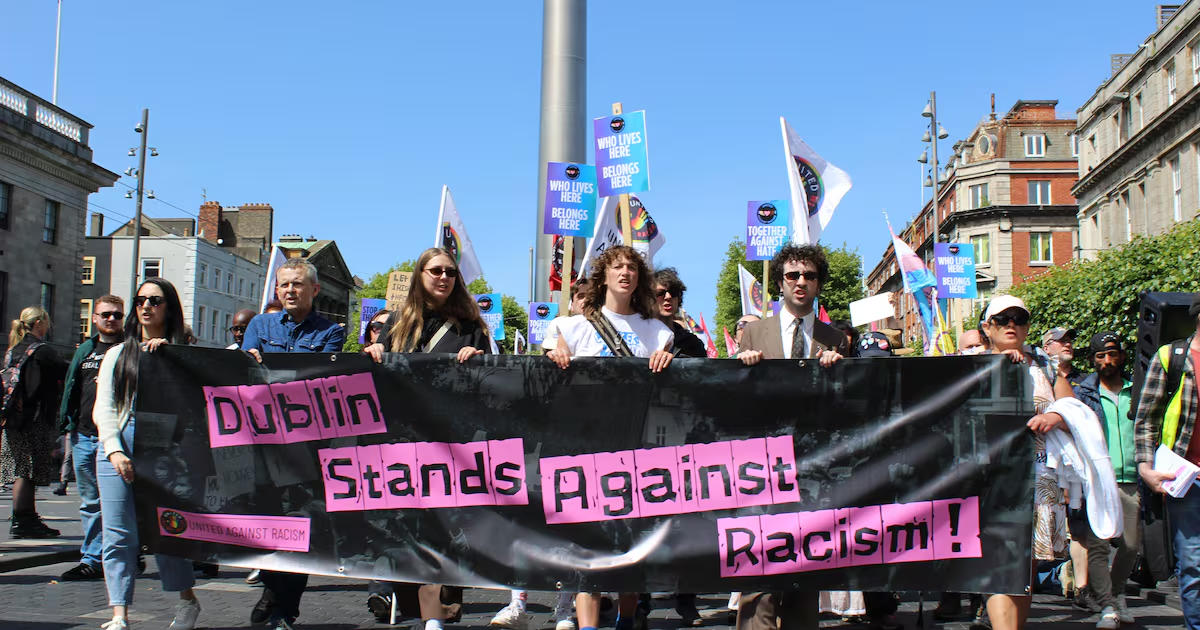
Demonstrators at an anti-racism march in Dublin on Sunday were told immigrant groups are frightened by the growth of racist rhetoric in Irish society. “In the moments we keep quiet, racism grows,” one speaker said. The United Against Racism march, which moved from the GPO on O’Connell Street to the Custom House, was held in response to days of violent demonstrations and rioting in Belfast in the wake of a stabbing attack on Monday.Anti-racism demonstrators on O'Connell Street, Dublin. Photograph: Hugh Dooley, The Irish Times The resulting disorder – which protesters in Dublin heard described as a “racist pogrom” – saw people forced to flee as their homes and cars were set alight in the first night of disorder on Tuesday.The violent disorder led to 32 arrests being made, while 42 officers were injured, the PSNI told The Irish Times on Sunday. The anti-racism protest in Dublin city followed days of violent disorder in Belfast. Photograph: Hugh Dooley, The Irish Times Organisers of the march said as many as 2,000 people took part, although the number could not be confirmed independently. The Garda said it is policy not to provide estimates of crowd sizes.The marchers were addressed by politicians including People Before Profit TDs Paul Murphy and Richard Boyd Barrett, Sinn Féin MEP Lynn Boylan, members of minority community groups, as well as artists Cúán De Búrca and Blue Niall. Cúán De Búrca taking part in the anti-racism march from the GPO to Custom House Quay. Photograph: Hugh Dooley, The Irish Times Bissa Kembetia, the president of the Irish Congolese Community, said the turnout was a comfort. He and his community have felt fear in recent weeks with the death of Yves Sakila and violence in Northern Ireland.“I have been here for more then 20 years, Irish [people] are not racist – they welcome us. But now, all of a sudden, everything has changed. There is fear in my face, in my heart, in my home,” he said. Bissa Kembetia, president of the Irish Congolese community, told an anti-racism march in Dublin that feelings of fear in his community are increasing. Photograph: Hugh Dooley, The Irish Times “I don’t know what will happen tomorrow. I am scared. But I am not scared when I see you all standing here."Kembetia pointed out that there were not many people of colour in the crowd at the march, but said the large number of people present showed that Irish people welcome immigrants. “People are scared,” he told The Irish Times after the protest. Minority groups who would like to have attended the march refrained from doing so over fears of being “singled out”.“In the moments we keep quiet, racism grows. We need to stand against racism,” he said.Paul O'Boyle drew comparisons between the targeting of immigrants now and the treatment of Catholics in 1970s Belfast. Photograph: Hugh Dooley, The Irish Times Originally from Belfast, Paul O’Boyle “grew up when pogroms were things you did to the ‘others’.” He added: ”In those times, the others were Catholics.“Racism is just adopting a stance against people you regard as ‘other’ – not real or human. It could be Jews, it could be Catholics.” Now, O’Boyle said, people of colour are the targets.On his way to the protest, he had walked past the memorial on Henry Street, where Yves Sakila died last month. He described this as being “like a jolt in the arm.”The protest was dotted with colourful placards, one of which was held by 21-year-old Anya Madzihon. Having come to Ireland from Ukraine four years ago, Madzihon said she wanted to counter “ridiculous” stereotypes against immigrants.“I’m working like everyone else does, I’m paying taxes like everyone else does,” she said. “The anti-immigrant [sentiment] is ridiculous.”Felix McKillop and Anya Madzihon took part in the anti-racism march in Dublin city. Photograph: Hugh Dooley, The Irish Times Madzihon was joined by Felix McKillop (25) from Dublin city centre.Living in the city, McKillop saw for himself the effects of the Dublin riots in November 2023. He felt it was important to stand in solidarity with minority groups who may not feel safe enough to come to the march themselves.“People need to cop on to themselves,” he said. “Let [immigrants] in, this is the land of a thousand welcomes.” Claire Mullen from Dublin attended the protest with her dogs Bailey and Buster, both of whom had anti-racist placards around their necks.“We cannot allow the most vulnerable people in society to be used as a scapegoat,” she said.Claire Mullen with her dogs, Bailey and Buster, at the anti racism march from the GPO to Custom House Quay. Photo: Hugh Dooley, The Irish Times Mullen said Government policy and rhetoric was contributing to the growth of racism in a similar way to how language surrounding single mothers had demonised that group.A single counter-protester heckled speakers with a chant of “refugees go home”. However, he was quickly shouted down.
‘There is fear in my home’: Up to 2,000 attend anti-racism march in Dublin
Event was held in response to recent violent demonstrations and rioting in Belfast
816 words~4 min read