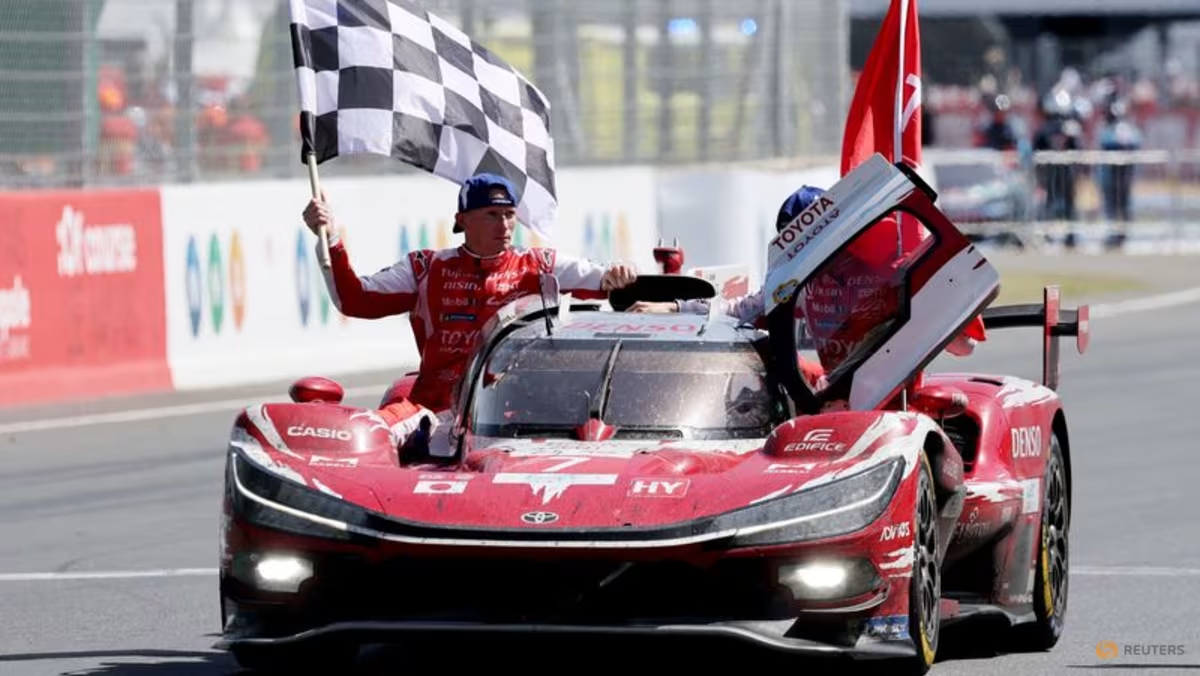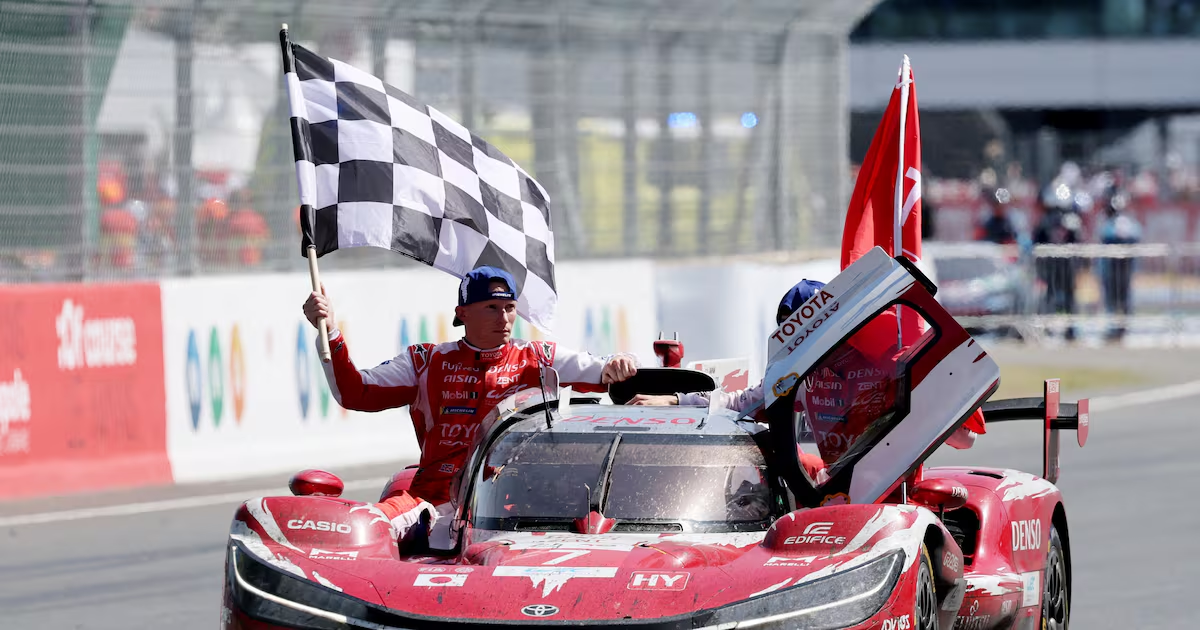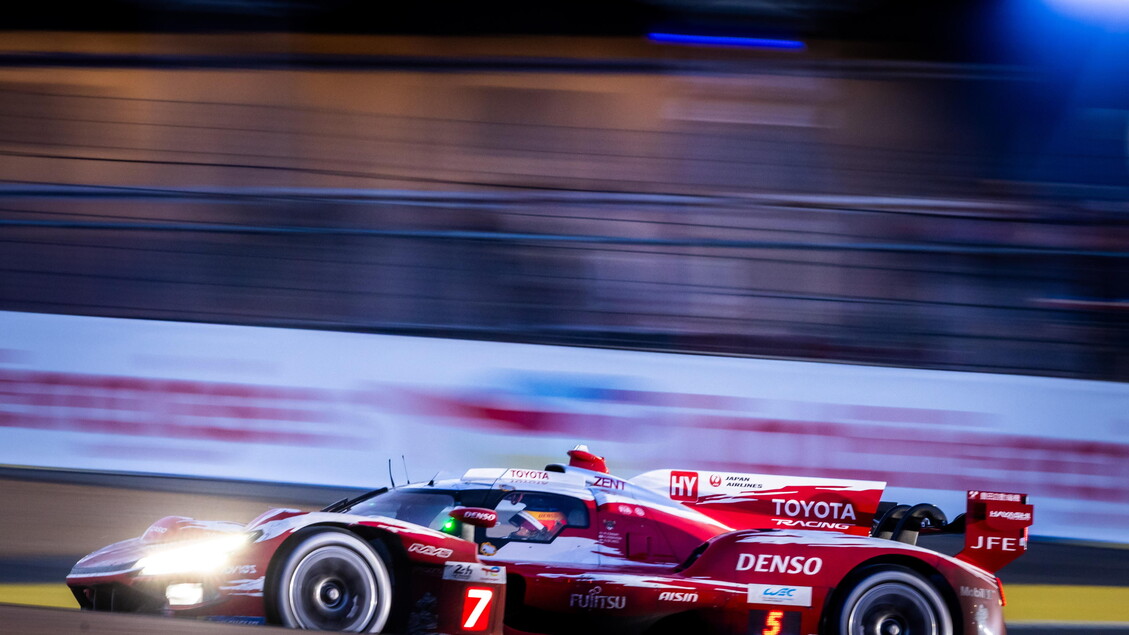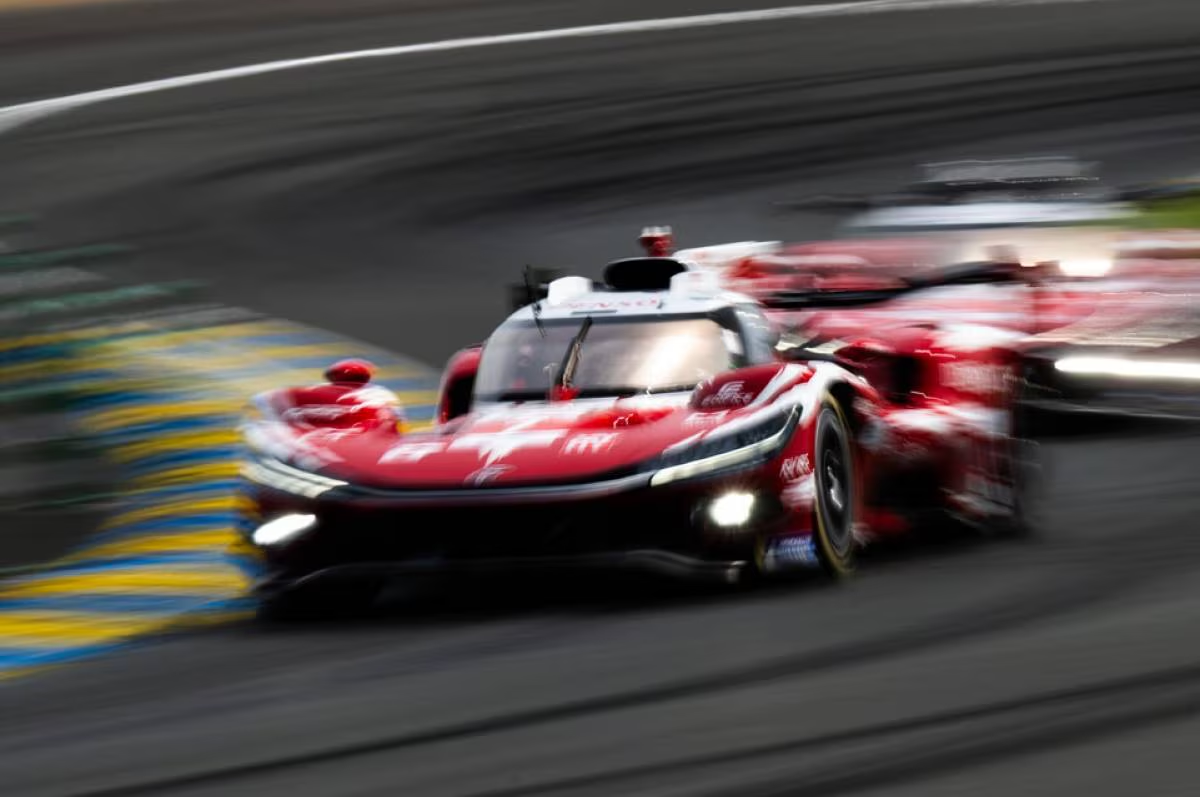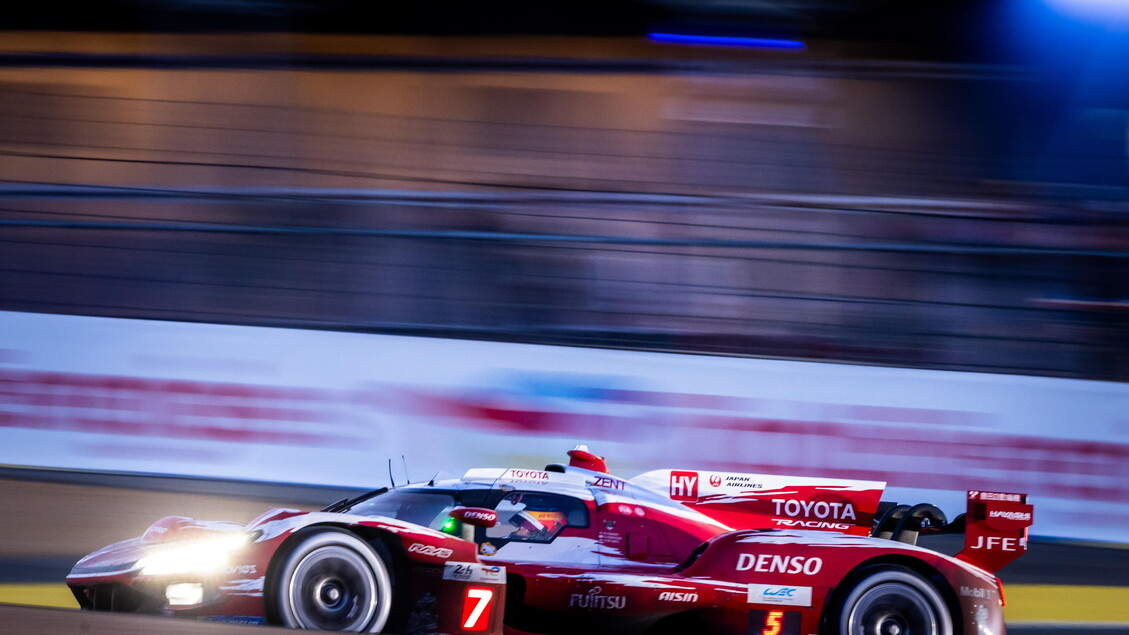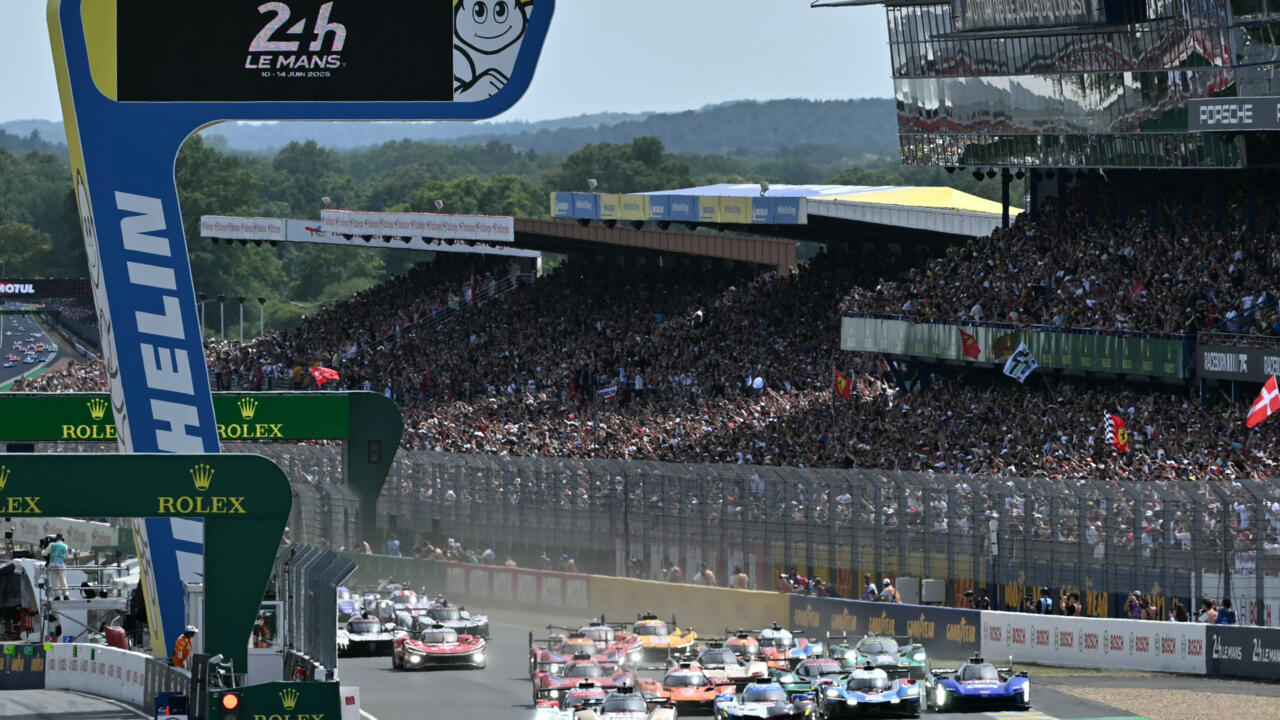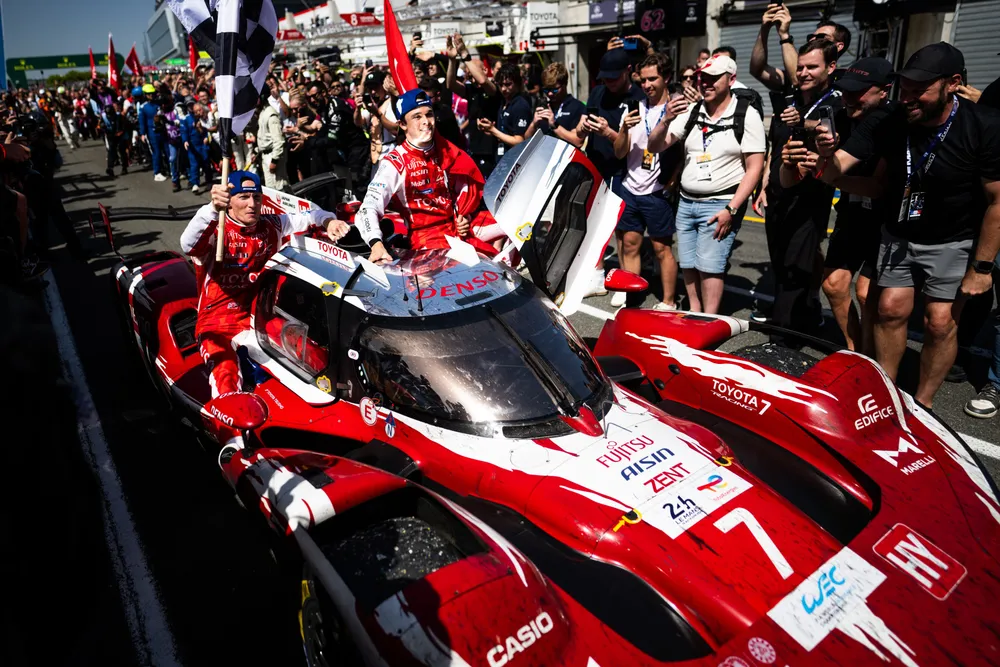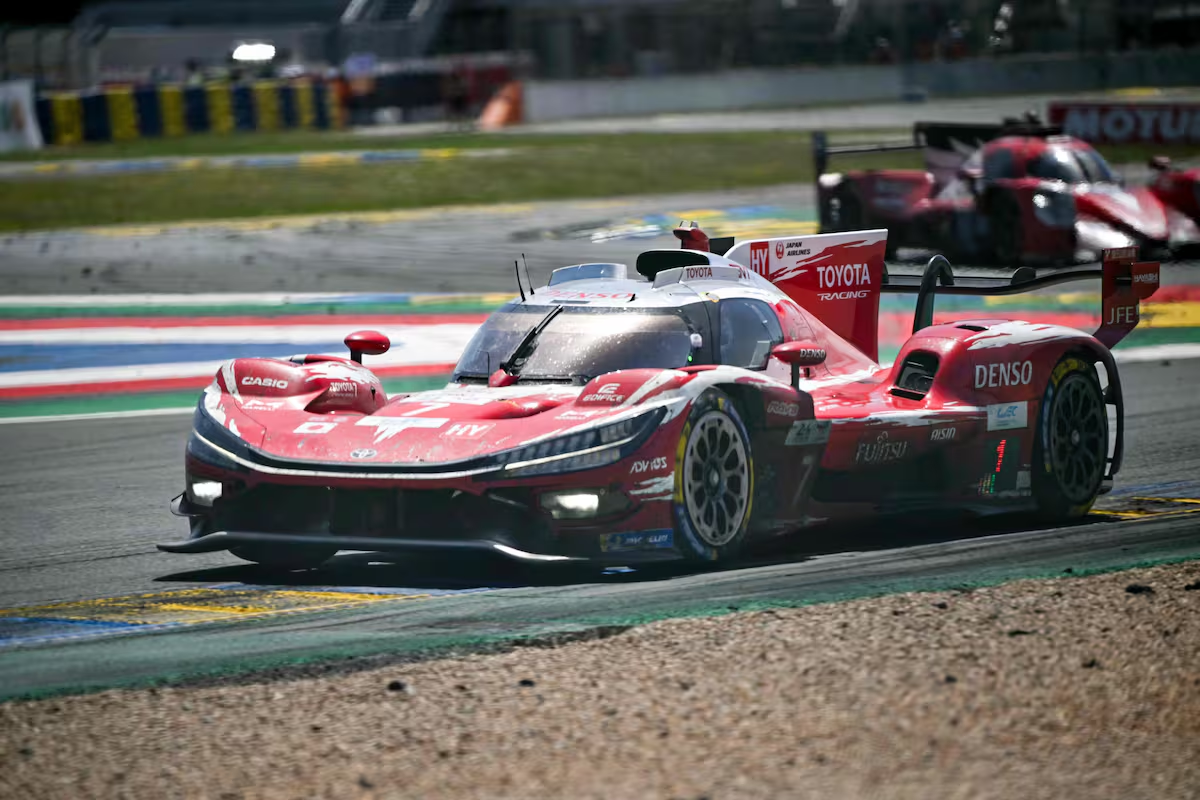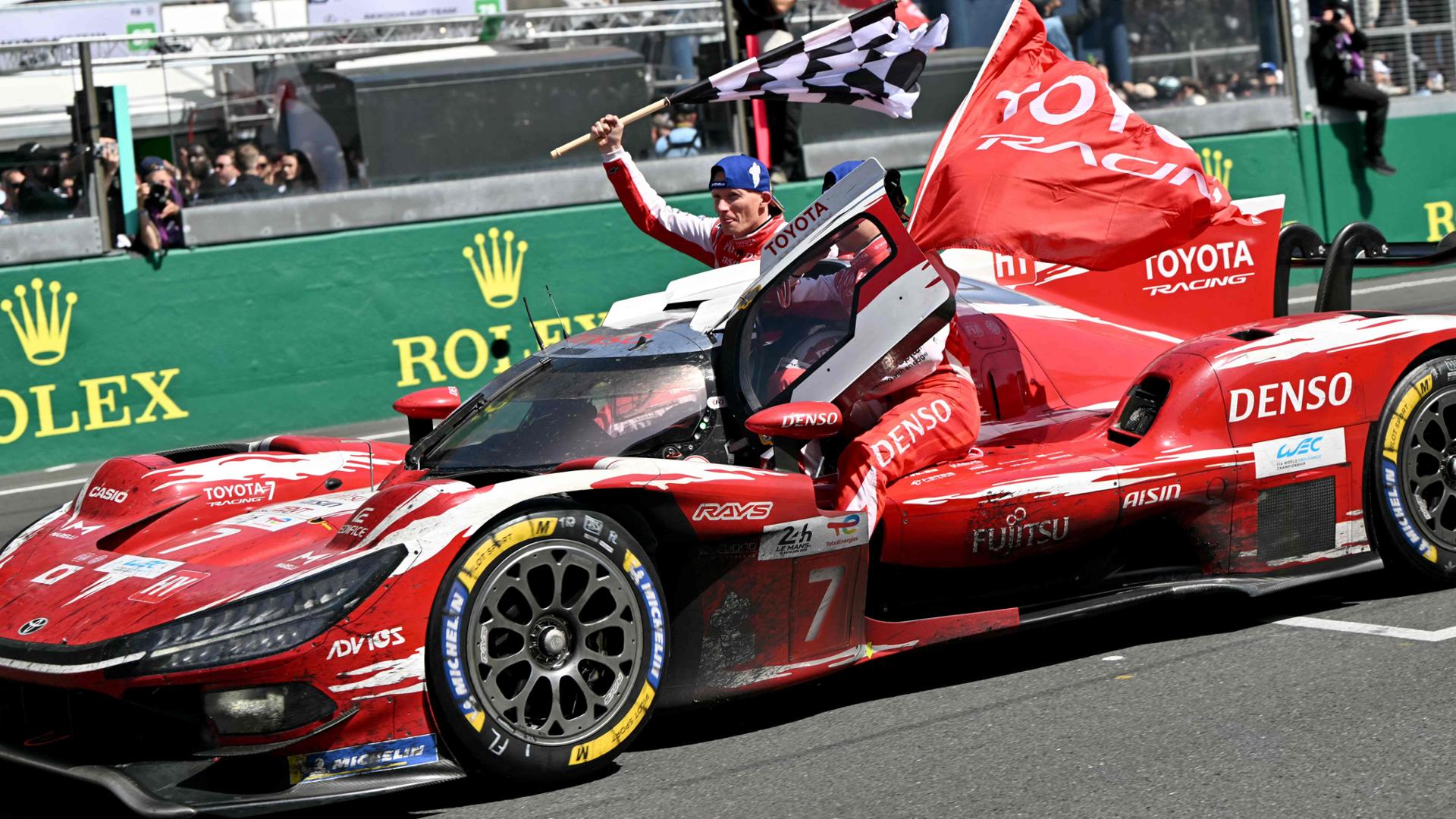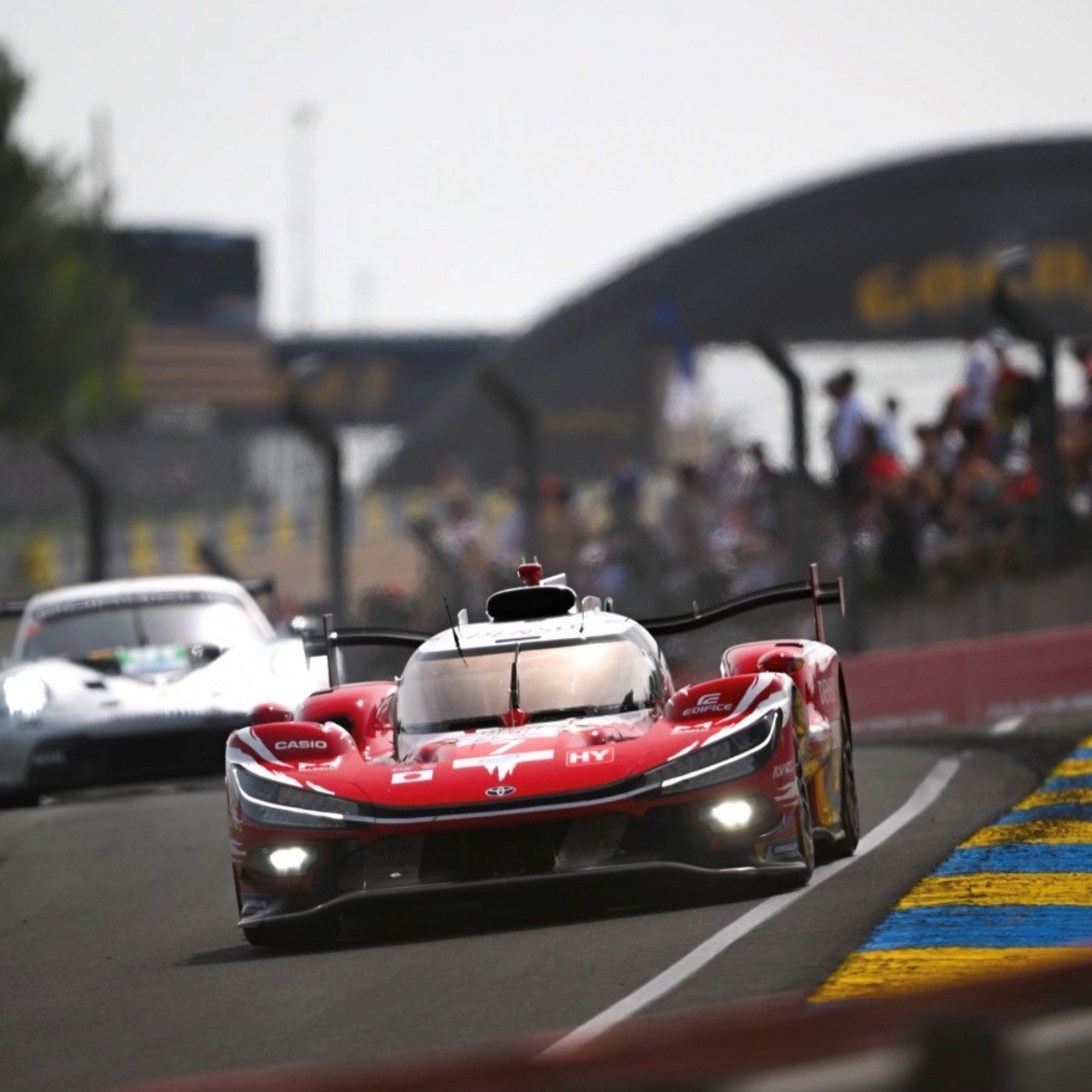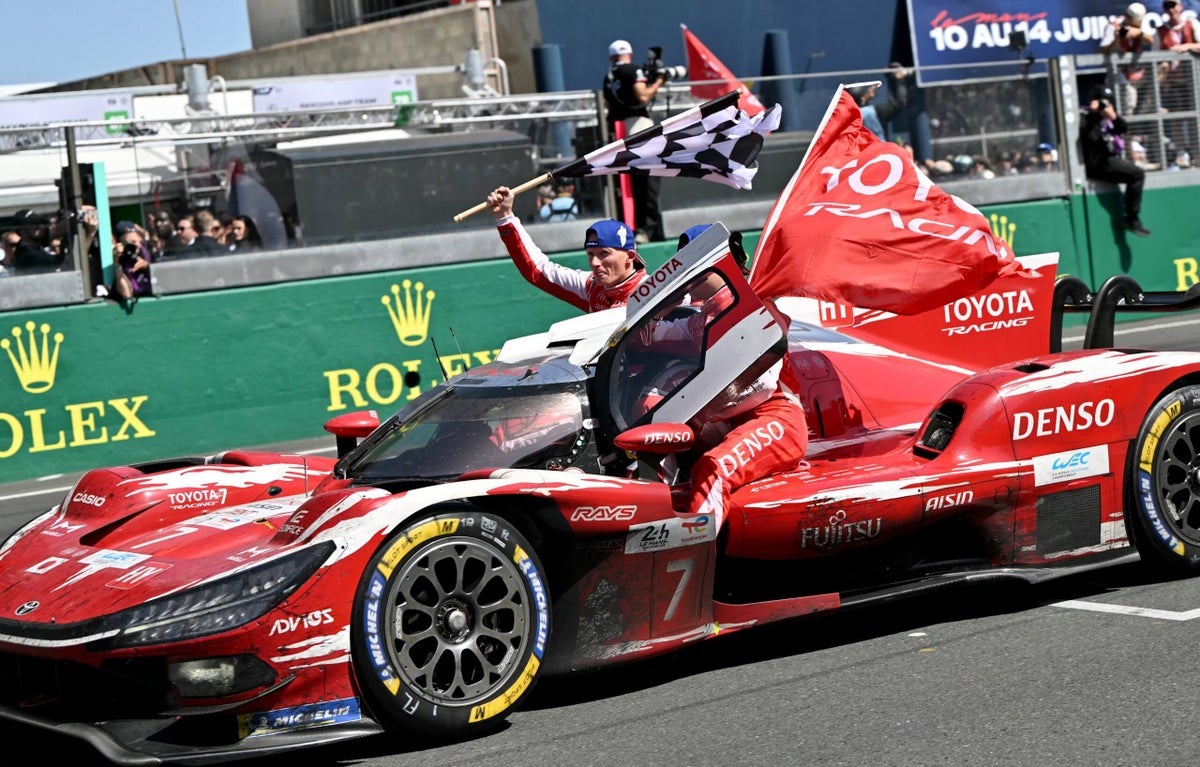
LE MANS, France — Toyota emerged triumphant in a pulsating battle with rivals BMW and Cadillac across a scorchingly hot 24 Hours of Le Mans contest.The Toyota crew of Kamui Kobayashi, Nyck de Vries and Mike Conway finished with a winning margin of 11 seconds to give the Japanese manufacturer a sixth overall Le Mans victory.Elsewhere, the previously dominant Ferrari cars were not in the fight at the front this time, neither were fellow Hypercar class runners Aston Martin, Alpine, Peugeot and Genesis (the premium car brand of South Korean manufacturer Hyundai).Toyota, BMW and Cadillac quickly rose to the fore after the race start, which took place at 4 p.m. local time on Saturday,Although Kevin Magnussen quickly dropped back from starting the No 15 BMW on pole position, Rene Rast put the No 20 BMW into an early lead that he maintained over the No 12 Cadillac car for the race’s opening portion.Toyota, which had its cars starting down the grid in 14th and 15th after a lackluster showing in qualifying, established the story of the race by pitting earlier than the rest of the Hypercar field. Both Toyotas used the clean air they emerged into to unleash strong pace under cloudless skies in northern France.That meant the No 8 Toyota took the lead with the rapid Sebastien Buemi at the wheel when the rest pitted, and for a long while this car looked to be Toyota’s best victory shot.Its battle continued to be with the No 20 BMW, until Cadillac’s pace improved as the temperature dropped when night fell.Heading towards halfway, Cadillac’s No 38 car that had set the fastest time in qualifying but lost pole due to a penalty had even shot to the lead, but a powering steering failure suddenly put the car and drivers Sebastien Bourdais, Jack Aitken and Earl Bamber out with just over 12 hours remaining.As the sun rose, the No 12 Cadillac of Louis Delétraz, Norman Nato and Will Stevens was well placed in the lead fight, before it got hit with a penalty for a slow zone infringement and the race’s second safety car with just under six hours left that bunched the field at the front. This aided Toyota’s race as its cars gained time, then got quicker again compared to its rivals as the temperatures rose.The No 7 gained handy time on its sister car when the No 8 lost time having its front brakes repaired around the safety car period, before they both hunted down the No 12 Cadillac that had maintained a strong position as the clock ticked towards a quarter of the race remaining.The Toyotas then took control in the closing hours, with the No 20 BMW staying close and then thwarting a Toyota 1-2, as the No 8’s tires wore. Buemi fought Robin Frijns hard for many laps, but in the end the BMW battled by.In the final hour, Frijns continued chasing and cut the gap between them from 24 seconds to just 11 by the finish, but it had been clear for some time that Toyota was in control.The other two retirements in the Hypercar class were the No 50 Ferrari and the 17 Genesis Magma Racing car.The former exited with an electric issue with five-and-half hours remaining around the second safety car period, while the latter retired with a broken front-right suspension that put it out at the Dunlop chicane early in the 8.4-mile track, with seven-and-a-half hours left.Sunday’s win was a first for Toyota at at the Circuit de la Sarthe since 2022. (Lou Benoist / AFP via Getty Images)What Toyota’s Le Mans win means for the top class of the WECThe victory at the Circuit de la Sarthe was a first for Toyota here since 2022. It also means that the streak of LMDh cars (a cheaper way of producing Hypercars using some general parts) being defeated in the top class of the World Endurance Championship at Le Mans continues.BMW and Cadillac both field LMDh designs, compared to Toyota’s Hypercar — which is entirely produced in-house by the Japanese manufacturer — and the fight between all three was close all race.But Toyota’s pace in the high temperatures was critical — aided by the TR010 Hybrid being handily kind to its tires. That meant its drivers could keep pushing on, although the late strategy split between the two cars, with the No 8 keeping on the same set of tires for a long time approaching the final hour, meant Buemi got caught in the battle with Frijns.Ahead, Toyota team principal Kobayashi ran serenely to the finish in the No 7, even with Frijns’ pass on Buemi increasing the pressure. But the pair were on the same tire strategy, which meant although the BMW slightly ate into the Toyota’s lead to the flag, it was not enough to stop Toyota.The result gives Kobayashi and Conway their second Le Mans victories, while de Vries secured his first — comfortably the biggest result of his motorsport career since he won the 2020–21 Formula E title, before a troubled, brief spell with the AlphaTauri team in Formula 1 in 2023.“It feels such a relief,” de Vries said. “I’m so thankful that Le Mans chose us this year. We had a very challenging race, lots of issues, lots of setbacks, but it shows that you’re never allowed to give up.“The safety car six hours to go was definitely very welcome, but given all the challenges we were dealing with this is a very proud moment for the whole team.”Ferrari charge for a fourth victory fails to igniteAlessandro Pier Guidi brought the lead Ferrari 499P car home in fifth, over two minutes behind the victorious Toyota. This marked the lowest Hypercar result for Ferrari since the team returned to racing in WEC in 2023.Ferrari had come into 2026 lacking the major aero developments of its Hypercar rivals at Toyota, BMW and Cadillac, although it did have some design refinements compared to last year. The impact of the WEC’s Balance of Performance mechanism must also be considered when assessing Ferrari’s Le Mans performance this year, as the WEC uses various tools, primarily on how engines are run, to try and equalize speeds between cars.
Toyota wins 24 Hours of Le Mans by outlasting BMW and Cadillac
Toyota wins its sixth overall Le Mans title by outlasting rivals BMW and Cadillac.
TL;DRAI
Toyota wins Le Mans with 11-second margin over BMW using early pit timing and superior hybrid thermal tire performance. In-house Hypercar thermal durability beats LMDh, signaling enterprise fleet EV adoption and automotive R&D investment priorities.
1,351 words~6 min read