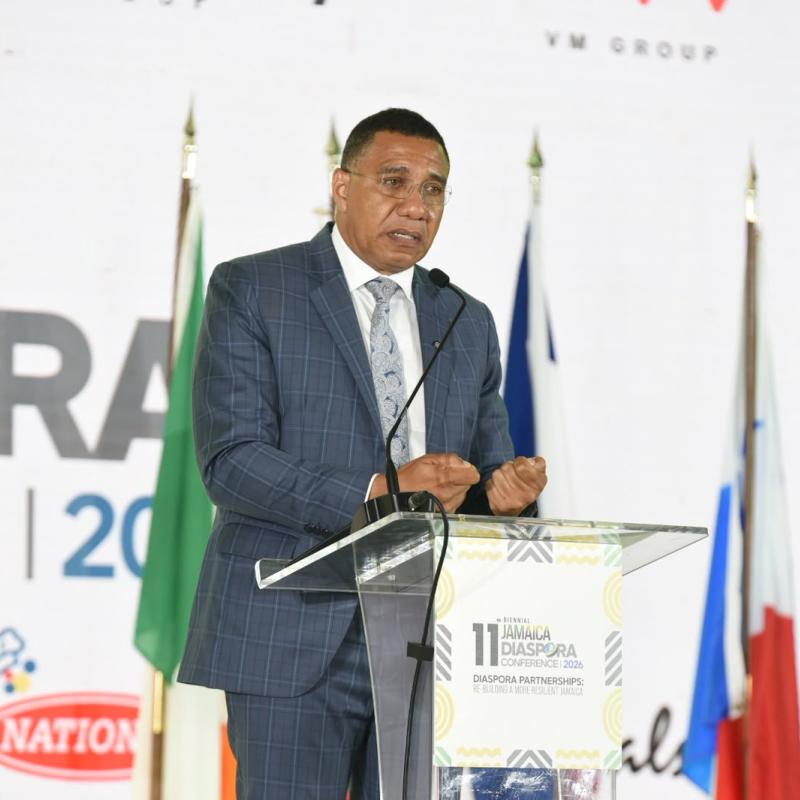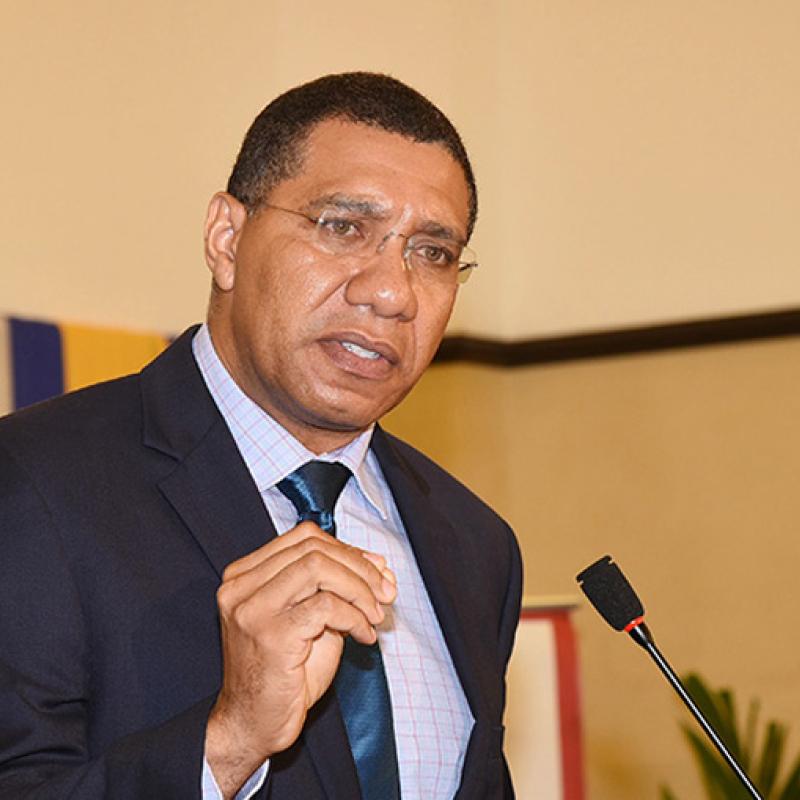
Renegotiating the Jamaica Public Service Company's electricity licence alone will not resolve the country's energy challenges, and Jamaica must begin preparing now for nuclear technology deployment within the next decade, says Prime Minister Dr Andrew Holness."We cannot place all our hopes for reduction on a renegotiated licence. We must now explore in meaningful ways, the large-scale deployment of alternative energy sources," Holness said at the Jamaica Chamber of Commerce 41st Annual Awards Banquet on Thursday night."We must prepare ourselves to be able to deploy nuclear technology. …It's going to be a decade or so. But to be able to deploy that, you have to prepare from now," he said, describing nuclear technology as "the de facto clean energy resource."Nuclear energy is generated through fission, the splitting of uranium atoms, producing large amounts of electricity with minimal greenhouse gas emissions. It is increasingly being embraced globally as a reliable, low-carbon alternative to fossil fuels.The prime minister reiterated that licence renegotiation talks with JPS are actively under way, with the government seeking to lock in major cost reductions for households and businesses through the new agreement. "The intention is to lock in with a licence certain changes that will see tangible reductions in electricity and energy costs for households and businesses," he said, acknowledging that Jamaica's energy costs remain "prohibitive". The JPS licence will expire July next year. Last year, Energy Minister Daryl Vaz announced that the licence will not be automatically renewed. JPS, in which the government has a stake, is Jamaica’s sole power provider. Holness’ comments came days after an island-wide power outage on June 5, Jamaica's first all-island system shutdown since April 2016 and the sixth since 2006. The situation has intensified public pressure on both the government and JPS ahead of the utility's licence expiration.JPS President and CEO Hugh Grant attributed the outage to lightning strikes that damaged equipment at two stations, triggering what he described as a cascading grid failure.However, the energy minister told the House of Representatives on Wednesday that the preliminary findings were "not acceptable" and that further investigation was required. Vaz also confirmed that Jamaicans and businesses that suffered losses during the blackout have no legal entitlement to compensation. Vaz said the upcoming expiration of the current JPS licence presented a critical opportunity to establish clearer standards for performance and accountability, aligning with the posture Holness outlined at the Chamber banquet.The Office of Utilities Regulation said on Friday it had established a special internal team to review JPS's preliminary report and direct the ongoing investigation, cautioning that no conclusions or regulatory enforcement actions could flow from the preliminary findings alone. A final detailed report from JPS is due within 30 days of the full restoration of electricity.Opposition Spokesman on Industry Anthony Hylton also warned that the blackout and its handling risked damaging Jamaica's standing with global stakeholders, a view Vaz said he agreed with. Holness also noted that energy costs had risen approximately 60 per cent since the Middle East conflict began in February, compounding pressures on businesses already navigating the economic aftermath of Hurricane Melissa. The view that licence renegotiation alone is insufficient is not confined to Jamaica as former Trinidad and Tobago Energy Minister Kevin Ramnarine, writing this month in a paper published by US think tank Energy For Growth Hub, warned that Jamaica's electricity rates remain among the highest in the Caribbean and globally. He noted that this is driven by reliance on imported fuel, system losses of 26.9 per cent from theft and grid inefficiencies, and legacy power purchase agreements that "continue to lock in uncompetitive pricing." Ramnarine, who served as energy minister from 2011 to 2015, argued that the government's decision not to automatically renew JPS's licence created an opening, but only if used to address root causes rather than focus solely on renegotiating existing arrangements."The success of this transition will depend on whether reforms tackle underlying issues such as system losses, contract transparency, and sector governance, rather than focusing solely on renegotiating existing arrangements," he wrote.According to GlobalPetrolPrices.com, which tracks energy prices across more than 100 countries, Jamaica's residential electricity rate averaged US$0.287 per kilowatt-hour between 2023 and 2026, higher than the United States, Canada, most of Latin America, and regional neighbours including the Dominican Republic. In comparison, Trinidad and Tobago's rate is US$0.057 per kilowatt-hour, roughly a fifth of Jamaica's, reflecting the advantage held by oil-producing Caribbean neighbours. There was no data available on Guyana. Follow The Gleaner on X, formerly Twitter, and Instagram @JamaicaGleaner and on Facebook @GleanerJamaica. Send us a message on WhatsApp at 1-876-499-0169 or email us at onlinefeedback@gleanerjm.com or editors@gleanerjm.com.
Nuclear energy within a decade: Holness says renegotiated JPS licence alone won't fix Jamaica's energy crisis
Renegotiating the Jamaica Public Service Company's electricity licence alone will not resolve the country's energy challenges, and Jamaica must begin preparing now for nuclear technology deployment within the next decade, says Prime Minister Dr Andrew Holness."We cannot place all our hopes for reduction on a renegotiated licence. We must now explore in meaningful ways, the large-scale deployment of alternative energy sources," Holness said at the Jamaica Chamber of Commerce 41st Annual Awards Banquet on Thursday night.
767 words~3 min read