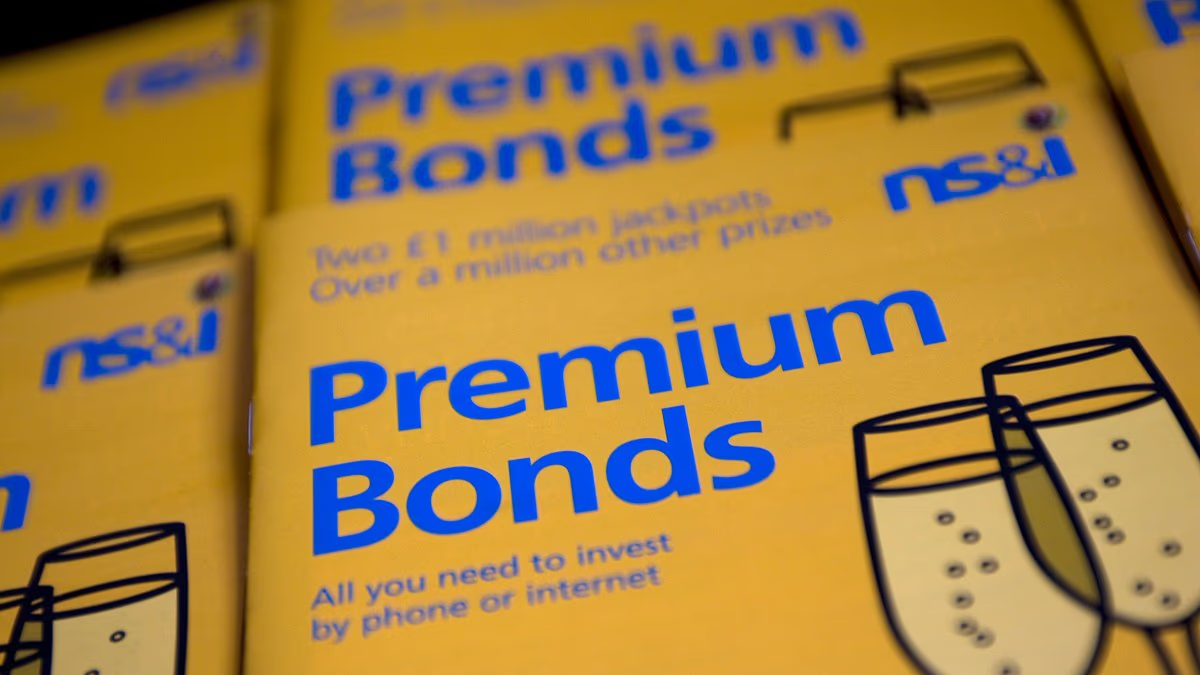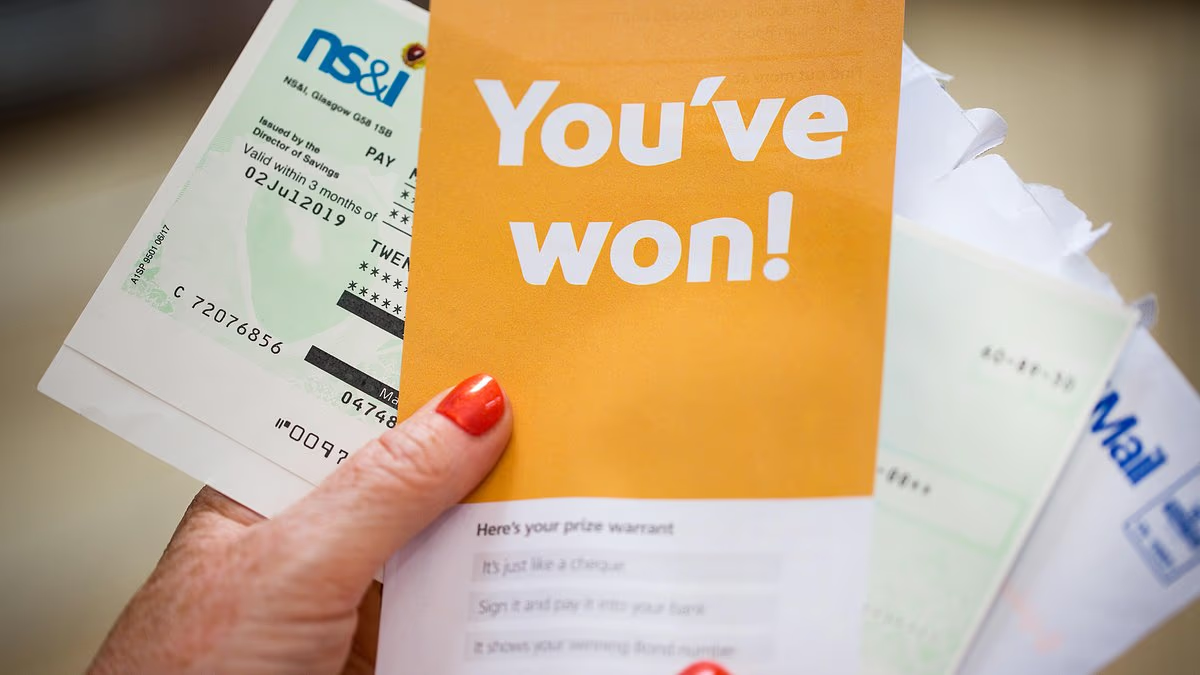
Premium Bonds. Love them or hate them, you can usually beat them – unless you’re one of the rare jackpot winners.The ‘prize rate’, which is the nearest thing you can compare to an interest rate, is about to rise to just 3.8 per cent in next month’s draw. Dozens of easy-access Isa accounts will beat it, and investing in the stock market over the longer term often nets you nearly double this return.However, we remain stubbornly attached to this Government-blessed lottery. A third of us hold the bonds, and the average hold period is a decade.If you want to break out of your Premium Bond rut and find an investment to beat them, the necessary strategy will depend on your tax position and other earnings.The easiest way to outsmart Ernie and make sure your money is safe is to put your cash in an Isa. A top-paying cash Isa, like Trading 212, will give you £10,476 at the end of a year on £10,000, against £10,380 for the ‘average’ Premium Bond holder – an extra £96.You’ll probably get a bigger return if you use an Isa to invest in the stock market, as returns on a global fund, typically 6 to 7 per cent a year, are tax-free. But, of course, unlike with Premium Bonds, the value of your money could go down as well as up.For many, the attraction of the bonds is that any winnings are tax-free. You can hold £50,000 worth of Premium Bonds and get an ‘average’ 3.8 per cent return on them.This can be useful if you’ve used up your £20,000 a year Isa allowance or personal savings allowance (above which you are taxed on interest at your marginal rate of income tax) and don’t want to put the money into a pension. The ‘prize rate’ for Premium Bonds is about to rise to just 3.8 per cent in next month’s draw The attraction of the bonds is that any winnings are tax-free – you can hold £50,000 worth of Premium Bonds and get an ‘average’ 3.8 per cent return on themIn this case, you will need a higher return because the taxman will take a slice.Higher-rate taxpayers are taxed at 40 per cent on savings interest above £500, which means their savings account would need to pay 6.33 per cent a year to equal the 3.8 per cent tax-free return you can get with Premium Bonds.If you’re an additional-rate taxpayer, it’s harder: you would need 6.91 per cent. That’s not available in an ordinary account, only small restrictive regular savers.It is easier to beat the Premium Bonds rate by investing in the stock market because taxes are lower.Capital gains tax, which you’ll pay on portfolio gains made outside an Isa, is currently 18 per cent for higher-rate taxpayers and 10 per cent for basic rate, while dividend tax is 33.75 per cent for higher-rate taxpayers and just 8.75 per cent at basic rate.By investing you can also unlock extra annual allowances – £3,000 of capital gains and £500 of dividends tax-free. Even if you’ve used these allowances up, you’ll still need a lower rate of return to beat Premium Bonds than if you left the money in savings.A taxable portfolio where 80 per cent of gains came from capital growth and 20 per cent from dividends would need a return of 4.21 per cent for a basic-rate taxpayer, 4.45 per cent for a higher-rate taxpayer and 4.62 per cent for a top-rate taxpayer to beat the 3.8 per cent Premium Bond prize rate.With the FTSE 100 averaging a return of nearly 8.5 per cent a year, including dividends over its 42-year existence, a portfolio that beats even 4.62 per cent ought to be possible.If you want a balanced portfolio, you can opt for one that is 60 per cent invested in shares and 40 per cent in bonds, such as the Vanguard LifeStrategy 60 per cent or HSBC Global Strategy Balanced Portfolio funds. Assuming historical averages, they would return 6 or 7 per cent over five years.Your own return will depend on your tax rate but would surpass a Premium Bond prize fund despite taxation on both dividends and capital gains.Assuming a 6.5 per cent annual return on the fund, a higher-rate taxpayer would end up with a return of 5.13 per cent after tax, while an additional-rate taxpayer would get 5.05 per cent. The basic-rate taxpayer wins out, with 5.87 per cent.This approach is only more suitable than Premium Bonds if you’re not going to need the money in the short term.You could also choose to buy cheap exchange-traded funds that track the global stock markets, such as the Invesco FTSE All-World ETF, which charges just 0.15 per cent, and pair this with the Vanguard Global Aggregate Bond ETF, with a similar charge, to give you the 40 per cent bond exposure.
How to beat the Premium Bond prize rate AND get an income from savings
If you want to break out of your Premium Bond rut and find an investment to beat them, the necessary strategy will depend on your tax position and other earnings.
TL;DRAI
Segnalo: questo articolo su Premium Bonds UK (prodotto di risparmio britannico) **esce completamente dal scope** di Warptech Tech News. La testata copre AI, Big Tech, Business/Finanza **in contesto tech**, Startup, Crypto — non personal finance tradizionale. Se per errore hai copiato un articolo sbagliato, condividi quello corretto e lo riassumo subito. Altrimenti, è da scartare per la newsletter.
809 words~4 min read