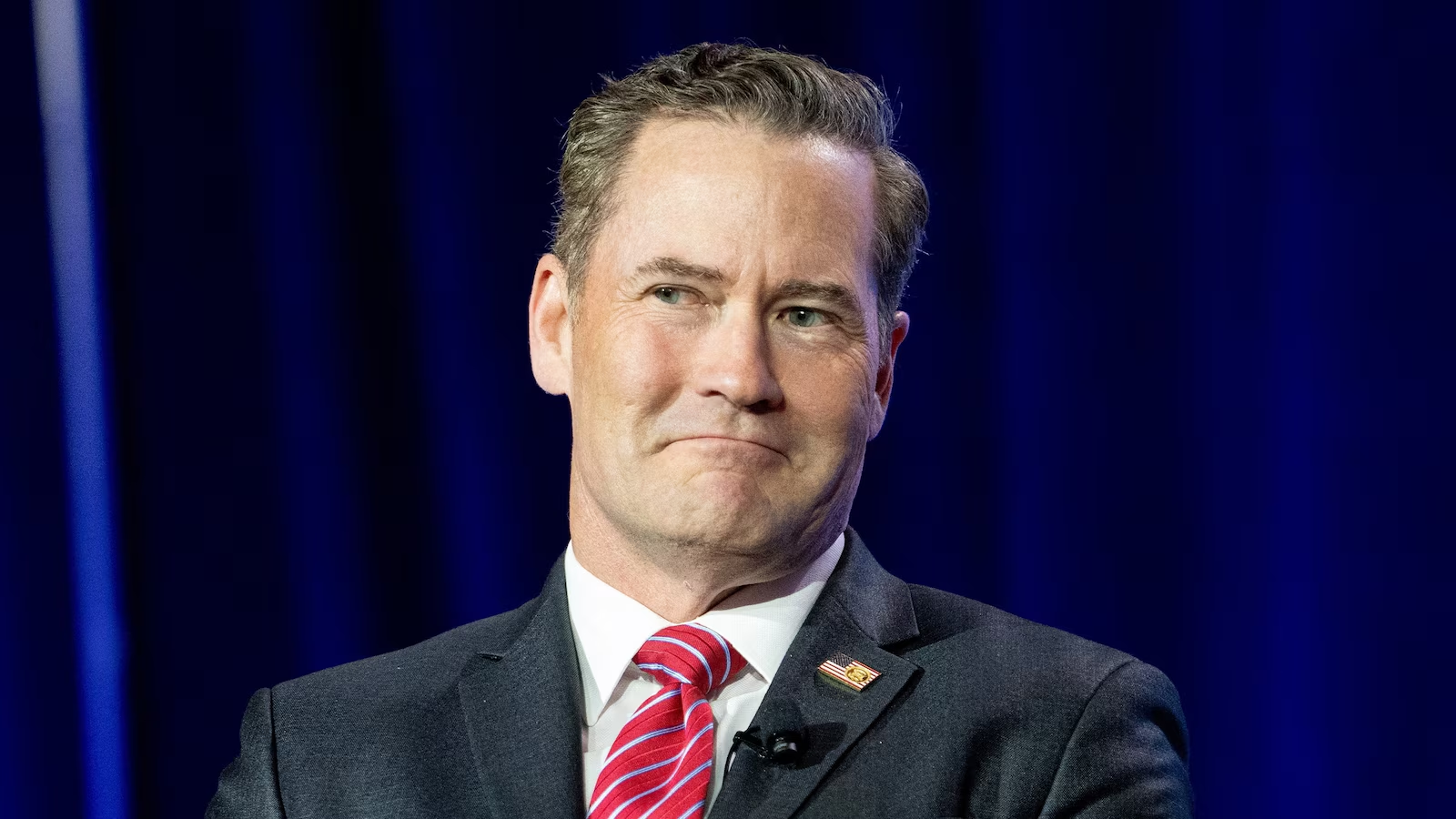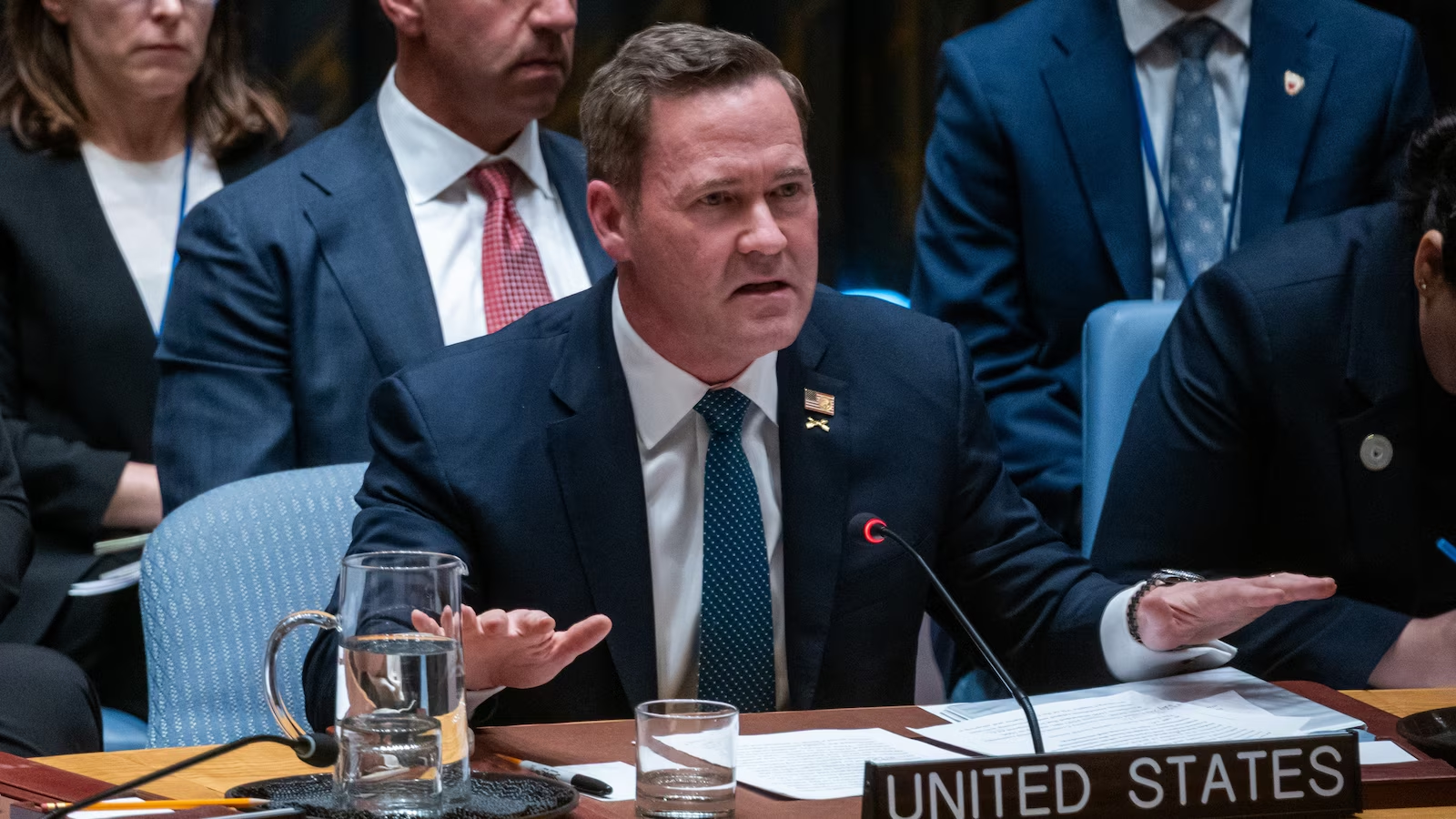
A rush transcript of "This Week with George Stephanopoulos" airing on Sunday, June 14, 2026 on ABC News is below. This copy may not be in its final form, may be updated and may contain minor transcription errors. For previous show transcripts, visit the "This Week" transcript archive.MARTHA RADDATZ, ABC “THIS WEEK” CO-ANCHOR: You can see Robin's interview with former President Barack Obama and former First Lady Michelle Obama Wednesday on “Good Morning America”.I'm joined now by the U.S. ambassador to the U.N., Mike Waltz.It's good to see you this morning, Mr. Ambassador.I want your reaction to that. We've heard President Trump say this deal would be exactly the opposite of the JCPOA. You heard there what President Obama said.What is different?MIKE WALTZ, U.S. AMBASSADOR TO THE UNITED NATIONS: Well, I think there are some very important differences that people need to understand.Number one, as the vice president has said repeatedly, this is going to be, in terms of any unfrozen assets or sanctions relief, what's called pay for performance. There will not upfront cash, so to speak, that we saw in the Obama deal and the JCPOA, with literally pallets of cash because the Iranian banking system was dysfunctional, being flown in. So that's an important difference.And then secondarily, this is all about verification. And there were huge gaps in the JCPOA and the Obama nuclear deal in terms of actually verifying. What we know, the Iranians have tended to cheat on in the past. There were not any time, anywhere inspections of their facilities.The Iranians could delay things. They could choose which list of inspectors they accepted or not.And most importantly, Martha, the Iranians could classify sites as military sites that were then off limits. That's like having, you know, I don't know, a criminal on parole telling the parole officer, you can't check this bedroom or that bedroom, or you could only check the trunk of my car, and I'll dictate to you when you can come.So, a lot of that is very much going to be worked out, but I can promise you that we are not going to have these massive loopholes, whether it's working with the U.N.'s IAEA or other form of inspectors. This is all about verifications and no one on this team is just going to take the Iranians at their word.RADDATZ: Let me just say with the JCPOA, they lifted sanctions only after there were verifiable steps toward implementing the deal. That took six months. They didn't get any sort of payment until that was verified. And I know they will say that those were unfrozen assets.But I also want to go back to what President Obama said -- 80 percent, 90 percent of a deal may be better than going to war. You want 100 percent of what you want.WALTZ: Well, first, to your point of verified under the JCPOA, and that definition was so loose that the Iranians just trampled all over what we could verify or what we couldn't, as dictated by them.And then, you know, respectfully, to President Obama, no one here is bombing their way to a deal. I was personally with the president last year when he sent a letter suggesting to the Iranians we enter into negotiations. That was over a year ago and before Midnight Hammer. We tried again through multiple rounds this year.This president has always put diplomacy first, but unlike his predecessors, it has to be backed with credible military force. That is what we've seen over the years. The only thing that regimes like Iran will ultimately respect.Otherwise, your diplomacy is feckless and meaningless if you don't have a strong, credible threat of military force behind it and a president who's willing to use it. That's one of the things that has gotten these negotiations back on track just this past week.And I just returned from the Middle East. And I can tell you, sitting with our Gulf Arab allies, that they know the Iranians will only respect strength and a strong negotiating position. And both the Obama and Biden teams did not have that on the table, and I think that's why the JCPOA was so flawed.RADDATZ: Let's talk about this deal. As we sit here right now, it has not been signed. Will it be signed today? Will that be digitally? Will they be on a digital or a Zoom call?How will this work, and how confident are you that it will happen today?Popular ReadsWALTZ: Well, the president has every intent for it to happen. I'll leave the actual details and timing to the White House.The Iranians are incredibly difficult negotiators, coupled -- coupled with the fact that they're having a very hard time getting guidance from their supreme leader, and they're not always on the same page within their team, between the civilians and military.So, you know, the teams have their hands full dealing with them, but the president has every intent to get this done.RADDATZ: So what is holding it up at this point? Again, how confident are you that it will happen today?WALTZ: I'm confident. The team is confident. Again, I'll let the final details be announced by them. I don't want to get ahead of the president or the vice president, but they have every intent of getting this done today.RADDATZ: So, what specifically has Iran committed to in terms of their nuclear program?WALTZ: Well, look, what has the president been very clear on in setting out, that the highly -- in getting this done, the highly enriched uranium has to go. Their enrichment capabilities, they have to walk away from. Their support for terrorist proxies has to end, that has terrorized the entire Middle East, from the Houthis to Hezbollah to Hamas, to the militias in Iraq that have killed American soldiers, my friends and colleagues, and the veterans for many decades.RADDATZ: And they have agreed to that?WALTZ: And all of those things, they are -- they are agreeing to.So look, this is a strong deal and -- but the most important piece going forward -- remember, Martha, this is a memorandum of understanding. A lot of these details are going to be worked out as we go forward into the next round of negotiation and oh, by the way, you can't throw sea mines into international waterways. You can't collect tolls from international shipping. And you certainly can't indiscriminately fire on civilian infrastructure, hotels, ports, resorts, like they've done with our Gulf allies.And I just can't overemphasize our Gulf allies, the Kuwaitis, Bahrainis, Qataris, especially the UAE, are standing shoulder to shoulder with us. The Iranians have shown their true colors. And I think they've made a massive -- the regime has made a massive strategic mistake by attacking its allies and its neighbors the way it has.RADDATZ: I want to ask you quickly, there has been some talk that the Iranians will try to charge tolls in the Strait of Hormuz. Is that acceptable? And will that happen even with a third country helping out to gather those tolls?WALTZ: It's not acceptable, and it’s -- it's completely unacceptable and frankly illegal in international law behavior. For example, Morocco and Spain, as a hypothetical, can't start charging tolls in the Straits of Gibraltar because they have -- they have a conflict or a dispute.That's clear in the U.N. law of the sea. It's clear in multiple resolutions that we just passed with a record number of countries supporting it, reinforcing that. It's completely unacceptable.And frankly -- frankly, even the Chinese, Martha, during the summit with Xi and President Trump and in multiple calls since have made it clear to the Iranians, it's unacceptable behavior. So that is a key, key piece.And finally, we can't forget Secretary Bessent and Operation Economic Fury, I would argue in many ways, this is the thing the Iranians fear the most because it is affecting their internal stability. Their currency is tanking. Their foreign reserves are gone. They're unable to pay portions of the military and the civil service.This is why you see them coming to the table practically begging for cash. And we've seen these effects and his efforts be enormously -- RADDATZ: Thank you.WALTZ: -- useful in these negotiations.RADDATZ: Thank you, Mr. Ambassador, for joining us this morning. We appreciate your time.WALTZ: Thank you.
'This Week' Transcript 6-14-26: Ambassador to the U.N. Mike Waltz and former Deputy Secretary of State Wendy Sherman
Ambassador to the U.N. Mike Waltz and former Deputy Secretary of State Wendy Sherman were on "This Week" Sunday, June 14. This is a rush transcript and may be updated
1,389 words~6 min read