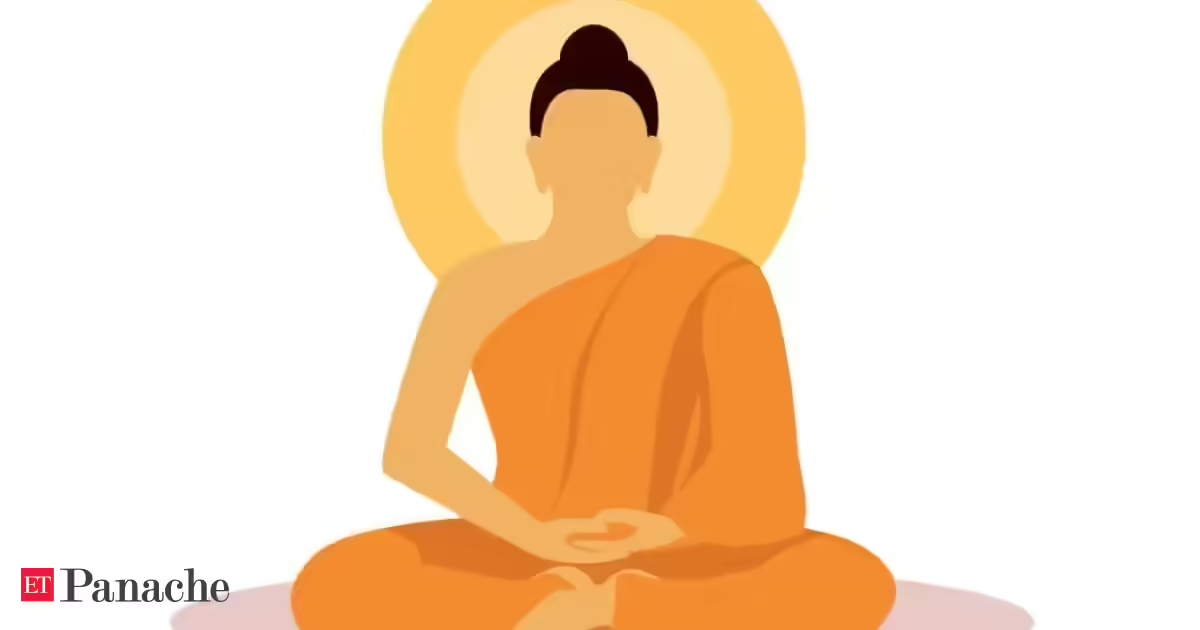
Buddhist Proverb of the Day highlights a teaching that encourages people to question the way they perceive reality and the role personal beliefs play in shaping their understanding of the world. The proverb, “The ultimate truth is not only hidden from you; it is actively being corrupted by your opinions,” points to a central idea found in Zen Buddhist thought: that reality becomes harder to see when it is filtered through attachment, judgment, and fixed viewpoints.The saying reflects a belief that truth is not necessarily distant or impossible to reach. Instead, it suggests that people often place obstacles in front of themselves through assumptions, preferences, and deeply held opinions. What appears to be reality may sometimes be a version of reality altered by personal interpretation.Many Buddhist and Zen teachings focus on the importance of observing life without immediately labeling experiences as good or bad, right or wrong. According to this perspective, wisdom grows when people become aware of the mental habits that influence how they see the world. Rather than constantly searching for answers outside themselves, practitioners are encouraged to examine the ways their own thinking shapes perception.The proverb is commonly associated with the teachings found in the Hsin-Hsin Ming, or The Verses on the Faith-Mind, a well-known Zen text traditionally attributed to Sengcan, the Third Patriarch of Zen Buddhism. One of its most frequently cited lines states: “Do not search for the truth; only cease to cherish opinions.” Together, these ideas continue to resonate with people seeking clarity in an increasingly noisy and opinion-driven world.Buddhist Proverb of the Day — Why Letting Go of Opinions Can Bring You Closer to Reality“The ultimate truth is not only hidden from you; it is actively being corrupted by your opinions.”Buddhist proverb of the day explores the relationship between truth, perception, and the human tendency to interpret everything through personal beliefs. It presents the idea that reality itself may not be difficult to find, but that the mind often complicates the process.The first part of the proverb suggests that ultimate truth is hidden from ordinary perception. In Buddhist philosophy, people often view the world through layers of conditioning, expectations, fears, and desires. These influences can make it difficult to see situations clearly as they are.The second part goes further by stating that truth is not merely hidden but actively distorted by opinions. Zen teachings frequently warn against becoming attached to rigid views because opinions can create divisions, judgments, and assumptions. Once people become invested in a particular perspective, they may stop seeing alternative possibilities or deeper realities.Taken together, the proverb teaches that clarity often comes not from collecting more information but from reducing mental clutter. The less a person is controlled by fixed judgments, the easier it becomes to observe life with openness, awareness, and balance.Why Opinions Sometimes Prevent UnderstandingOpinions help people make sense of the world, but they can also become barriers to deeper understanding. When individuals strongly identify with their beliefs, they may unconsciously reject information that challenges their existing views.Zen Buddhism encourages practitioners to approach life with what is often called a beginner's mind—a state of openness that allows experiences to be seen without excessive interpretation. This does not mean abandoning critical thinking. Rather, it means recognizing that certainty can sometimes limit learning.Many misunderstandings in relationships, workplaces, and society arise because people focus on defending opinions instead of exploring reality together. The proverb serves as a reminder that understanding often begins when attachment to being right starts to loosen.The proverb carries practical lessons that remain relevant in everyday life.Openness creates clarityPeople are more likely to understand situations accurately when they remain open to new perspectives rather than clinging to fixed conclusions.Assumptions can be misleadingMany conflicts arise not from facts themselves but from assumptions people make about those facts. Questioning assumptions can lead to better judgment.Self-awareness mattersRecognizing personal biases is often the first step toward seeing situations more objectively and making wiser decisions.Growth requires humilityLearning becomes easier when individuals accept that their current understanding may not always be complete or final.Understanding the Zen PerspectiveThe proverb reflects several core ideas found within Zen Buddhism. Zen developed from the meeting of Indian Buddhist teachings and Chinese philosophical traditions before later spreading to Japan and other parts of the world. Rather than focusing primarily on doctrine, Zen places strong emphasis on direct experience and mindful awareness.Meditation, often called zazen, is one of the central practices in Zen. Practitioners sit quietly and observe thoughts without becoming attached to them. The goal is not to force thoughts away but to understand their temporary nature.Zen teachings often compare the mind to a mirror. When the mirror is covered with judgments, fears, preferences, and opinions, reality appears distorted. As those mental layers settle, the world can be seen with greater clarity. This idea closely reflects the message behind today's proverb.Many Zen teachers have emphasized simplicity, presence, and direct experience. Rather than endlessly analyzing reality, Zen encourages people to encounter it directly through awareness of the present moment.Why This Proverb Is Still RelevantThe message of this Buddhist proverb feels especially relevant in the modern age. People are surrounded by constant streams of information, opinions, commentary, and debate. Social media platforms, news cycles, and online discussions often reward certainty and quick judgment rather than careful reflection.In such an environment, it becomes easy to mistake opinions for facts or to view every issue through predetermined beliefs. The proverb encourages a different approach. It invites people to pause, examine their assumptions, and remain open to perspectives they may not have previously considered.Its message also applies to personal growth. Whether dealing with relationships, work challenges, or everyday decisions, individuals often benefit from observing situations before rushing to conclusions. The ability to listen, reflect, and remain open-minded can lead to better understanding and fewer unnecessary conflicts.Ultimately, the proverb highlights a timeless lesson: truth is often easier to recognize when people become less attached to their own certainty.
Buddhist proverb of the day: 'Life's ultimate truth is not only hidden from you; it is actively being corrupted by your opinions...' A centuries-old lesson on the dangers of passing judgments too quickly
The Buddhist proverb, “The ultimate truth is not only hidden from you; it is actively being corrupted by your opinions,” reflects a key Zen teaching about perception and self-awareness. Rooted in the Hsin-Hsin Ming, traditionally attributed to Sengcan, the Third Patriarch of Zen Buddhism, the saying suggests that personal judgments, assumptions, and fixed beliefs can distort one's understanding of reality. The proverb encourages openness, humility, and mindful observation.
983 words~4 min read