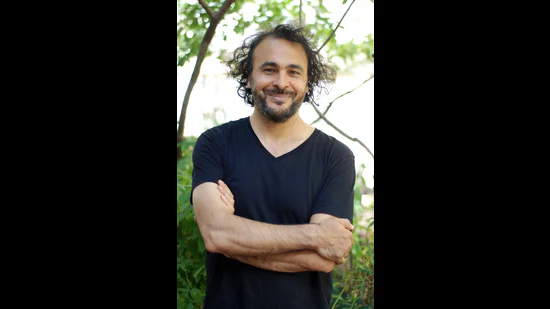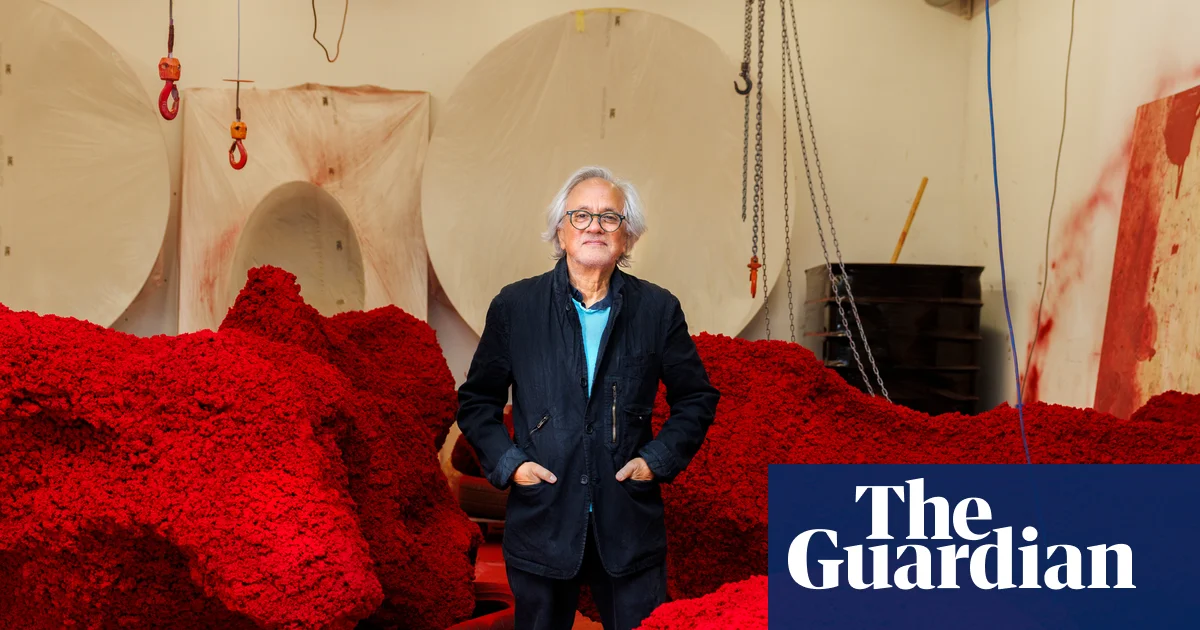
In Anish Kapoor’s 3,100 sq metre studio complex in south London, photographers, assistants and gallery representatives gather in an upstairs meeting room. The artist has a staff of 23 in London – 11 studio assistants, nine people in the offices, three stone masons at a yard in Battersea – and some have been with him for decades. When he’s in town, everyone wants a piece (“It’s like The West Wing,” says one gallery rep).
Anish Kapoor and his hazmat-suited assistant with some of the 31 parts of Ha Makom
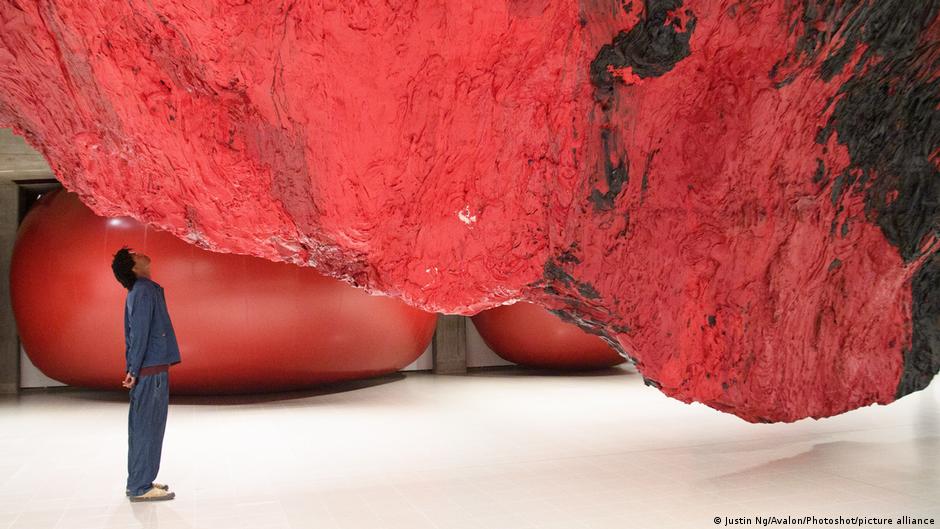
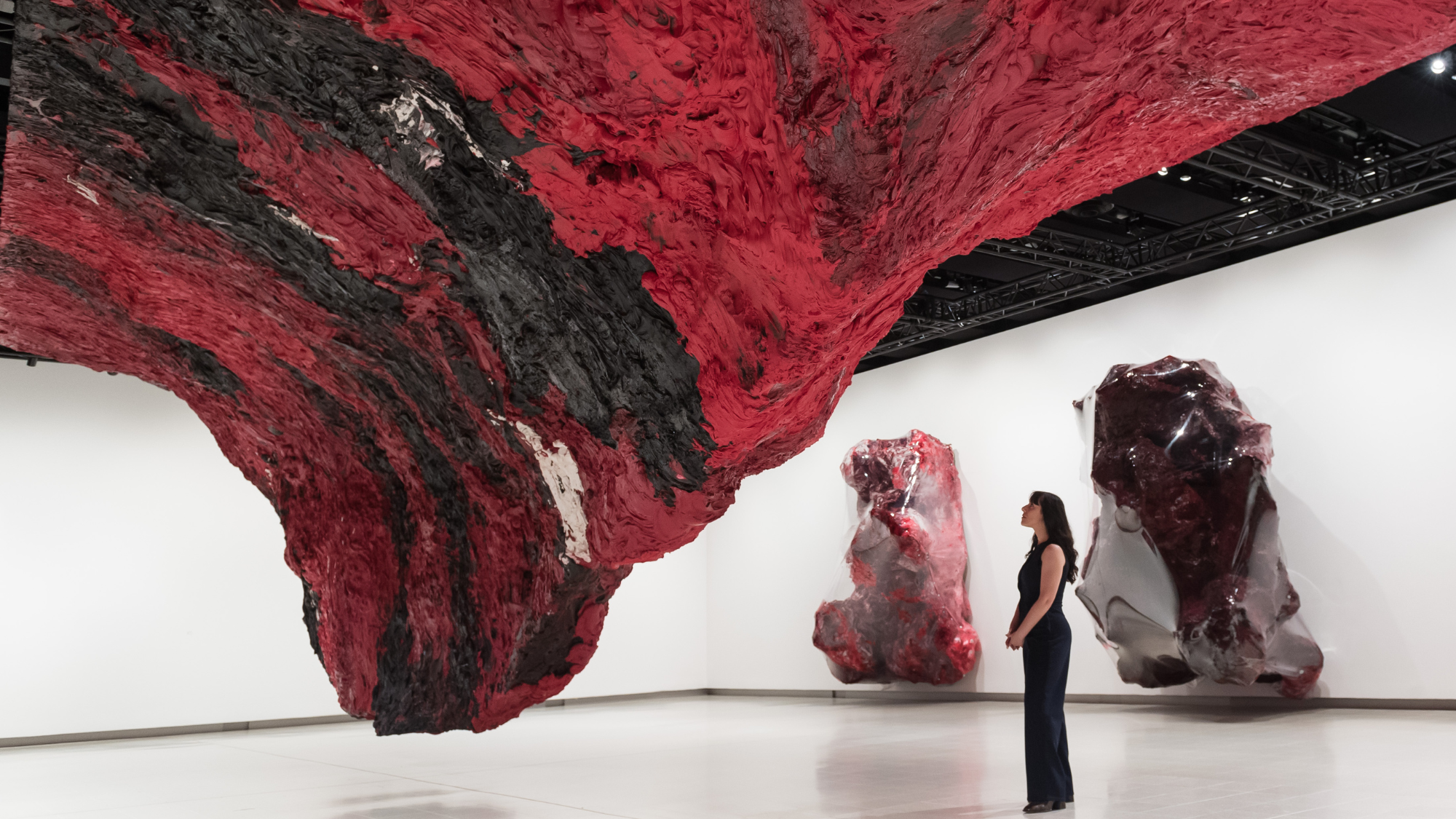
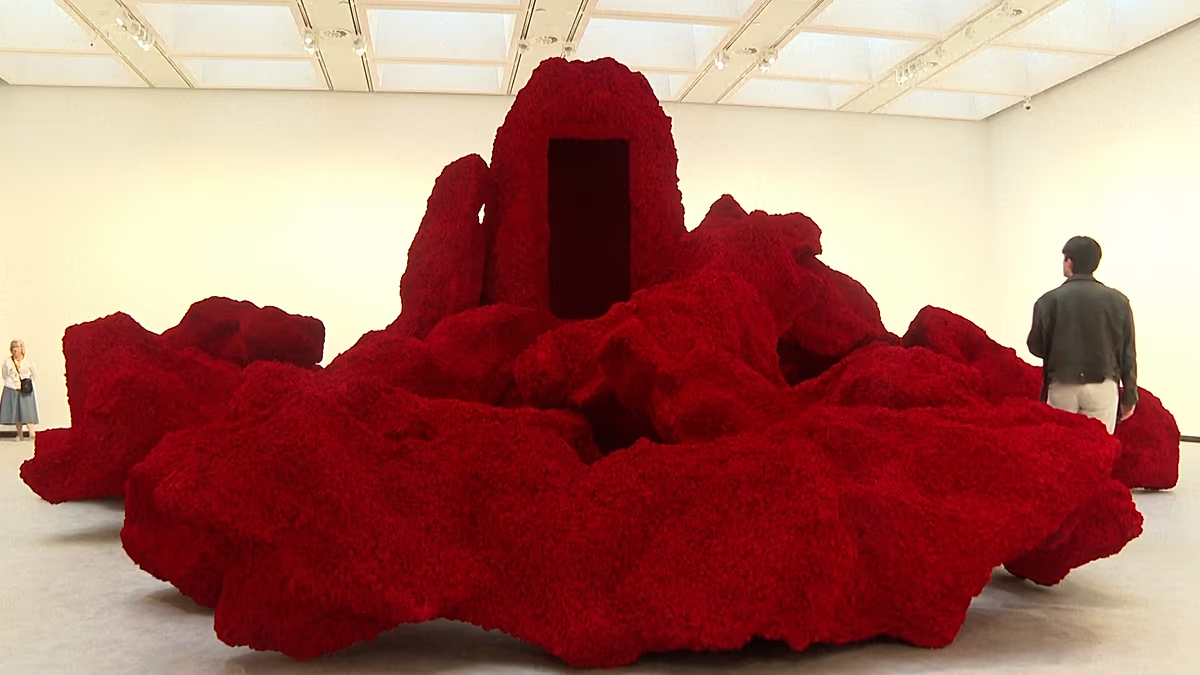
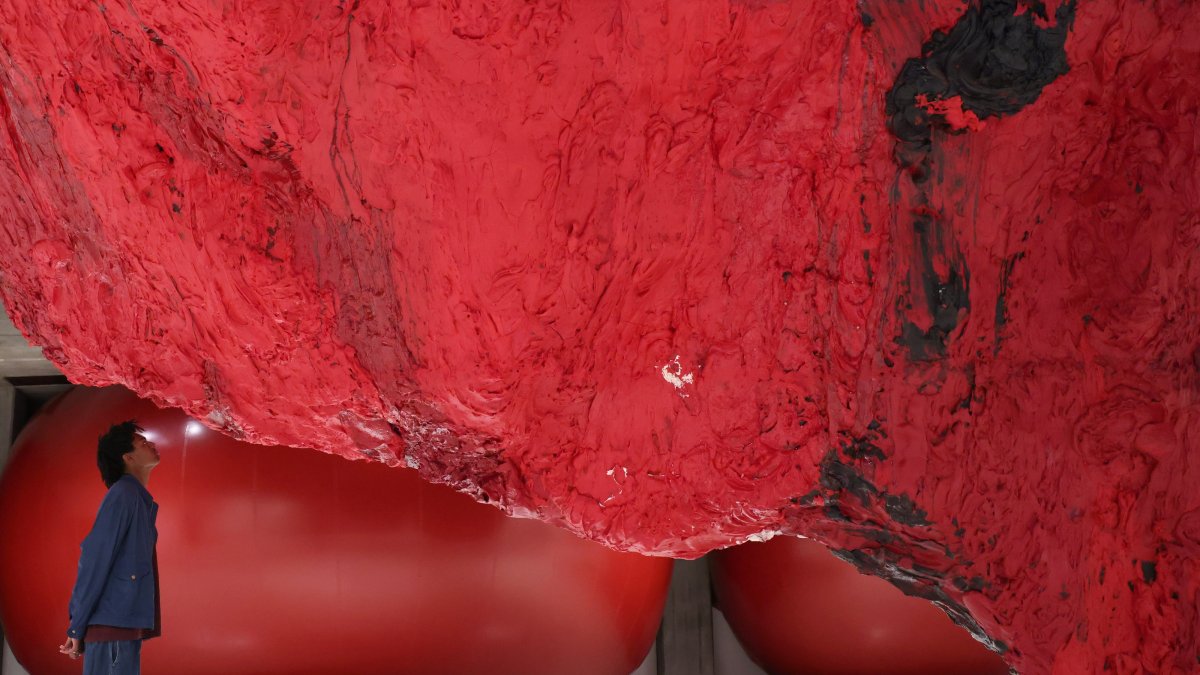
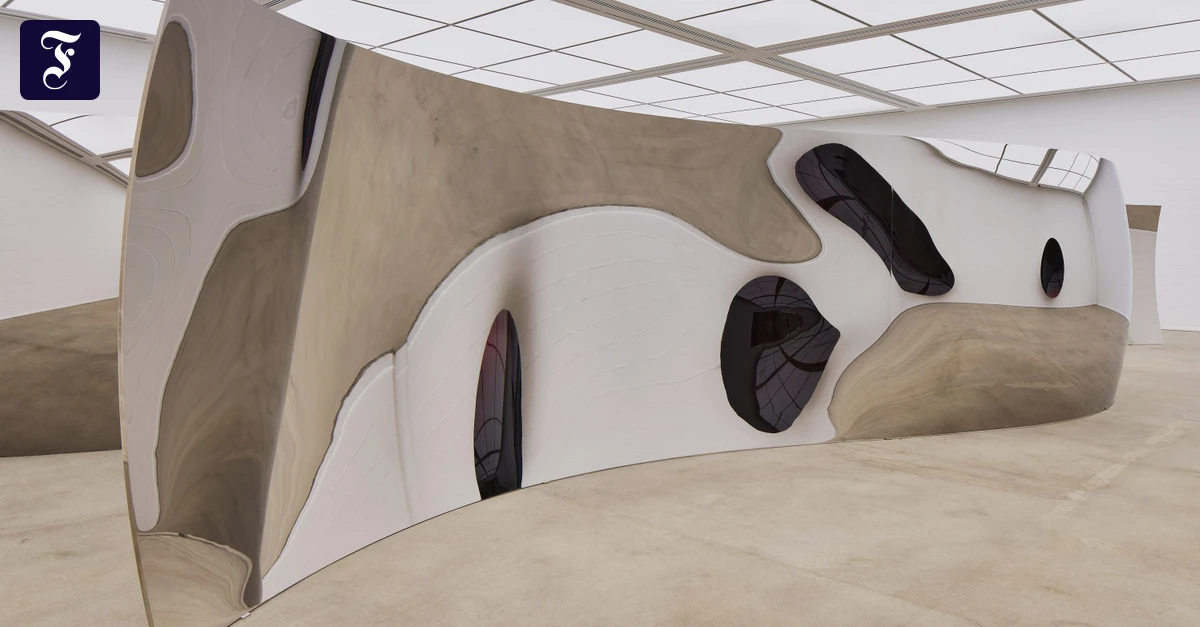
The studio, which takes up most of a converted dairy factory, is an upstairs-downstairs warren. Each room is dedicated to a different kind of thing: large red installations; small black sculptures; exhibition layout models; lacquered concave mirror paintings; archival drawings. In the upstairs meeting room, there is a weekly calendar hand-drawn over eight sheets of A3 paper with, beneath it, a very long list titled “Unfinished Hayward Works”. And on the windowsill stands a curious item: a solid cylinder of concrete, excavated from the Southbank Centre’s Hayward Gallery.That cylinder was brought over by Kapoor’s old friend, the outgoing Hayward Gallery director Ralph Rugoff, to celebrate Kapoor’s 72nd birthday in March, as well as their current collaboration. It is symbolic of the 1.5 metre-wide bit of gallery floor that Kapoor has just had drilled out in preparation for his career-spanning show, which opens at the Hayward this week. (Rugoff describes the cylinder as the perfect gift for the artist who has spent his life producing voids: “This is what happens when you do that.”)Emerging from his office in a faded black jacket and scuffed trainers, Kapoor embarks on a rapid-fire walk-and-talk tour, shoulders slightly hunched, like a trail runner hitting their stride. “Honestly,” he says, “everything’s a total mess here. But it doesn’t matter. Come.”The Southbank Centre was the first to give Kapoor a major show in the UK, in 1998. He is one of the few artists to be asked back for a solo show. “I’m both excited and a little terrified,” he says. Tellingly, the pieces he’s most anxious about, he says, are those the public know best.Threading a path between bulbous shapes wrapped in protective coverings, Kapoor heads for a giant, red mountain-like structure, just below the peak of which he has carved out one of his signature voids – a dark rectangular aperture. The structure, he explains, is one of the 31 parts comprising a new piece, titled Ha Makom, that is destined for the Hayward. “It’s a huge work, huge work,” he says, gesturing all over the room. “There’s a part of it, there’s another.”