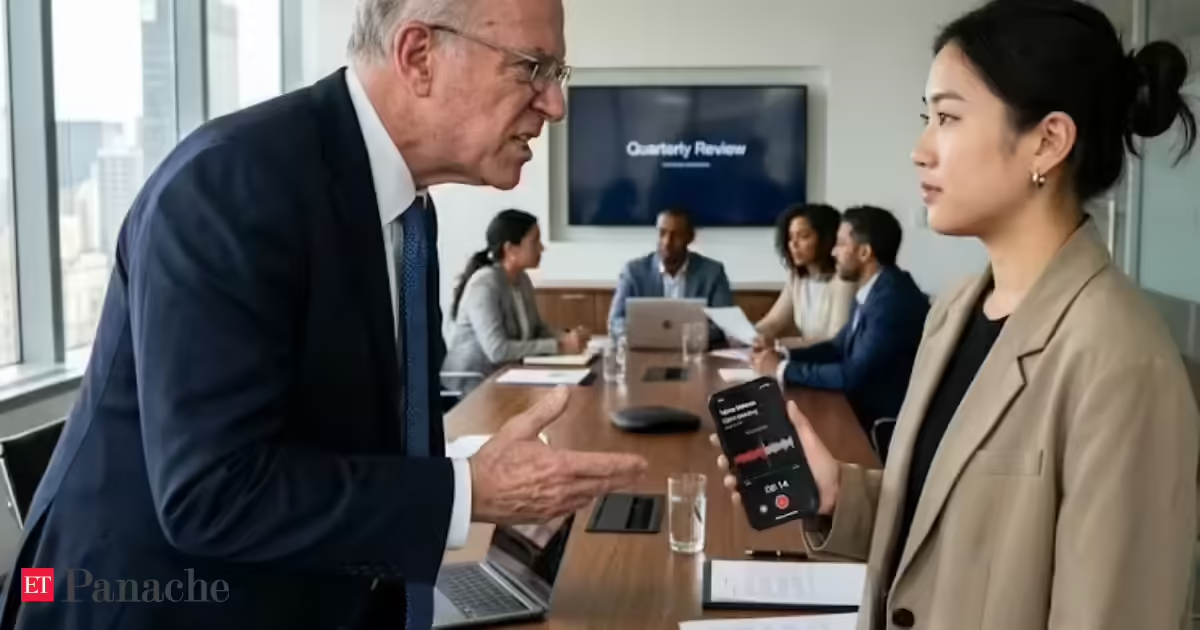
Gen Z employees are often praised for embracing technology and finding faster, more efficient ways to get things done. However, their approach to work can sometimes leave millennial managers and older colleagues puzzled. What seems like a smart shortcut to one generation may come across as unprofessional or inappropriate to another. While some traditional workplace practices may appear outdated in an age of smartphones and artificial intelligence, they can still carry meaning beyond their practical purpose. Career coach Simon Ingari recently shared a story on X that perfectly captures this generational disconnect and the unexpected lesson that followed.A clash of workplace normsAs per the post, the incident took place during an important client meeting. While the manager was taking notes in the traditional way with pen and paper, a Gen Z employee chose to record the discussion on a smartphone instead. When questioned about not writing anything down, she explained that the recording could later be transcribed into text using AI tools, making the process faster and more efficient than handwritten notes.The manager, however, was not convinced. He pointed out that the meeting involved an important client and asked whether permission had been obtained before recording the conversation. Realizing the concern, the employee immediately stopped the recording. The discussion then shifted from technology to workplace expectations.A lesson beyond productivityThe Gen Z employee argued that AI-powered transcription could capture every detail within seconds and questioned why handwritten note-taking was still necessary. From a practical standpoint, recording the conversation seemed like the superior option. The manager responded that the issue was not efficiency but perception. According to him, the client had interpreted the lack of note-taking as a sign of disinterest or disrespect.Surprised by the explanation, the Gen Z employee asked whether simply holding a pen and writing notes was enough to signal attentiveness. The manager replied that, in many professional settings, such visible actions communicate respect and engagement. Clients often associate note-taking with active listening, regardless of whether more advanced technological alternatives are available.Key takeaway The exchange eventually led to a broader realization. While technology can undoubtedly improve productivity, workplace interactions are not governed by efficiency alone. Professional relationships are also shaped by impressions, etiquette and unspoken social cues. By the end of the conversation, the employee acknowledged the point with humour, noting that the experience itself was something worth making a note of.
Gen Z employee records details of client meeting on smartphone. When manager calls it disrespectful, an unexpected lesson on workplace etiquette follows
A Gen Z employee's use of AI for meeting notes surprised her millennial manager. The manager explained that clients value visible signs of attentiveness like note-taking. This incident showed that professional relationships depend on more than just efficiency. Impressions and etiquette play a crucial role in workplace interactions. The employee learned a valuable lesson about professional conduct.
TL;DRAI
Gen Z employee records client meeting on phone for AI transcription; manager flags it as disinterest despite speed. Professional relationships depend on perception—visible engagement signals respect and attention, crucial for client trust and business outcomes.
393 words~2 min read