For a long time, when an AI gave me a bad answer, my instinct was to rewrite the prompt. Add a "please." Try "act as a senior engineer." Reword the question for the fifth time. The gains were real but tiny — and I kept hitting the same wall.
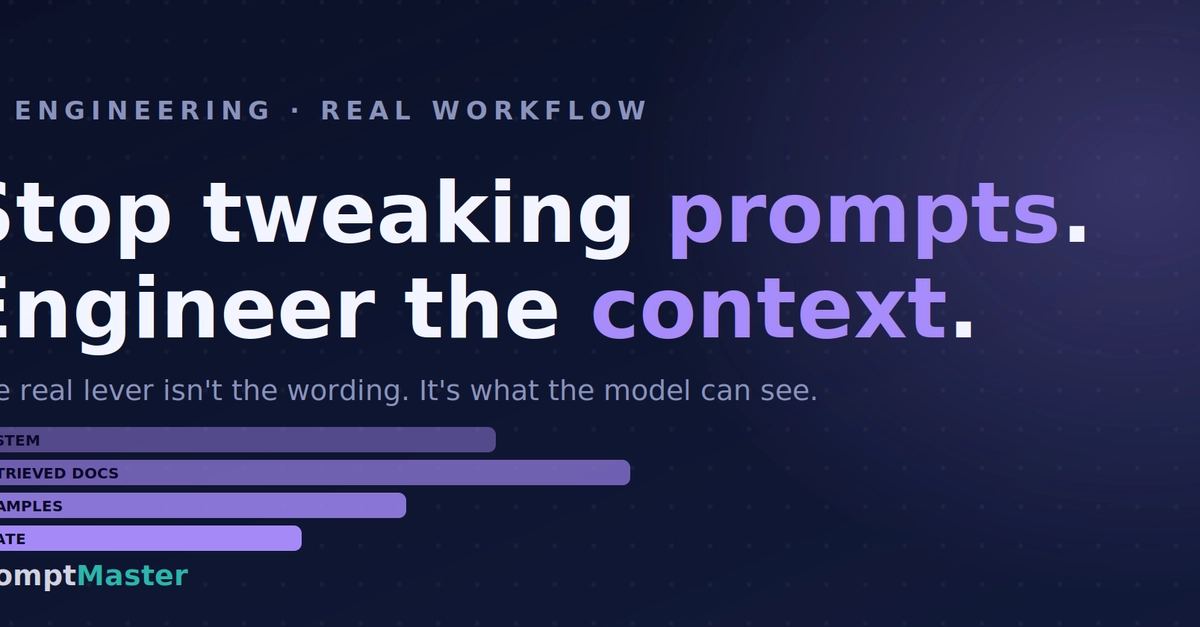
The shift that actually moved my results was simple: the model usually isn't being dumb. It's being blind to something I never showed it. Once I started engineering the context instead of polishing the prompt, the quality jumped in a way no amount of wordsmithing ever delivered.
Prompt engineering vs context engineering
These get blurred together, but they're different jobs.
The prompt is your instruction — what you're asking for. The context is everything the model can actually see at the moment it answers: the system setup, any documents you've pulled in, the examples you provided, the prior state of the conversation, and the actual relevant data or code. Context engineering is the discipline of deciding, deliberately, what goes into that window and what stays out.