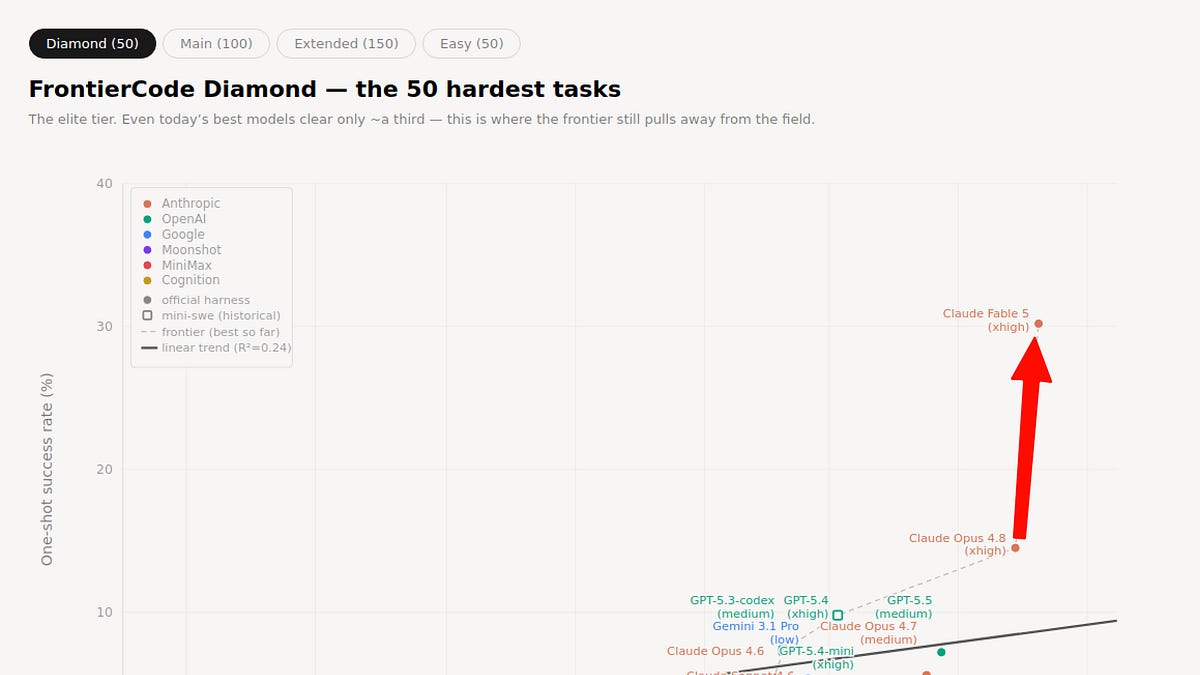
For months, the most interesting model at Anthropic was one we could not use. Mythos was the internal system the company said was too capable to release, the one that found software vulnerabilities at a level that tripped its own safety thresholds. On June 9, 2026, that tier went public for the first time, as Claude Fable 5. Opus 4.8, the model anchoring production coding agents, suddenly had a successor that's a full capability class above it.
This raises two questions for anyone running coding agents. The practical one is whether you should move your fleet from Opus 4.8 to Fable 5. The bigger one is whether a Mythos-class model, the tier Anthropic held back as too capable to ship, lives up to what the name promised. This article answers both, and the numbers tell a more interesting story than the announcement did.
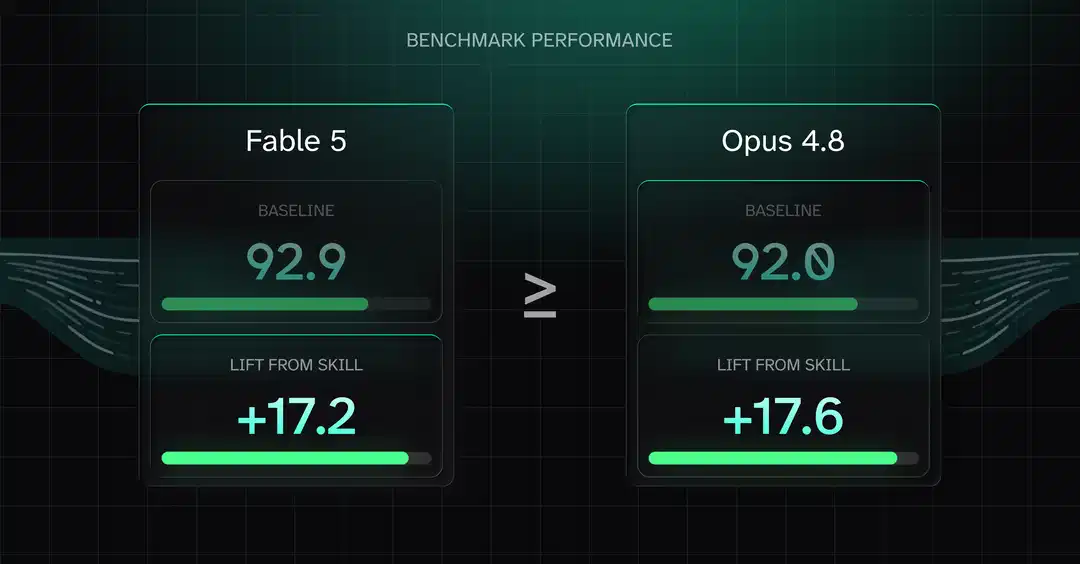
We ran both models through the same evaluation, close to 1000 shared scenarios scored twice each, once with no skill supplied and once with the relevant skill in context. The short answer, as of mid-2026, is that Opus 4.8 is still the better value for most agent fleets, and the gap between the Mythos hype and the measured reality is the real story in the data.
A Mythos-class model is a tier of Claude that sits above the Opus class in capability. It reaches a threshold Anthropic considers high-risk, particularly at discovering and exploiting software vulnerabilities. Fable 5 and Mythos 5 are the same underlying model with the same capabilities. What separates them is the safeguards: Fable 5 is the public version that ships with safety classifiers, while Mythos 5, restricted to approved partners, runs without them.