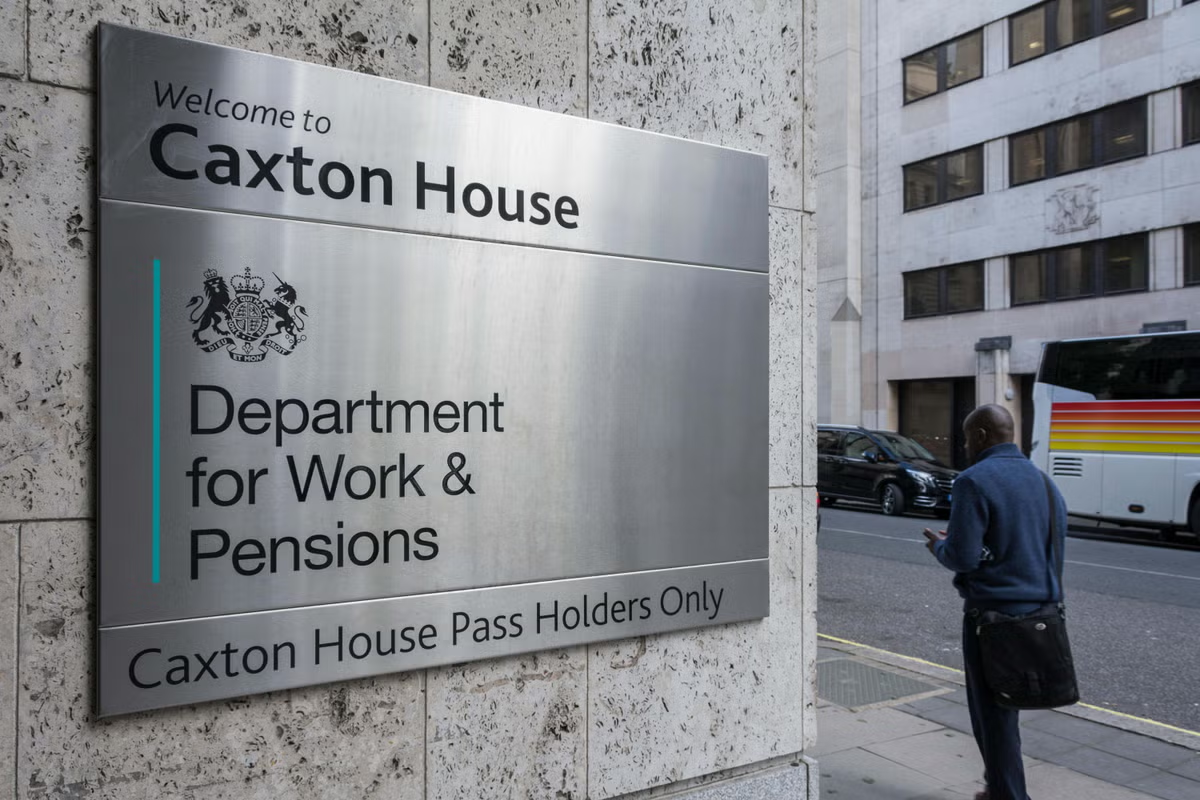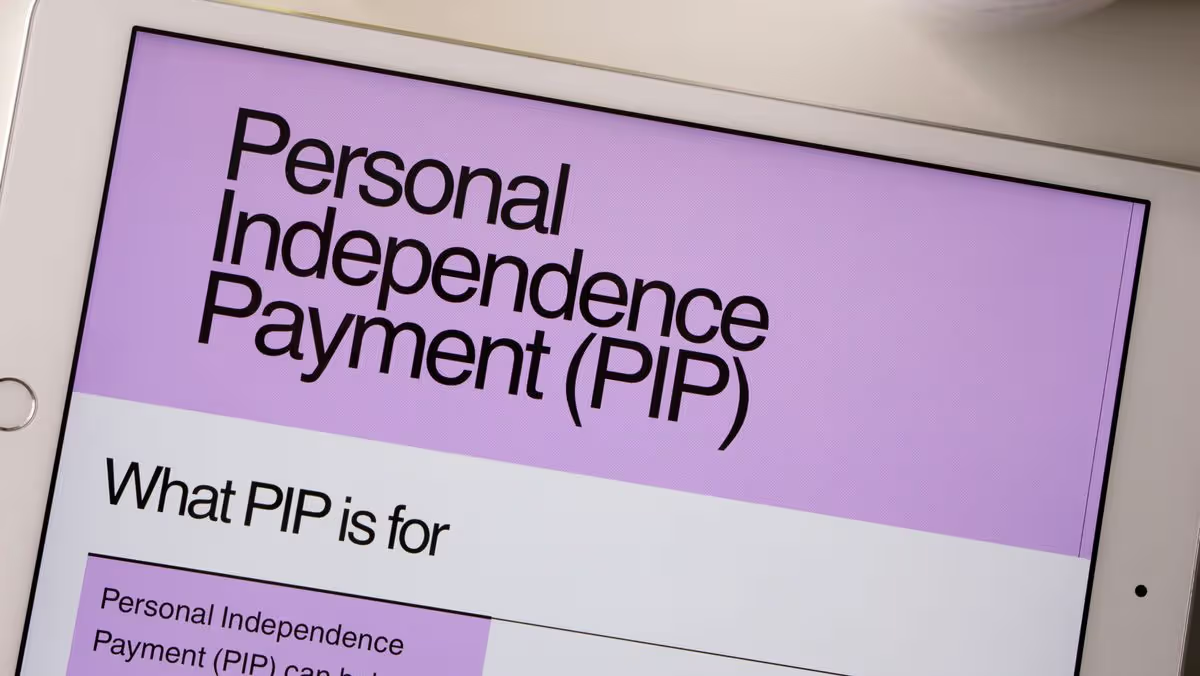
The Personal Independence Payment is given to people who need extra help with living costs because of a disability07:22, 14 Jun 2026People with disabilities can get financial help through a variety of benefits. One of the major ways people living in England and Wales can get assistance is through Personal Independence Payments (PIP), which is not means-tested and is paid to those who need help with extra living costs.Those claiming PIP can get the money even if they are working, have savings or who are getting other benefits. The main criteria is that those who are eligible must have a long-term physical or mental health condition or disability and difficulty doing certain everyday tasks or getting around because of their condition.There are two parts for PIP - a daily living part for those needing help with everyday tasks, and a mobility part for people needing help with getting around. Whether you get one or both parts and how much you get depends on how difficult you find everyday tasks and getting around.There are different rules for those nearing the end of life (for example, due to a life-limiting illness), as they will automatically get the daily living part. However whether the mobility part will be paid depends on individual needs.Figures show there are 3.8million people claiming PIP. The DWP explains what problems people need to claim the benefit and the strict rules which must be met.Daily living partAccording to the DWP website people might get the daily living part of PIP if help is needed with:preparing foodeating and drinkingmanaging your medicines or treatmentswashing and bathingusing the toiletdressing and undressingreadingmanaging your moneysocialising and being around other peopletalking, listening and understandingMobility partSeparately people might get the mobility part of PIP if they need help with:working out a route and following itphysically moving aroundleaving your homeThe DWP said: "You do not have to have a physical disability to get the mobility part. You might also be eligible if you have difficulty getting around because of a cognitive or mental health condition, like anxiety."Assessment of needsThe Department for Work and Pensions (DWP) will assess how difficult the claimant finds daily living and mobility tasks. For each task they will look at:whether you can do it safelyhow long it takes youwhether you need help to do it, from a person or using extra equipmentHow often your condition affects tasksHowever there is a rule around how often help is needed before PIP is awarded. The DWP states it needs to be "most of the time" which it sets out as at least 183 days.It said: "To get PIP you must experience difficulty with tasks most of the time. This means that you expect to have difficulty more than half of the days over a 12-month period."Other eligibility rulesPersonal Independence Payment (PIP) is paid if all of the following apply:you’re 16 or overyou have a long-term physical or mental health condition or disabilityyou have difficulty doing certain everyday tasks or getting aroundyou expect the difficulties to last for at least 12 months from when they startedYou also usually need to be under State Pension age to make a new PIP claim. There are different eligibility rules if you’re nearing the end of life (for example, due to a life-limiting illness). You might be able to get PIP more quickly and at a higher rate.There are other rules for people who have returned from abroad or those living in Scotland as wel as those who are not British citizens.How much PIP paysPIP currently pays different amounts depending on the level of care needed. The weekly 2026/27 daily living part is £76.70 for the lower rate and £114.60 for the higher rate. The weekly mobility payment is £30.30 for the lower rate and £80 for the higher rate.This is usually paid every four weeks. It goes directly into a bank, building society or credit union account.How to claimBefore applying for Personal Independence Payment (PIP), check if you’re eligible. If so and you live in England or Wales you can then:call the ‘PIP new claims’ phone line on 0800 917 2222, Monday to Friday 8am to 5pm, and answer some basic questions about you and your disability or conditioncomplete a form that asks about how your disability or condition affects you. You can do this online or by postyou might need to have an assessment, if more information is neededIf you live in:Northern Ireland claims are different. Find out how to claim if you live in Northern IrelandScotland also has different benefits so you need to apply for Adult Disability Payment (ADP) insteadThere’s a different way to claim if you’re nearing the end of life (for example, due to a life-limiting illness).Help with PIPIf help is needed with understanding or applying for PIP you can:get help from Citizens Advicewatch PIP video guides with British Sign Languageuse easy read guides which explain PIPArticle continues belowYou may be able to get a home visit from a Department for Work and Pensions (DWP) officer to help you with your claim. Ask the advisor when you call the PIP new claims phone line.
DWP 183-day rule for anyone claiming PIP
The Personal Independence Payment is given to people who need extra help with living costs because of a disability
849 words~4 min read