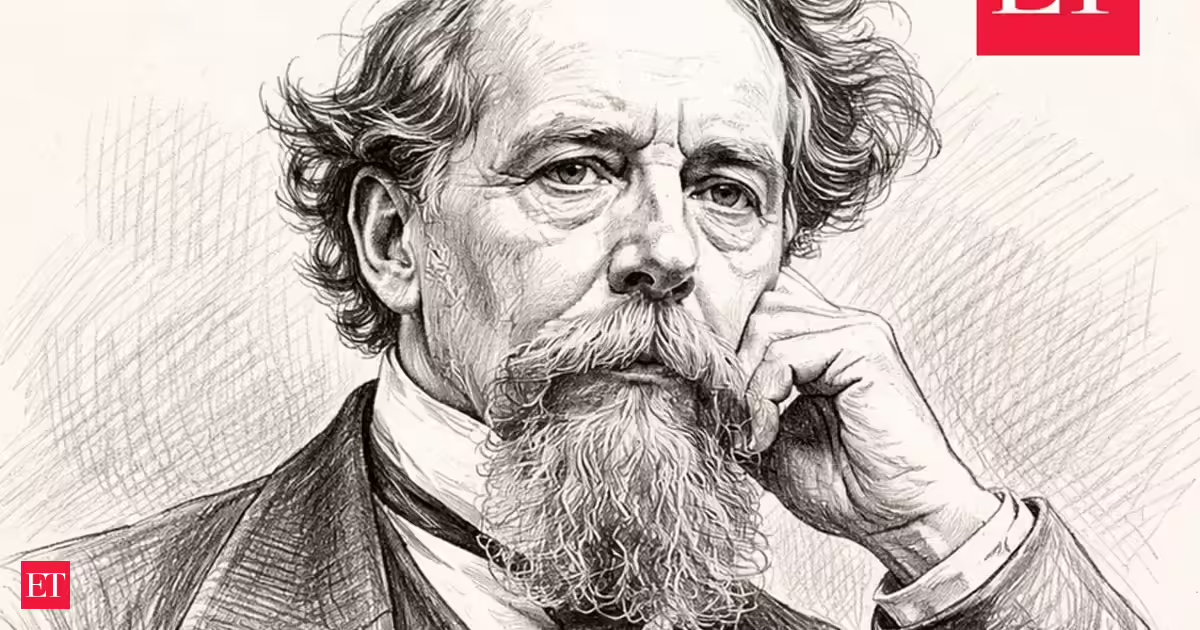
Like the opening scene in The Secret Life of Walter Mitty where a mundane day explodes into epic adventure, there's a question that whispers through every quiet moment of our lives: What do you do when the light starts fading, and you know you can't stop it?Maybe it's watching a parent age, feeling your own energy slip, or confronting a dream that's slipping away. We all face those moments when comfort asks us to settle, to ease up, to accept the slow dimming. But what if the answer isn't acceptance, it's fire?Quote of the Day by Dylan Thomas: "Do not go gentle into that good night, Old age should burn and rave at close of day; Rage, rage against the dying of the light."Also Read: Life lesson of the day by Gregory Peck: ‘Inside of all the makeup and the character... it’s you’ To Kill a Mockingbird actor on the power of authenticity in an appearance-obsessed worldWhy Dylan Thomas's quote on resisting death and embracing life matters todayIn an era of burnout culture, quiet quitting, and the constant pressure to just cope, Thomas's summons to rage feels like a lightning strike. We're told to be gentle with ourselves, to accept limitations, to find peace in letting go. But Thomas argues that peace without passion is surrender. When modern life asks us to shrink, to soften, to go quiet, his words remind us that the most human thing we can do is burn bright, even when the world is dark.This matters especially now, when so many feel powerless against forces beyond their control: the climate crisis, political upheaval, and economic instability. Thomas doesn't offer hope; he offers rage. Not the destructive kind, but the fierce, creative fury that says something like: I am here, I am alive, and I will not fade quietly.What Dylan Thomas's quote means in real lifeIn real life, this quote isn't about shouting at the sky; it's about refusing to let your fire die before you're ready. It's the 65-year-old entrepreneur launching their first company. The cancer patient who fights for every day. The artist who keeps creating even when no one's watching. It's choosing to care deeply when cynicism is easier. To love fiercely when it might end. To speak up when silence would be safer.Thomas wrote this for his dying father, but it's for anyone facing an ending: a relationship, a career, or a chapter of life. The "good night" isn't just death, it's any moment when the world tells you to settle. "Going gentle" is accepting that you're too old, too broken, too late. But Thomas says: Burn. Rave. Rage. Not because you'll win, but because burning is what it means to be alive.Who is Dylan Thomas?Dylan Thomas was a Welsh poet born in 1914 in Swansea, Wales, whose lyrical, emotionally charged poetry revolutionized 20th-century literature. Despite dying at just 39, he became one of the greatest Welsh poets of all time, known for his imaginative use of language, vivid imagery, and obsession with the sound and rhythm of words. His work resisted categorization; he avoided literary groups and had little interest in the socialist politics that dominated his contemporaries like W.H. Auden.Thomas began writing poetry as a child and was published by his teens. His 1934 debut Eighteen Poems received little initial attention but soon gained favor among influential critics. He was a living legend by the time of his 1946 collection Deaths and Entrances, which included his most famous works. Beyond poetry, Thomas wrote radio scripts, screenplays, and the beloved radio play Under Milk Wood. He became a mass-appeal figure through his popular readings, representing the Celtic bard archetype for many.A poet honored by Bob Dylan, The Beatles, and Christopher Nolan Bob Dylan, The Beatles, and Christopher Nolan all honored Dylan Thomas by integrating his name, image, and specific poetry into their most defining artistic works. According to Bob Dylan's 2004 autobiography, Chronicles: Volume One, the legendary musician, born Robert Allen Zimmerman, legally adopted "Dylan" as his last name as a direct homage to the Welsh poet, as per the BBC. Furthermore, in 1967, The Beatles paid visual tribute to Thomas by placing his face on the crowded, iconic album cover of Sgt. Pepper's Lonely Hearts Club Band, an era during which Paul McCartney openly cited Thomas as a massive literary influence on their songwriting. Finally, director Christopher Nolan transformed Thomas's famous villanelle, "Do Not Go Gentle into That Good Night," into the narrative and thematic heart of his 2014 science fiction film, Interstellar.Dylan Thomas's legacyThomas's legacy endures as a poet who fused the Romantic tradition's emphasis on imagination and emotion with modernist difficulty. His work continues to resonate because it speaks to universal human struggles: death, love, creation, and the terror of fading. Do not go gentle into that good night has become one of the most quoted poems in English literature, especially at funerals and moments of confrontation with mortality.Though his personal life was turbulent, marked by chronic drinking, debt, and early death from alcohol and drug complications in 1953 Thomas's artistic influence remains profound. He inspired generations of poets to prioritize sound over sense, to embrace ambiguity, and to write with raw emotional intensity. His film scripts, stories like Portrait of the Artist as a Young Dog, and his iconic voice in recordings ensure his work reaches beyond academia into popular culture. Today, he's remembered not just as a great poet but as the wild man from the West, a Celtic bard who burned so brightly that his light still refuses to die.
Quote of the Day by Welsh poet Dylan Thomas: 'Do not go gentle into that good night, old age should…' - the raging verse that Bob Dylan, The Beatles, and Christopher Nolan honored
Quote of the Day by Dylan Thomas urges people to resist life's inevitable decline. In today's world of burnout, his words champion a fierce, passionate approach to living. This message resonates with those facing challenges like climate change or personal struggles. It means refusing to fade quietly, choosing instead to burn brightly.
924 words~4 min read