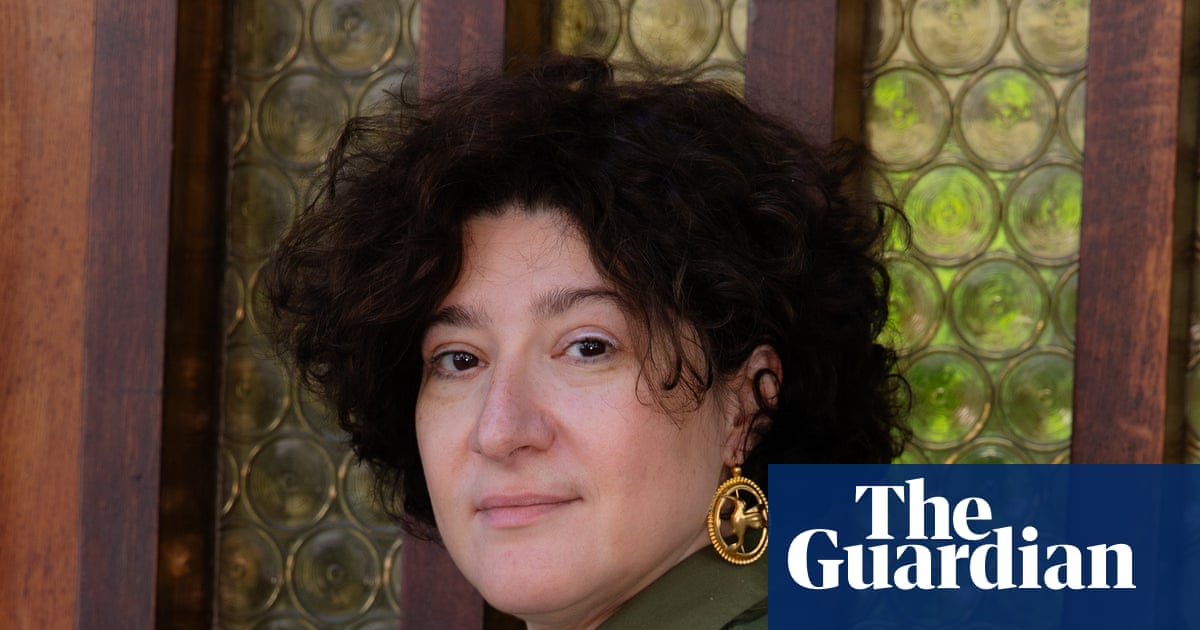
Jana Bakunina left Russia at 19 to study and then work in the UK. She travelled easily between the two places for decades. Now she can’t return. Last year she published The Good Russian: In Search of a Nation’s Soul about the lives of her family and friends back in her native country, the many who have accepted Putin’s propaganda about Ukraine and the West, and the others who are in a state of “inner emigration”, quietly dissenting but unable to speak publicly. It’s a sad and insightful portrait of life under autocracy.It looked so different in the years after glasnost and perestroika, she says. “I was growing up in this period of openness and hope and really turning to the West … I remember even at the time, thinking, ‘Oh gosh, of course we’re pro-western’ … When my mum and I went to Estonia in 1991 just before the putsch, I thought Estonia was like the absolute pinnacle of western civilisation. And then my first trip abroad was to Bulgaria, I couldn’t believe how European that was. “The first time I went to western Germany, I really lost my mind … As soon as perestroika started, my father was already working at this technical university and he started trying to import optics and microscope equipment from Germany. He started going abroad for business trips. He’d bring stuff from there. My whole education, my whole family mentality, what we listened to in terms of music, it was all looking at the West.” She learned English and German. She went to Germany to study the International Baccalaureate when she was 16. Of her home city, she says: “Yekaterinburg was like a million and a half people and it already felt too small. I wanted to go abroad, to London.” Was that outward inclination a common perspective in Russia at that point? “I’d like to say yes, but now, with age, I realise that there were many people who perhaps did not have the same opportunities … Certainly among my schoolfriends that [view] was absolutely common.”Russia had been caught between two tendencies going back to the 18th century: “Some philosophers though Russia should be turning to the West, the whole Peter the Great idea of looking at Europe and adopt their values: liberal values, democracy. It’s actually still very relevant today. The others were saying we have our own path. [That] we share a lot of values which are also valued in more Eastern countries: orthodoxy, nationalism.”What happened was also a tragedy of geopolitics. Beyond the looting of public resources by self-interested oligarchs and the collapse of Russian industry it’s also, she says, a story about oil. “When Gorbachev came into power, he was trying to modernise the Soviet Union. Never in his wildest dreams did he foresee the dissolution of the Soviet Union, but when he was trying to modernise the economy, the oil price went down. This was around 1985 and so Russia couldn’t meet its obligations to all this money that they’d borrowed.”She thinks that if the oil prices had risen again in the Yeltsin era, history would have played out differently. Instead, the recovery happened when Putin was in power and fed his initial popularity and mystique. “The standard of living rose for everyone ... Obviously, in the state propaganda, that’s all they’re talking about. It’s like a gospel.” She sighs. “Power corrupts. So if a little insignificant man suddenly is put forward by the KGB, he holds on to power.”Vladimir Putin, formerly a Soviet intelligence officer, has been prime minister or president of Russia since 1999. Photograph: Vyacheslav Prokofyev/AP She doesn’t know exactly when her sense of reality and that of her home country started to diverge but she really noticed it after the Russian annexation of Crimea. “Up until that time the people, the characters in the book … shopped at the same Zara, H&M shops ... They would be going on holidays to Spain or Norway.”Every summer she went to Russia and got together with her old classmates. “[This time] my closer friends were like, ‘Don’t bring up the politics, let’s have a nice evening for old time’s sake’ … You could see that [some] people were thinking very differently … [My father] wrote this email to me at the time, ‘Crimea is ours.’ Every time I would go to Russia from that time on, you could trace it. My father was becoming so aggressive the way he spoke to me. Then you go to Russia and you turn on the TV and they have this ‘minutes of hate’ kind of programme where the host and his guests would literally spit from anger and talk about Nazis in Ukraine. He was just repeating it word for word.”[ Wilful ignorance is not an acceptable dodge when it comes to Aughinish AluminaOpens in new window ]Her friends who do not agree with the regime live in a limbo-like state of “internal emigration … This was the term that I learned when I went to Russia in 2023 ... It actually turns out it’s from communist times and has resurfaced for the purposes of today.”When did it become impossible to dissent publicly? “Literally from the day after the full-scale invasion, because they introduced all these new laws. Before that, people were already very careful about not saying things at work … [Now] whatever you said could be interpreted as ‘defamation of the Russian army’. I could go every day and open X or Facebook, and through the Russian independent sources, because they still exist, I could find you a new arrest of someone who might have just commented on some YouTube video.”A month ago, she says, for example, a woman in the Siberian city of Novosibirsk commented negatively on a video about the Russian army. “She was sentenced for defamation of the Russian army and got five years in prison for this one comment.”People have, very quickly, got used to this repression, she says. “Remember when during Covid, you wouldn’t leave somewhere without a mask, or would find it weird to go outside the 5km radius? [It was a] new way of living. That’s what happened in Russia. No one would ever talk about politics out in the open now … They would tell their kids not to talk about anything at school with their friends. They would not post on Instagram.”I think that things would have to get a lot worse for people to come out and protest about empty bread stalls like they did in 1917— Jana BakuninaCan people still access foreign media? “Yes, they read everything that they could possibly get their hands on. There are all these Telegram channels they follow. They follow individual journalists posting or read Novaya Gazeta or Meduza [Russian language news sources] … But to do that they have to have a VPN device on their phone. Then the government blocks that particular VPN. So then you have to find a new one, to ask around. It’s a full-time job.”How many would go to this trouble of using VPNs to find the truth? “A minority. But go into any [Alexei] Navalny video on YouTube and there you can see a number of views very quickly going into millions. Is it possible for anyone to access truth and facts? Yes. Do all people access them? No.” For most people in Russia, she says, there’s a state-controlled portal where you get everything – the weather, gardening news, politics, email, online payments. “My mother doesn’t go anywhere else.”Alexei Navalny in court in Moscow in 2021. Photograph: Moscow City Court/AP/PA Are figures of dissent like Alexei Navalny, who died in prison in February 2024, important? “Yes, but there are none now. [June 4th] was his birthday; he would have turned 50. His wife and his former team have launched an archive of all the photos, the videos, the blog posts he wrote, and I was thinking that’s really nice, but equally it’s just very sad, because he’s dead. He’s gone.” Earlier this year the Kremlin flatly rejected accusations from five European countries that the Russian state had killed Navalny using toxin from poison dart frogs, but his widow said the truth had finally been proven.Many who speak out now, like the exiled businessman Mikhail Khordorkovsky, live outside Russia. “People still listen to political analysts, they read the news, but they absolutely have no hope … When people ask me, ‘What do you think is going to happen after Putin?’ I’m going to go back to what [people in Russia] told me: ‘Nothing is going to change’.”When did she realise she couldn’t return? A week after Navalny died, she says, she learned about a woman with dual Russian and US citizenship who was arrested and sentenced to 13 years for a small donation to a US-based charity in favour of Ukraine. “I had an email confirmation of a much larger donation in my phone [when I travelled].”Since her last visit she met her mother in Kazakhstan but now her mother feels too weak to travel. “She asked me, literally a fortnight ago, never to ask her this again, because it’s painful for her ... And frankly, it was always painful for me to ask her.”Yekaterinburg, Jana Bakunina's home city. Photograph: Anna Yurieva/AF/Getty It’s very difficult for her. Her father is ill with cancer. “I’m the only child, and I’m going to have to rely on some members of the family and friends to help ... I’m one of those people who just has to accept that life has changed.”The war in Ukraine is coming home to Russia via traumatised and maimed war veterans, she says. However, this is largely concentrated in the small towns from which they are recruited rather than the bigger cities. Drones are hitting Russian cities. Mobile phone service, she is told, is frequently disrupted as the authorities try to block the drone signals but, for the most part, people are still in denial about the nature of the conflict. [ Russia is showing signs of weakness in Ukraine. So it hits harderOpens in new window ]“There were periods of time in the last year where suddenly nothing works. So maybe you’ve ordered an Uber equivalent, and then you arrive at your destination, and you can’t pay because suddenly there is no signal. Where is protest at that? … I think that things would have to get a lot worse for people to come out and protest about empty bread stalls like they did in 1917.”She particularly worries about the younger generation. “I remember when I was growing up, the texts we used at school were all about Lenin. Now they read stories about Putin and how Ukraine is bad. These children have known nothing else. They have parades, the cult of military uniform, the defenders of Mother Russia. Girls have to be ready to support their husbands, produce loads of children. That generation will not come to the West … I think that [in the West] we need to be thinking about how to reach out to those young people. “My parents’ generation is gone. It’s impossible to do anything with them. My generation is also hard ... Anyone who’s under 30s, let’s give them opportunities to come here and study and work … give them a glimpse of this other life.”As well as portrait of modern Russia, her book is also a primer for what autocracy looks like for those of us who live in places where we can still say what we think. She laughs when people in western countries suggest their freedom of speech has been curtailed because they get blowback for an opinion. “This is really nothing. People don’t know what it’s like to be absolutely helpless.”She worries that the US is in danger of heading down a similar road with Trump’s centralisation of power and the low levels of resistance she sees among US politicians. People are concerned with their own lives, she says. “They care about their businesses, their families. How much do we hear about people really getting together to make sure that the next election is going to be won by a strong Democrat that everyone can unite around? ... I can absolutely guarantee you [some people in the US] have done their own inner emigration.”The Good Russian: In Search of a Nation’s Soul by Jana Bakunina is published by The Bridge Street Press. Patrick Freyne interviews Jana Bakunina at the Dalkey Book Festival on Friday, June 19th at 12.30pm.
Russian author Jana Bakunina: ‘In the West, people don’t know what it’s like to be absolutely helpless’
The exiled Russian writer, who is coming to Dalkey Book Festival next week, talks about the ‘inner emigration’ of her friends under Putin and how even her father accepted regime propaganda
2,087 words~9 min read