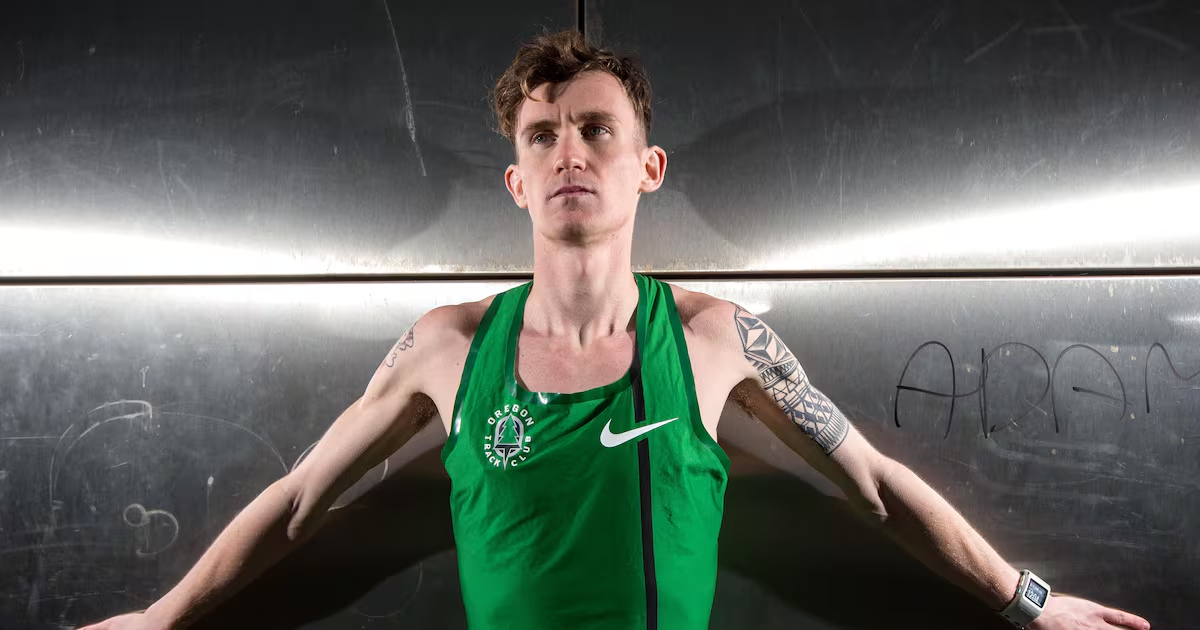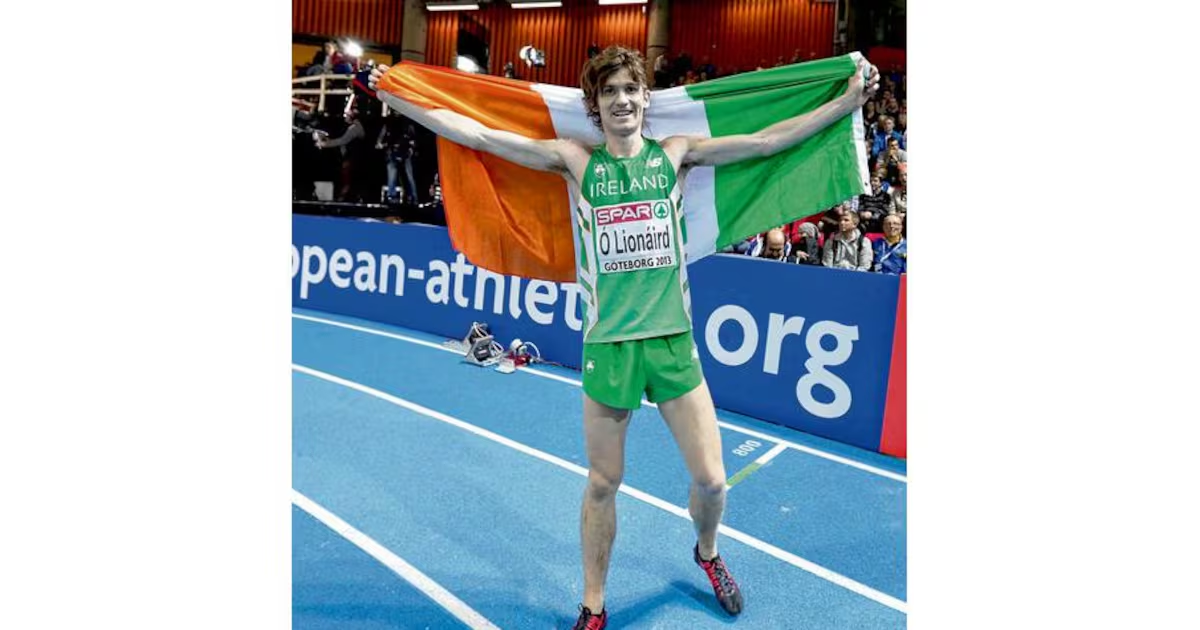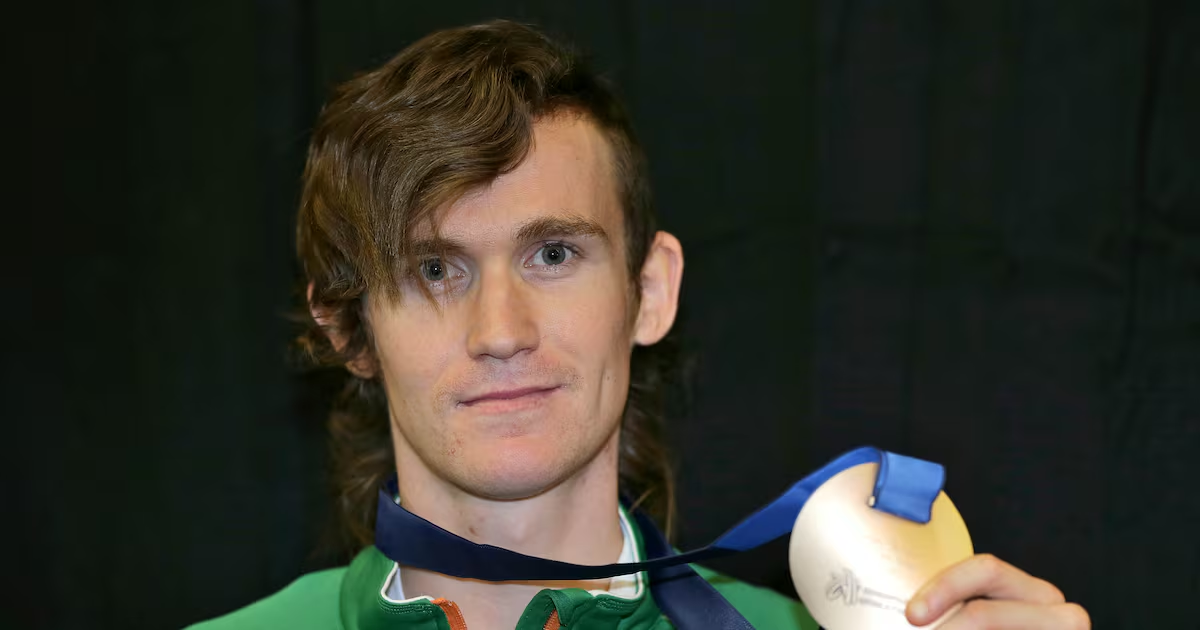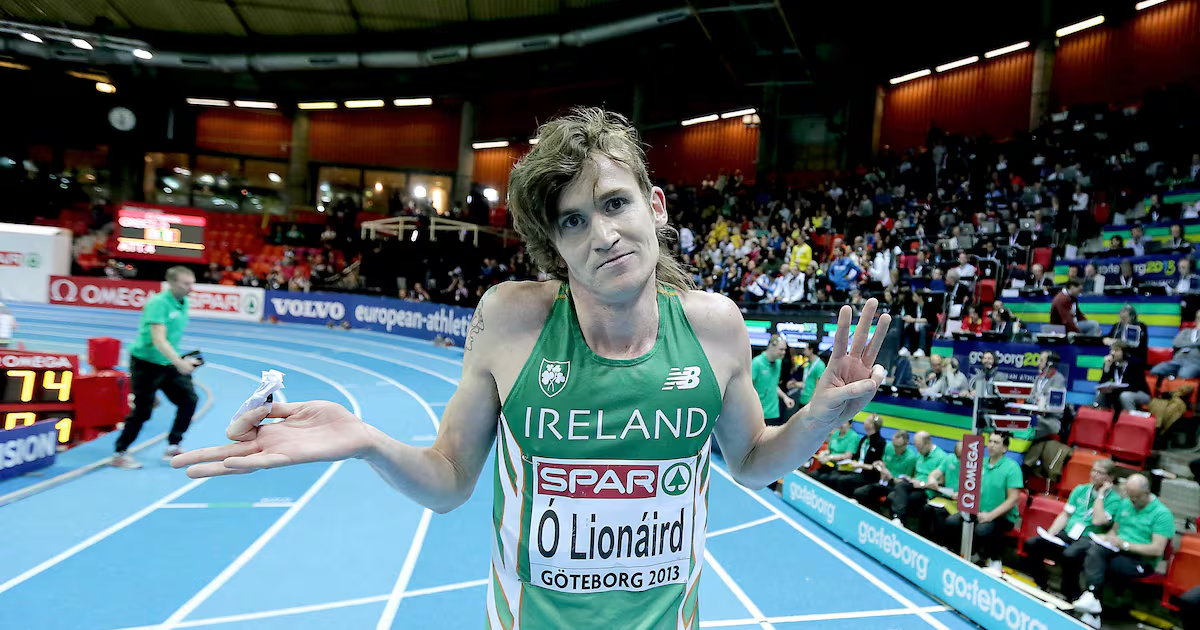
There is a standout scene at the end of Without Limits, the 1998 movie about Steve Prefontaine. His coach Bill Bowerman is delivering the eulogy inside Hayward Field at the University of Oregon, days after Pre – as he was better known – died in a car crash at age 24.“Pre always said a race is a work of art and he was out to make it one every step of the way,” says Bowerman, his character perfectly played by Donald Sutherland. “And he finally got it through to my head that the real purpose of running isn’t to win a race – it’s to test the limits of the human heart.”Something about that scene has been replaying in my mind in the days since Tuesday, when Ciarán Ó Lionáird was found dead in Vancouver at the age of 38. Although a generation apart, Prefontaine and Ó Lionáird always struck me as kindred running spirits, cut from the same old-school running cloth.They also shared that rare and intangible ability to naturally inspire and easily connect with other runners, both on and off the track. Both ran to win and had fiery running spirits. They were also, at times, rebellious runners. Although never without a cause. Every race had to be a work of art, even if sometimes it went badly wrong.The many heartfelt tributes paid to Ó Lionáird since his sudden death were also telling in that they went far beyond any of his running achievements. He only ran for four years on the international stage, a period during which he was often plagued by injury.His appearance in the 1,500 metres at the 2012 London Olympics was, by his own admission, “the worst experience of my life”, after he trailed home in 13th position in his heat. After another season ravaged by injury in 2015, he retired before the Rio Olympics in 2016, at age 28, utterly convinced his running career was over. There was one brief excursion back into racing at Burning Man, the sort-of-outlaw Nevada desert festival, in 2017, when he decided to run a short leg of the 50km ultra-marathon. “Are you Ciarán Ó Lionáird?” asked one fellow runner, when recognising the 2012 Olympian. “What the f*** are you doing here?”(L-R) Ciarán Ó Lionáird, Asbel Kiprop and Daniel Kipchirchir Komen lead the field during the 1,500m semi-final at the 2011 IAAF World Championships in Daegu, South Korea. Photograph: Jung-Yeon-Je/AFP via Getty Images There was another comeback attempt during the 2020 lockdown, with an eye on the rescheduled Tokyo Olympics, before an Achilles tendon injury soon put an end to that too.More than 50 years after Prefontaine’s one truly famous race, when he finished fourth in the 5,000m at the 1972 Munich Olympics, his spirit continues to breathe life into US distance running. His life was cut tragically short in 1975, aged just 24. However, for a runner who never won a major championship medal and never broke a world record for that matter, he remains one of the most recognised names in US distance running.Maybe they hadn’t quite seen his likes before and you get that sense about Ó Lionáird too.Ó Lionáird’s high point came in 2011, when in the one summer, he improved his 1,500m best from 3:48.36 to 3:34.46 – qualifying him for the World Championships in Daegu, South Korea. His 10th-place finish in that final remains the best of any Irishman.Two years later, he won his only championship medal, taking bronze in the 3,000m at the 2013 European Indoors in Gothenburg, having boldly made a bid for gold on the last lap. I can still recall Inpho photographer Morgan Treacy telling me how hard they found it to get Ó Lionáird to smile on the medal podium afterwards, because that was one race he truly believed he should have won.Above all of that, Ó Lionáird left a lasting impression, even if you only met him once. This was because of his generous running spirit. From his earliest days with West Muskerry Athletic Club, close to where he grew up in Macroom, to his later years with Leevale AC in Cork city, he aspired to being the best runner he could possibly be. And he always wanted to inspire other runners in that pursuit too.In the selfish world of the elite athlete, he was always approachable, even if somewhat elusive. He gained considerable popularity in the Irish athletics community during this period because of this very nature. After the 2011 World Championships, when he moved to train with the Nike Oregon Project, he packed whatever key possessions he had into two heavy-duty sports bags and gave everything else away – including his car.Ciarán Ó Lionáird's running career was blighted by injury After the London Olympics in 2012, he gave his race singlet to his physio Evan Scully, the precious number still attached. In the London Calling documentary that same year, the standout scenes are Ó Lionáird revisiting his school in Macroom, and Leevale AC, giving something back there too.Another memory remains for me. When we first met in Santry in August 2011, Ó Lionáird had just run his 3:34.46 to change the course of his running career. Dressed in retro Nike gear, by that stage he was already sporting the old-school look, complete with small facial tash and carefully-trimmed mullet. Put him in a picture alongside Dave Bedford, Neil Cusack or Steve Prefontaine and he’d look in perfect company.He told me of how he’d paid €5 for a train ticket from Leuven to Oordegem, in Belgium, his base that summer, for one last race over 1,500m. It was bust or boom, Ó Lionáird already rolling one last dice when transferring from the University of Michigan, to take up the offer of a half-scholarship at Florida Sate University, for his final year in 2009.Without room and board, he found the cheapest apartment in Tallahassee. He slept on a mattress, running morning and evening in the sweltering heat inside the college stadium until he finally regained some race fitness.“I had a pair of running shoes, and a pair of shorts,” he told me. “And I didn’t even need a T-shirt to run in Florida.”Ni bheidh do léithéid arís ann.
Ian O’Riordan: The running spirit of Ciarán Ó Lionáird was generous and rare in Irish athletics
Cork athlete made a mark far beyond running, as seen by the tributes since his death
1,032 words~5 min read