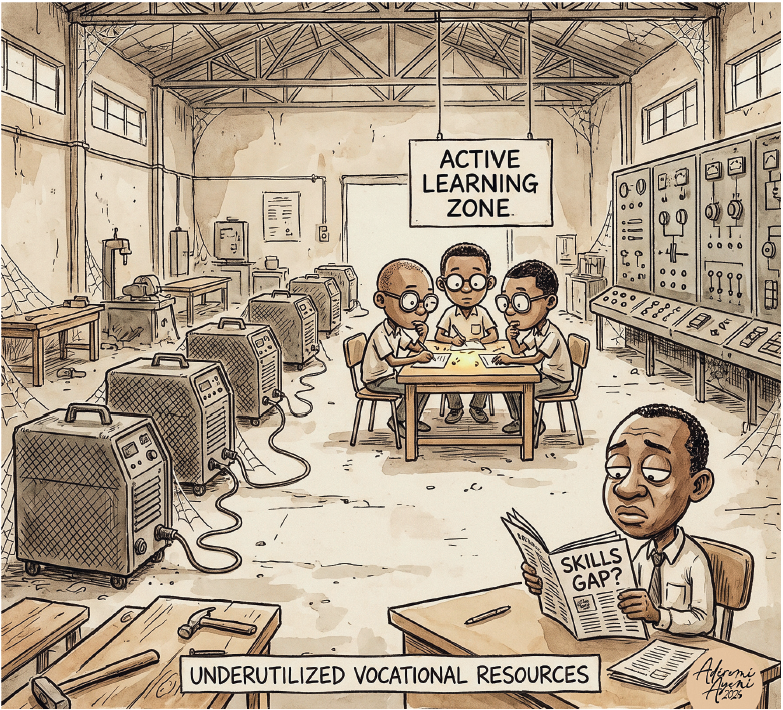
SEGUN H. OLUGBILE argues that the gap could be addressed
Tosin Eniolorunda’s recent remarks on the difficulty of filling over 500 roles in his organisation have reignited an important debate about talent, education, and workforce readiness in Nigeria’s digital economy. His concerns about the country’s skills gap are valid. However, the conclusion that these vacancies persist largely because Nigerian youths are unqualified reflects a narrower diagnosis of a more complex structural issue.
Nigeria’s challenge is not simply a shortage of talent; it is a shortage of deliberate, scalable systems for transforming potential into capability. A closer look at Eniolorunda’s own career trajectory offers a useful perspective.
Trained as a Mechanical Engineer, he did not emerge from university as a fintech specialist. His transition into the technology sector was enabled by Interswitch, an institution that invested in developing talent at a time when Nigeria’s digital payments ecosystem was still nascent. The company did not wait for a ready-made workforce, it built one.
This model of corporate-led talent incubation has historically underpinned the growth of new industries. It is neither accidental nor optional; it is foundational.