Unbeatable football stars, historic goals and legendary goalkeepers: The FIFA World Cup has begun in the US, Mexico and Canada, but the frantic search for tickets remains. Many fraudsters are trying to scam football fans online.
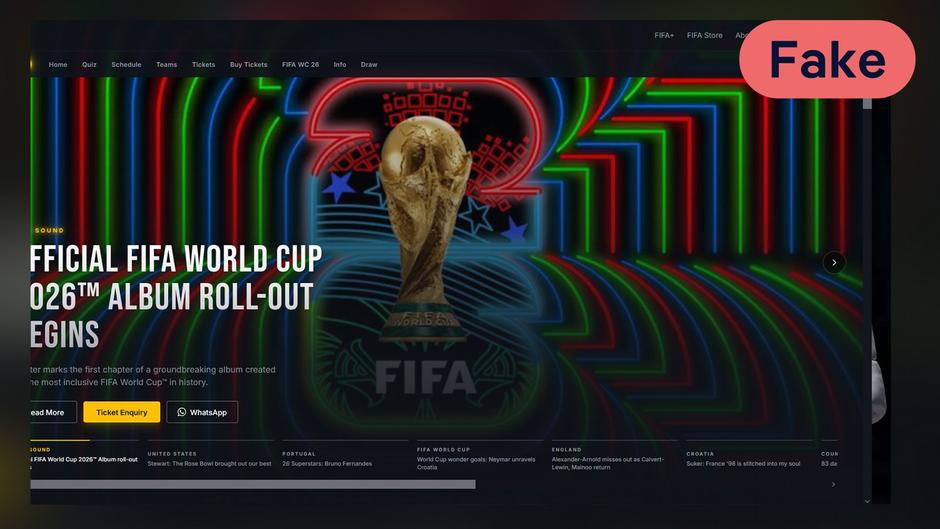
In May, the US domestic intelligence service, the Federal Bureau of Investigation (FBI) warned against scams and said it was issuing a public service announcement "to warn the public that cyber threat actors are conducting spoofing attacks against the Federation Internationale de Football Association (FIFA) website in advance of the 2026 FIFA World Cup."
It went on to explain that "a spoofed website is designed to pose as a legitimate website, with branding, product listings, etc., and malicious actors use them to further illegal activity like personal information theft and facilitating monetary scams."
It also listed dozens of suspicious domains that had already been identified but said that "the public should be aware that new websites will continue to appear."
DW Fact Check has put together some tips on how to spot scams.Often you can tell if a site is fake from inconsistencies in the text