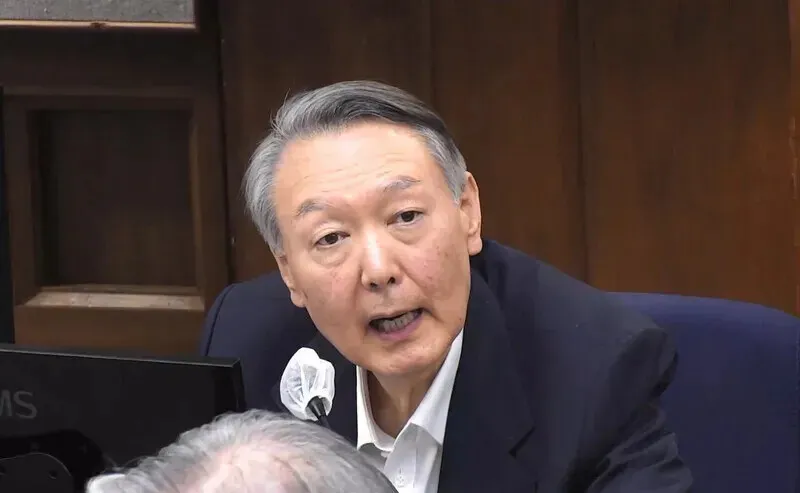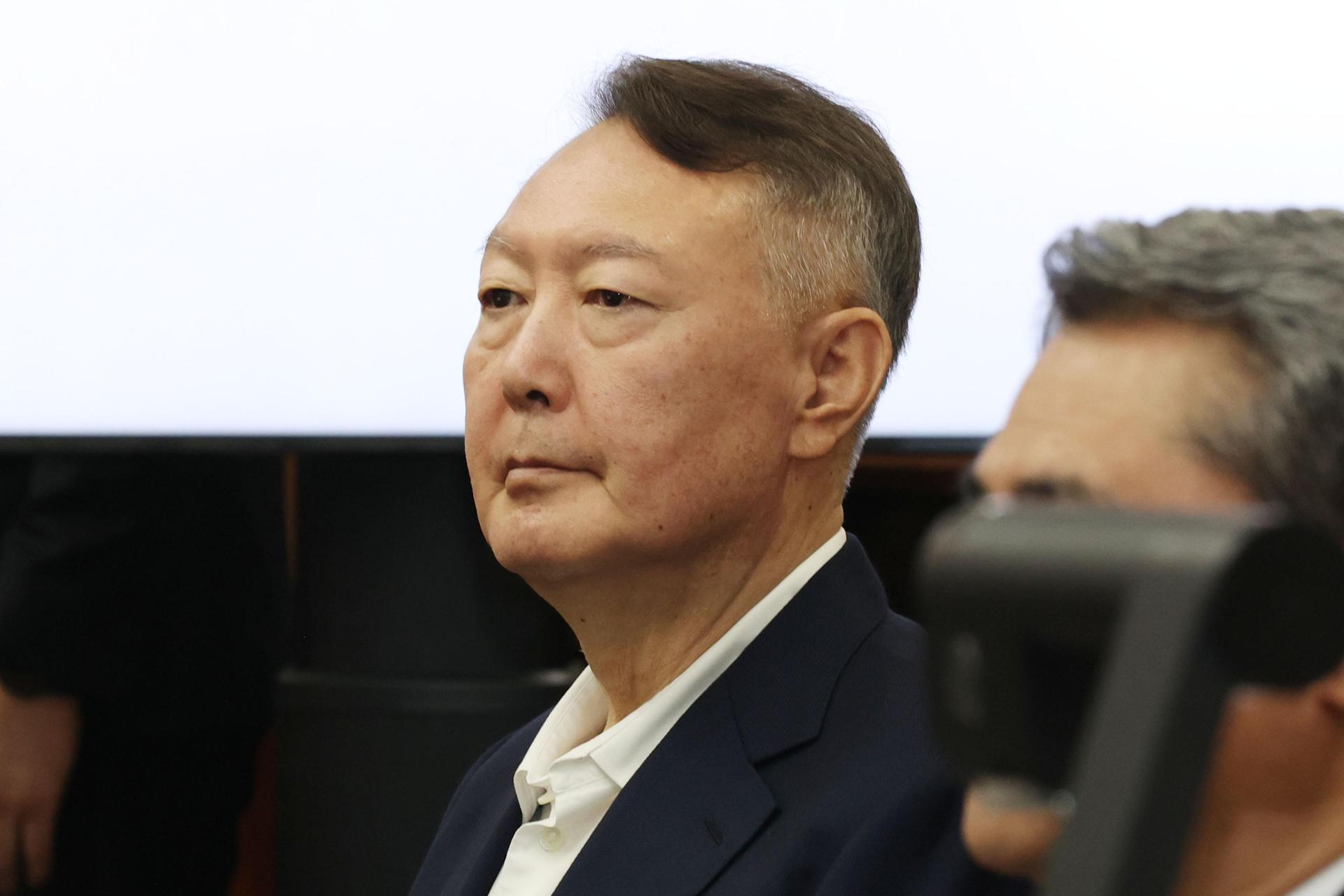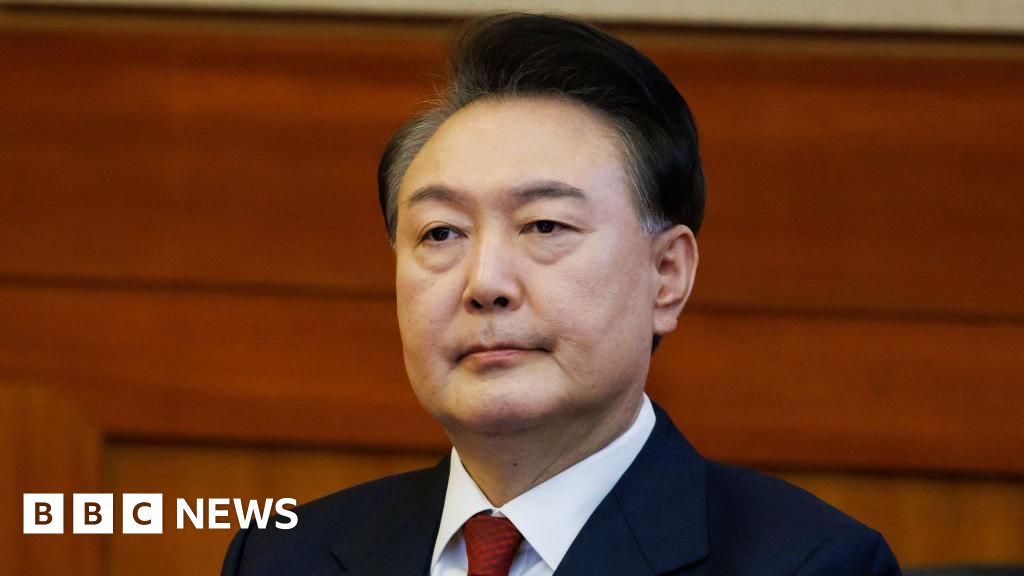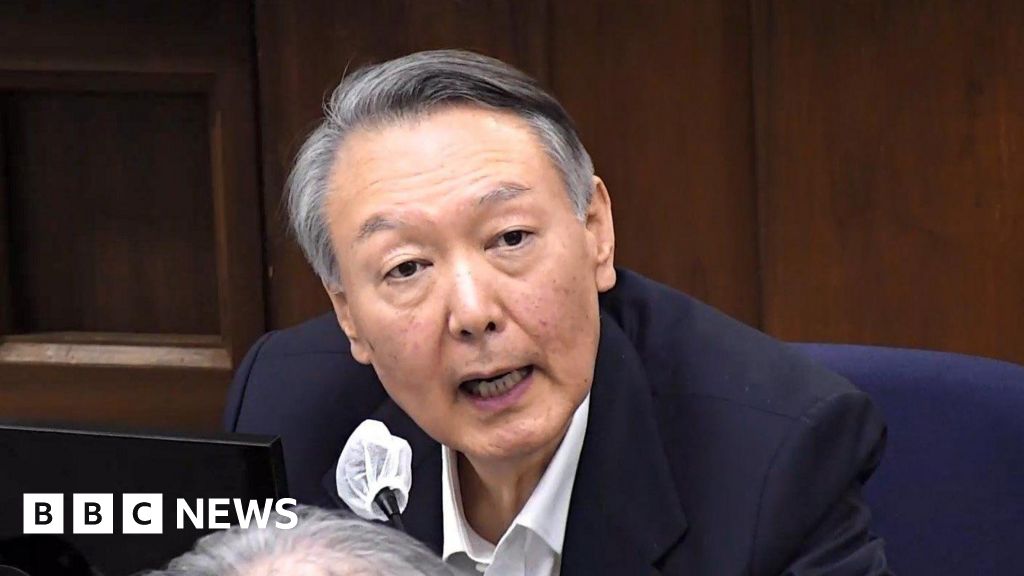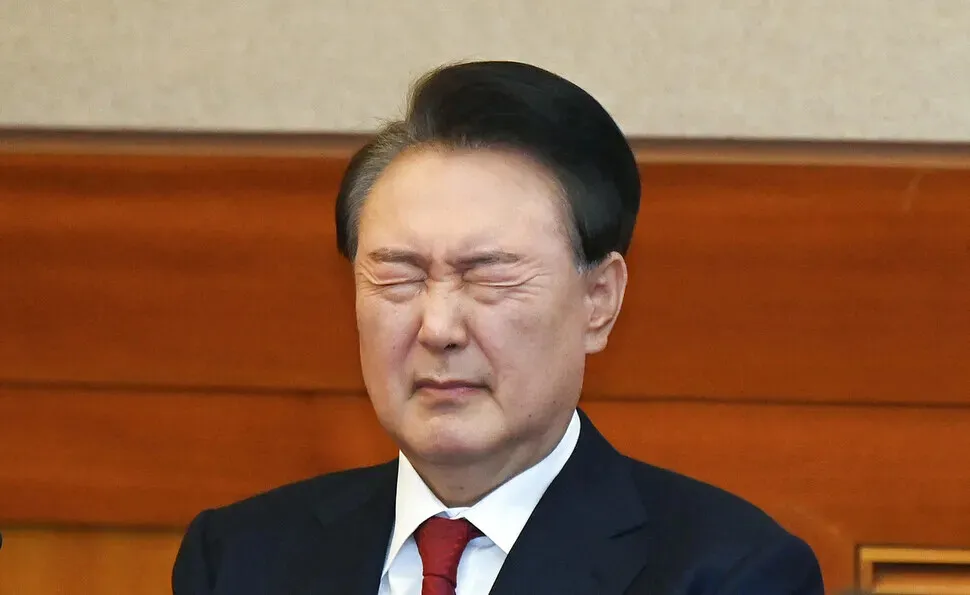
President Yoon Suk-yeol squeezes his eyes shut while attending a hearing as part of his impeachment trial at the Constitutional Court in Seoul on Feb. 6, 2025. (courtesy of the Constitutional Court of Korea)
All evidence points to President Yoon Suk-yeol having attempted to instigate an insurrection. While Yoon refuses to appear for any and all questioning, witness testimonies tantamount to criminal confessions continue to emerge. More than enough evidence exists to demonstrate that Yoon attempted to subvert the Constitution by establishing an emergency legislative body after rendering the National Assembly powerless, blockading the Hankyoreh and other media outlets, and instigating violent riots. The wealth of evidence is, in fact, almost makes it difficult to grasp the immediate motivation behind Yoon’s attempted insurrection. As such, Yoon is exploiting that loophole by fallaciously declaring that his martial law invocation was a “warning” against what he calls the “tyrannical rule” of the opposition party.Judging by the extensive planning and sequential execution of the insurrection, along with the attempts to seize the National Assembly and National Election Commission, Yoon most likely resorted to his late-night insurgency to evade criminal punishment for himself and his wife, Kim Keon-hee. Many are calling for investigations into the broader circumstances surrounding the impeached president, which may have included a scheme using the prosecution service and the military to ensure he could enjoy long-term rule.Public prosecutors’ indictment of Yoon, which runs for more than 100 pages, breaks down the process of how Korea’s leader hypnotized and deluded himself into believing the country was in crisis. First, it identifies Yoon’s perception of the political situation in South Korea before his martial law stunt, then explains how he met with key military commanders to complain about the circumstances, refers to his escalating rhetoric and more. Out of the 100 pages, seven are devoted to explaining Yoon’s motive for violating the law.According to the indictment, Yoon began hinting at abusing his power to mobilize the military and declare martial law in March 2024, as demonstrated by comments he made to former Defense Minister Kim Yong-hyun, who was head of the Presidential Security Service at the time, and others.Yoon claimed that he finalized his decision to call for martial law “around Nov. 29 or 30” during a hearing in his impeachment trial at the Constitutional Court on Tuesday. “After the possibility of an impeachment bill for the Board of Audit and Inspection chair was brought up, I suggested invoking martial law to Kim Yong-hyun,” he stated. Previously, Yoon rationalized the sudden announcement of martial law in his Dec. 12 address to the public by arguing that it was triggered by the “reckless” attempts at impeaching the head of the Board of Audit and Inspection chief and prosecutors, severe budget cuts and evidence pertaining to election fraud.Last year, Choe Jae-hae, the chief of the Board of Audit and Inspection, had become embroiled in controversy regarding a slipshod, pro forma audit that manipulated facts related to the alleged illegal relocation of the presidential residency. The Democratic Party of Korea announced its decision to impeach Choi on Nov. 1, 2024, and the bill was introduced to parliament on Nov. 28. The impeachment process of Lee Chang-su, head of the Seoul Central District Prosecutors’ Office, who cleared Kim Keon-hee of charges related to the Deutsch Motors stock manipulation case, soon followed.The Democratic Party warned of harsh cuts to the government budget bill for 2025, targeting funds allocated to prosecutors for classified operations, and the party railroaded a downsized bill through the National Assembly’s Special Committee on Budget and Accounts on Nov. 29.Yoon allegedly contemplated the necessity of martial law in light of the various grievances piling up about the country’s political situation and said he resolved to take action on Nov. 29. This claim is likely to be false, as Yoon’s specific plans to push for martial law began at least 45 days before Nov. 29.The indictment points out that the martial law troops were selected as early as Oct. 14, 2024. Kim Yong-hyun instructed Moon Sang-ho, the chief of the Defense Intelligence Command, to “aid Roh Sang-won in his mission.” By that time, Kim and Roh were planning to organize an investigation unit under the martial law command to investigate the alleged involvement of National Election Commission employees in election fraud. A chain of command was established, with Kim Yong-hyun at the top followed by Roh Sang-won, Moon Sang-ho and Kim Yong-gun (colonel of the Defense Intelligence Command), to select Headquarter of Intelligence Detachment agents and make interim reports. Prosecutors have confirmed that this took place in mid-October 2024.“Roh, who was a civilian at the time, only moved under directions he received from Kim Yong-hyun, who was receiving orders from Yoon. The investigation team under the martial law command began to be organized in earnest in mid-October of 2024. This was before the impeachment bills for the chief of the Board of Audit and Inspection and prosecutor Lee Chang-su were introduced to parliament and cuts were made to the government budget for 2025, which Yoon claims to be the reason behind his declaration of martial law,” a jurist with previous experience investigating cases related to the president, told the Hankyoreh.