AFP, GENEVA
The first-ever international agreement on safeguarding digital platform workers in the gig economy was adopted on Friday at the UN’s International Labor Organization (ILO).The Decent Work in the Platform Economy Convention is aimed at extending labor protections to hundreds of millions of people worldwide who work through digital platforms, in areas such as food delivery and car services.The convention applies to “all digital labor platforms” and “all digital platform workers... whether they are in the formal or informal economy,” according to the text adopted by ILO members.
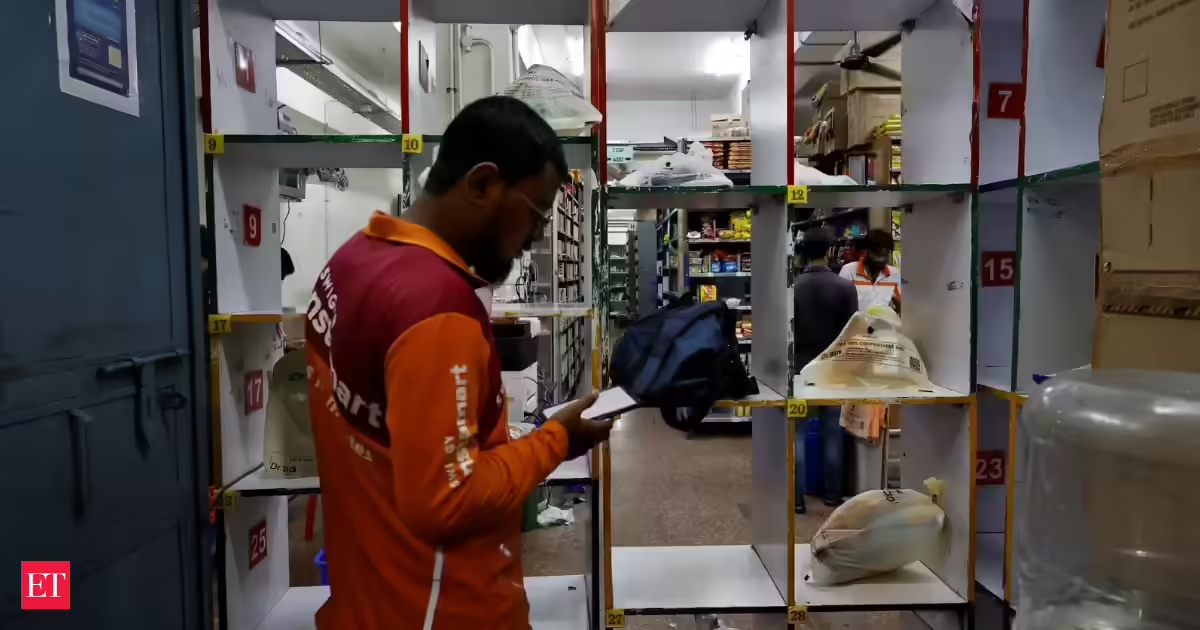
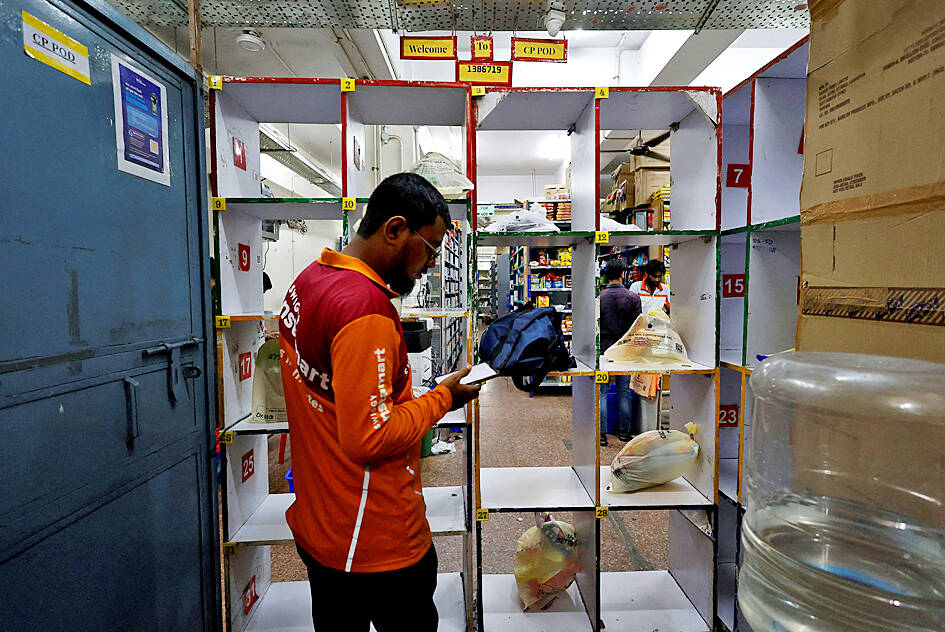
A gig worker picks up groceries for an order at a market area in New Delhi on May 6, 2024.
Until now, labor practices have struggled to keep pace with the dramatic shifts in the way people work.The World Bank in 2023 estimated there were up to 435 million online gig workers around the globe who had largely fallen outside regular labor protections.
Companies behind the apps control the gig work via algorithms that assign tasks, set pay, evaluate performance and even fire workers. Despite largely controlling the tasks and pay, the platforms typically classify the workers as independent contractors rather than employees. This allows them in many cases to ignore things such as minimum wage requirements, workplace safety and access to social security.“The ILO now has the first convention that focuses on the impact of digitalization in the world of work,” ILO Director-General Gilbert Houngbo said.“This convention seeks to bring about tangible improvements in the lives of millions of workers around the world,” Brazil’s representative said at the adoption.In Brazil, “around two million workers will see their opportunities, dignity and autonomy strengthened by this convention,” she added.Other countries, such as India, Bangladesh and the US, felt that the convention should be applied flexibly, depending on national contexts.“We continue to urge extreme caution with respect to prescriptive binding regulations in fast-evolving areas of the economy,” US Representative Lorenzo Riboni said.Independent contractors control their own work and “lean into an entrepreneurial spirit that makes America great,” he added.The International Trade Union Confederation said the convention would help ensure that millions of platform workers can enjoy the rights, protections and dignity that all workers merit.“This convention represents a major step forward,” confederation political director Jeroen Beirnaert said.However, the convention allows countries “to provide for certain limited exclusions from its scope... [so] there is a risk that certain categories of workers will be excluded,” he said, but added that countries that choose to apply such exclusions would have to justify them.The confederation urged governments to ratify the convention quickly, saying the future of work had to be built on rights rather than precariousness.The convention comes into force in member states 12 months after they ratify it, so long as two countries have ratified the text.The convention calls on countries to ensure that gig workers are guaranteed fair pay and access to social security protections “on terms no less favorable than those applicable to other workers with the same classification of status in employment.”Countries should also ensure that digital labor platforms provide workers with “timely, verifiable and easily understandable information on the terms and conditions of their employment or engagement.”“Platform companies have built a business model that sidesteps labor protections, and shifts risks and costs onto the workers,” Human Rights Watch senior economic justice adviser Lena Simet said.The convention marks “a turning point for platform workers,” setting “the first global standard to protect their rights and hold digital labor platforms accountable,” she said.