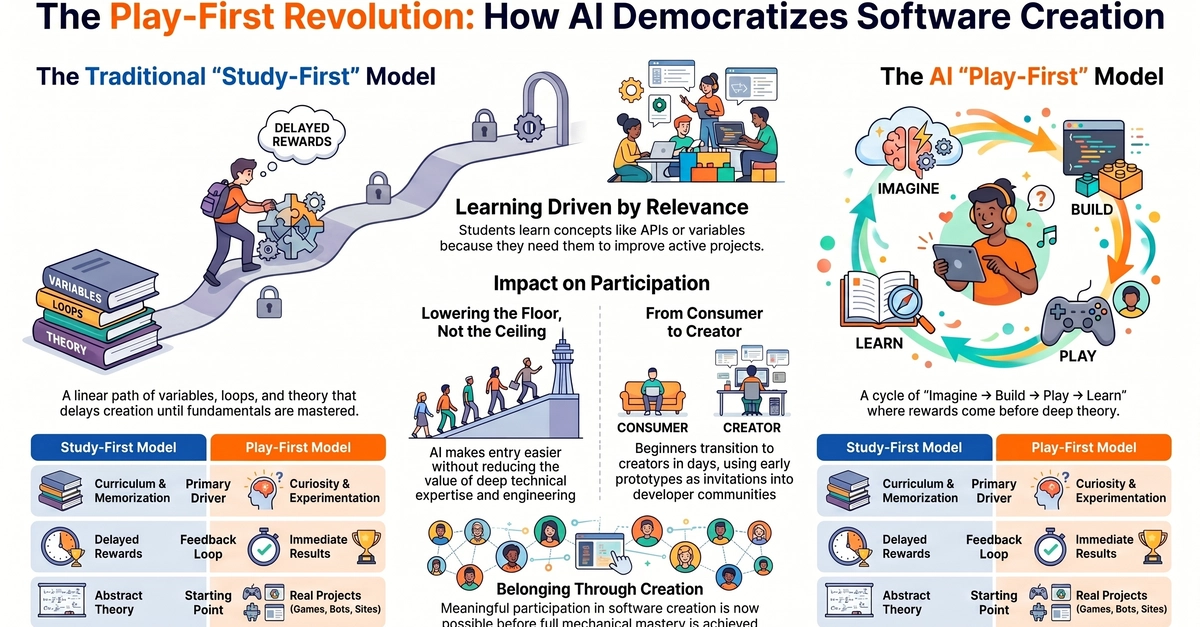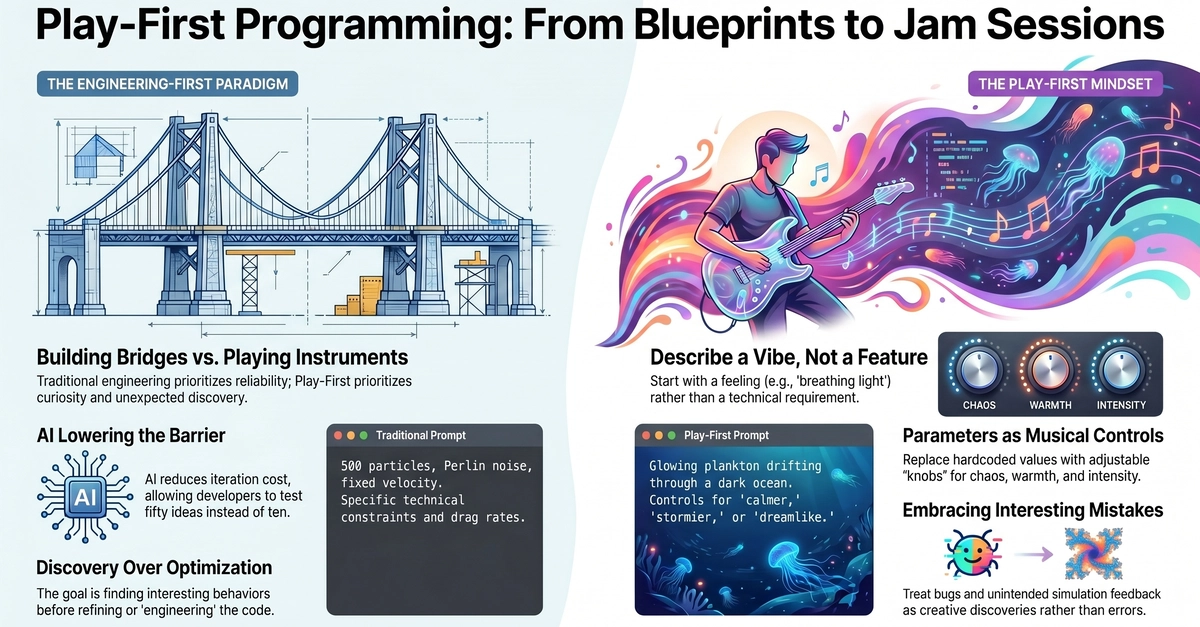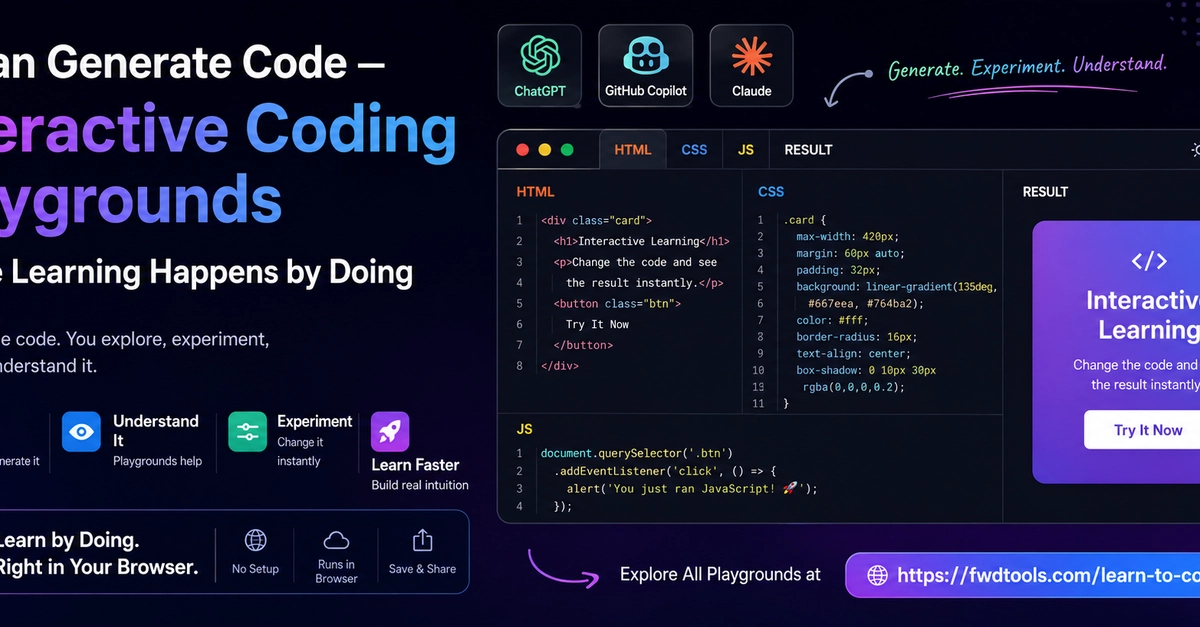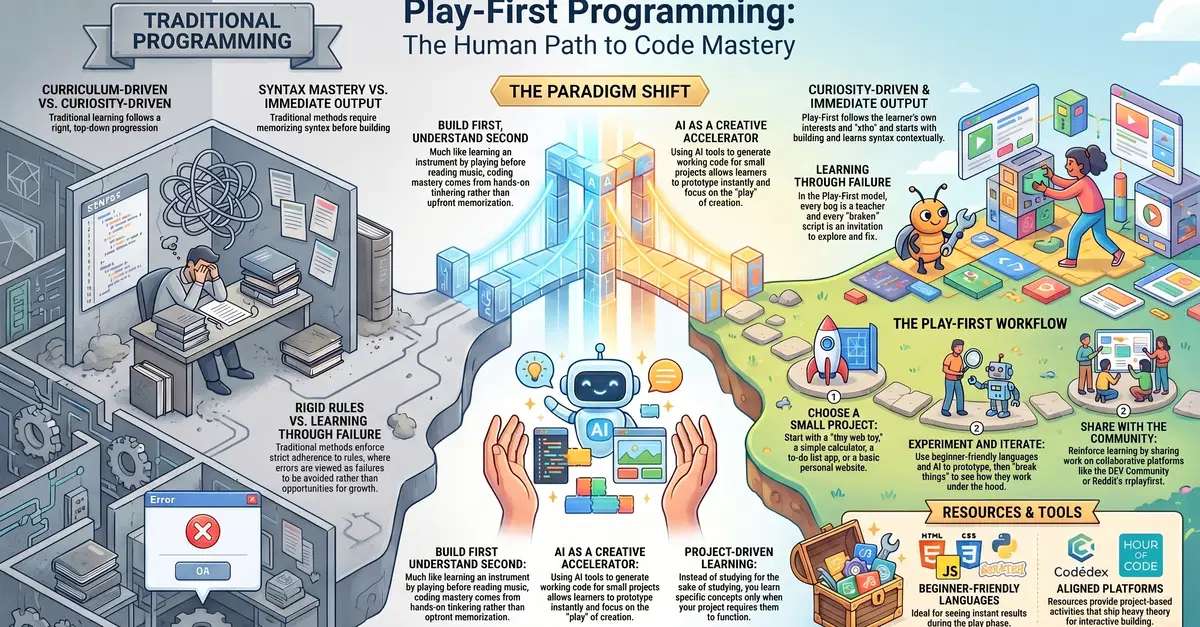
Play‑First Programming is built on a simple but powerful idea: you learn to code more effectively when you start by building things, not by memorizing things. Instead of grinding through syntax charts or abstract theory, you begin with small, playful projects and let hands‑on experimentation pull you forward. It’s the same way musicians learn by picking up an instrument and playing long before they can read sheet music. Coding becomes something you do first and understand second — a creative act rather than a technical initiation ritual.
The philosophy grew out of experimenting with AI tools like ChatGPT and Claude to generate working code for small projects in minutes. Whether it was HTML, Python, or C#, the ability to prototype instantly changed the learning experience. It became clear that the fastest way to understand code wasn’t through memorization, but through play. At the same time, many “vibe coding” spaces online seemed more focused on quick monetization than genuine learning. That contrast helped shape the idea of the Play‑First Programmer — someone who learns by tinkering, who builds small and fun projects, who follows curiosity rather than profit, and who uses AI as a creative accelerator rather than a shortcut. If you want to explore the philosophy more deeply, you can dive into Play‑First Programming.