The launch of Apple Inc (NASDAQ:AAPL) iPhone may have contributed significantly to America's declining birth rate, according to a new working paper published earlier this month by the National Bureau of Economic Research (NBER).
The study found that smartphone adoption may explain a meaningful share of the sharp drop in U.S. fertility over the past two decades.
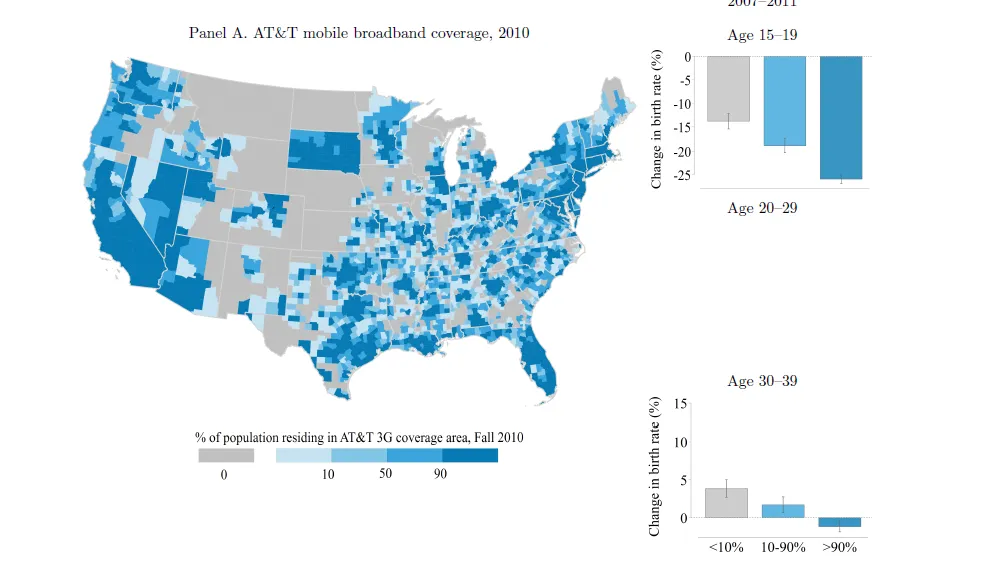
Researchers analyzed birth trends following the iPhone's launch in June 2007, when AT&T Inc (NYSE:T) held exclusive U.S. distribution rights until February 2011. That exclusivity allowed economists to compare areas with early iPhone access against regions with limited access, creating what they described as a natural experiment.
The findings were notable. In the first four years after the iPhone's release, regions with greater access to the device saw birth rates fall 4.5% to 8% more among ages 15 to 19 and 3.2% to 6.6% more among ages 20 to 24. The decline was steepest among younger Americans but appeared across every age group.
Even after adjusting for factors such as housing prices and urbanization, researchers still found a strong relationship between higher iPhone adoption and lower fertility.