CHICAGO -- For kids with central precocious puberty (CPP), there shouldn't be a one-size-fits-all approach to testing and treatment, according to a clinical practice guideline from the Endocrine Society.
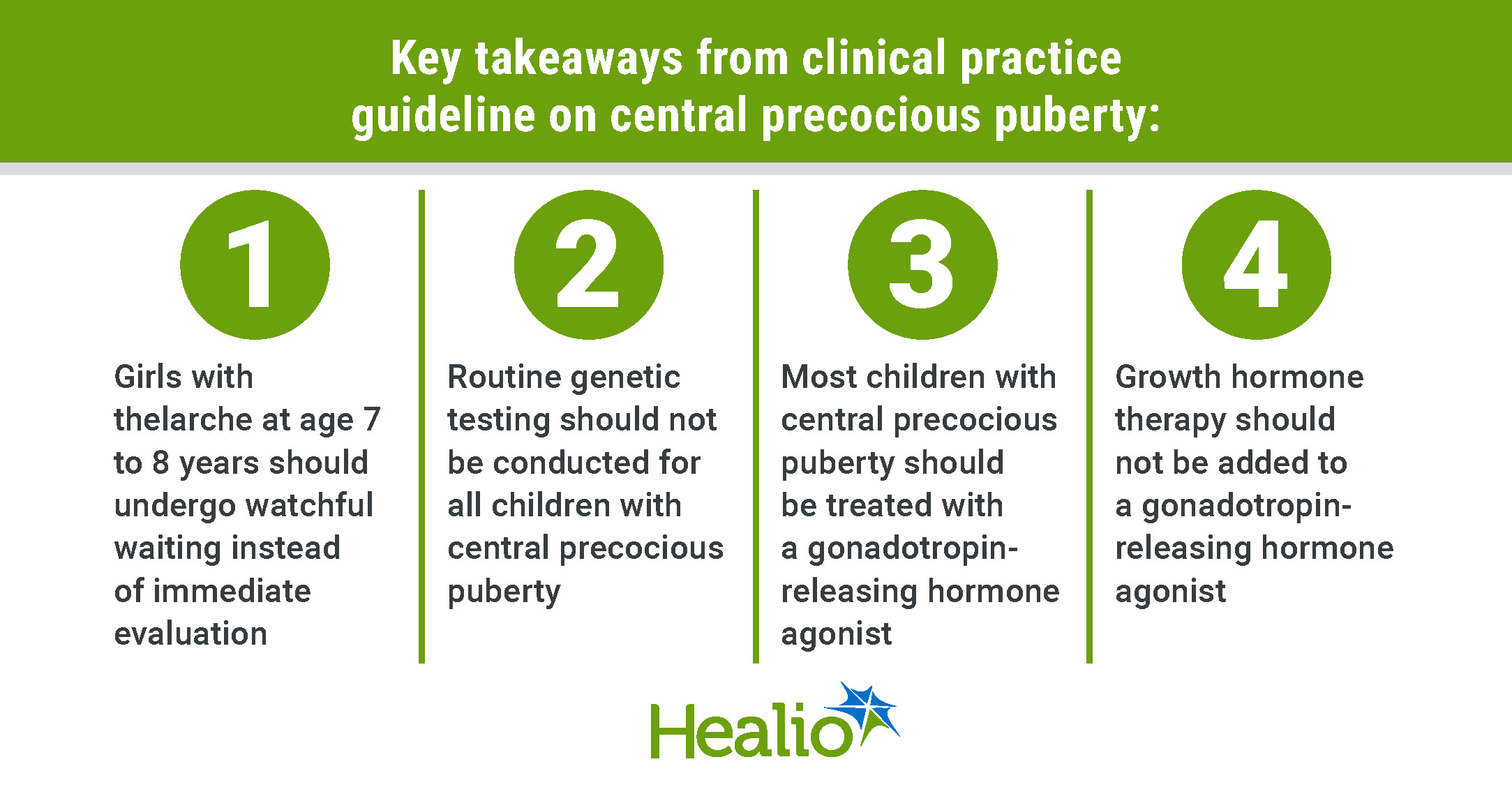
The guideline, the first of its kind from the society, first recommended watchful waiting via periodic physical examinations rather than immediate evaluation with laboratory testing and/or radiologic imaging in girls who present with thelarche, commonly known as breast budding, between the ages of 7 and 8 years.
They also suggested 4 to 6 months of observation to differentiate unsustained or slowly progressive puberty from rapidly progressive puberty before starting diagnostic evaluation in girls younger than 7 years with initial breast development.
The guideline was presented at the organization's annual meeting, ENDO 2026, here, and published in the Journal of Clinical Endocrinology & Metabolism.
Though there are "many important clinical questions regarding the diagnosis and management of CPP ... 10 of the most controversial clinical questions were prioritized," noted Guideline Development Panel Chair Ana Claudia Latronico, MD, PhD, of the University of São Paulo, and colleagues.