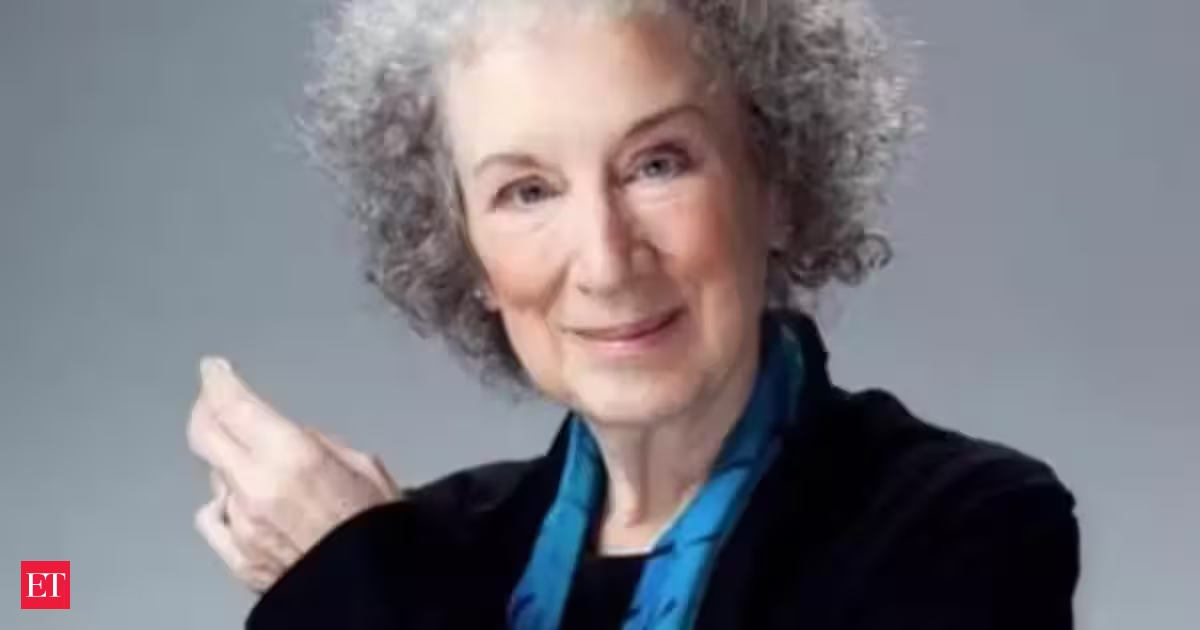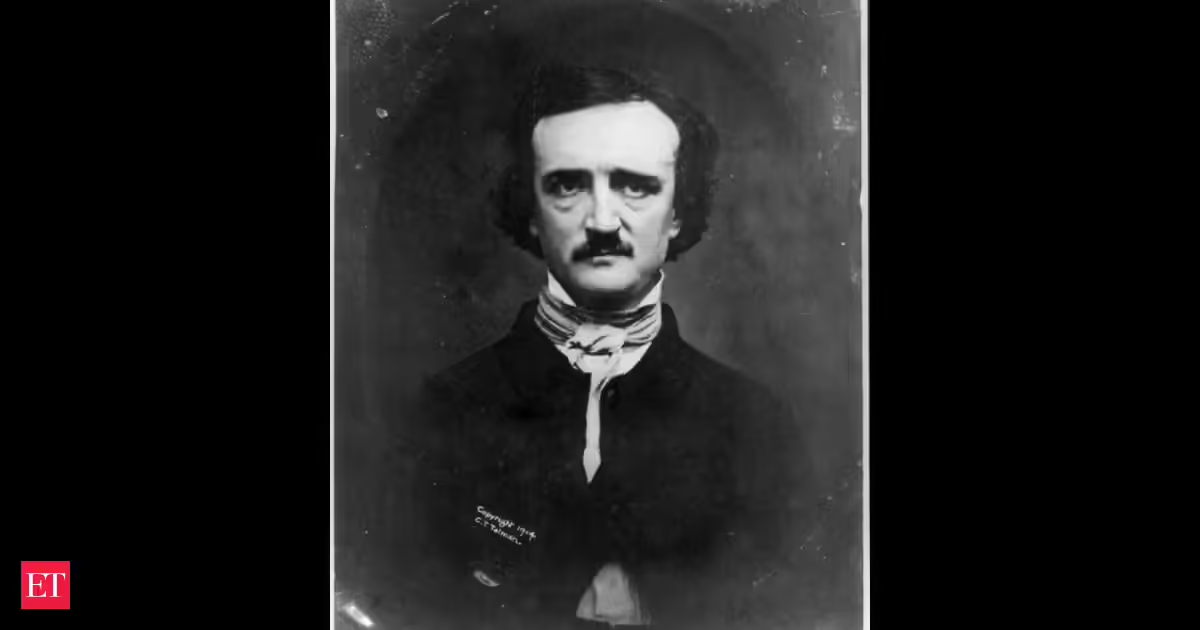
Quote of the Day by Emily Dickinson continues to inspire writers, thinkers, and leaders across generations with deep philosophical insight. Emily Dickinson believed that words hold a living force capable of shaping perception, emotion, and destiny itself. In today’s fast-moving digital world, the Emily Dickinson quote on words feels even more relevant, reminding us that language is not passive but powerful and alive. Every time we speak, write, or think, we activate meaning that can build or break realities.The essence of the Emily Dickinson quote on words lies in its quiet yet profound truth that words carry energy beyond sound. They influence how humans interpret the world and how societies evolve over time. From political speeches to personal affirmations, the Emily Dickinson quote on words explains why language remains humanity’s most powerful tool. Even a single sentence can shift emotions, spark revolutions, or heal broken minds.Quote of the Day: Can a single word change a life? Emily Dickinson’s profound lesson on language, meaning, and human potential"I know nothing in the world that has as much power as a word. Sometimes I write one, and I look at it, until it begins to shine."The Quote of the Day reminds us that words carry silent power that shapes human thoughts, emotions, and direction in life. Every spoken or written word influences mindset, builds perception, and creates reality over time. In today’s digital world, where communication moves instantly across platforms, the importance of choosing words carefully has become even more critical for personal growth, relationships, and success.ALSO READ: Quote of the day by Karl Marx: "One day there will be trillionaires, but you will still have nothing." — What did Marx reveal about wealth inequality, capitalism, and the future of money? A wealth quote that offers powerful lessons on building lasting prosperity beyond moneyThis Quote of the Day also teaches that language is not just expression but creation. A single positive sentence can inspire confidence, while a careless word can break trust or weaken motivation. From leadership to daily life conversations, words act as invisible forces guiding decisions, actions, and long-term outcomes. That is why mindful communication remains one of the strongest keys to emotional intelligence and meaningful living.The deeper meaning behind Emily Dickinson quote on power in human lifeQuote of the Day by Emily Dickinson highlights that language is more than communication—it is creation. Words shape how people think about themselves and the world. When someone hears encouragement, confidence builds. When someone hears criticism, doubt grows. The Emily Dickinson quote on words explains this invisible but powerful psychological effect of language.Throughout history, leaders, writers, and reformers have used words to change civilizations. Speeches that inspired independence movements, or writings that sparked intellectual revolutions, all reflect the truth behind the Emily Dickinson quote on words. Language becomes a bridge between thought and action, turning ideas into movements that reshape societies.Even in personal life, the Emily Dickinson quote on words teaches responsibility. A simple sentence can either heal a relationship or damage it permanently. People often underestimate how deeply words settle into memory and emotion. That is why mindful communication becomes essential in building trust, respect, and emotional stability.Who was Emily Dickinson? Emily Dickinson was a 19th-century American poet known for her deeply introspective and unconventional writing style. Born in 1830 in Amherst, Massachusetts, she lived a largely private life, spending most of her years in relative isolation. Despite this, she produced nearly 1,800 poems, many of which were discovered only after her death. Her work explored powerful themes such as death, immortality, nature, love, and the inner workings of the human mind.Emily Dickinson’s poetry is celebrated for its emotional intensity, sharp imagery, and innovative use of language, punctuation, and structure. During her lifetime, only a few of her poems were published, but posthumously she became one of the most important figures in American literature. Today, she is regarded as a pioneer of modern poetry whose unique voice continues to influence writers, thinkers, and readers around the world.The Emily Dickinson quote can be seen clearly in historical events where language changed the course of nations. Great speeches like those during independence movements show how words can unite millions. Leaders understood the emotional force described in the Emily Dickinson quote on words, using language to ignite courage and purpose.In literature and philosophy, writers transformed societies through carefully chosen words. Books that questioned injustice or celebrated freedom became turning points in human thought. The Emily Dickinson quote on words reflects this timeless power, proving that written expression can outlive generations and still influence modern thinking.In everyday life, the Emily Dickinson quote on words appears in small but powerful moments. A teacher encouraging a student, a friend offering support, or a leader guiding a team—all demonstrate how language shapes outcomes. These simple interactions prove that words are not small; they are structural forces of human experience.Even failures and successes often depend on words. A motivating statement can push someone toward achievement, while discouraging words can limit potential. The Emily Dickinson quote on words reminds us that language is both responsibility and opportunity, shaping paths that people follow throughout life.Other Famous Quotes by Emily Dickinson “Hope is the thing with feathers that perches in the soul.” “Forever is composed of nows.” “Unable are the loved to die, for love is immortality.” “Saying nothing… sometimes says the most.” “The soul should always stand ajar, ready to welcome the ecstatic experience.”These quotes by Emily Dickinson reflect her deep understanding of life, emotion, and human consciousness. She used simple language to express complex truths about hope, time, love, and existence.
Quote of the Day by Emily Dickinson: “I know nothing in the world that has as much power as a word. Sometimes I write one, and I look at it, until it begins to...” — What this timeless quote teaches about the hidden power of words, learning, leadership, and creating lasting impact
Quote of the Day by Emily Dickinson offers a timeless lesson on the power of words, communication, and personal growth. Success often begins with language. Great leaders, thinkers, and innovators shape the world through ideas expressed clearly. This inspiring wisdom reminds us that a single word can influence decisions, transform lives, and create lasting impact.
TL;DRAI
Emily Dickinson's nearly 1,800 poems asserted that words shape human perception, emotion, and societal outcomes. For tech leaders, strategic communication—clarity, tone, encouragement—structures organizational outcomes as fundamentally as technical architecture.
929 words~4 min read