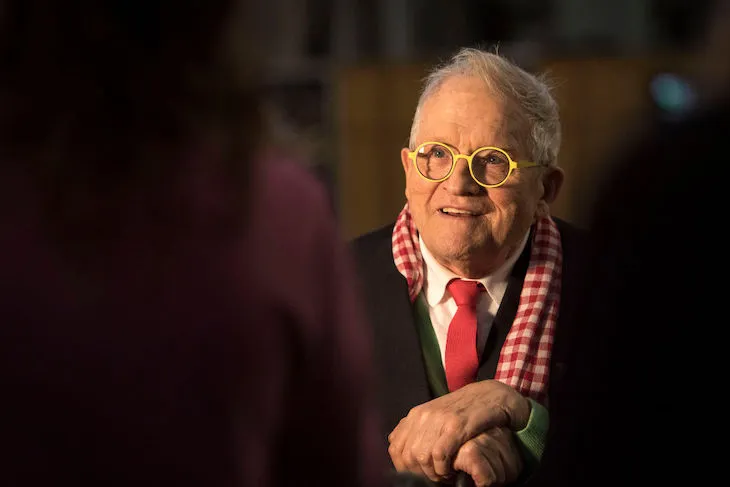
For six years, in the 1990s, I was David Hockney’s ex-pat English next-door neighbour in the Hollywood Hills. A rickety blue fence divided us as well as 18 years. I spent Christmas with him one year at his cottage in Malibu, me and twenty other men eating BBQ turkey in shorts and Speedos. We got to know each other pretty well, having some memorable adventures together in LA as mischief-making Brits who regarded the city as something of a playground. Neither of us took the Californian authorities especially seriously.
Hockney was certainly a rebel at heart. It came as little surprise when I later found out David was a Eurosceptic
My first thought on hearing of his death in London this week, aged 88, other than sadness at the loss of a friend, was not only that Britain had lost its “greatest living artist”. But two other points are worth making. David, perhaps more than any other artist, helped create the splashy pool-side dreamscape idea of Los Angeles as the new “Promised Land” in the world’s global consciousness.
He liked to say that when he arrived in the sixties, he set out to become not a fleeting pop artist but an artist – like Canaletto in Venice, or Caravaggio in Rome – who captured Southern California’s suburban zeitgeist, its long afternoon shadows and its sexual spirit of place. He once said that when he arrived in the 1960s, he thought: “My God, this place needs its Piranesi. So here I am!”.