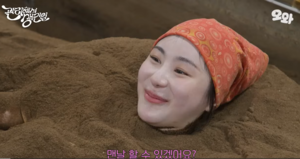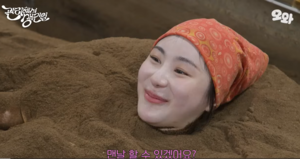
K-pop singer Lee Chae-yeon taking enzyme bath (YouTube) Buried up to the neck in warm, fermented rice bran, a new generation of Koreans is sweating out the stress of daily life.Enzyme baths, a heat therapy long associated with middle-aged and older Koreans, are drawing customers in their 20s and 30s, who see the treatment as a way to reduce puffiness, flush out fatigue and recover from busy routines without breaking a sweat at the gym.The treatment involves lying in a bed of hinoki cypress sawdust, rice bran and medicinal herbs mixed with microorganisms. As the microbes ferment, they generate natural heat of 40 to 70 degrees Celsius. Unlike a conventional sauna, which delivers intense heat through electric devices, an enzyme bath raises the core body temperature gradually, stimulating blood circulation and lymphatic flow. Many visitors book sessions before photo shoots or important events to reduce facial and body swelling.Card spending data points to a clear generational shift in the practice. Customers in their 20s and 30s accounted for 47.5 percent of payments at enzyme bath establishments in the first quarter of this year, up from 30.1 percent in the first quarter of 2023, according to an analysis released May 20 by Shinhan Card's big data research institute. The share of customers in their 40s and 50s fell from 53.5 percent to 36.1 percent over the same period.Demand has held up despite the price. At one enzyme bath house in Seoul, where a session costs 100,000 won ($65), nearly 40 reservations fill each weekend day, mostly from women in their 20s and 30s.Celebrities have fueled the interest. Actress Oh Yeon-seo introduced the treatment on June 1 on her YouTube channel, burying her entire body except her head in the enzyme bed."When I take a half bath at home, I do not really sweat from deep inside, but here the sweat comes from within. My calves are already so hot. It is a pleasant kind of heat," she said in the video. K-pop singer-actor Lee Hyeri taking an enzyme bath (YouTube) Clips of K-pop idols, including Lee Chae-yeon and Lee Hyeri, receiving enzyme baths have also circulated on YouTube, where the treatments are presented as part of an anti-inflammatory and detox routine.The appeal goes beyond celebrity endorsements. Enzyme bathhouses tend to feature neat interiors and a calm atmosphere, setting them apart from the scrub-focused bathhouses of previous generations.Analysts attribute the revival to the increase in experience-driven spending and a growing willingness to pay for physical and mental recovery, a pattern some have dubbed "recoverynomics.""Young consumers tend to value experience. Saunas have become another venue for that kind of consumption," said Lee Eun-hee, a consumer studies professor at Inha University."Young people today are highly interested in health and seek out a wide range of health-related activities. They are willing to open their wallets if they judge something to be good for their health, even at some cost," Lee said.
Enzyme baths heat up as latest wellness trend
Buried up to the neck in warm, fermented rice bran, a new generation of Koreans is sweating out the stress of daily life. Enzyme baths, a heat therapy long asso
TL;DRAI
Enzyme baths now attract 47.5% of Korean 20-30-year-olds (up from 30% in 2023), rebranding as youth wellness trend at 100,000 won. The shift reflects "recoverynomics"—youth prioritizing health experiences over gym routines—signaling demand for wellness-tech and booking platforms.
487 words~2 min read