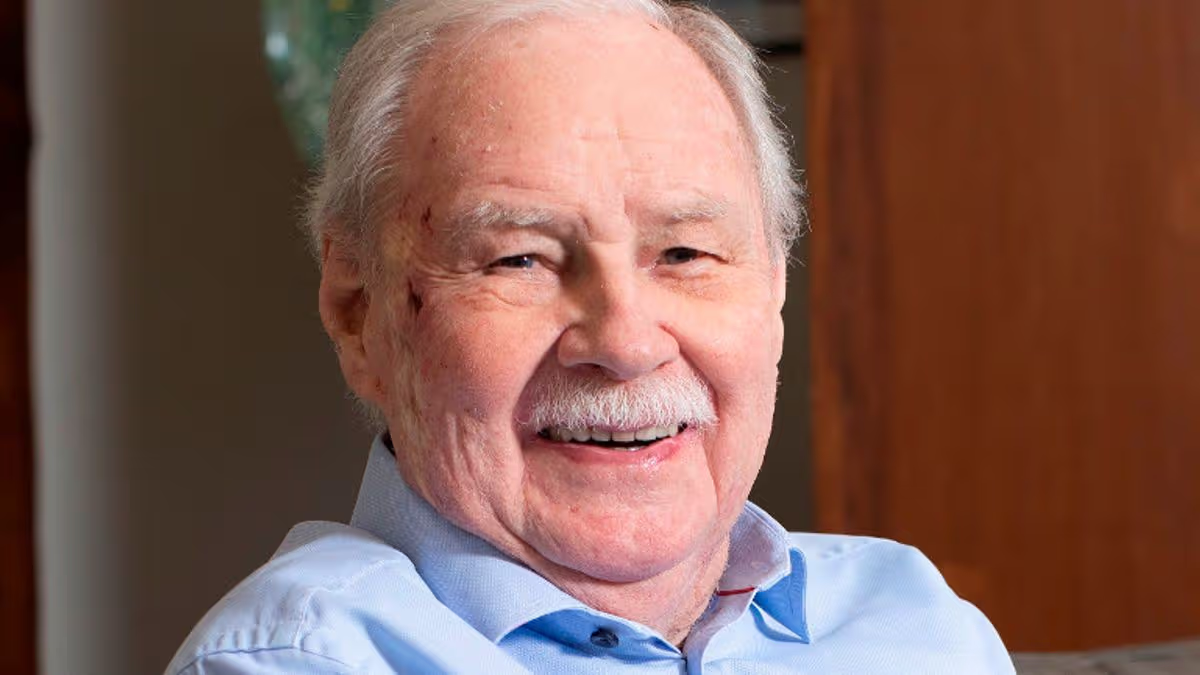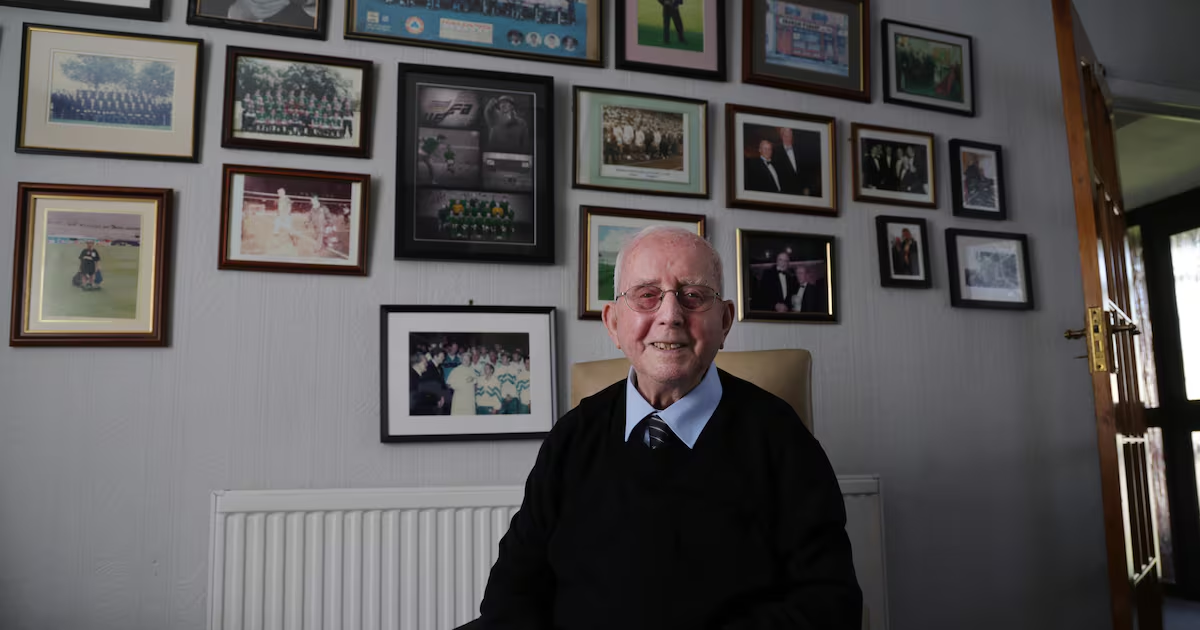
The 102-year-old Dubliner is being honoured for his services to football at a presentation hosted by the city’s Lord Mayor‘I saw grown men cry’: Charlie O’Leary, kitman in Jack Charlton era, recalls the highs of Irish soccer. Video: Bryan O'Brien / Editor: Eoin Ronayne Sat Jun 13 2026 - 06:00 • 4 MIN READKey to Charlie O’Leary’s long life, he believes, is his “sense of humour”. The 102-year-old, who lives in Harmonstown, Dublin, “always saw the funny side of everything” and “rarely fell out with anyone”. The attributes served him and Irish soccer well during an almost century-long career. The diminutive O’Leary is best known as the self-described “little fellah” who, between 1988 and 2000, was kitman to the Republic of Ireland team during its glory years of the 1988 European Championship and 1990 and 1994 World Cups under Jack Charlton. “Football crazy” since his childhood days around the streets of East Wall, he cofounded the famous street leagues in the late 1940s, a footballing firmament where many of the game’s brightest stars first shone. This evening, his services to Irish football will be honoured with a presentation by Lord Mayor Ray McAdam of the Lord Mayor’s award. The first public evidence of O’Leary’s existence was recently published, in the 1926 census. Two-year-old Charles O’Leary is recorded as living at Leary’s Place, a long-gone row of two-room cottages off Townsend Street where he lived with his sister Annie and parents Annie and Edward.Two years later, his father – recorded in the census as a “carter and labourer” – was offered a promotion and a bigger cottage across the river near the rapidly growing docks at East Wall. “East Wall was like a wonderland,” says O’Leary. “There was about six streets of houses with two big fields, and a massive football pitch.” Charlie O'Leary: The 102-yera-old says he 'always saw the funny side of everything'. Photograph: Bryan O’Brien As the local population grew, teenage Charlie started the under-16 street leagues in 1943, with matches played in Fairview Park in the 1950s and 1960s before the leagues expanded across Dublin into the mid-1970s.He says “so many” famous players came through the leagues. Alumni include Dick Whittaker (Chelsea FC); Liam Tuohy (Shamrock Rovers, Newcastle United, Republic of Ireland); Noel Peyton (Shamrock Rovers, Leeds United, Republic of Ireland) and Johnny Giles (Manchester United, Leeds United and Republic of Ireland).Charlie O’Leary (right) in the dugout with Republic of Ireland Ireland manager Jack Charlton, assistant Maurice Setters and physio Mick Byrne anduring a match against Spain in 1989. Photograph: Billy Stickland/Inpho “One of the best things” he did was marrying his late wife Kathleen in 1950, he says. They met in 1946 by chance when they sat next to each in the New Electric cinema on Talbot Street. They lived in Ringsend before moving in the mid-1950s to the house he still lives in alone. The other “best thing” he did was becoming a referee. It gave him an “education that you won’t get in any university – how to be confident, how to control without arrogance, how to communicate,” he says.Charlie O'Leary and his wife Kathleen, who died 17 years ago, on their wedding day. Photograph: Bryan O’Brien In the late 1980s he was invited to join the Republic of Ireland’s backroom team, as kitman, by its new manager Jack Charlton.The best moment? “It has to be the day we beat England,” he says of the 1-0 victory in the 1988 Euros in Stuttgart, West Germany.When you go to a League of Ireland match, you see the heart and soul of the people there, the love they have for their local team. I grew up loving that— Charlie O’Leary“I will never forget it. I saw grown men cry,” he says, laughing.Two years later, Italia 90 was the first time the Republic of Ireland qualified for the World Cup, reaching the quarter-finals when beaten by Italy 1-0. Captain Mick McCarthy was “furious” at the result, he says.“He still maintains to this day we should have beat them. The referee was terrible,” says O’Leary.The trip’s highlight was meeting Pope John Paul II. At one point the pontiff leant in and spoke to him. “I don’t remember anything he said. I was mesmerised,” he says.Charlie O'Leary in his Dublin home with a picture of him meeting Pope John Paul II in Rome during Italia 90. Photograph: Bryan O’Brien That jubilant, morale-boosting summer, crowned by the team’s homecoming in an open-top bus welcomed by hundreds of thousands of ecstatic fans, is seen by some as the kick-start of the Celtic Tiger. “It was smashing,” he says with a smile. As the 2026 World Cup begins, he won’t be supporting any team, given Ireland’s absence. “Irish football is my main concern. I never followed any English team – always Bohemians,” he says referring to the Phibsboro-based club. “When you go to a League of Ireland match, you see the heart and soul of the people there, the love they have for their local team. I grew up loving that.”Charlie O'Leary with the manager Mick McCarthy and the Republic of Ireland team in 1996. Photograph: Billy Stickland/Inpho The award this evening is “unbelievable” he says. “From the time I was a kid I was football crazy. And East Wall, I adored East Wall. I learned me football, I learned everything there.”[ Ireland kitman Charlie O’Leary at 100: ‘You’d have to say to yourself, what did I do to deserve this?’Opens in new window ]He is “thrilled” his family will attend the Mansion House with him. “Since my wife died they have been everything to me. You have no idea how kind they are.”A new documentary, The Charlie O’Leary Story – From Johnny Cullen’s Hill to The Olympic Stadium, Rome, will be screened on Sunday at the Lighthouse cinema in Dublin. IN THIS SECTION
‘I saw grown men cry’: Charlie O’Leary, kitman in Jack Charlton era, recalls the highs of Irish soccer
The 102-year-old Dubliner is being honoured for his services to football at a presentation hosted by the city’s Lord Mayor
972 words~4 min read