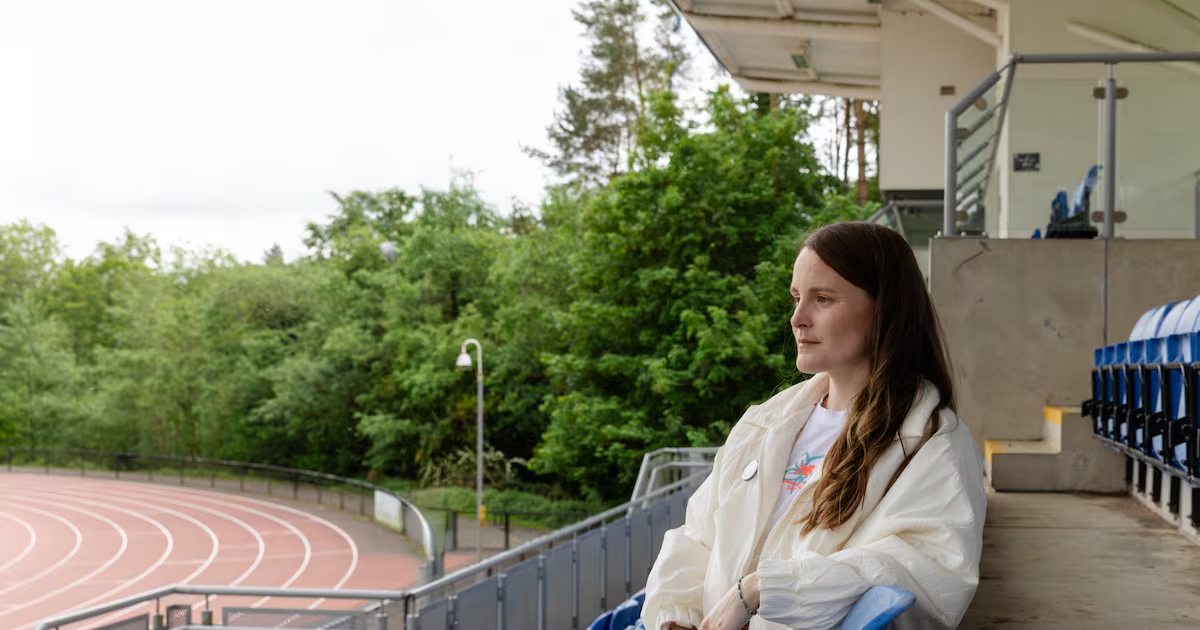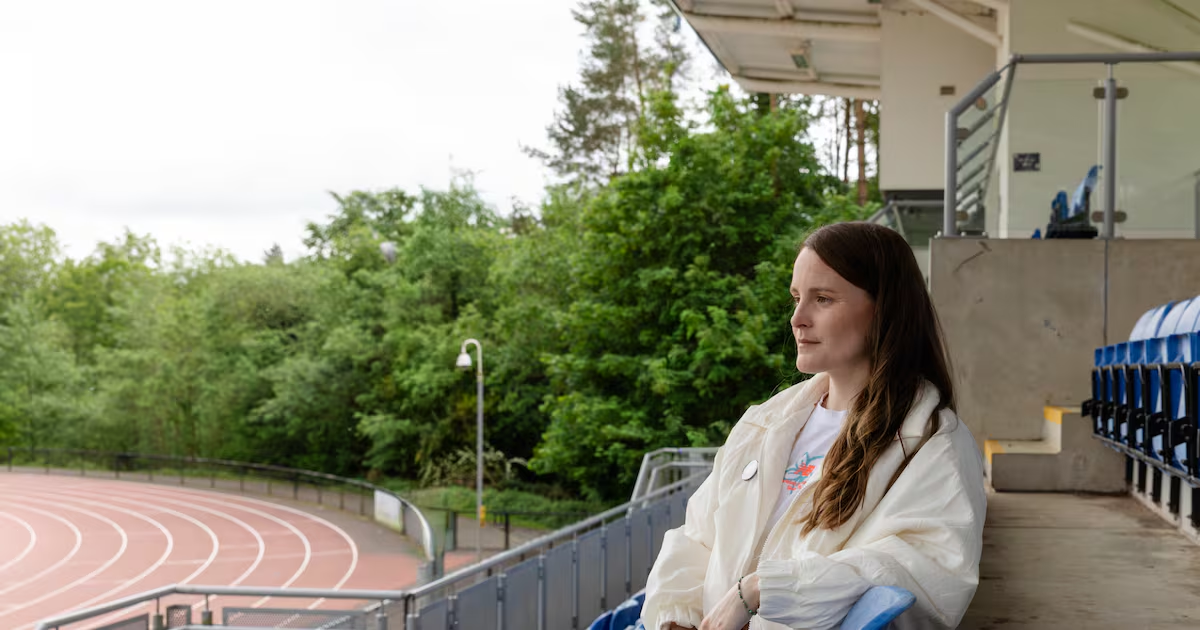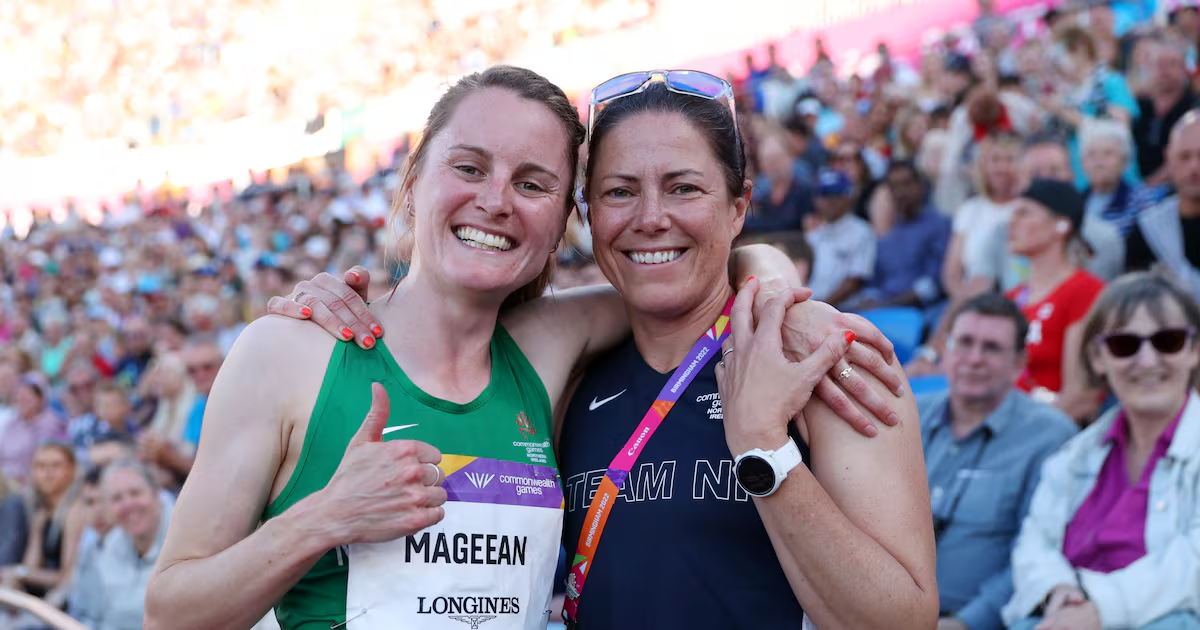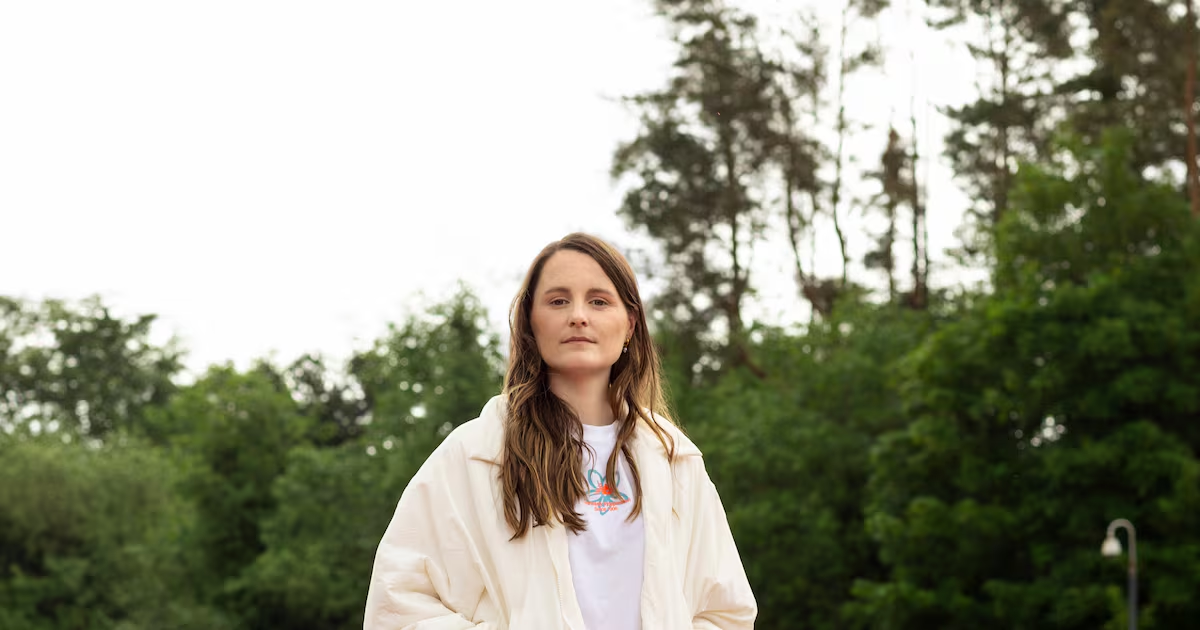
A couple of months back, Ciara Mageean was sitting on her couch at 10.59am. The time is specific and important. She was bored, which is also important. On a whim, for something to be at, she grabbed the laptop and logged on to a bowel cancer support group on Zoom.It was a resource she hadn’t tapped into before, mostly because she hadn’t felt the need. In all truth, she didn’t especially feel it now either. But cancer has that brutal dichotomy of days – some are the most significant and urgent of your entire time on the planet, others are long and lost and purposeless. You do what you do to get through them all.“It was like, ‘Sure, I’ll just tune in and listen’,” she says now. “And I’m a big believer in things happening for a reason. For some reason, I was bored at specifically a minute to 11 because if it had been half-10, it probably wouldn’t even have entered my head. But now I was listening in and a lady came on who had obviously done this before because everyone seemed to know her.“She started to tell her cancer story and while she was chatting away, she goes, ‘Oh, hold on, one of the nurses is here – Hello! Come on in! I’m on this Zoom.’ And it was her district nurse coming in to take her blood. She just kept chatting away and I was like, ‘Oh, this is their normality.’[ Ciara Mageean in her own words: ‘I was told she didn’t want to coach me any more’Opens in new window ]“It’s their normality that nurses are so commonplace in their house. It’s their normality to have a sharps box in the corner of their front room and a cupboard full of medication and laxatives. And a timeline that fluctuates because sometimes you’re good and sometimes you’re bad.”We’re sitting in Mageean’s livingroom in Dunmurry, a quiet suburb just south of Belfast. This is the house she and her fiance Thomas Moran moved to when she came home heartbroken after the 2024 Olympics. Her running career is all around us – awards on the shelves, running track on the wall, a framed cityscape of Paris (of all places) above the sofa.This was supposed to be their starter home, the bridge between here and Los Angeles in 2028. Once those Olympics were over, she’d be 36. She’d hang up the spikes, they’d move out to the country, they’d start a family. They’d get on with the next phase of life, catch up with their friends who’d got a head start on all that stuff while she was busy with athletics. That was the plan. Before.Before cancer. Before stage four. Before chemotherapy. Before immunotherapy. Before the sickness and the tiredness and the lakes of tears. Before ever giving a second’s thought to death or survival, fear or hope. Before sitting on this Zoom call and hearing all of it reflected in a stranger having her bloods taken.“She started talking and gave her name and said, ‘I was diagnosed in 2016 with stage four bowel cancer.’ She just spoke briefly, like, ‘Oh, if I was going to tell you a whole story, we’d be here all day.’ I didn’t envisage that I would be jumping on to this Zoom call and ending up feeling like I wanted to cry. Ciara Mageean: 'I’ve always kept that bit of hope.' Photograph: Evanna Devine for The Irish Times “They were like, ‘Who wants to go next?’ I said, ‘I just want to thank that lady for sharing her story. I was diagnosed with stage four in May of last year and was told at Christmas that surgery’s not an option and that radiotherapy is not an option. Kind of giving me a two- to three-year outlook. And hearing you say that you were diagnosed in 2016 and you’re still here and you look great, I didn’t know that could be a reality.’“She came back on and she said, ‘When I was diagnosed, I was given six to 12 months to live. They told me that surgery wasn’t an option.’ And as she was talking, I was thinking, ‘For some reason, I needed to see the clock at 10.59 and to remember this call was happening and for that lady to have decided that she was going to be on it and give me that message.’“Because I’ve always kept that bit of hope. There’s always outliers in statistics, there’s always progress in research. I’m not necessarily the same as somebody who has been given a stage four bowel cancer diagnosis and is older than me and has other co-morbidities and had more risk factors. Maybe I can be the exception to the rule.”This should not be happening. Of course it shouldn’t. Shortly after her diagnosis, she was handed a booklet on bowel cancer from Macmillan Cancer Support. She flicked through it and came to the page on risk factors associated with the disease. She became more and more angry with every heading she read.‘As soon as I got that diagnosis, I felt like the grim reaper was on my shoulder’— Ciara MageeanAge? She’s 34. Less than five per cent of bowel cancer patients are under 50. Around one per cent are under 35.Diet? She’s worked with a Team Ireland nutritionist for over a decade.Low physical activity? She’s the reigning European champion at 1,500 metres.Overweight? Look at her.Alcohol? Barely touches a drop.Smoking? Never once in her life.Family history? None. Zero. Nada. Zilch.Basically, if you lined up everyone in Ireland, north and south, in the order of their risk of being a stage four bowel cancer patient, Mageean would be away at the back with the playschool kids. Yet here she is. This is her life.It’s just over a year since her diagnosis. She was on a training camp in Font Romeu in France, mostly doing bike work because her ankle still hadn’t healed fully after surgery the previous September. Thomas was there; some friends from her former training group in Manchester were there.Ciara Mageean celebrates winning the
Ciara Mageean: ‘I probably won’t make my 40th birthday. That’s rough’
The Co Down athlete and reigning European 1,500m champion was diagnosed with stage four cancer just over a year ago
3,814 words~17 min read