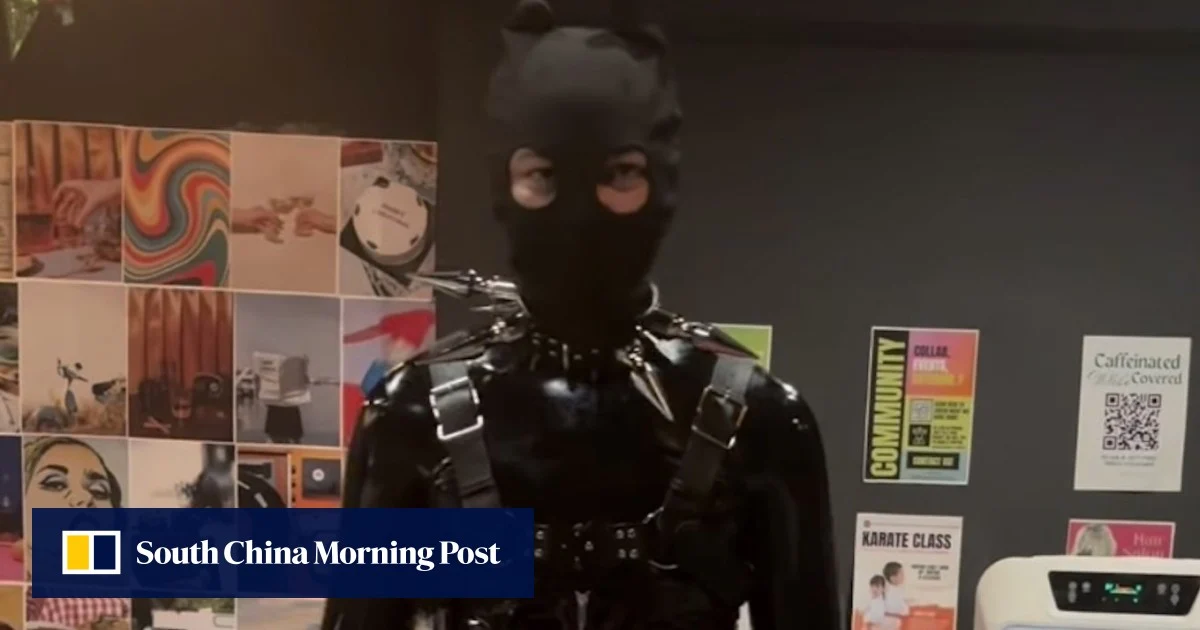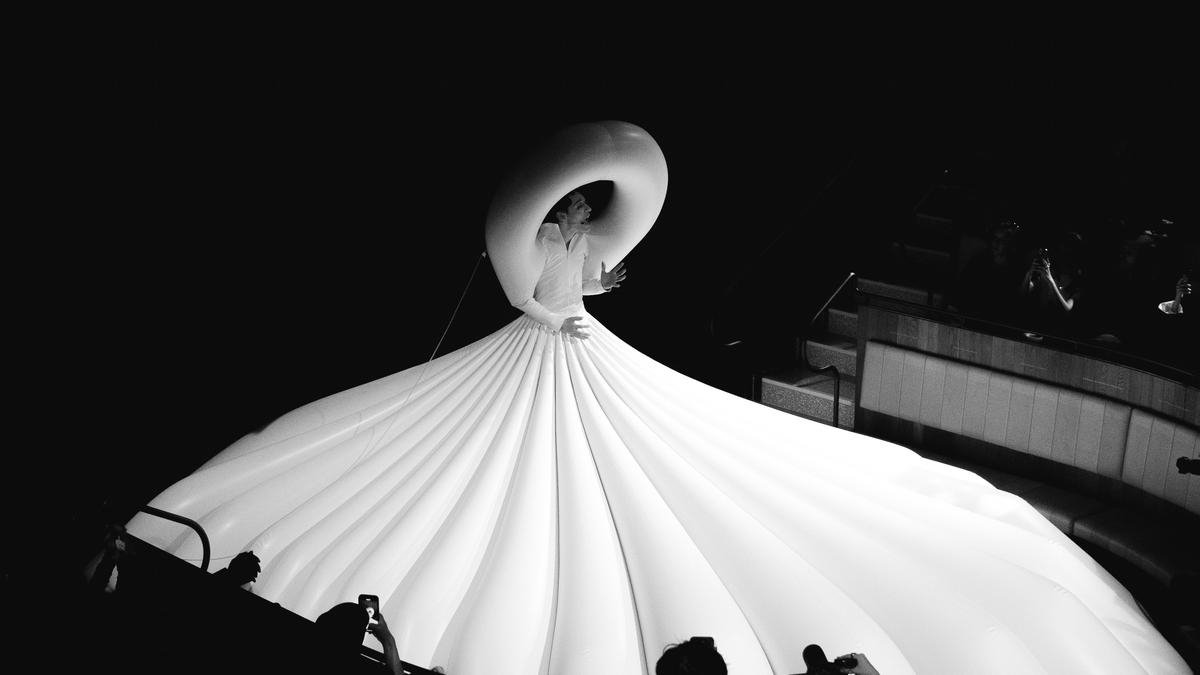
Harikrishnan Keezhathil Surendran Pillai, or Harri KS, is no stranger to latex. Long before the Kerala-born designer founded his label Harri following his graduation from the London College of Fashion’s Master of Arts Fashion Design Technology (Menswear) programme in 2020, he was helping his father, Surendran Pillai, on their small plantation (under one acre) in Kollam.The process was direct. “In Kerala, latex production is part of everyday life,” he says. “You tap the tree in the morning, collect the latex, begin forming sheets by afternoon, and then dry and cure them over time to create the final raw material.” He is quick to clarify the distinction: what his father produces is raw, agricultural latex, largely destined for industrial use. “I use fashion-grade latex for my clothes.” Hari’s work is known for its sculptural, inflated latex garments, particularly the now-recognisable balloon trousers.
Harri KS
| Photo Credit:
Special arrangement
In Kerala, rubber is not so much a formal plantation economy as a dispersed, domestic one. Introduced in the early 20th century, the crop thrives in the state’s humid midlands. Kerala accounts for the majority of India’s natural rubber—once over 90%, now closer to three-quarters as cultivation expands elsewhere, according to the Rubber Board of India. Much of it comes from small holdings, often tucked into backyards across districts like Kottayam and Kollam, where production folds into everyday life.Harri did not set out to become a designer. If anything, he was trying to break free from the expectations society placed on him to become either a doctor or an engineer. His early ambition was simply to leave home after finishing school at St. Jude’s in Kollam. Admission to the National Institute of Fashion Technology in Bangalore in 2012 became, as he puts it, “that exit.”