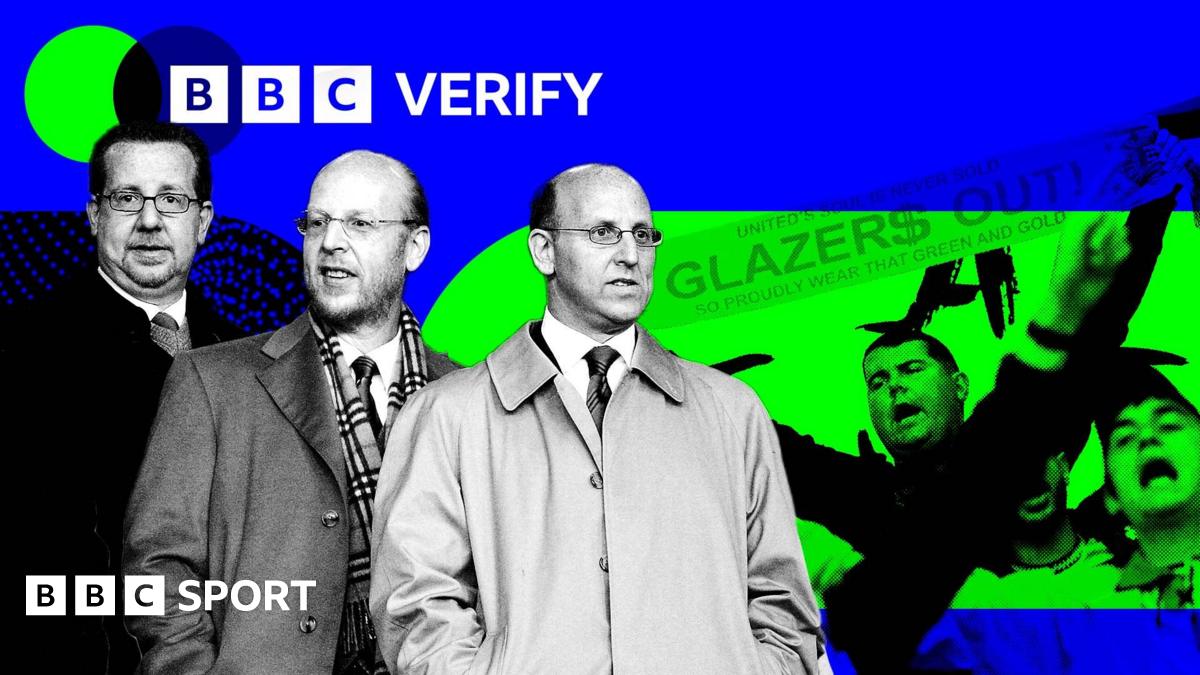
For the past two decades, debt has been a four-letter word at Old Trafford in more ways than one.Ever since Malcolm Glazer’s controversial £790million ($1.06bn at today’s rates) takeover in May 2005, Manchester United’s level of borrowing has incensed their supporters and burdened the club’s operations through at times astronomical interest payments.On Friday, United announced they had added a further $125million in long-term debt to the pile, after refinancing $425m worth of pre-existing debt that was due to be repaid next year.A new $550million bond was instead issued at a higher rate of 5.36 per cent, meaning yet more expensive interest payments in the future.In a filing to the U.S. Securities and Exchange Commission (SEC), United said the $550million proceeds would be used to pay the $425m due to expire in 2027 and for “general corporate purposes”.Here, The Athletic outlines United’s debt picture and what effects this latest refinancing may have.How much debt have the Glazer family put United in?United were a debt-free club before American businessman Glazer’s highly controversial takeover in 2005.It was a leveraged buyout — in other words, not wholly but mostly financed by borrowed money, and it placed £604million worth of debt and associated interest payments on the club. United’s assets, including their Old Trafford stadium itself, were also registered as collateral in case of default.That £604million figure has gone up and down over the decades since, rising to £773m during the 2009-10 season, a time remembered for widespread fan protests against Glazer’s ownership through the green and gold movement.A refinancing later that year, the club being floated on the New York Stock Exchange in 2012 and a further refinancing in 2015 helped cut the debt pile down to size.Following this latest refinancing and United’s recent third-quarter results, total debt can be estimated at £728million — only £45m off 2009-10’s end-of-season peak.How is United’s debt structured?Their debt is split into three parts.The first is the club’s senior secured notes, which previously had an outstanding amount of $425million due at a fixed interest rate of 3.79 per cent. This was set to mature just over a year from now, in June 2027, at which point it would need to be repaid if not refinanced.Sources with knowledge of United’s debt structure — speaking on the condition of anonymity to protect relationships, like others who talked to The Athletic for this article — have long anticipated the club would seek to refinance the senior secured notes this summer.On Friday, an SEC filing confirmed that United had issued $550million’s worth of senior secured notes, carrying an interest rate of 5.36 per cent. This debt is not from a typical bank loan. These are bonds, sold by the club to the U.S. private placement market, which is typically made up of insurance firms and asset managers.The second tranche of debt is United’s secured term loan facility, worth $225million at a variable interest rate. This is a traditional loan, with Bank of America acting as lender. Following this week’s refinancing, this is now also set to be repaid in 2031, to align with the senior secured notes.
Manchester United have added $125m in long-term debt. What does it mean for the club?
Why have they taken this step and what are the ramifications? The Athletic analyses the latest financial developments at Old Trafford
1,536 words~7 min read