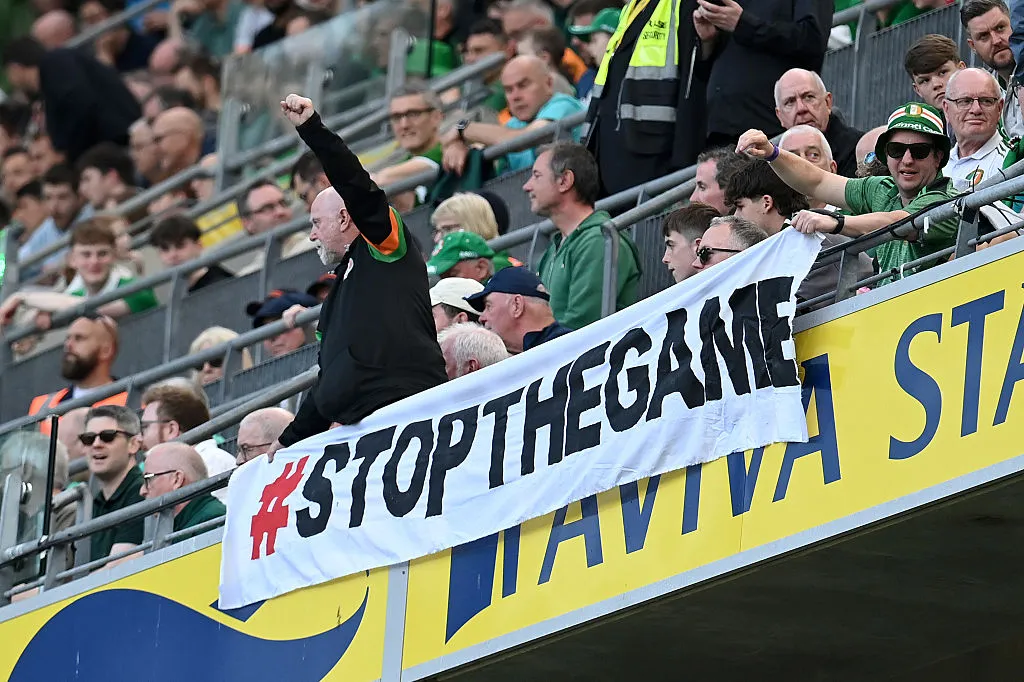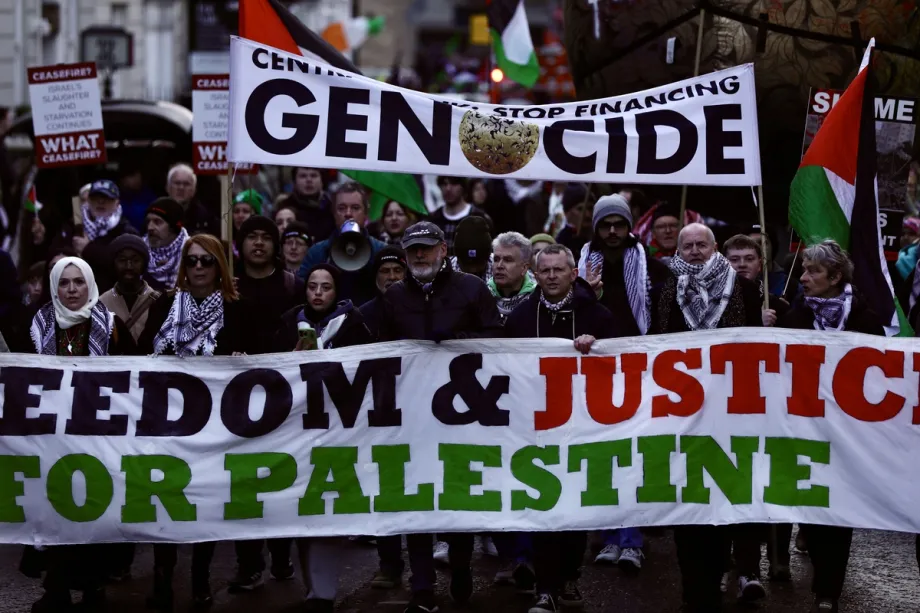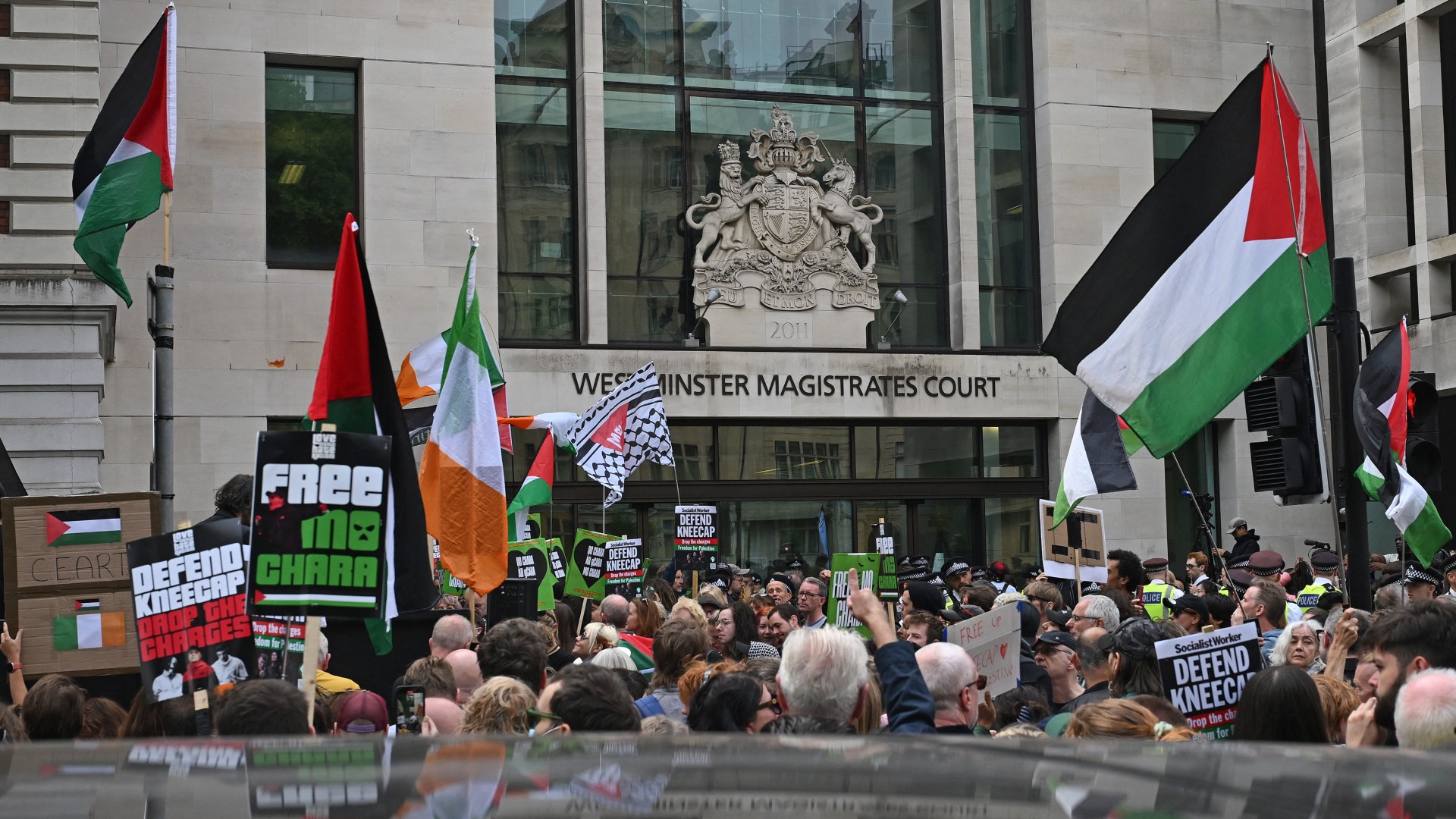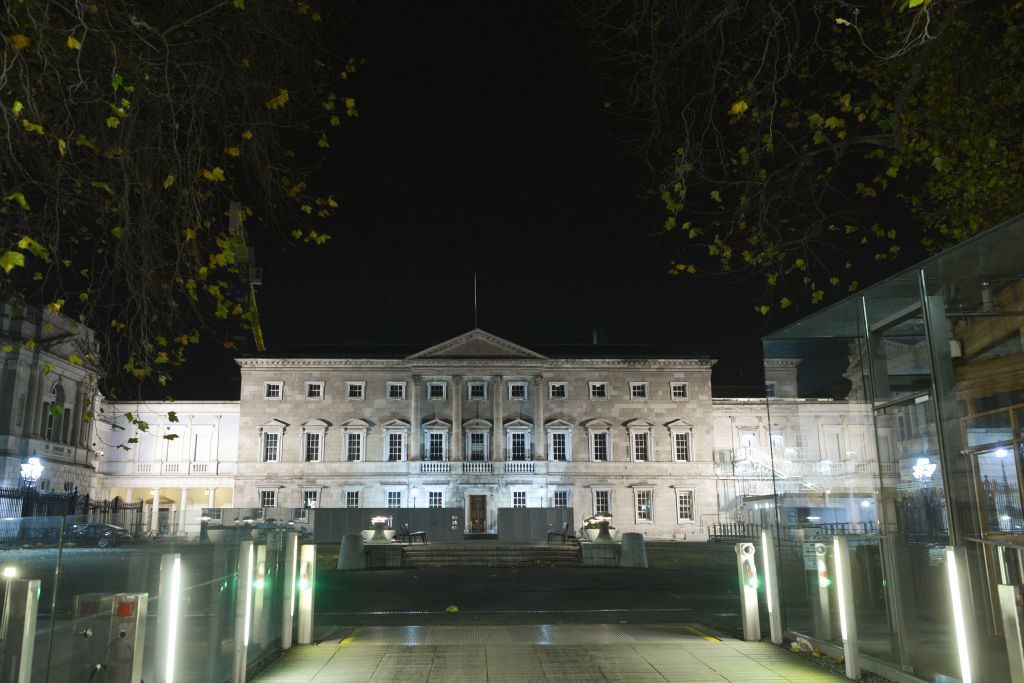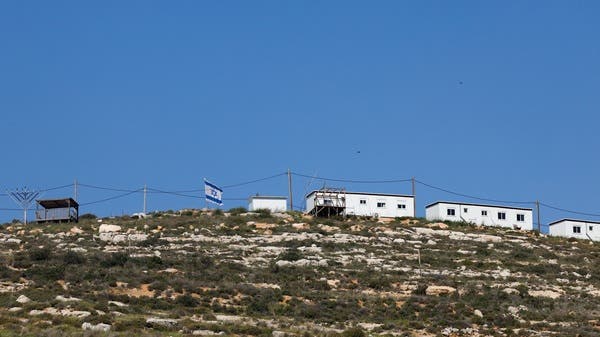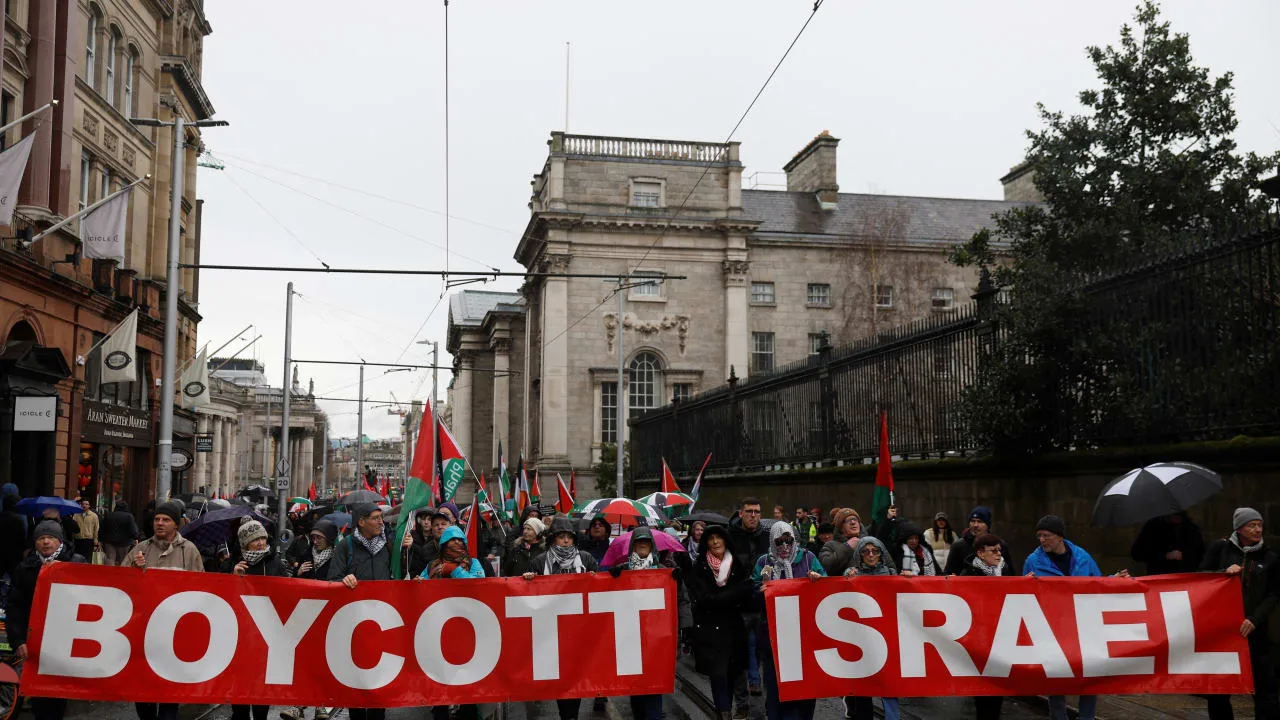
Last week, Ireland’s Department of Foreign Affairs and Trade published its obligatory Regulatory Impact Analysis (RIA) on the Irish government’s Israeli Settlements in the Occupied Palestinian Territory (Prohibition on the Importation of Goods) Bill 2026 (the PIGS Bill), which was published the previous week.The bill, in various forms, has consumed an unprecedented amount of parliamentary time and has been the subject of eight years of debate and controversy in Ireland.Its enactment represents a repetitive demand of all Irish pro-Palestinian and antil-Israel groups and all of Ireland’s opposition parties.The central focus of the bill’s advocates is to ban the importation into Ireland of all goods and services originating from “Israeli settlements” in the West Bank, Gaza – where no settlements exist – and east Jerusalem.The bill, as published, applies to such “settlements” but is confined to goods and excludes services. The exclusion has enraged those who have campaigned for its enactment.A man holds Irish and Palestinian flags as people protest calling for governments around the world to stop arming Israel during a demonstration in solidarity with Palestinians in Gaza, amid the ongoing conflict between Israel and Hamas, in Dublin, Ireland, June 15, 2024 (credit: Clodagh Kilcoyn/Reuters)These people favor applying boycott, divestment, and sanctions (BDS) to the entirety of Israel and all Israelis, and many advocate Israel’s eradication. They perceive the bill as a Trojan horse for a broader boycott and its promotion as a mechanism for demonizing and delegitimizing Israel.The bill’s publication coincides with all Irish anti-Israel groups and opposition parties campaigning for a boycott of the autumn-scheduled Ireland-Israel UEFA football matches as a follow-up to Ireland’s self-harming, irrelevant boycott of Eurovision.Escalating boycott campaigns in Irish public lifeThe former follows failed campaigns to have Israel excluded from all international football and basketball games and is accompanied by a less prominent campaign to have Israel excluded from participating in the European wheelchair rugby championship!In today’s Ireland, even disabled Israelis are legitimate targets for opprobrium and discriminatory boycott!The exclusion of Israeli services from the PIGS Bill has been justified by the Irish government on the grounds that they are impossible to regulate and that prohibiting them could jeopardize the export of Irish goods to the US – Ireland’s second largest trading partner, accounting for 32% of goods exported in 2024.The overall Ireland-US economic relationship is valued in the RIA as exceeding one trillion euros.The government is also concerned that extending the bill to include services could jeopardize many of the estimated 245,000 jobs provided by US global multinationals based in Ireland, as well as the many jobs indirectly related to US companies.It could also compromise further US investment in Ireland and the billions of euros in tax payments annually received by Ireland’s exchequer from US companies, which the Irish economy and public services are hugely dependent on.Additional concern relates to any potential impact on Irish multinationals operating in the US.This is due to US anti-boycott laws – both at the federal level and in 38 states – which prohibit companies from complying with or cooperating in boycotts involving pre-1967 Israel and the “Occupied Territories” and may affect how such companies can operate or implement related policies.The concerns have been exacerbated by commentary from 40 members of Congress, who are critical of the Irish government’s plans.International context and emerging legislative comparisonsWhen first proposed, the bill, if enacted in its original form, would have been the first Nazi copycat law specifically targeting Jews in Europe since the end of World War II.Spain has now achieved that distinction by enacting a ban on the importation of goods from Israeli settlements, including Jerusalem, similar to the PIGS Bill.The Netherlands and, reportedly, Belgium are currently considering such laws. Slovenia has abandoned any such plan upon its new government assuming office.The RIA accompanying the PIGS Bill, while sounding serious warnings, also starkly illustrates its farcical nature.“Goods” under the bill are said to include things of every kind, whether animate or inanimate.Their importation is to be prohibited if they originate from a postal code whose goods do not benefit from preferential tariffs afforded to Israeli goods under the terms of the EU-Israel Association Agreement. Under existing EU arrangements in place since February 2005, all Israeli goods commercially entering the EU must detail the postal code and name of the area where the products come from.To enable the arrangements’ implementation, the European Commission periodically publishes lists of non-eligible locations that do not benefit from preferential tariffs and their postal codes.They are all considered within the “Occupied Territories” and east Jerusalem.Like Spain, the Irish government is now intent on weaponizing the published lists to identify goods to be prohibited from being imported into Ireland.Ireland’s customs authorities are charged with implementing the law when it is enacted and brought into force.While the objective of the bill is to boycott Jewish goods originating from Judea and Samaria and also east Jerusalem – perceived as “illegally Occupied Territories” – unlike its draft predecessor, it excludes non-commercial imports “that form part of a person’s personal baggage and are intended for his or her personal consumption or use.” This is to avoid Irish customs feeling compelled to check the baggage at every port and airport of every traveler entering Ireland. The initial draft included such goods: following the bill’s enactment, should I purchase a tallit, tzitzit, tefillin, a yarmulke, or a mezuzah in east Jerusalem for my personal use, there should be no difficulty in my importing these items upon returning to Dublin.I can even arrive with some dates grown on a moshav in the West Bank for my personal consumption.However, should I purchase any such item as a gift for family and friends, I could find it confiscated by customs or, if undeclared, be at risk of prosecution.To what extent, if any, Irish customs will conduct spot checks on arriving passengers or identify travelers returning from the Holy Land as likely customs offenders – whether Jewish or non-Jewish – is unknown.A concerning provision in the PIGS Bill, not present in the original draft, facilitates the creation – at the discretion of the foreign minister – of a database to enforce its provisions.An open question is whether the government intends to collect data recording the identities of every member of the Irish Jewish community and of Israelis residing in or visiting Ireland for specific baggage searches by customs officers.Legal framing and the government’s interpretation of the billAccording to the RIA, the bill is based on Ireland’s perspective that settlements in “Palestinian territory occupied since 1967, including east Jerusalem, have no legal validity” and that nothing should be done “to entrench” Israel’s “unlawful presence.”This is a euphemism for it being Irish government policy that no Jewish person should reside or work in Judea or Samaria, nor in east Jerusalem, despite the Jewish people’s 3,000-year historical connection to the land. In the Irish government’s view, there is no validity to the Jewish connection to the Kotel, the City of David, and to the many archaeologically established Jewish sites, many referenced in religious texts and in established history for centuries. The government appears to retrospectively validate Jordan’s illegal occupation of east Jerusalem from the 1948 War of Independence until 1967, as well as its expulsion of all its Jewish residents and expropriation of their property. It entirely ignores the continuity of Jewish residence in east Jerusalem going back millennia.The RIA also depicts the bill as resulting from an “advisory opinion” of the International Court of Justice of July 2024 that states should abstain from trade dealings with Israel concerning the “Occupied Territories,” which assist in entrenching Israel’s “illegal occupation.”The “opinion” is regarded by the government as creating an international law obligation to impose the PIGS Bill ban on goods. Of course, if such an “obligation” existed, it would equally apply to services. The ICJ doesn’t distinguish between them.The first problem is that under the EU’s Common Commercial Policy, the EU has exclusive competence over international trade. While the Irish government has referenced this as another reason for excluding services from the bill, it is also why it lacks the competence to enact legislation prohibiting the importation of goods. The RIA points out that EU law permits states to prohibit the import of goods “on public policy grounds” but does not mention that under EU case law, this can only be utilized in very exceptional and narrow circumstances where there is “a genuinely and sufficiently serious threat to the requirements of public policy affecting one of the fundamental interests of society.” It cannot be credibly suggested that the import into Ireland of €685,000 worth of goods over the five-year period from 2020 to 2024, largely consisting of dates, olives, and avocados, constitutes any such threat nor “entrenches Israel’s presence” anywhere.The second problem is that the ICJ’s opinion is merely an opinion; it has no binding effect. However, EU law is directly applicable, and the RIA admits that the European Commission, on October 17, 2025, rejected the proposition that the “opinion” requires any prohibition on the import of goods.The RIA asserts that the Irish government disagrees with the Commission’s rejection.While repetitively asserting that it is Irish public policy for the state to comply with international law, the RIA bizarrely rejects compliance with Ireland’s primary international commercial trading obligations, which are enforceable by the European Commission and clearly prescribed under the EU Treaties’ Common Commercial Policy.According to Ireland’s Central Statistics Office, imports of goods from Israel in 2024 were valued at €3.8 billion.Imports in 2024 directly from the “Occupied Territories” were €214,204.The RIA also acknowledges that these goods may arrive through the port of another EU state, clear customs there, and, under EU free-market movement rules, enter Ireland clear of any Irish customs controls.The reality is that the Irish government is engaged in a symbolic and farcical legislative process to prohibit the direct importation into Ireland of a minimal amount of goods originating in the “Occupied Territories,” which, if the PIGS Bill becomes law, could still be indirectly imported into Ireland through any other EU state.The RIA omits to reveal that such goods could simply be delivered to Belfast port and then transported across the Irish border from Northern Ireland under special arrangements put in place as a result of Brexit to ensure the free movement of goods between Northern Ireland and the Republic.The RIA acknowledges the economic and political risks created by enactment of the bill. They include:The European Commission could initiate infringement proceedings against Ireland before the European Court of Justice for enacting a bill incompatible with EU Treaties, potentially requiring Ireland to pay damages.The “potential” negative political impact from Israel and the US with “significant adverse impact on Irish economic interests and operators.”This references the fact that all of the US-related economic perils previously detailed – which resulted in the exclusion of services from the bill – are equally applicable to its prohibition on the import of goods.The political perils also include damage to Ireland-US political relationships and the possibility that Israel may expel Ireland’s ambassador to Israel and to Ireland’s recognized state of Palestine.The potential negative perception of Ireland in the US, among the Israeli public, and within the Diaspora – which presumably includes Ireland’s small Jewish community.The RIA acknowledges that development of the bill has resulted in accusations of antisemitism, which the government rejects. It is a rejection that lacks any credibility in the real world outside Ireland’s political bubble.As Israel continues to be confronted by existential threats posed by Iran, Hezbollah, Hamas, various other terrorist groups, terrorist lone wolves, and a range of internal political difficulties, and as a general election looms, the political circus that is Ireland’s largely irrelevant engagement with the Israeli-Palestinian conflict continues to dominate Irish parliamentary time, public protests, and political campaigning.The lunacy is a consequence of the Irish government’s repetitive, toxic anti-Israel rhetoric; its lack of backbone and consistent failed attempts to appease opposition political parties; and the escalating number of antisemitic Irish-Israeli hate groups and their cultish followers. Attempting to overcome US hostility to the bill, the RIA asserts that the Irish government doesn’t support a BDS approach in relation to Israel and asserts the bill is not a BDS measure as it doesn’t apply to Israel within its pre-1967 borders. That assertion lacks all credibility and is not assisted by opposition parties, who depict it as a flawed boycott measure that should be extended to services.The Irish government is legally required to inform the European Commission of the PIGs Bill’s content, and the Commission can respond. Whether the Commission will make any public comment on the bill that inhibits its progress is unclear. Meanwhile, as the Irish government is about to assume the presidency of the EU, it is continuing its futile and obsessive campaign within the EU for suspension of the EU-Israel Association agreement and continues, through its toxic rhetoric, to contribute to escalating antisemitism.The writer is a member of the board of the Israel Council on Foreign Relations and a former Irish minister for Justice and Defence. The views expressed here are his own.
Ireland's hamfisted boycott bill is political theater at its worst | The Jerusalem Post
The Irish government is engaged in a symbolic and farcical legislative process to ban the import of goods from Israeli settlements.
2,166 words~10 min read