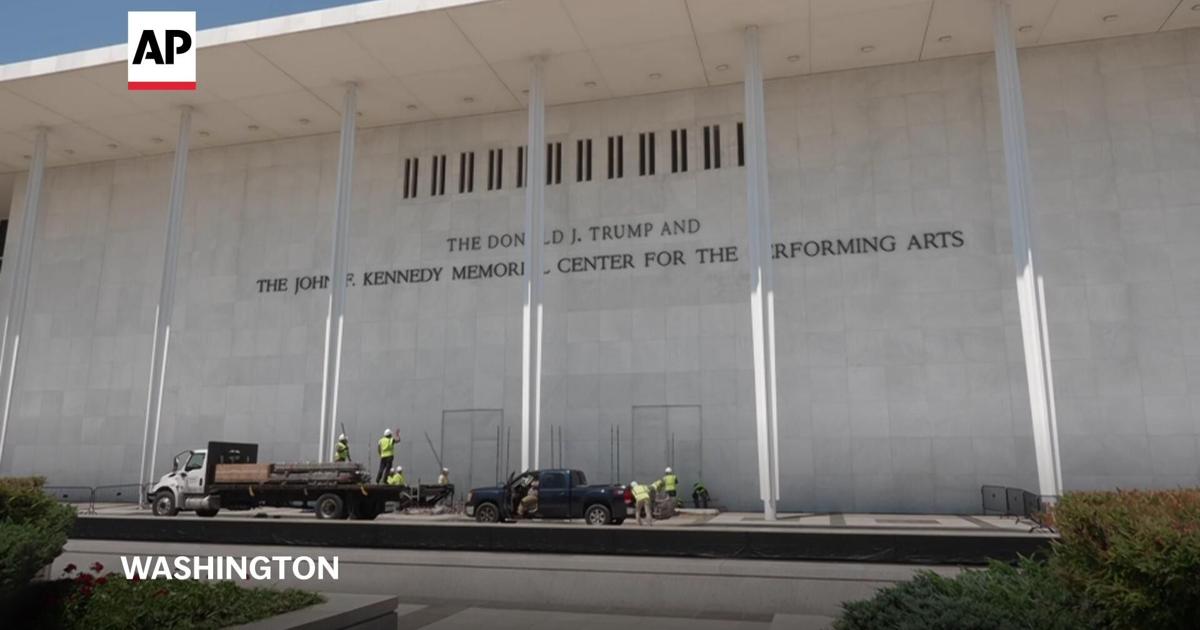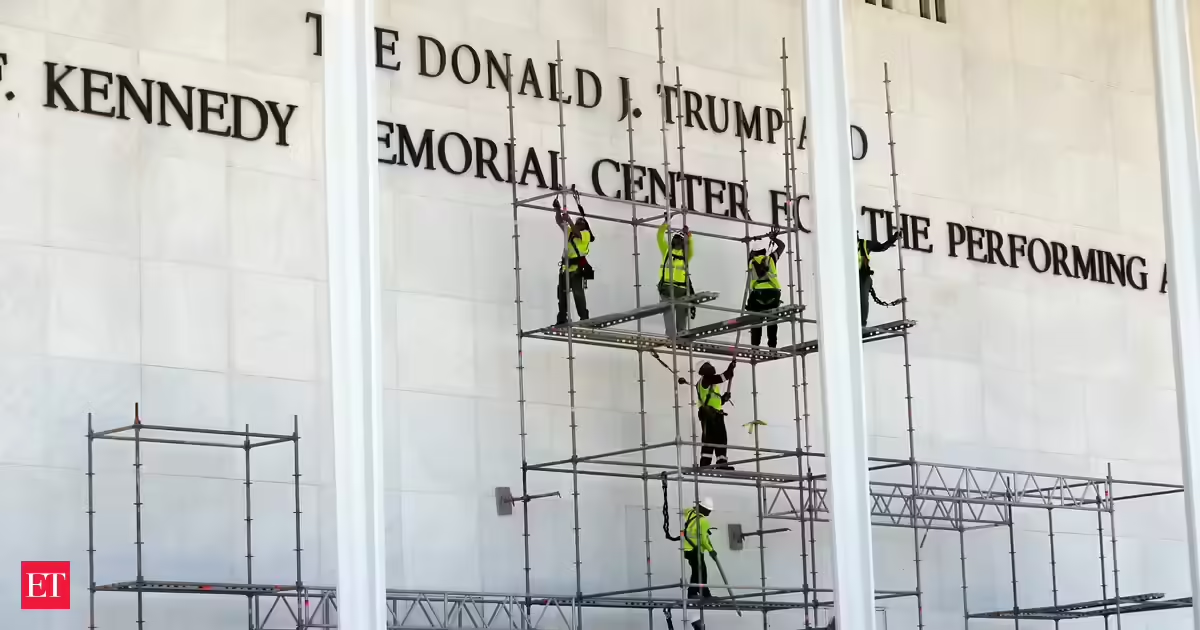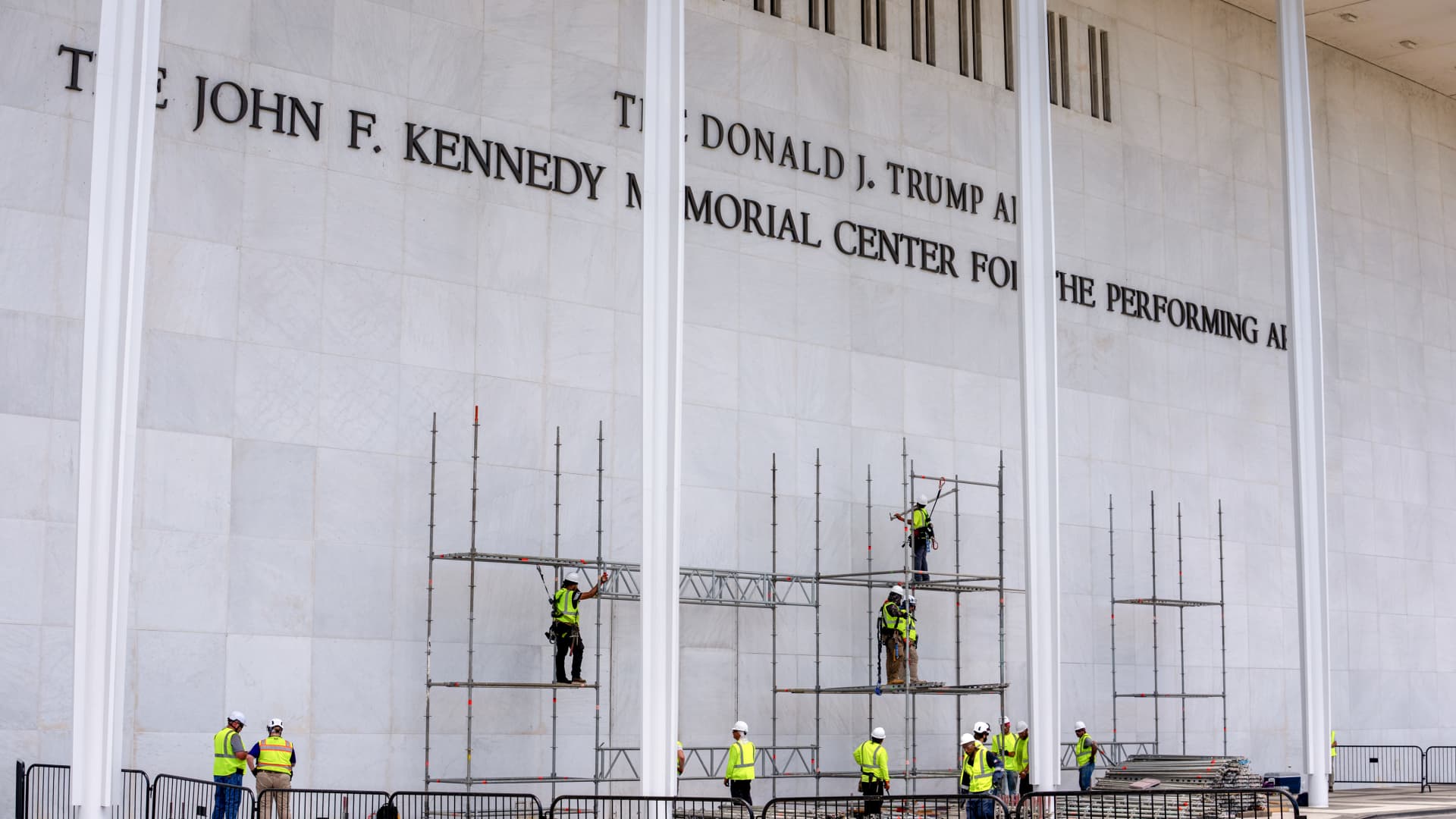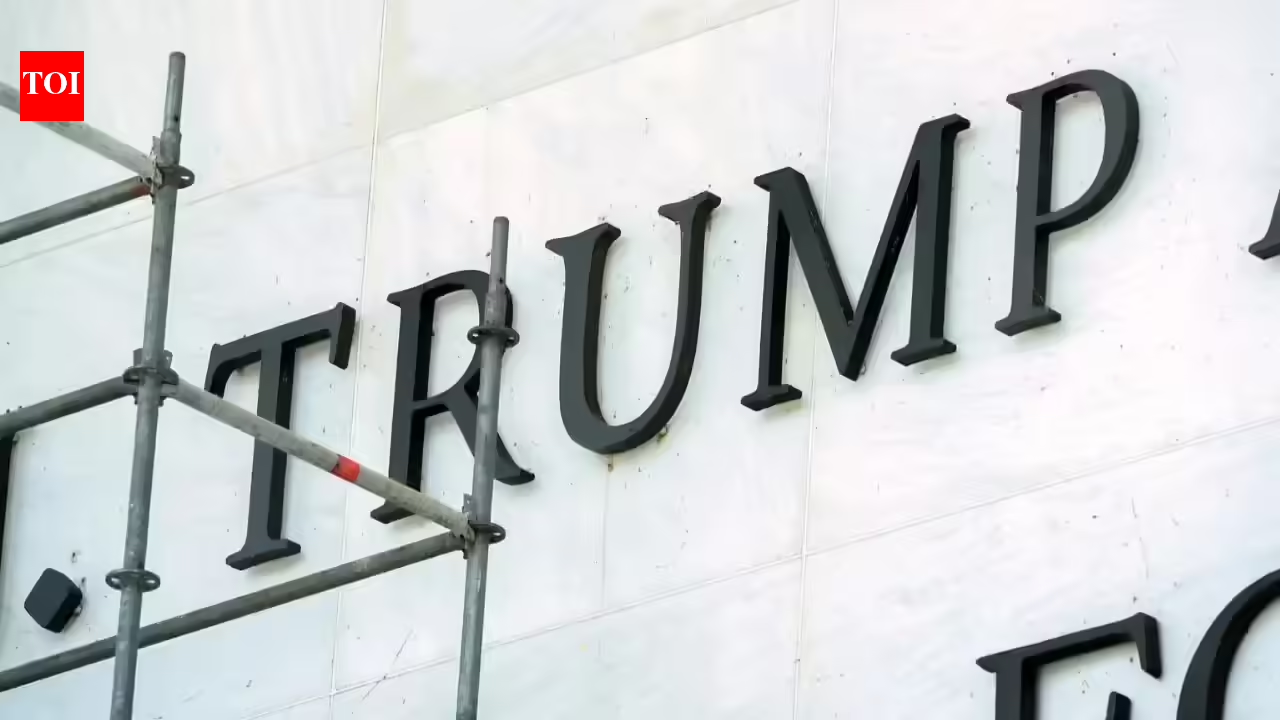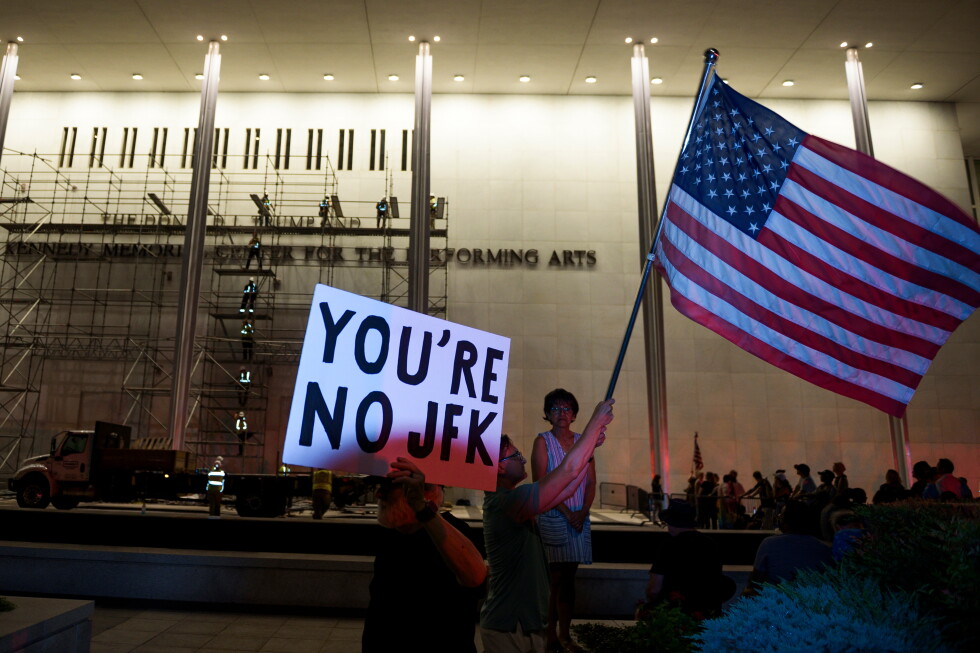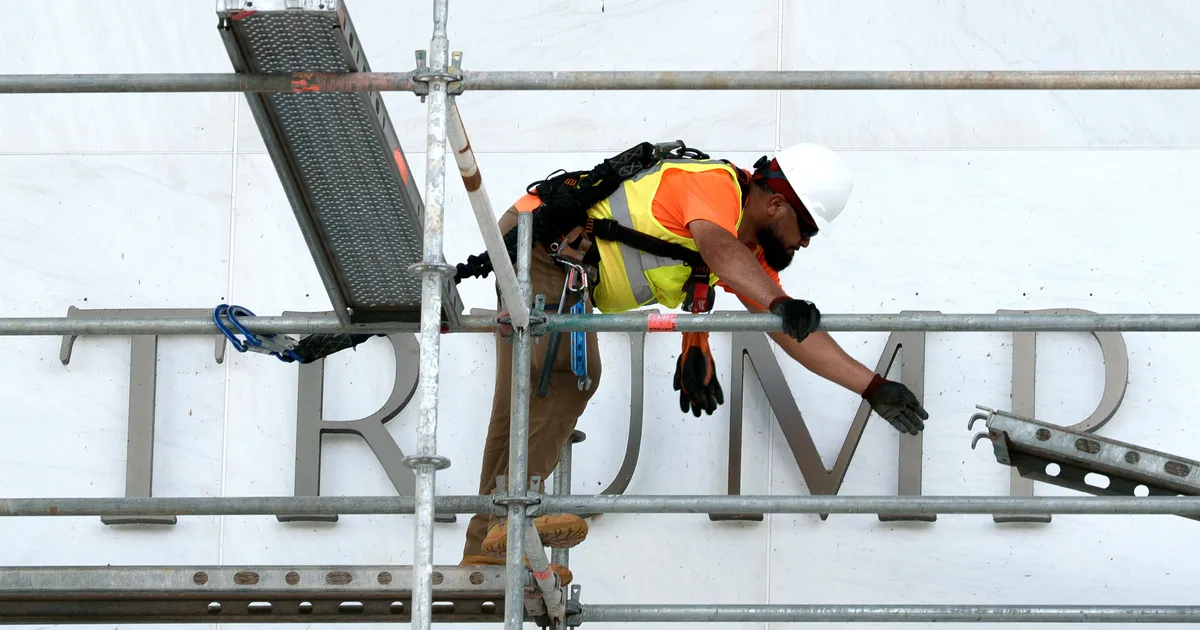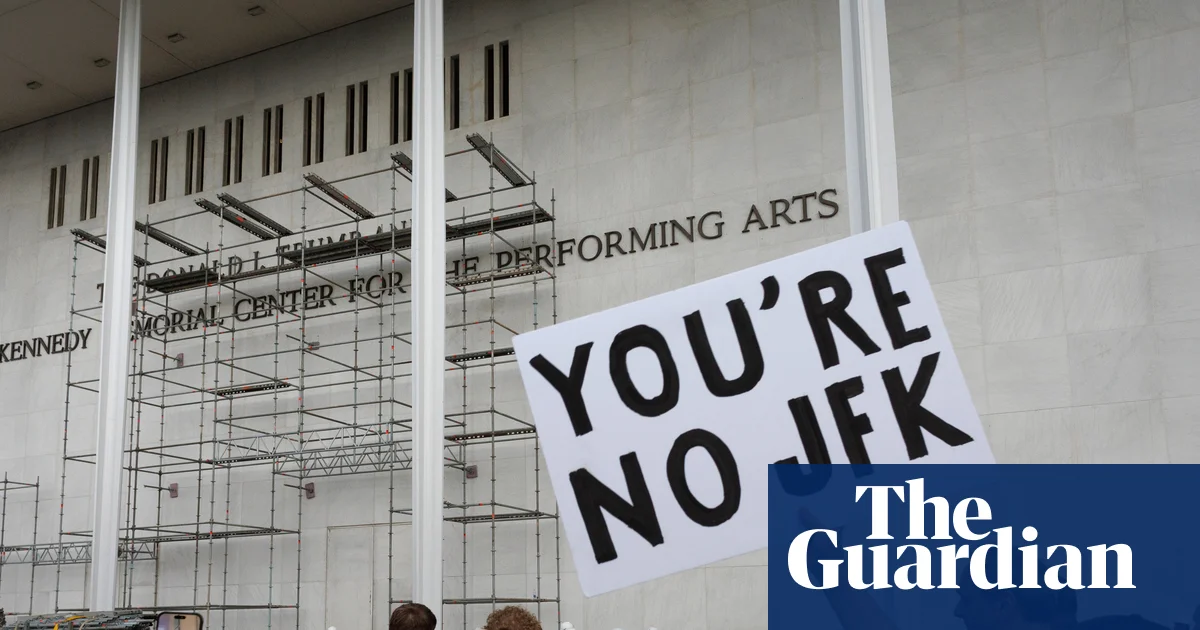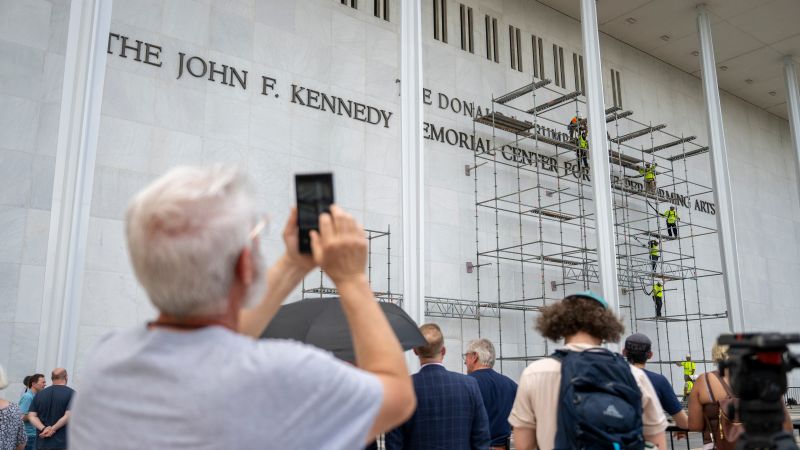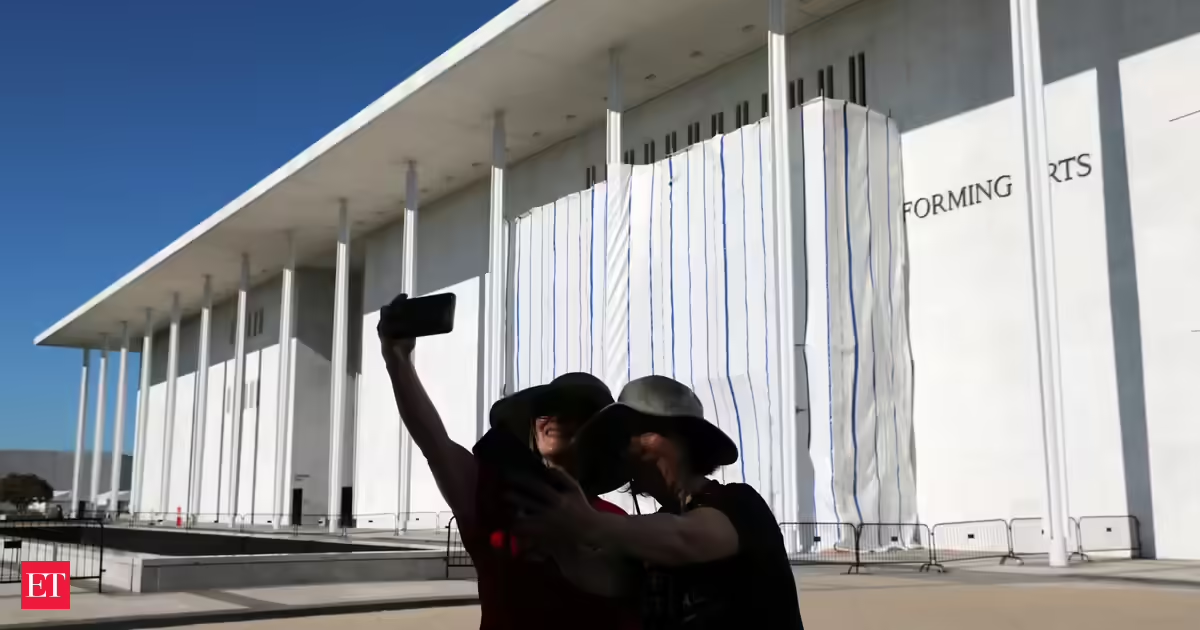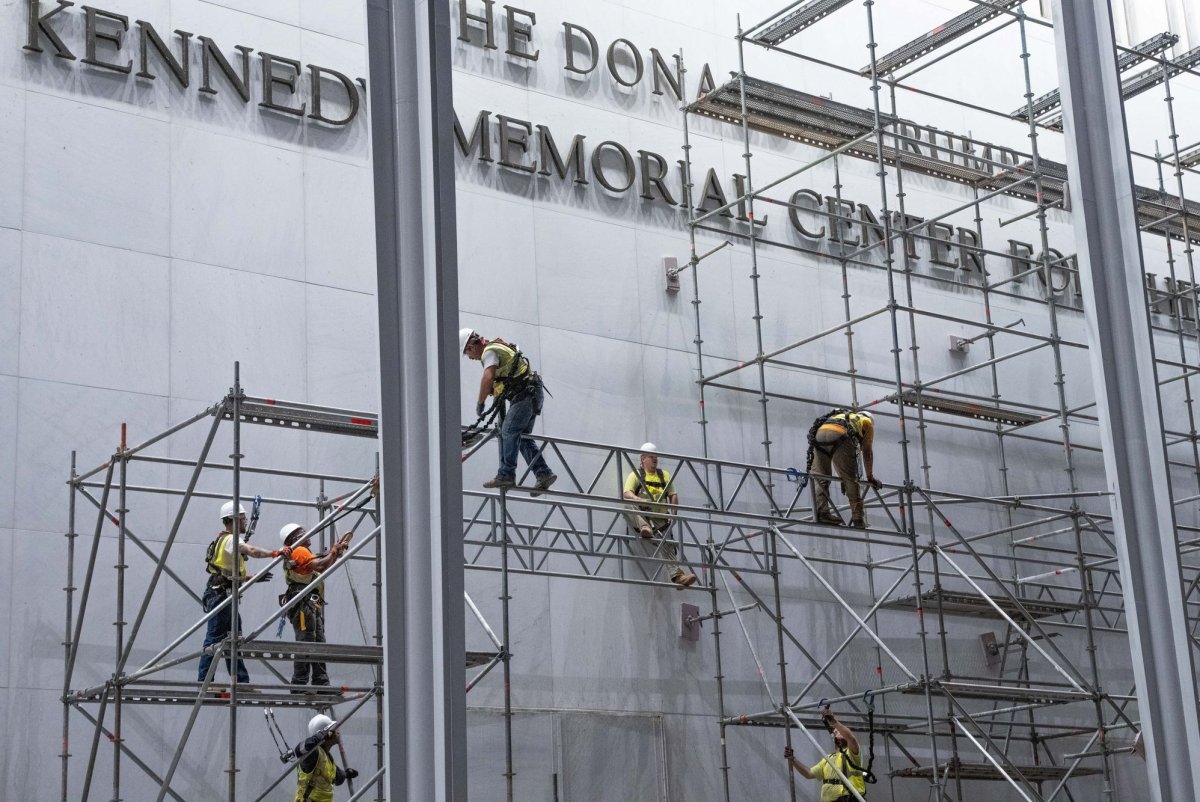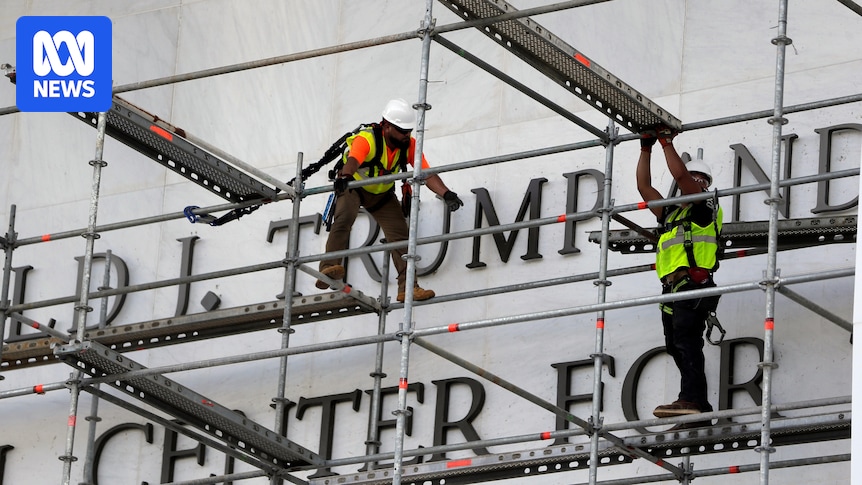
An appeals court in Washington DC has rejected a last-ditch effort by the Kennedy Center's leadership to keep President Donald Trump's name on the building, leaving the institution with few options other than removing the name in the coming hours.With storms dancing around Washington before a court-ordered deadline to remove references to Mr Trump, workers were seen building scaffolding around a section of the building that includes the president's name.A crowd gathered nearby and cheered their work as the Trump name moved closer to being taken down, some of them regularly having protested the renaming since it occurred last December.Protesters, including former CNN anchor Jim Acosta, celebrate the impending removal of the Trump name. (Reuters: Ken Cedeno)After ignoring the Kennedy Center for much of his first term, Mr Trump has wielded tremendous influence over the venue during his return to office.Just a month into his second term, he ousted the centre's previous leadership and replaced it with a board of trustees that named him chairman.Mr Trump's name was quickly added to the building.Last month, US District Judge Christopher Cooper ruled that Mr Trump's name was illegally added to the iconic Washington performing arts facility, and ordered it removed by Friday.Justice Cooper also blocked the administration from closing the cultural and arts venue for major renovations that had been planned to start in July and last for two years.It prompted the president to declare that he would transfer control of the venue to Congress, though it was not immediately clear how that directive would be carried out.The Kennedy Center failed in its appeal of a judge's ruling that it had been illegally renamed in December. (AP Photo: Rahmat Gul)Late on Thursday, however, Mr Trump's hand-picked board at the centre mounted a last-minute effort to keep his name on the facade, arguing that the renovation was badly needed and accusing the lower court, in terms that seemed similar to Mr Trump's speech patterns, of interfering in the effort."The District Court is not allowing us to close in order to properly fix up and repair the Building, including potentially life threatening structural damage like beams and parking garage ceilings that are rusted, and in serious danger of falling onto people below. Indeed, total collapse!" the centre's submission said.Justice Cooper denied the Kennedy Center's request on Friday afternoon, and a further appeal of that ruling was rebuffed on Friday evening.Even as the Kennedy Center has fought efforts to remove Mr Trump's name from the building, however, it has taken steps to comply with Justice Cooper's initial ruling.A June 4 memo to staff from the Kennedy Center's Office of General Counsel said email signatures, letterheads and other documents must reflect the name as "The John F. Kennedy Center for the Performing Arts" or the "Kennedy Center".The Kennedy Center's website has also dropped Mr Trump's name, while an earlier email sent to members offering ticket packages for the June 28 Mark Twain Award for American Humor ceremony came from the Kennedy Center, without including Mr Trump's name.Donald Trump has taken a hands-on approach to the Kennedy Center's management this term. (AP Photo: Mark Schiefelbein)White House ordered to restore history, science materialsAlso on Friday, a federal judge ordered the Trump administration to reinstall exhibits and signs on topics like slavery and climate change that it had removed from parks and monuments nationwide.In March 2025, Mr Trump signed an executive order targeting what he called a "revisionist movement" that portrayed the US as "inherently racist, sexist, oppressive, or otherwise irredeemably flawed".His order directed the Department of the Interior to make changes to parks, monuments and memorials to address any "false revision of history" that the White House said had occurred in recent years.Among the materials that were later removed were an exhibit at Philadelphia's Independence National Historical Park describing the ownership of enslaved people by George Washington, the nation's first president, and signage detailing climate threats at Fort Sumter in South Carolina.US District Judge Angel Kelley in Boston cited those as some of the many examples of signs, displays, and exhibits being removed from parks under Mr Trump "that do not align with its preferred narrative, thereby telling half-truths".Removing these signs not only undermined "the integrity of the National Parks; it sets a dangerous precedent of censorship and sanitisation," Justice Kelley said."History cannot be faithfully told while excluding the experiences of communities whose contributions, struggles, and achievements form an important part of our nation's story," she wrote.Justice Kelley, who was appointed by Democratic president Joe Biden, issued a preliminary injunction at the behest of groups representing park conservationists, historians and scientists, who argued that the US Department of the Interior was in violation of congressional mandates governing how the more than 430 national park sites should be operated.She also ordered the government to restore the signs within 21 days, "by the 250th anniversary to properly honour the remarkable achievements of the United States".Skye Perryman, whose liberal legal group Democracy Forward represented the plaintiffs, said the judge's decision "not only stopped further censorship, but recognised the need to restore the exhibits the administration already illegally removed".The Department of the Interior in a statement called Justice Kelley a "liberal activist judge" and said it was reviewing its options to appeal.AP
Trump's name set to be stripped from Kennedy Center as appeal fails
With storms dancing around Washington before a court-ordered deadline to remove references to Donald Trump, workers were seen building scaffolding around a section of the building that includes the president's name.
TL;DRAI
Appeals court rejected Kennedy Center's bid to retain Trump's name on the building; federal judge ordered its removal by Friday. The ruling signals governance instability and regulatory unpredictability in federal institutions—institutional risk for enterprise planning.
870 words~4 min read