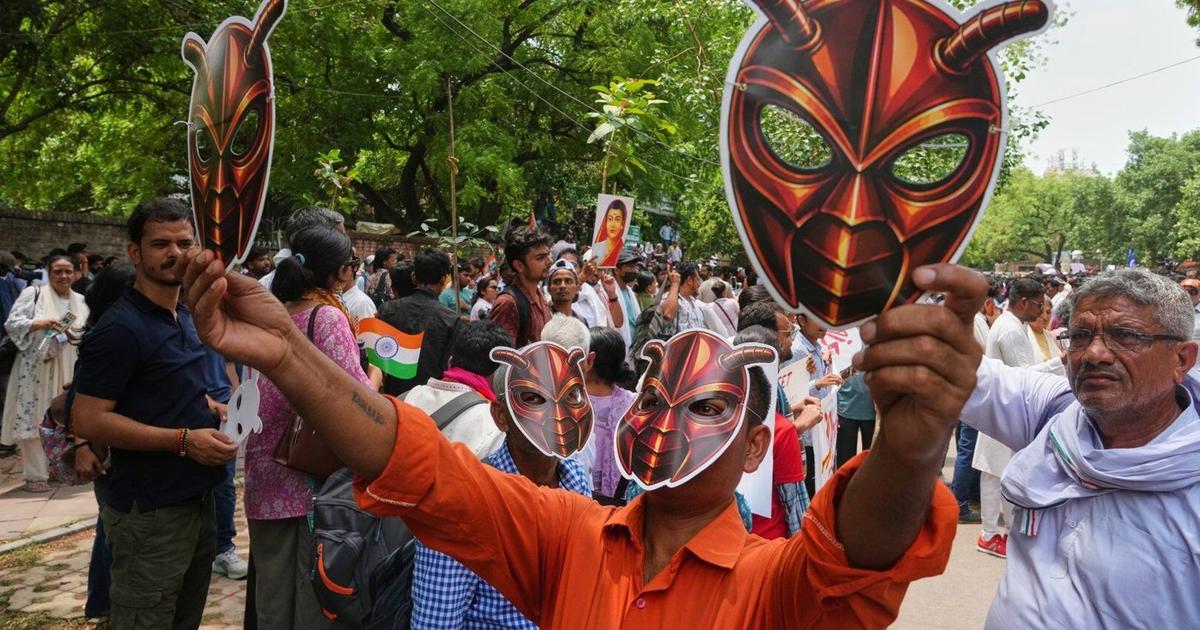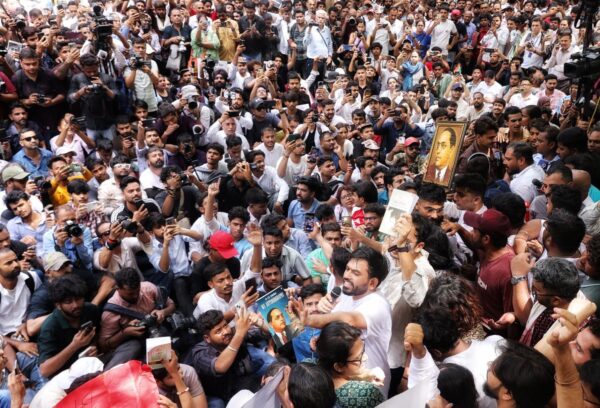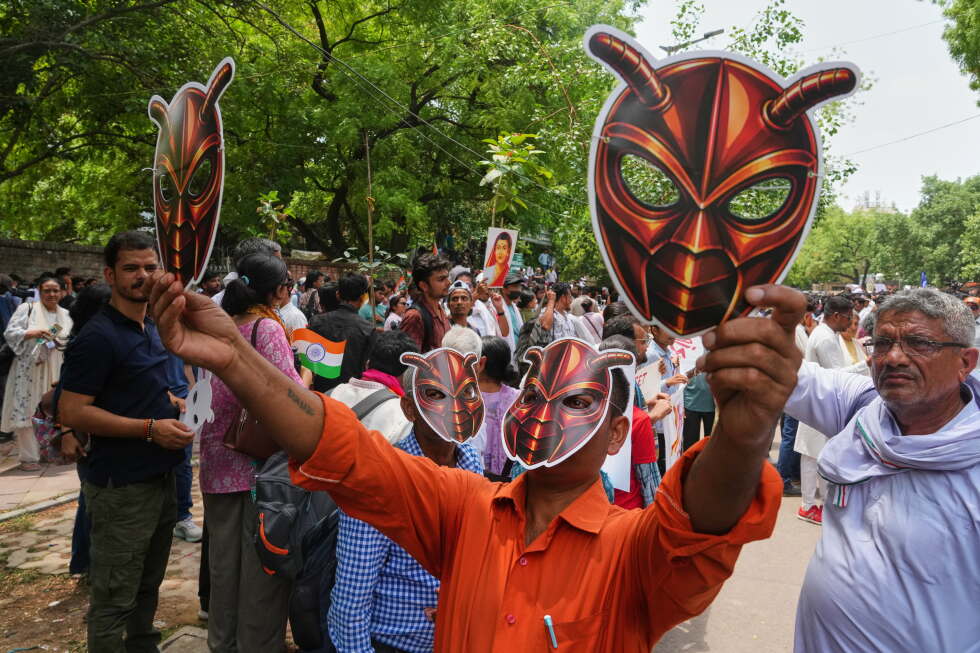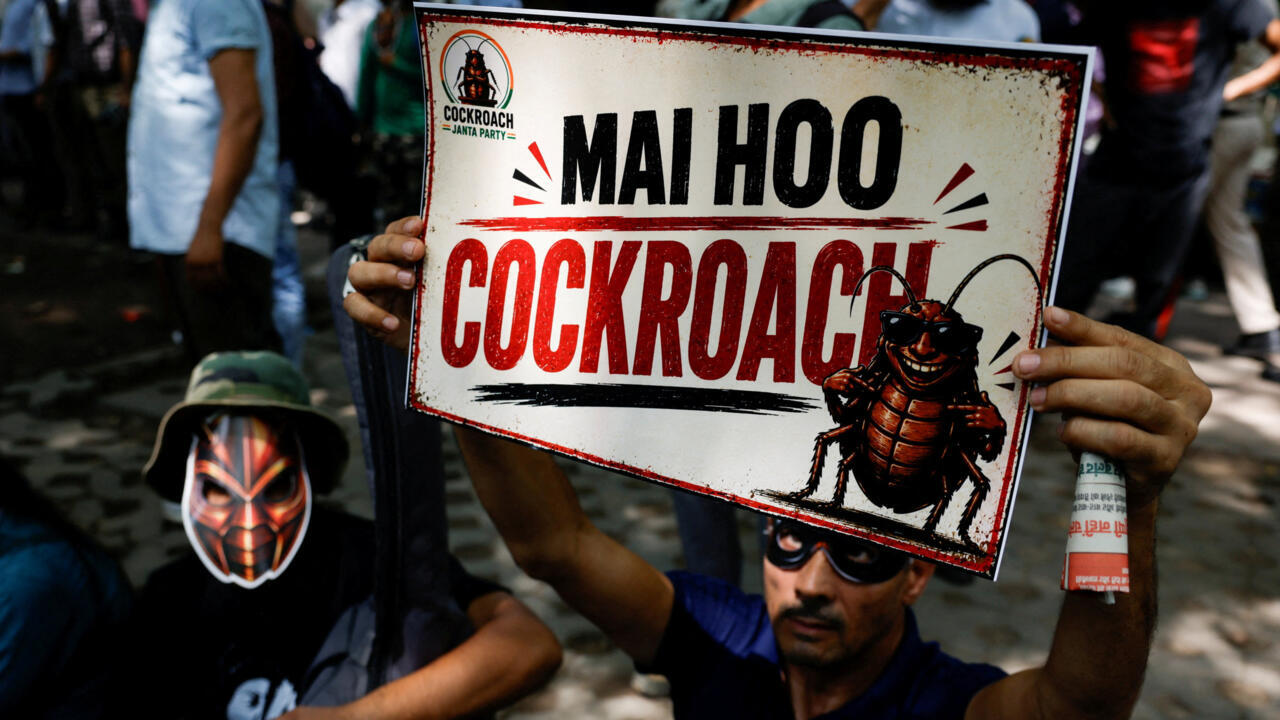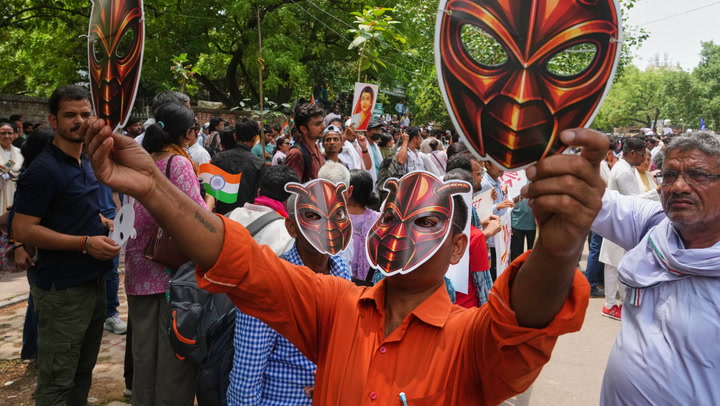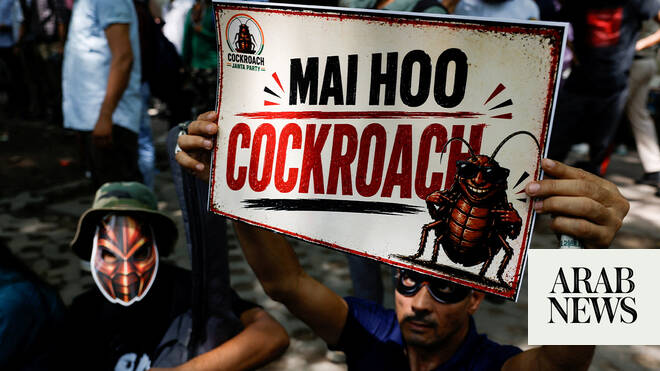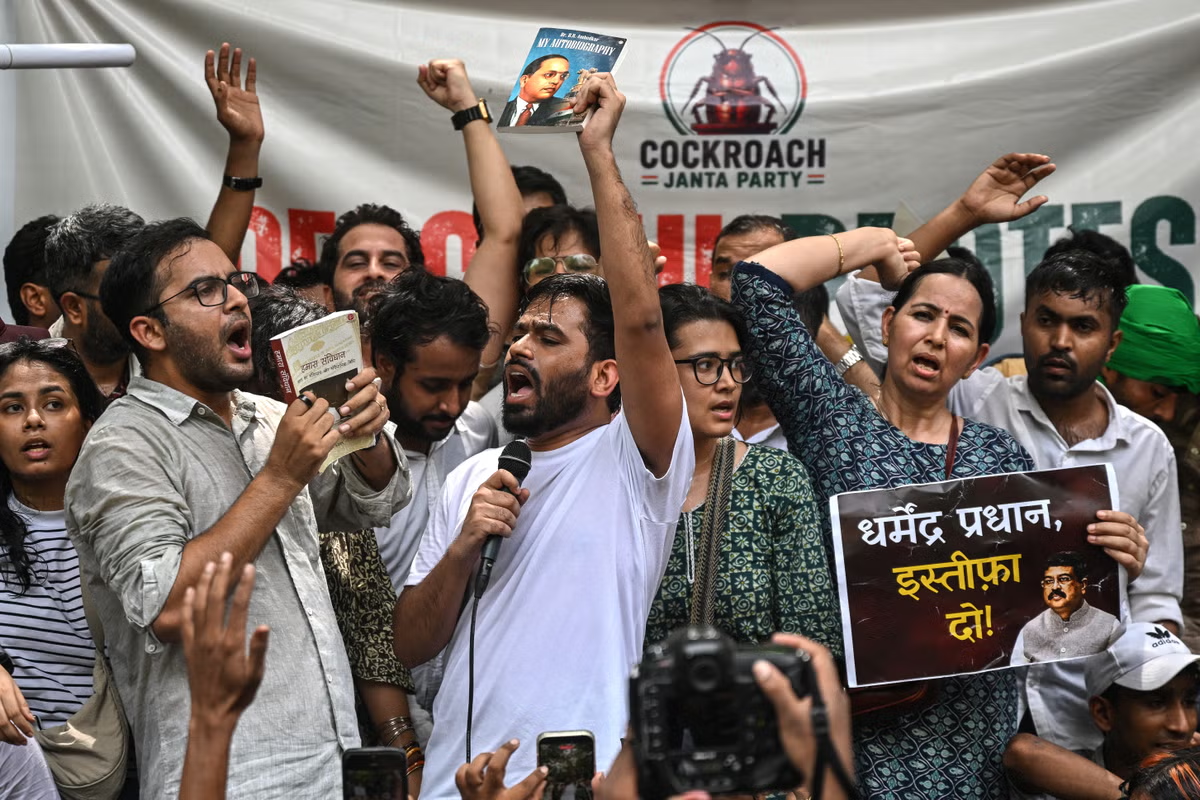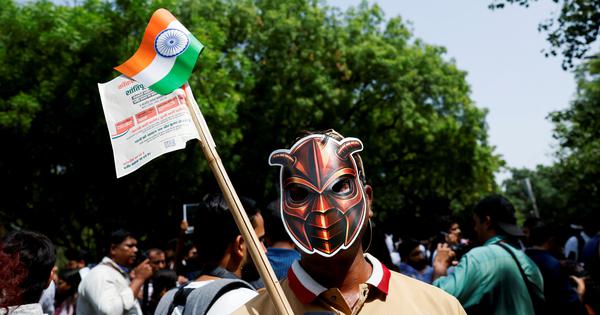
The first weekend of June witnessed a cockroach infestation like never before in history. Hundreds of people braved the sweltering heat to gather at a protest site in New Delhi donning cockroach masks on June 7, in the first physical demonstration of a nascent Gen Z movement called the “Cockroach Janata Party” that has already gained millions of followers online. The city’s press corps turned up in large numbers to cover the great crawling out party.It was the culmination of what emerged as an online satire in reaction to a throwaway comment by the chief justice equating jobless youths to cockroaches. It blew up in no time, accumulating 19 million Instagram followers in less than a week, more than what the ruling Bharatiya Janata Party can boast of, and enough to raise “national security” fears for the government to have its site blocked on social media platforms.The creator of this unique “voice of the lazy and unemployed”, a student at Boston University, made a dramatic return to Delhi on the day of the protest to lead the “revolution”. His immediate demand is the resignation of India’s education minister, who has presided over a series of public examination fiascos such as paper leaks and misgrading that have aggravated the country’s youth. After the initial uncertainty over whether the demonstration would be allowed at all, a government not known to take kindly to dissent relented with a super-quick clearance to avoid confrontation as the crowds swelled.A supporter of the Cockroach Janta Party holds a placard reading “I am Cockroach” during a protest in New Delhi on June 6. Credit: AFP.The Modi dispensation is making the usual noises about foreign forces fomenting trouble through a seemingly apolitical movement and government critics are speculating on whether the cockroach movement is being engineered by the government itself to blunt opposition forces, the movement’s instant connect actually points to a lot more than anger at an incumbent government. It is emblematic of pathologies that go beyond Modi’s government, and even India.More than anything else, the cockroach movement is a reflection of the universal decay of political parties that ails all democracies today. It is an expression of a deeply felt crisis of representation that has come to pervade India and many other democracies, where people do not connect with political parties anymore – including Opposition parties – and hence do not consider them as useful platforms for channeling their dissent.The claustrophobia of post-truth polities with captured institutions run by strongmen like Modi, where the norms of democratic correction do not seem to hold anymore and dissent may feel futile, only exacerbates this resigned disconnect – but is not its principal trigger.The great disconnectNoticeably, the cockroach movement comes on the heels of a series of state elections in which the BJP pulled off historic wins, like the anti-government O1G meme movement that gained pace after Hungary’s Viktor Orbán won by a landslide in 2018 to secure a third straight term. With its latest electoral triumph, the BJP now controls 22 of India’s 28 states with 73% of the country’s total geographical area and 78% of its 1.45 billion population, making India a one-party state for all practical purposes.Modi’s continued electoral success would seem to be at odds with the latent dissent of the cockroaches. It isn’t, because this apparent political success masks a grievous disconnect between people and politics. His serial successes in the face of his manifest failures only deepens the disconnect. The more election victories he stacks up in the face of the mounting hardships of lived experience, the more distrust he generates in the system.In election after election, pre-poll surveys in India have been showing that the main voter priorities are jobs and inflation, yet the issues that invariably end up dominating campaigns are anti-Muslim scaremongering and the chimera of India’s supposed global ascent under Modi’s able stewardship.A woman walks past a hoarding of Narendra Modi as she arrives to attend a public meeting for women addressed by him in Varanasi on April 28. Credit: AFP.Modi’s narrative control through a captured media, his party’s unlimited resources minted on the back of executive power, and the emotive appeal of his polarising identity politics, allow his party to set the agenda to its advantage, and crowd out the substantive issues of survival and sustenance. It’s easy to see why so many people might feel unrepresented and disconnected.India, for example, is currently undergoing a crippling heat wave; all the 50 hottest cities in the world now happen to be in India. In just one state, the heat wave has killed more than 8,000 people in five days. Yet heat, just like air pollution that is estimated to kill close to 2 million people every year, does not make it to mainstream political discourse. Despite being among the countries most vulnerable to global warming, neither are there set standards to track heat-related fatalities nor are such data systematically released to the public in India, invisibilising one of the most pressing public health disasters from public policy debates.Not just in India, disconnect of this nature has resulted in the worldwide loss of public trust in politicians and governments. In many democracies, from Kenya to Nepal, the trust deficit has manifested in Gen Z movements like the Cockroach Janta Party, often crossing over from online to physical protests. In other democracies, it shows up as voter disenchantment by way of reduced turnout and plummeting party memberships. In others still, like in the UK, it’s manifested in voter migration from mainstream parties to fringe parties like the Greens and Reform in search of authentic representation.The malaise at the heart of this is the hollowing out of mass parties, eroding their capacity for connecting citizens to the state and political processes. As political parties become ever more dependent on big money with the decline of grass-roots party organisations such as unions and associations as primary sources of funding and mobilisation, politics increasingly moves from volunteer-driven social activism to specialised, expert-managed campaigns driven by data analytics, PR strategies and digital marketing.The party’s overA playground for political consultancies, communication firms and dark money, elections come to resemble corporate marketing campaigns by organisations competing for public office rather than movements and ideological battles. The technocracy that colonises politics today intensifies the popular withdrawal from political life. Once embedded in society, politics feels increasingly remote and elite-captured as parties have stopped functioning as social organisations and operate more as appendages of the state. As Peter Mair argues in Ruling the Void: The Hollowing of Western Democracy, political parties have become so disconnected from society that they no longer seem capable of sustaining democracy in its present form.As parties decay, the quality of public representatives – no longer filtered through the needs of party constituencies and collectives – degrade rapidly. The chief minister of capital Delhi, grappling with a water scarcity on top of a punishing heatwave, last week said water has become scarcer as it is evaporating from the pipes. A couple of days later, the deputy chief minister of Bihar, with one of the worst public healthcare systems in India, declared that the healthcare vision for the state was to make people so healthy that there would be no need for hospitals.A prominent BJP MP and film star, meanwhile, made headlines on Sunday saying nurses’ uniforms need to be decolonised while people outraged at the latest instance of a crumbling public healthcare system – a disturbing video of parents forced to move their 12-year-old son between hospitals on a stretcher in the blazing sun, in the absence of an ambulance or paramedics.This laughable incompetence of the kakistocracy that constitutes much of India’s ruling classes – cutting across parties – makes politics feel even more remote, disconnected and unreal.These pathologies are hardly confined to India, but are magnified by the advanced stage of its democratic decay in the absence of the guardrails of relatively more resilient governing institutions in other democracies facing similar challenges.Delhi is facing a water crisis because the water supplied to residents evaporates before it reaches them, says CM Rekha Gupta. pic.twitter.com/Y0Pyb7Larj— Aditya Goswami (@AdityaGoswami_) June 5, 2026
Why India’s Opposition parties should be worried about the cockroach movement
People no longer see political parties as useful platforms for channeling their dissent.
2,034 words~9 min read