Get free access to the most comprehensive World Cup coverage in The Athletic app.
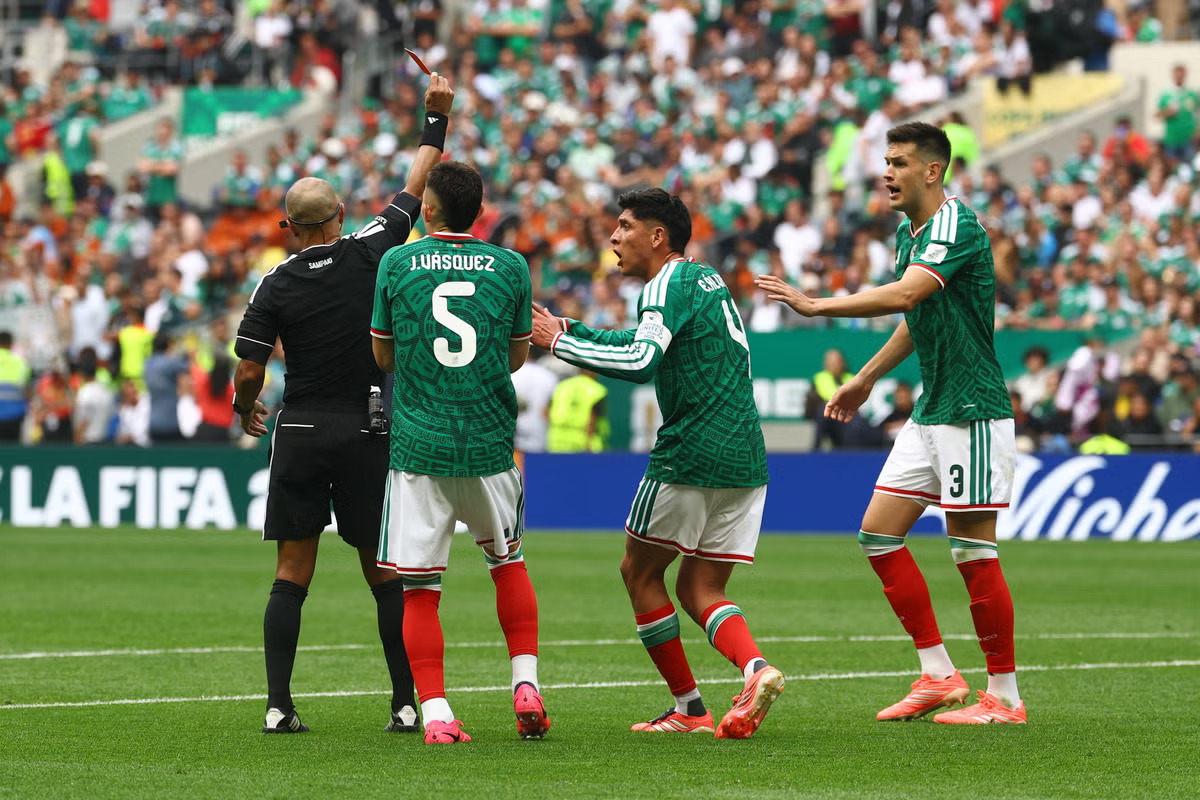
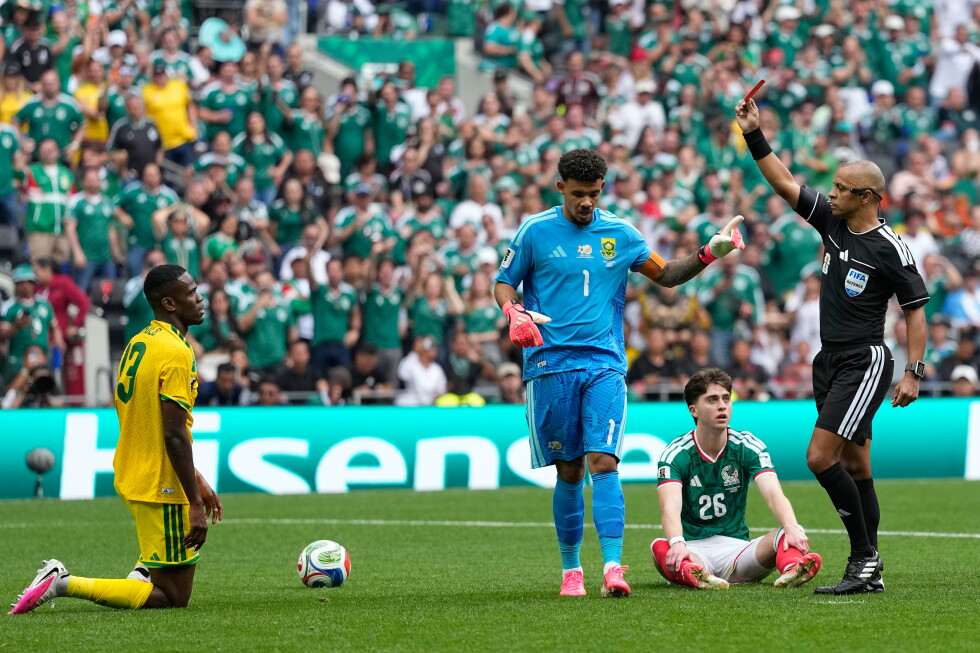
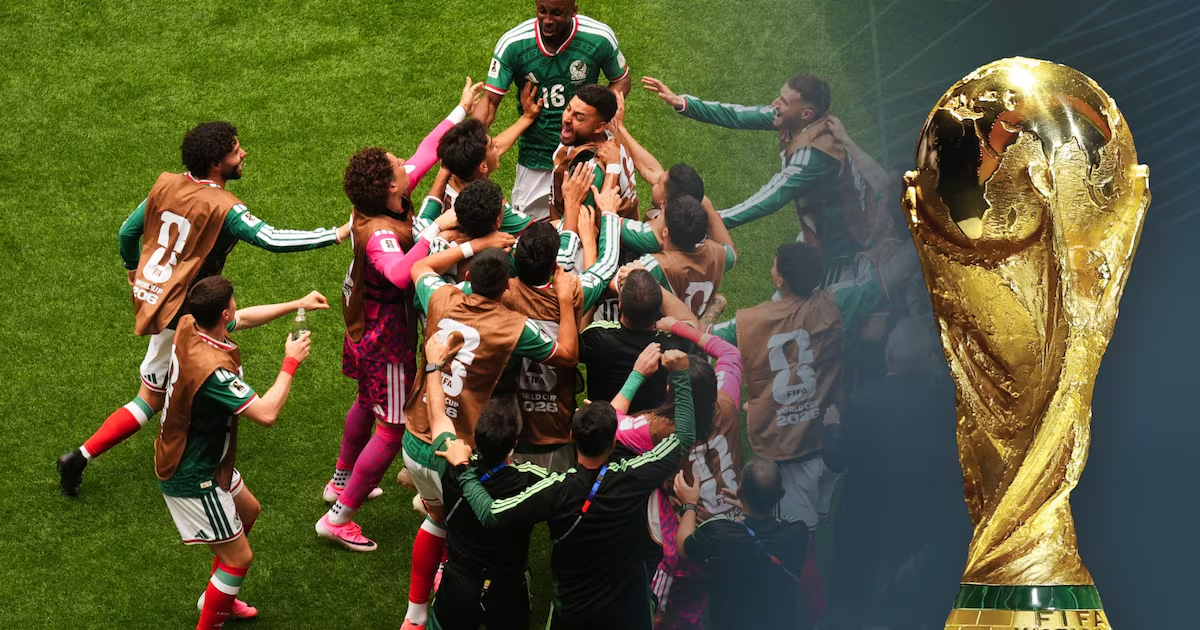
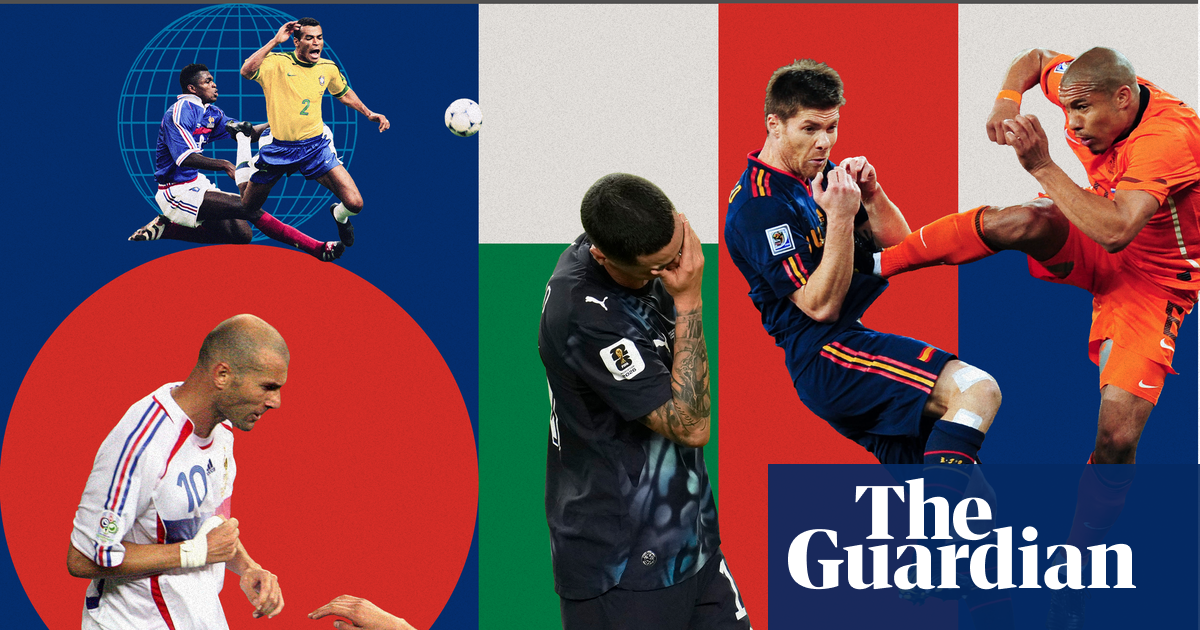
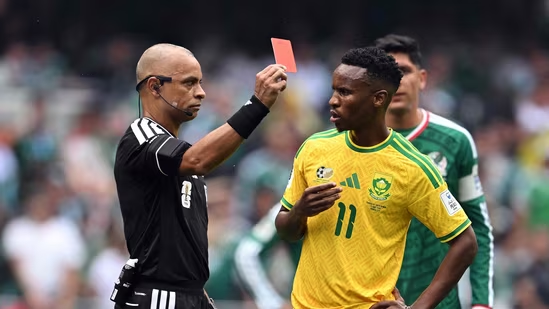
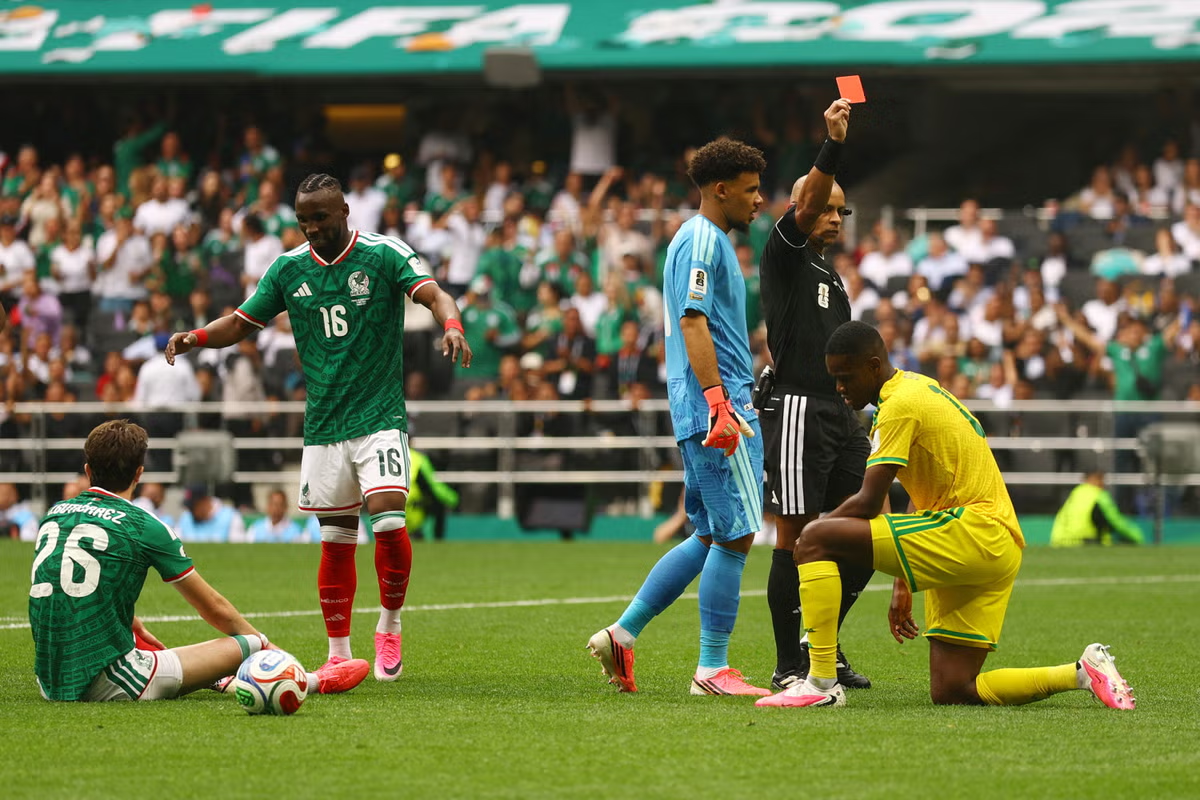
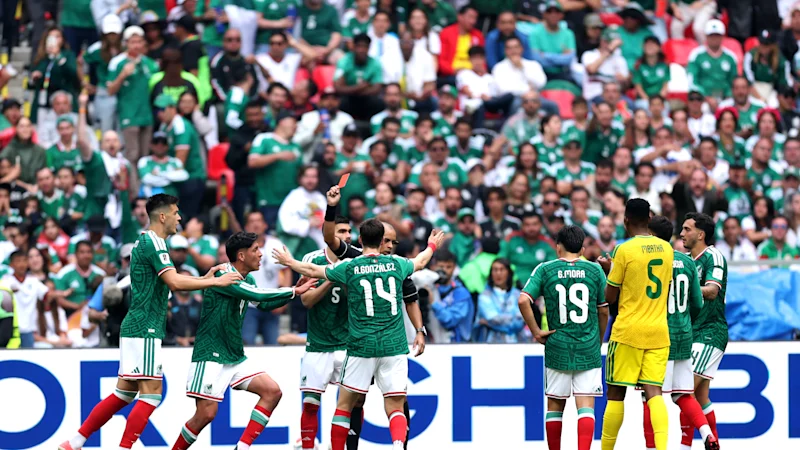
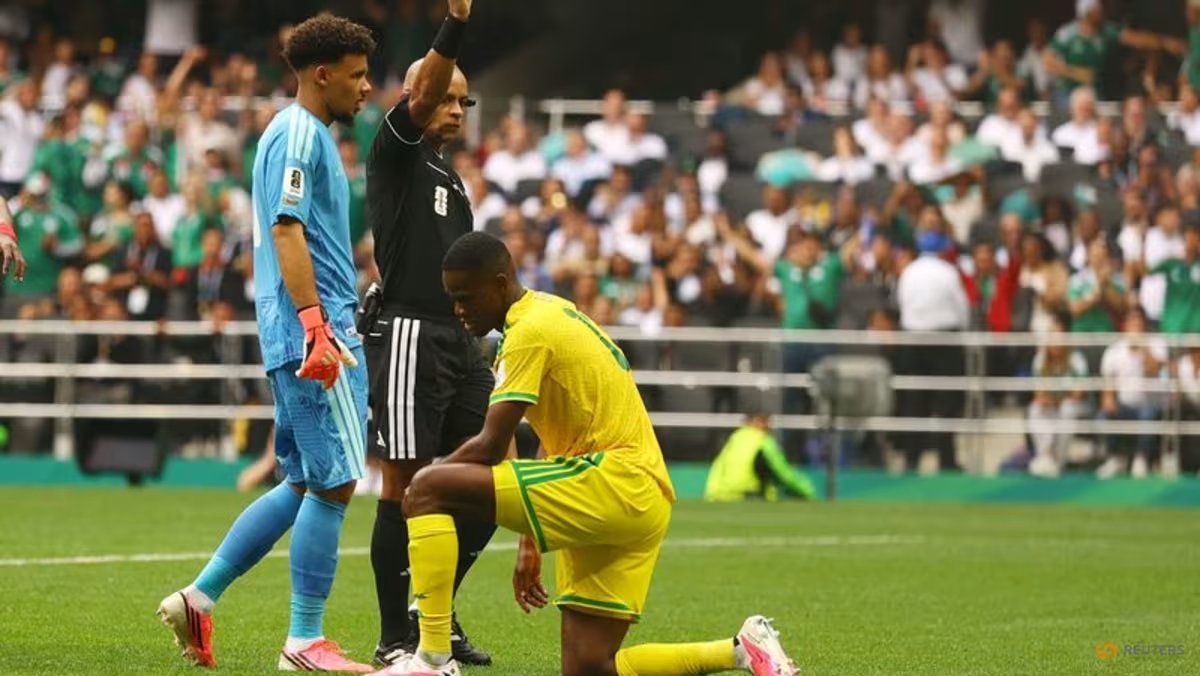
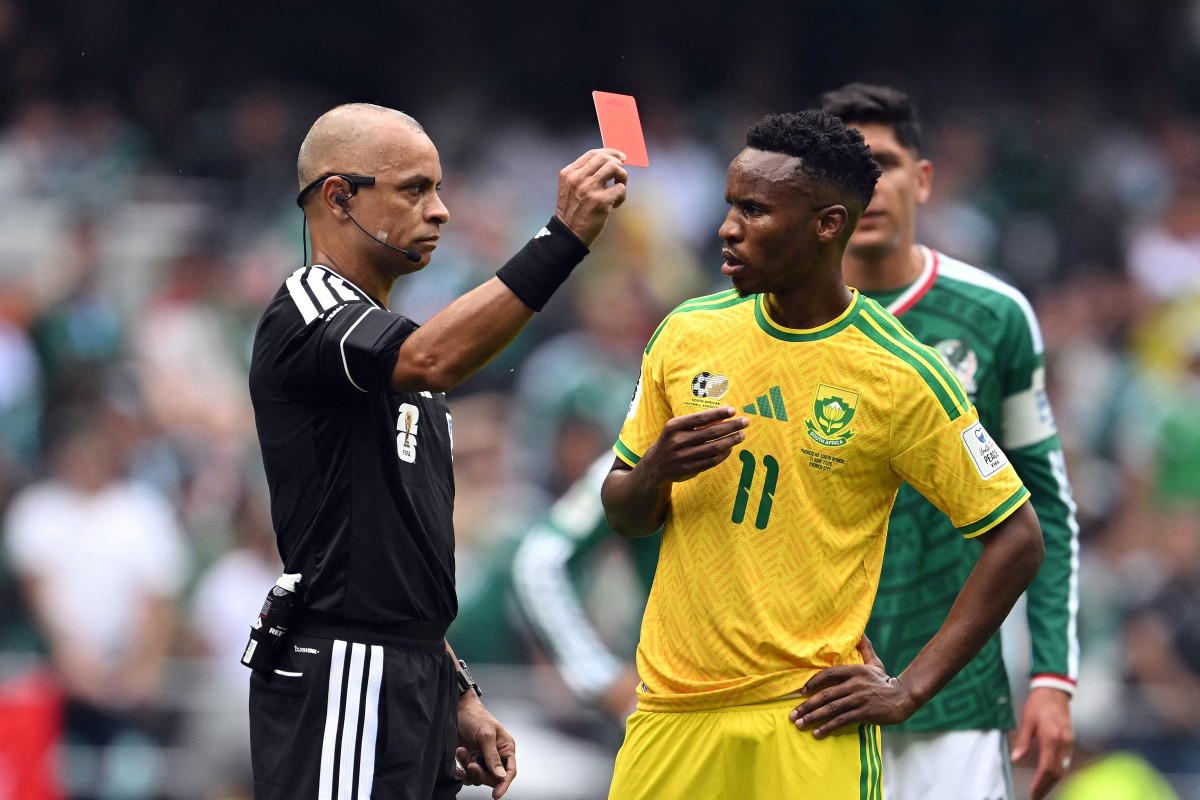
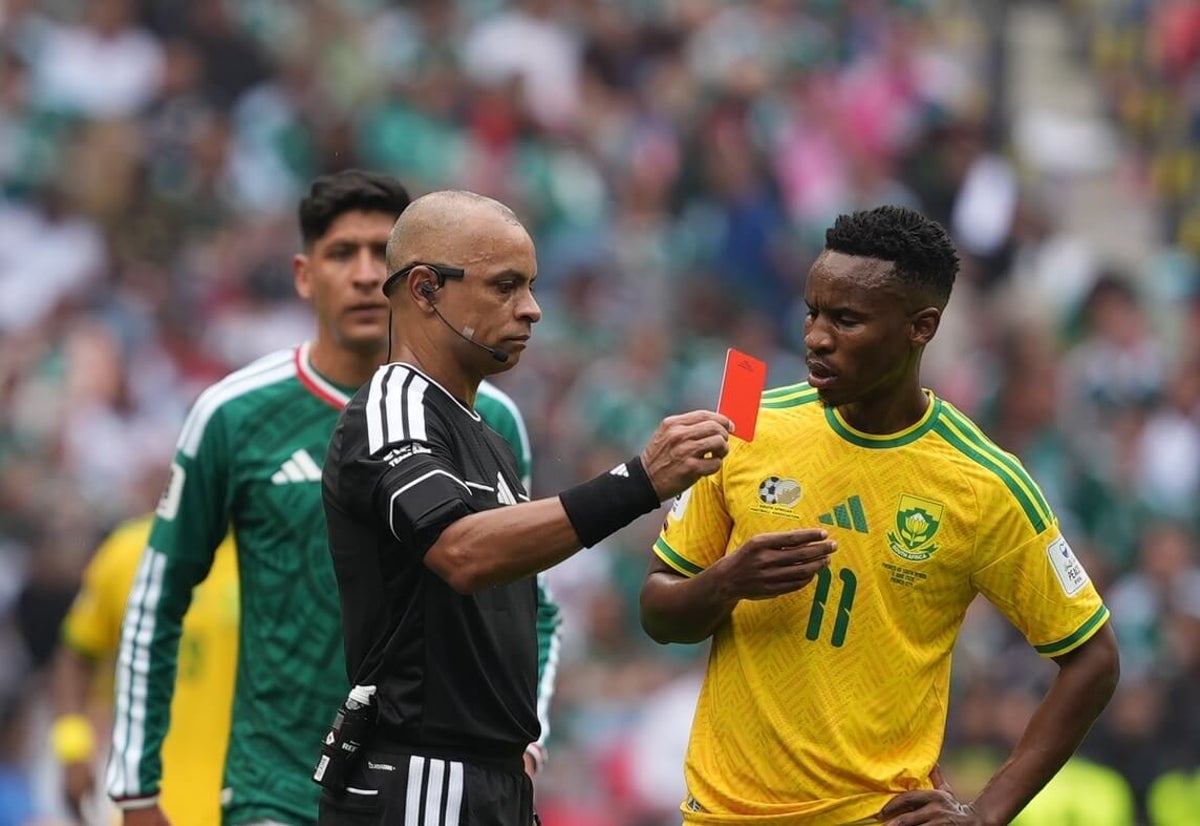
The opening fixture of the 2026 World Cup featured an inspiring story from Raul Jimenez, a controversial VAR decision and a win for hosts Mexico — but it will be remembered most for a flurry of red cards.South Africa’s Sphephelo Sithole and Themba Zwane, along with Mexico’s Cesar Montes, were all sent off during the co-host’s 2-0 victory, ensuring FIFA’s disciplinary rules became a talking point from the first game of the tournament.Only the ‘Battle of Nuremberg’ between Portugal and the Netherlands at the 2006 World Cup in Germany produced more red cards in the history of the tournament. The bad-tempered last-16 tie descended into chaos as Russian referee Valentin Ivanov showed four red cards and 16 yellow cards.What happened in Mexico vs South Africa?Sithole became the first player to be sent off at this World Cup when he was dismissed for denying a goal-scoring opportunity four minutes after half-time. He brought down Brian Gutierrez, who was clear on goal, just outside the box and was sent off by Brazilian referee Wilton Sampaio for a professional foul. It capped a tough evening for the midfielder, whose mistake in the ninth minute led directly to Julian Quinones scoring the opening goal.Zwane was sent off in the 84th minute after Sampaio was sent to the pitchside monitor by VAR to check his clash with Roberto Alvarado. The South Africa midfielder was adjudged to have used violent conduct with his arm to the face and was given his marching orders. Sampaio was soon reaching for red again when Montes was sent off in added time for a cynical foul on Khuliso Mudau.All three players will miss their side’s next fixture.The offences pale in comparison to the 1990 opening fixture when Cameroon stunned holders Argentina in a 1-0 win despite having Benjamin Massing and Andre Kana-Biyik sent off for slightly more agricultural tackles.By contrast, the last two tournaments, in Qatar and Russia, had just four red cards each.What impact do disciplinary records have on progression from the group stages?This expanded World Cup features 12 groups of four teams. The top two nations in each group progress automatically to the knockouts, alongside the eight best third-placed finishers.Teams are ranked first by points, then goal difference and then goals scored. If they still cannot be separated, FIFA turns to its fair play system.Sphephelo Sithole was sent off for a professional foul (Carl Recine/Getty Images)Under the system, yellow and red cards carry disciplinary penalties and the team with the better disciplinary record is ranked higher.If a tiebreak occurs, teams are deducted one point for a yellow card, three points for an indirect red card following two yellow cards, four points for a straight red card and five points when a player receives both a yellow card and a direct red card in the same match.NationYellow CardsRed Cards Fair Play DeductionSouth Africa22-10Mexico11-5South Korea10-1Czech Republic000Canada20-2Bosnia and Herzegovina30-3Has a disciplinary record impacted a major tournament before?The most famous example of disciplinary records affecting qualification came at the 2018 World Cup in Russia. Japan and Senegal finished level on points, goal difference and goals scored in Group H, forcing FIFA to separate the sides using the fair play system.Japan had accumulated four fewer yellow cards than Senegal and advanced to the knockout stages, becoming the first team in history to progress on disciplinary record.France defender Laurent Blanc missed the 1998 World Cup final after being sent off in the semi-final against Croatia following an altercation with Slaven Bilic. He watched from the stands as France beat Brazil 3-0.And every England fan of a certain age will well up at the memories of Paul Gascoigne in 1990. During England’s semi-final against West Germany, Gascoigne was booked for a foul on Thomas Berthold. Realising the caution would rule him out of the final if England progressed, the midfielder burst into tears in one of the defining World Cup images. England went on to lose on penalties. Paul Gascoigne is consoled by Terry Butcher after England’s exit at the 1990 World Cup (Mark Leech/Getty Images)What are the suspension rules at the World Cup?Any player shown a red card is automatically suspended for one game.That applies whether the player is shown a straight red card or receives two yellow cards in the same match. FIFA’s Disciplinary Committee can impose a longer ban if the offence is deemed particularly serious, such as violent conduct, so Zwane could yet be ruled out of the rest of the group stage.If a suspension cannot be served during the tournament because a team is eliminated, it carries over to that nation’s next official international fixture. Players can be suspended through yellow-card accumulation. Any player who receives two yellow cards in separate matches is automatically banned for the next game. The suspension applies regardless of whether the next fixture is a group-stage match or a knockout tie.For the 2026 World Cup, FIFA has introduced two amnesty periods because of the tournament’s expanded format.Single yellow cards collected during the group stage are wiped before the knockout rounds begin, while any single cautions accumulated during the round of 32, round of 16 and quarter-finals are erased after the last eight matches.Which players are suspended or at risk of suspension?Red cards: