Show Caption
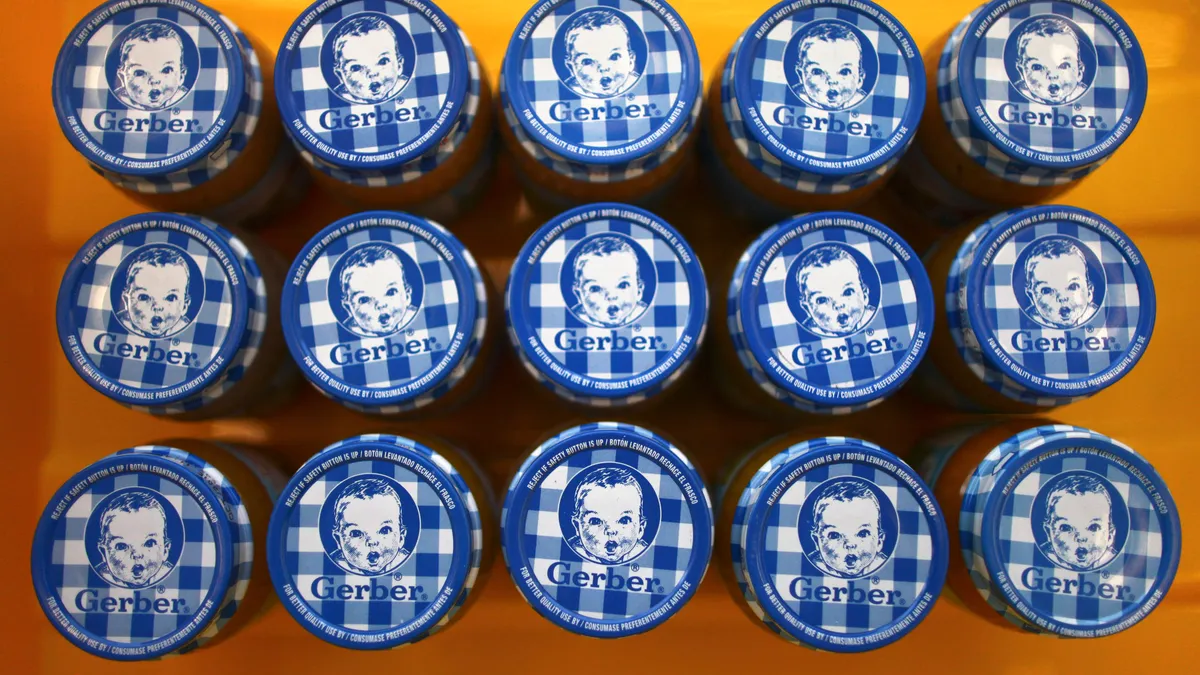
Hundreds of parents are taking major baby food makers like Gerber to task in a series of recently-filed lawsuits that accuse the companies of "systemic poisoning" that left their children disabled.More than 200 lawsuits have been filed against popular baby food brands, including Gerber Products Company, Beech-Nut, Campbell and Nurture, since the beginning of 2026. In June alone, roughly 40 suits were filed against the company by the 10th of the month, according to court records reviewed by USA TODAY, all based on similar allegations.The brands' "knowingly exposing" children to heavy metals is the crux of the complaints, which by and large argue that "Defendants sold these baby foods knowing that Toxic Heavy Metals, when consumed by babies, are known to cause brain damage and neurodevelopmental harm," as outlined in a June 9 filing on behalf of one Florida mother, Jennifer Garcia."Baby food should be safe. It should not be contaminated with toxic heavy metals. Period. This action aims to stop Defendants from poisoning infants with contaminated baby food," said the filing, which also alleged that Garcia's 6-year-old child has suffered "debilitating brain injury" as a result of eating the contaminated food as an infant.Most of the recent complaints list similar alleged injuries, including autism spectrum disorder and attention deficit hyperactivity disorder (ADHD). The initial complaints do not provide direct evidence of these claims (such as medical testing, a healthcare professional's opinion, product-specific testing or evidence that other potential causes were ruled out), but note that investigations have not been finished.The heavy metals in question - inorganic arsenic, lead, cadmium and mercury - have been found to negatively affect the development of children, causing "untreatable and frequently permanent” brain damage, even with limited exposure, per the FDA and World Health Organization. Reduced IQ, developmental and learning disabilities and behavioral disturbances, like antisocial behavior, are among the most oft-cited long-term impacts.What we know about heavy metals and autism, ADHDNo definitive studies are showing a causal link between heavy metal consumption and autism, however. While some studies show higher levels of heavy metals in children with autism, researchers have not proven that these exposures cause the condition, and results vary greatly depending on factors like geography, testing methods and study design. The evidence is stronger for ADHD and lead, specifically, but is still not definitive in proving direct cause.Additionally, current scientific consensus does not offer one specific cause for autism or ADHD, instead generally believing them to be multifactorial conditions that involve both genetics and environment.This is one of the reasons that limits on heavy metals in baby food don't already exist, food safety attorney Bill Marler told USA TODAY. Marler is not involved in any of the mentioned suits."The link between heavy metals and direct injury is hard to prove," he said. "You can't prove it, then there's no good data and more studies need to be done and then they keep kicking the can down the road."Baby food products listed in lawsuitsThe lawsuits name a handful of companies that make baby food products, including Beech-Nut Nutrition Company, Gerber Products Company, Hain Celestial Group, Inc., Nurture, LLC, Plum Organics, The Campbell’s Company, Sprout Foods, Inc., Neptune Wellness Solutions, Inc. and Walmart, Inc.They allege contamination across nearly every major baby food category, including cereals, purees, meals, snacks, and teething products, especially those containing rice flour and root vegetables.Product types listed in the lawsuits include:Infant rice cerealMultigrain baby cerealsOatmeal/oat cerealsRice‑based snacks and cerealsJarred fruits and vegetables (e.g., sweet potato, carrots, spinach)Fruit/vegetable puree pouches or jarsMixed fruit and veggie blendsMeat and vegetable dinners (e.g., turkey, chicken, beef blends)Stage 2 / Stage 3 mixed mealsTeething biscuits/teethersPuffed grain snacksRice cakes/toddler snack cakesUSA TODAY reached out for comment from all mentioned brands on June 11.Campbell's said it does not comment on pending litigation, but pointed out that it sold Plum Organics to Sun-Maid Growers in 2021.Congressional inquiry found arsenic, lead in baby food itemsA congressional inquiry in February and September 2021 found that tested commercial baby foods "were tainted with significant levels of toxic heavy metals," discovered through internal documents and testing. The investigation found the presence of at least one of the four main heavy metals in baby food products produced by all reviewed companies, which included Beech-Nut Nutrition Co, Hain Celestial Group Inc. (Earth's Best Organic brand), Gerber, Walmart Inc. (Parent's Choice brand), Sprout Foods Inc. (Sprout Organic Foods brand), Campbell Soup Co. (Plum Organics brand) and Nurture Inc. (HappyBABY brand).Some such contaminants are naturally occurring in the environment and are not inherently toxic in certain doses, but even small amounts of the above-listed heavy metals are considered dangerous to children. These amounts are generally measured in parts per billion, or ppb, a measurement used to determine how much of a substance is in something else - like the amount of lead in a bottle of drinking water.More importantly to the lawsuits, the inquiry also found internal correspondence that showed the companies were aware of the presence of these metals, and in some cases, violated their own standards. In some instances, the companies tested their ingredients but not final products, and still opted to use high-arsenic and lead ingredients that exceeded internal standards."Our heavy metal testing is performed as part of our monitoring program and not as a condition of product release, all of the products that were tested were sold into commerce," Nurture told the subcommittee, according to the report.Baby foods contained up to 177 times acceptable lead levels: inquiryFinished products from Hain (Earth's Best Organic), meanwhile, had 28% to 93% more arsenic than expected based on ingredient-only testing. More than 25% of the tested baby food sold by Nurture exceeded 100 ppb inorganic arsenic, while Beech-Nut used ingredients in its baby foods with as much as 913.4 ppb arsenic and 886.9 ppb lead. Only one company, Nurture, even tests for mercury, which clocked in at 10 ppb.This is compared with the FDA maximum set for bottled water, which was used as a measure because no FDA regulations specifically for heavy metals existed for baby food at the time, of 10 ppb inorganic arsenic, 5 ppb lead, and 5 ppb cadmium. The Environmental Protection Agency cap for mercury in drinking water is 2 ppb."The test results of baby foods and their ingredients eclipse those levels: including results up to 91 times the arsenic level, up to 177 times the lead level, up to 69 times the cadmium level, and up to 5 times the mercury level," said the February report, which reviewed the only responding parties: Nurture, Beech-Nut, Hain, and Gerber. The later September report included the companies that previously had not complied with the investigation.In February 2021, the FDA issued a "reminder" of manufacturer standards to baby food makers as a result.Major baby brands 'knowingly' sold food with heavy metals: lawsuitsThe lawsuits point to these findings, as well as a 2019 report from the nonprofit Happy Babies Bright Futures, as evidence that the companies knew they were selling products with levels of metals that, while not technically illegal, have been proven to cause adverse health effects."Defendants justify this callous disregard for the welfare of babies because, until recently, there were no regulations governing the presence of toxic heavy metals in baby foods—and, because there were no regulations, they were free to do as they pleased," said a suite of complaints filed June 4-10. They also alleged that parents were never made aware of the possible presence of these substances in the foods, and therefore could not make an informed decision.The complaints accuse the companies of negligence and other manufacturing liabilities and seek a jury trial and judgment to "punish and deter” the brands.What is the FDA doing?Contaminants in mass-produced foods, including baby food, have been a focus point of the MAHA movement. The U.S. Food and Drug Administration announced an initiative called "Operation Stork Speed" in March 2025, which planned to buckle down on testing baby formulas for contaminants including heavy metals.The agency has also initiated the "Closer to Zero" campaign to increase testing and reduce contamination in food intended for children. It also passed the first-ever lead limits for baby food in 2025, though the standards are not legally enforceable.A bill called the Baby Food Safety Act, which would set enforceable limits, was reintroduced to Congress in April.