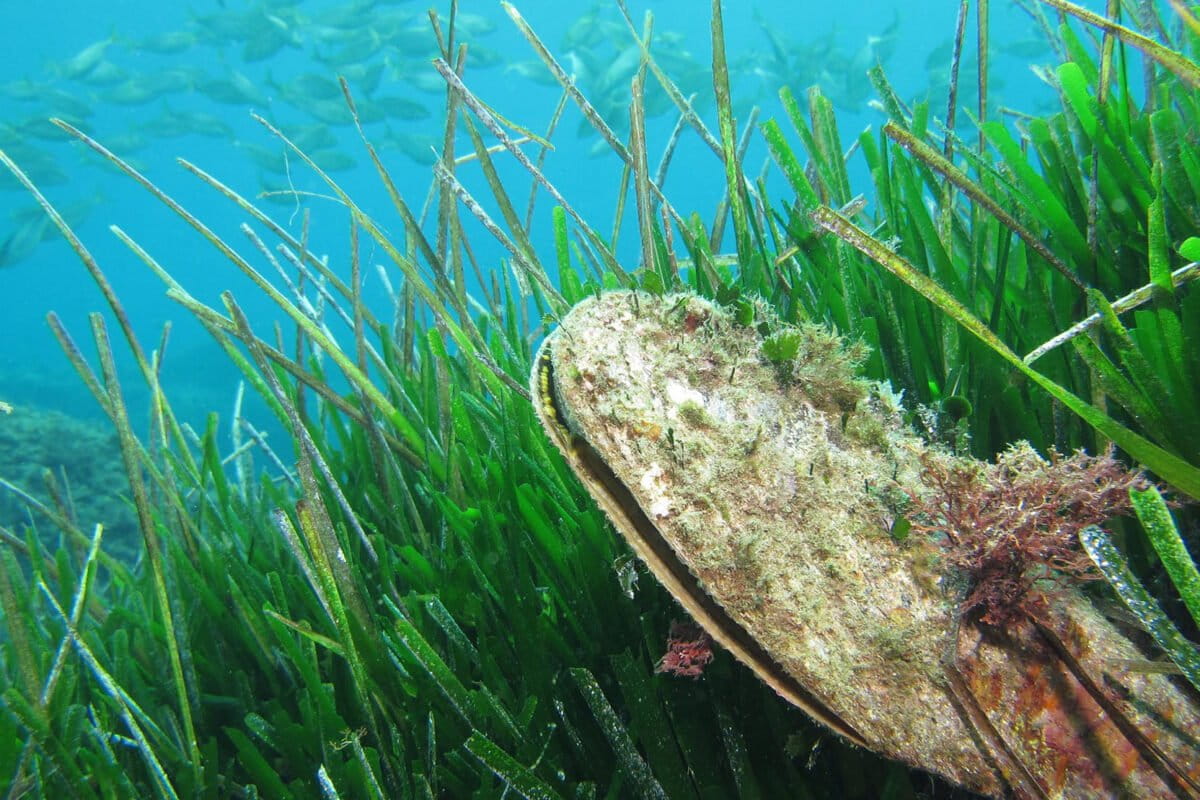
Neptune grass is generally regarded as the most ecologically important seagrass and shallow-water habitat in the Mediterranean Sea, where it is endemic. But the species has been in decline for many decades.A new study found that following the introduction of stronger environmental regulations and practices in the mid-to-late 1980s, Neptune grass (Posidonia oceanica) repopulated sampled sections of the waters off Marseille, France, over the ensuing four decades at rates that experts called “exceptional” and “remarkable.”The lead author said the study shows the value of passive restoration: letting seagrass meadows regrow on their own after removing the human-caused drivers of decline, rather than focusing on replanting or transplanting the species.
Neptune grass is generally regarded as the most ecologically important seagrass and shallow-water habitat in the Mediterranean Sea. It suffered a severe decline during the 20th century, and there have been myriad efforts to actively restore it via replanting schemes. A new study points to the merits of a different approach: Remove the human-caused drivers of the decline and let the meadows regrow on their own.
The study, published March 5 in the journal Marine Environmental Research, found that following the introduction of stronger environmental regulations and practices in France in the mid-to-late 1980s, Neptune grass (Posidonia oceanica) repopulated sampled sections of the waters off the city of Marseille over the ensuing four decades.